


Publications
The solution to the crisis surrounding the Iranian nuclear program is nowhere in sight, and the ticking clock is forcing Tehran to make fateful decisions
INSS Insight No. 2069, December 9, 2025
Iran is embroiled in an ongoing crisis with the International Atomic Energy Agency (IAEA), as Iran does not allow it to inspect the sites struck during the 12-day war with Israel. It is also locked in a standoff with the United States, as Tehran refuses to renew negotiations—despite mediation efforts mainly by actors from the Gulf states—so long as the demand for zero enrichment remains in place. Inside Iran, too, a debate over negotiations is underway; for now, the Supreme Leader Khamenei has determined that the Trump administration is not a suitable partner for cooperation. In the background, Iran continues its intensive efforts to produce missiles and threatens a harsh response against Israel in the event of another military confrontation. This deadlock will compel Iran to make decisions in the coming weeks to months, with rather limited bargaining chips at its disposal.
In the six months after the 12-day war with Israel, the crisis surrounding Iran’s nuclear program—both with the IAEA and with the United States (and Israel)—has not been resolved, and the deadlock is becoming more complicated.
The rift between Iran and the IAEA was highlighted on the eve of and during the most recent meeting of the IAEA’s Board of Governors, held on November 17–20. Before the meeting, IAEA Director General, Rafael Grossi described the situation in a series of media interviews:
- The IAEA conducted 12 inspection visits in Iran—none of them at the sites struck during the war;
- In his assessment, Iran wishes to remain a signatory to the Treaty on the Non-Proliferation of Nuclear Weapons (NPT);
- The IAEA has not found any satellite evidence of renewed uranium enrichment. Grossi noted that some Iranian activity is taking place in the vicinity of the sites that were hit, but not enrichment; in particular, he noted that there is no activity at the uranium conversion facility in Isfahan;
- He estimates that all uranium enriched to 60% and most uranium enriched to other levels remained at the sites that were struck.
The IAEA director general’s assessments—particularly his view that Iran is not currently engaged in enrichment—are echoed by Washington-based research institutes, notably the Institute for Science and International Security (ISIS), led by David Albright. Iran’s foreign minister, Abbas Araghchi, has also made similar assertions. At the same time, Iran is known to be active at two locations: a site built in recent years near Natanz, which may indicate an intention to use it in the future for uranium enrichment, and a complex in Isfahan, where activity is reportedly underway in one of the tunnels that could also be used for enrichment—if and when Tehran decides to resume such activity.
Against this background, the IAEA Board of Governors adopted a decision promoted by Germany, the United Kingdom, and France—the European states that have partnered to advance an agreement with Iran—together with the United States. The decision calls on Tehran to grant inspectors immediate and full access to all nuclear facilities, as required under the NPT, which obligates compliance with safeguards and inspection demands. The IAEA is demanding that Iran submit a detailed report on the condition of the three sites that were damaged, allow inspectors to reach these sites, and notify the IAEA about any intention to build a new nuclear site, in accordance with Code 3.1.
Iran, as is its practice, sought before the meeting to prevent any decision against it and threatened to respond. That response indeed came quickly: Iran announced that the agreement signed in Cairo on September 9 by Iran’s foreign minister and the IAEA director general was canceled. This agreement was to allow the IAEA to resume its inspection activities, which, in the first stage, were to be limited to facilities not attacked in the war, while obligating Iran to provide a status report on the damaged installations and its enriched uranium stockpile. The head of the Atomic Energy Organization of Iran stated that Iran will continue to advance its scientific and nuclear programs despite attempts to prevent it from doing so.
Notwithstanding the Board of Governors’ decision, and despite Iran’s continued refusal to negotiate with the IAEA on future oversight, the IAEA director general stated that he is not, at this stage, recommending referral of the matter to the UN Security Council for a resolution of condemnation. This stance reflects his hope that over time—and given Iran’s decision not to withdraw from the NPT, despite calls within Iran to do so—it will be possible to reach understandings on monitoring the sites that were damaged.
In parallel, the impasse between Tehran and Washington continues over the prospect of renewing negotiations toward a new nuclear agreement. The talks were halted on the eve of the planned sixth round following the Israeli strike on Iran in June 2025. Since then, both sides have repeatedly signaled, in principle, their interest in resuming negotiations, yet no practical diplomatic step has been taken. This reflects the gap between the US opening position, centered on a demand that Iran halt uranium enrichment—and Tehran’s position, which states unequivocally that enrichment is its right under international law and that it has no intention of relinquishing it. The US demand has been further reinforced by the activation of the “snapback” mechanism, which reinstated UN Security Council sanctions on Iran and obliges it to cease enrichment, refrain from building heavy-water reactors, and avoid any uranium-separation activity (the latter two demands are not relevant, as Iran is not engaged in those activities).
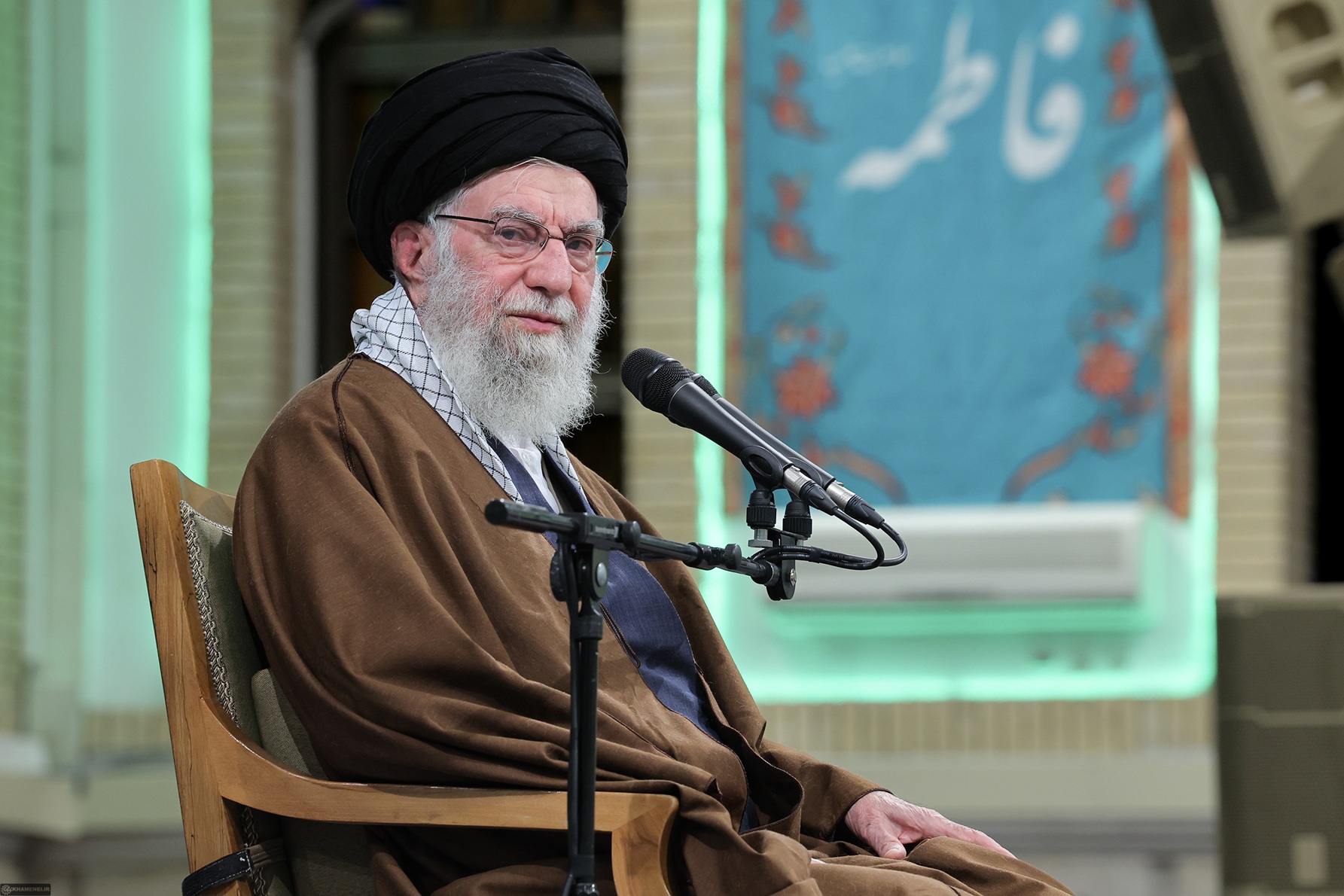
Negotiations with the United States—both as a path to lifting sanctions on Iran and, in particular, as a way to reduce the risk of another attack—remain a contentious issue in Iran’s domestic politics. As on other issues, the political camps are sharply divided and polarized. Washington has made it clear that it will return to talks only if Iran accepts three conditions: halting uranium enrichment, ending the arming of its proxies in the Middle East, and agreeing to restrictions on its missile program. Conversely, Iranian figures, mainly from the conservative camp (which in practice enjoys almost complete dominance in Tehran’s decision-making process), argue that the US approach does not allow for balanced and fair negotiations, as Foreign Minister Araghchi put it, and that talks are not meant to lead to following orders. Iran’s Supreme Leader, Ali Khamenei, summed up the situation when he stated in a television interview on November 27 that the Trump administration “is not worthy” of ties or cooperation with Tehran, and dismissed rumors that Iran had sent messages to Washington as a “pure lie.”
Various actors, mainly from the Gulf states, have sought to identify areas of flexibility in the positions of both sides that could pave the way for renewed negotiations. At this stage, however, there has been no breakthrough. The issue returned to the headlines ahead of Saudi Crown Prince Mohammed bin Salman’s visit to Washington on November 18, after he had received a message from the Iranian president. While the Iranian Foreign Ministry denies that the message addressed the possibility of resuming negotiations, a Majles member claimed that it did. Esmail Kowsari, a member of Iran’s National Security Committee, clarified that Iran has no need for mediators and that if it decides to negotiate, it will do so itself, without fear. Despite the uncertainty created by these statements, it appears that the question of mediation—whether by Qatar (considered close to envoy Steve Witkoff and President Trump), Oman, which mediated the prewar contacts in June, or Saudi Arabia—appears secondary to the central problem: the gap between the parties’ positions.
Meanwhile, senior Iranian military officials continue to escalate threats toward Israel as part of an organized effort to deter another Israeli strike. In addition to emphasizing the severe damage Israel suffered in the war, a recurring theme in their statements is that Iran is now better prepared and more heavily armed. Some, including the army commander, have even hinted that Iran might strike first if it concludes that Israel is on the verge of attacking.
Amid the extensive discussion of the recent war and the possibility of another round of fighting, Khamenei’s remarks stand out. He has claimed that Israel intended the war to weaken the regime and incite the Iranian public to rise against it and that this effort failed. Undoubtedly, undermining the regime’s stability is clearly Iran’s main fear. This fear stems partly from statements by Israeli officials early in the war, hinting at such an objective, and also from concern that Israel is planning another strike aimed directly at the regime. Against this backdrop, Iran has intensified efforts to mass produce missiles, while highlighting the damage they inflicted on Israel. Iranian officials also warn that in any future confrontation, Iran will launch a large number of advanced, highly destructive missiles at Israel.
Iran thus finds itself in a deadlock with no apparent exit, both in its relations with the IAEA and with the United States. On the one hand, Tehran appears to recognize that it cannot remain indefinitely without any oversight of its nuclear-related activities, and that every step it takes—even if it does not involve uranium enrichment—triggers speculation in Israel and the West and could be used against it. On the other hand, cooperation with the IAEA is a key bargaining chip in any negotiations through which Iran would seek a US guarantee that Israel will not attack it.
To this day, Tehran accuses the IAEA of publishing a report on the eve of the war that served as a central trigger for the attack. Another leverage point is Tehran’s continued membership in the NPT. This card has not yet been played, although Iran has threatened to withdraw from the treaty. Iran’s dilemma here is complex: Remaining in the NPT requires cooperation with inspections, yet the Majles has passed a law preventing such cooperation, and, in practice, no inspections are taking place. The IAEA director general has made it clear that the IAEA is losing its ability to verify the situation and therefore will not be able to declare that Iran’s nuclear program is intended for peaceful purposes or confirm that enriched material has not been diverted to unknown sites. At the same time, an Iranian withdrawal from the NPT would amount to an admission of a possible intent to move toward producing nuclear weapons on the basis of the enriched material still in its possession—an action that would expose Iran to military attack.
This situation cannot persist indefinitely. In the coming weeks and certainly within months, Tehran will be required to make decisions, no later than the next IAEA Board of Governors meeting in the first quarter of 2026. From President Trump’s perspective, the diplomatic track was and is the preferred option, and it does not appear that he is considering military moves—largely because, in his view, Iran’s nuclear program has been destroyed. For the European partners and the Gulf states as well, interest in renewing negotiations has only grown; they are seeking compromises that could enable a return to talks. Tehran, for its part, continues to stall in the hope of improving its terms. It may be assumed that only a new move by one of the sides—such as an Iranian announcement of withdrawal from the NPT, or alternatively a draft decision at the next Board of Governors meeting to transfer the issue to the UN Security Council—could open the way to renewed negotiations.