


Publications
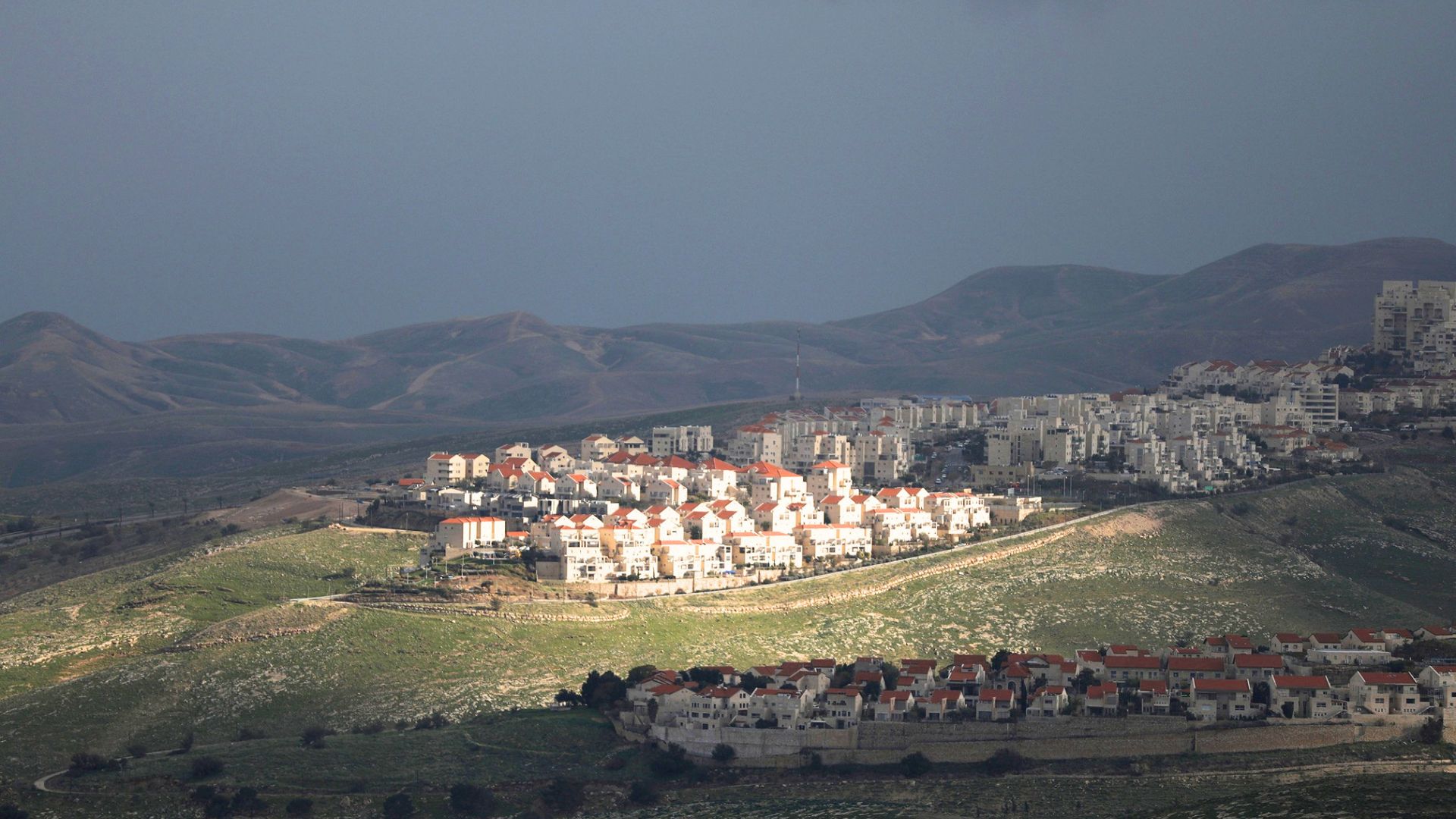
The publication of a tender to build 1,234 housing units in E1 crosses a threshold that Israeli governments have avoided for years, due to American and European opposition. What are the implications of this controversial move?
INSS Insight No. 2197, September 9, 2026
Follow us on GoogleThe publication of a tender for the construction of 1,234 housing units in E1 crosses a threshold that Israeli governments have avoided for years. Previous governments advanced plans for the area, but stopped short of the tender phase due to American and European opposition and the associated diplomatic costs. The current government has chosen to move toward implementing construction as part of its declared policy of establishing facts on the ground, aimed at eliminating the possibility of establishing a Palestinian state. The choice to do so this close to the elections, when construction remains a long way off and its implementation is far from guaranteed, underscores the gap between the government’s immediate political gain and the project’s strategic value, as well as the diplomatic price Israel is already paying for it. Israel has distinct strategic and security interests in E1 and the area east of Jerusalem, but realizing them requires a broad agreement framework. Unilaterally establishing facts on the ground narrows Israel’s room for maneuver in pursuing an agreement and leads it toward a diplomatic crisis. This comes without offering an alternative solution to the Palestinian issue, while deepening Israel’s commitment to the reality that will remain on the ground.
What is E1, and What Has Changed?
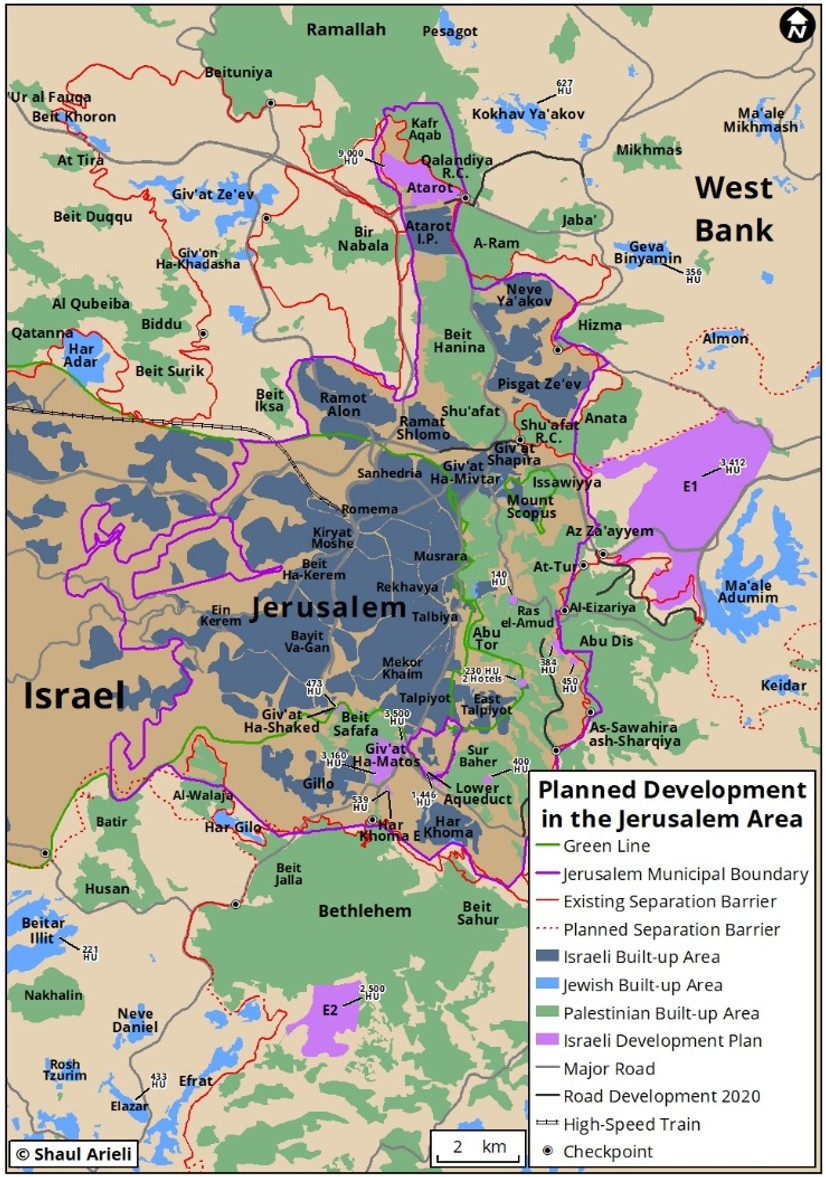
E1 (East 1) is one of the most sensitive and highly controversial areas in the West Bank. It comprises a defined area of roughly 12 square kilometers, stretching west of Ma'ale Adumim toward Jerusalem. The land falls within the municipal jurisdiction of Ma'ale Adumim, but remains largely open and undeveloped, with the exception of the headquarters of the Israel Police’s Judea and Samaria District. Most of the land has been declared state land by Israel, while additional sections were expropriated in the 1970s for the development of Ma’ale Adumim. Enclaves of privately owned Palestinian land remain within the area but are not included in the construction plans.
E1’s importance stems first and foremost from its location. It is located east of Jerusalem, adjacent to Route 1, which leads from Jerusalem to the Dead Sea and connects Jerusalem to Ma'ale Adumim. Israel seeks to use development in E1 to strengthen its hold on the area between Jerusalem and Ma’ale Adumim and its control over the area east of the capital, which is essential to its defense. The Palestinians and the international community regard the same area as a critical component of territorial contiguity between the northern and southern West Bank and of the connection between East Jerusalem and the territory of a future Palestinian state. Over the years, the strategic location of E1 has turned construction in the area into a focal point of diplomatic controversy between Israel and the United States, European nations, and Arab states.
Israeli planning in E1 began in the 1990s, aimed at expanding Ma'ale Adumim westward. Over the years, successive Israeli governments advanced plans for the area, froze and revived them, and moved them through various stages of the planning process. Yet they stopped short of the tender phase for residential construction, partly because of opposition and pressure from the United States and European countries. Approximately one year ago, two plans comprising 3,401 housing units were approved, and in August 2026, the Ministry of Construction and Housing issued a tender for the first time for the construction of 1,234 units.
The publication of the tender, however, does not mean that construction has begun. The deadline for submitting bids has been set for October 19, just one week before the elections, after which additional stages will be required before construction can commence. The immediate significance of the move lies in the crossing of a threshold that previous governments have avoided: transitioning from an approved plan to a tender process that brings construction closer to implementation.
International Opposition
The publication of the tender for construction in E1 triggered fierce international opposition. More than twenty Western countries, alongside the European Commission, condemned the move and called on Israel to reverse it. Concurrently, eight Arab and Islamic states published condemnations of their own. The United States, however, refrained from directly condemning the tender but reiterated its opposition in principle to Israeli annexation of the West Bank and emphasized that stability there serves both Israel’s security and the administration’s objectives in the region.
The breadth of this opposition reflects the particular international significance attributed to E1. For the international community, E1 represents more than another dispute over settlement construction; it is regarded as a key litmus test for the viability of the two-state solution.
At the heart of these statements is the impact of construction in E1 on Palestinian territorial contiguity and the connection between East Jerusalem and the rest of the West Bank. Western countries warn that construction will create a "wedge" that will disrupt the contiguity of Palestinian territory. The Arab and Islamic states, along with Turkey and Pakistan, also emphasize the harm to the link between the West Bank and East Jerusalem, the intended capital of a future Palestinian state based on the 1967 lines.
At the same time, there is fundamental legal opposition to the settlement policy itself. The statements emphasize that Israeli settlements in the West Bank are illegal and constitute a violation of international law and relevant UN resolutions. Arab and Islamic states present E1 as part of a broader policy of illegal annexation, which also impairs the Palestinian right to self-determination and threatens not only the two-state solution, but also regional stability and security.
Opposition to the construction is also tied to the situation in the West Bank. Western countries note that the move is liable to exacerbate the "severe instability in the West Bank," against the backdrop of "unprecedented levels" of settler violence and "severe restrictions" on the Palestinian economy. Arab and Islamic states likewise condemned "settler violence against the Palestinian people and their property," which they said was taking place "with the support of the Israeli occupation authorities."
The opposition extends beyond declarations and is accompanied by the threat of concrete measures. Western countries called on commercial companies not to participate in the tender, warning of legal and reputational consequences, including the risk of complicity in serious violations of international law. Arab and Islamic states expressed support for international measures, including sanctions against individuals and entities responsible for or assisting in illegal settlement-related activity, and called for an end to their support and funding. They further urged the UN Security Council, states, and international actors to take urgent and effective steps to halt the move and preserve the possibility of a Palestinian state.
Why is E1 Important to Israel?
From Israel’s perspective, E1’s significance stems from its strategic location between Jerusalem and Ma’ale Adumim, along the capital’s eastern envelope and on the axis leading to the Dead Sea and the Jordan Valley. Over the years, Israeli governments have sought to retain control over this area even under a future diplomatic agreement, while preserving Israel’s ability to shape its future development.
Construction in E1 is intended to strengthen Ma'ale Adumim and its connection to Jerusalem, establishing its status as part of the territory Israel seeks to retain under its sovereignty in a future agreement. This derives from a security interest in maintaining freedom of maneuver in Jerusalem's eastern envelope and along the corridor leading to the Dead Sea and the Jordan Valley. From Israel's point of view, this is not the establishment of a new, isolated settlement, but rather the development of an area adjacent to Ma'ale Adumim and within its municipal jurisdiction, aimed at creating settlement continuity between Ma'ale Adumim and Jerusalem. At the same time, construction is intended to restrict the expansion of Palestinian building in Area C and the establishment of Palestinian territorial contiguity between Jerusalem and Ma'ale Adumim, which would reduce Israel's ability to shape the area in the future.
The current government, however, ascribes a different purpose to these considerations. Minister Bezalel Smotrich, who oversees the Settlement Administration in the Ministry of Defense, presents E1 as a means of "eliminating the idea of a Palestinian state," thereby redefining the political objective of the construction. E1 is no longer presented as an asset Israel seeks to retain ahead of a future diplomatic settlement, but as a tool meant to lock in control over the territory and prevent such an arrangement altogether. According to Smotrich, E1 forms part of a "de facto sovereignty plan" encompassing settlement expansion, the regulation of outposts, and the application of sovereignty to Area C at a minimum.
What Does E1 Change in Practice?
In practice, construction in E1 would not “split the West Bank in two” or, on its own, make a Palestinian state impossible. E1 is not the sole transit route between the northern and southern West Bank, and transportation and traffic solutions exist from Ramallah to East Jerusalem and Bethlehem. Even today, part of the traffic between the Ramallah area and Bethlehem bypasses Jerusalem through Al-Azariya, Abu Dis, and Wadi Nar, rather than through E1. Over the years, additional transportation alternatives have been discussed to allow connectivity between the two parts of the West Bank.
However, transportation contiguity is not equivalent to sovereign contiguity. The ability to drive from Ramallah to Bethlehem is not the same as continuous Palestinian control over the territory and infrastructure connecting them. Construction will expand the Israeli presence and reduce the area available for Palestinian territorial contiguity. At the local level, it will complicate access to privately owned Palestinian land and to grazing grounds used by Bedouin communities, restrict the expansion potential of Arab neighborhoods in East Jerusalem, and increase reliance on transportation routes and infrastructure under Israeli control.
Conversely, the claim that construction in E1 would render the two-state solution impossible is also far-reaching. An Israeli presence does not necessarily preclude separation into two states. Even if the plan is implemented, it remains theoretically possible to draw a future border. In previous permanent settlement frameworks, including the Clinton Parameters in 2000, the Taba talks in 2001, and the Olmert proposal in 2008, the possibility that Ma'ale Adumim would remain under Israeli sovereignty was considered within the framework of border adjustments and land swaps.
From Israel’s perspective as well, a distinction must be drawn between the strategic importance of the area and the need to build there. Israeli interests explain the significance of E1, but they do not in themselves mandate construction there, and certainly not at the present timing. Construction would deepen Israel's hold east of the city and strengthen the connection and access between Ma'ale Adumim and Jerusalem, but it would not create seamless settlement continuity between the two. Palestinian settlements will remain in the area, including Anata, Az-Za’ayyem, Abu Dis, and Al-Azariya. Nor does the desire to retain Ma’ale Adumim under Israeli sovereignty necessitate construction in E1. For years, Israel maintained its freedom of action and its security interests in the area without executing the construction plan.
The Strategic Significance for Israel
The controversy surrounding construction in E1 illustrates the gap between the territorial gain Israel attributes to the move and its actual strategic value.
This gap is particularly pronounced given the current timing. The government has chosen to advance E1 even though the next government will determine whether the process continues. At this stage, the move’s values are primarily political: it allows the government to claim an achievement ahead of the elections and raises the political cost of reversing course afterward.
The move makes clear that Israel has ceased thinking in strategic and diplomatic terms, with all its actions aimed at establishing facts on the ground to neutralize the capacity for future territorial and demographic separation from the Palestinians. Yet by doing so, Israel does not resolve the Palestinian issue; rather, it deepens its commitment to it and its responsibility for the reality that will remain on the ground. Israel will still be required to contend with questions that construction in E1 does not solve: how it intends to sustain long-term control alongside a large Palestinian population, what the status of the territory and its residents will be, who will be responsible for the Palestinian population’s needs, and what will happen if the Palestinian Authority collapses. Therefore, if E1 is part of a policy whose declared objective is to "eliminate" the possibility of a Palestinian state, Israel must define what is intended to replace it. Preventing a single solution does not in itself constitute a strategy.
The fact that Israeli governments attributed importance to E1 for decades yet nevertheless chose not to proceed with construction demonstrates that the decision was never merely territorial, but diplomatic as well. The current government assigns decisive weight to the territorial interest, even at the cost of harming Israel's broader diplomatic and strategic interests.
Construction remains a long way from implementation, if it ever reaches that stage, yet Israel is already paying the price: confrontation with key partners, erosion of the diplomatic capital it needs in other arenas, and mounting international pressure to advance concrete measures against it over its West Bank policy. This comes precisely as the Palestinian arena is deteriorating and fears of escalation are rising.
The risk in advancing construction in E1 is not only in the diplomatic and security cost Israel will be required to bear, but also in the possibility that it will pay those costs for a move that entrenches a territorial and civil reality that will be harder to alter, narrows its room for maneuver, and deepens its commitment to the Palestinian issue rather than attempting to resolve it.
Dekel was the head of the negotiating team with the Palestinians under Prime Minister Ehud Olmert during the 2007-8 Annapolis process.