


Developments in the Global Oil Market: Strategic Significance | INSS
go to header go to content go to footer go to search
INSS logo The Institute for National Security Studies, Strategic, Innovative, Policy-Oriented Research, go to the home page
INSS
Tel Aviv University logo - beyond an external website, opens on a new page
  • Campus
  • Contact
  • עברית
  • Support Us
  • Research
    • Topics
      • Israel and the Global Powers
        • Israel-United States Relations
        • Glazer Israel-China Policy Center
        • Russia
        • Europe
        • Antisemitism and Delegitimization
      • Iran and the Shi'ite Axis
        • The Campaign Against Iran and the Shiite Axis
        • Iran
        • Lebanon and Hezbollah
        • Syria
        • Yemen and the Houthi Movement
        • Iraq and the Iraqi Shiite Militias
      • Conflict to Agreements
        • Israeli-Palestinian Relations
        • Hamas and the Gaza Strip
        • Peace Agreements and Normalization in the Middle East
        • Saudi Arabia and the Gulf States
        • Turkey
        • Egypt
        • Jordan
      • Israel’s National Security Policy
        • Military and Strategic Affairs
        • Israel's Security Strategy
        • Societal Resilience and the Israeli Society
        • Jewish-Arab Relations in Israel
        • Climate, Infrastructure and Energy
        • Terrorism and Low Intensity Conflict
      • Cross-Arena Research
        • Data Analytics Center
        • Law and National Security
        • Advanced Technologies and National Security
        • Foreign Information Manipulation and Interference
        • Economics and National Security
    • Projects
      • Preventing the Slide into a One-State Reality
      • India-Middle East-Europe Economic Corridor (IMEC)
  • Publications
    • -
      • All Publications
      • INSS Insight
      • Policy Research and Papers
      • Special Publication
      • Strategic Assessment
      • Technology Platform
      • Memoranda
      • Posts
      • Books
      • Archive
  • Database
    • Surveys
    • Spotlight
    • Maps
    • Dashboards
  • Events
  • Team
  • About
    • Vision and Mission
    • History
    • Research Disciplines
    • Chairman of the Board
    • Board of Directors
    • Fellowship and Prizes
    • Annual Reports
    • Internships
  • Media
    • Communications
    • Video gallery
    • Press Releases
  • Podcast
  • Newsletter
  • Campus
Search in site
  • Research
    • Topics
    • Israel and the Global Powers
    • Israel-United States Relations
    • Glazer Israel-China Policy Center
    • Russia
    • Europe
    • Antisemitism and Delegitimization
    • Iran and the Shi'ite Axis
    • The Campaign Against Iran and the Shiite Axis
    • Iran
    • Lebanon and Hezbollah
    • Syria
    • Yemen and the Houthi Movement
    • Iraq and the Iraqi Shiite Militias
    • Conflict to Agreements
    • Israeli-Palestinian Relations
    • Hamas and the Gaza Strip
    • Peace Agreements and Normalization in the Middle East
    • Saudi Arabia and the Gulf States
    • Turkey
    • Egypt
    • Jordan
    • Israel’s National Security Policy
    • Military and Strategic Affairs
    • Israel's Security Strategy
    • Societal Resilience and the Israeli Society
    • Jewish-Arab Relations in Israel
    • Climate, Infrastructure and Energy
    • Terrorism and Low Intensity Conflict
    • Cross-Arena Research
    • Data Analytics Center
    • Law and National Security
    • Advanced Technologies and National Security
    • Foreign Information Manipulation and Interference
    • Economics and National Security
    • Projects
    • Preventing the Slide into a One-State Reality
    • India-Middle East-Europe Economic Corridor (IMEC)
  • Publications
    • All Publications
    • INSS Insight
    • Policy Research and Papers
    • Special Publication
    • Strategic Assessment
    • Technology Platform
    • Memoranda
    • Posts
    • Books
    • Archive
  • Database
    • Surveys
    • Spotlight
    • Maps
    • Dashboards
  • Events
  • Team
  • About
    • Vision and Mission
    • History
    • Research Disciplines
    • Chairman of the Board
    • Board of Directors
    • Fellowship and Prizes
    • Internships
    • Annual Reports
    • Privacy Policy and Terms of Use
  • Media
    • Communications
    • Video gallery
    • Press Releases
  • Podcast
  • Newsletter
  • Campus
  • Contact
  • עברית
  • Support Us
bool(false)

Publications

Home Publications INSS Insight Developments in the Global Oil Market: Strategic Significance

Developments in the Global Oil Market: Strategic Significance

INSS Insight No. 662, February 8, 2015

Follow us on Google
עברית
Shmuel Even
Global oil prices have fallen dramatically over the past six months, following an excess of supply over demand. The drop in prices is another blow to Iran and to Russia, which are both under economic sanctions. Iran is accusing Saudi Arabia of conducting an oil war, and is threatening to respond to it. These threats highlight the danger of the Iranian nuclear process to the stability of the Persian Gulf in particular, and to the global energy market in general. The economic pressure on Iran, however, is likely to constitute an opportunity for the West to improve the terms of an agreement on the nuclear question.

Since mid-2014, global oil prices have fallen dramatically. The price of an American WTI barrel of oil was $44 in late January 2015, compared with $105 in late June 2014. At the previous low point in mid-February 2009, the price of a barrel was $34, compared with a high of $140 per barrel in late June 2008 and a low of $18 a barrel in mid-November 2001. The price has recovered somewhat in recent days (as of February 6, 2015, the price of a barrel of oil was $53), but in any case, it is clear that the price of oil is highly variable and hard to predict.

The direct reason for the slide in oil prices is that supply is in excess of demand. Over the past five years, while Europe has had trouble emerging from the economic crisis and China’s rapid growth has slowed (factors that moderate global demand for oil), global oil production grew at a faster pace than consumption.  The sharp increase in American oil production stems from shale oil production. The increase in global oil production compensates for the decline in oil production by countries such as Libya, whose internal situation is unstable, and Iran, which is subject to the Western-imposed sanctions.

According to January 2015 OPEC figures, based on various sources, in the years 2009-2014 Iran’s production of crude oil fell from 3.75 million barrels of oil a day to 2.76 million barrels a day, while Iraq’s production (despite its difficult internal situation) rose from 2.42 million barrels a day to 3.66 million barrels a day. Production also rose sharply in Saudi Arabia, Kuwait, and the United Arab Emirates. Oil production in Libya plummeted from 1.56 million barrels a day to 0.44 million barrels a day. The stronger American dollar also contributed to a drop in the dollar-denominated price.

The conflict of interest between the world’s two largest groups of oil producers had a substantial effect on the situation in the oil market. One group, which includes Saudi Arabia, Kuwait, and the United Arab Emirates, holds large oil and foreign currency reserves, and overall is in a good position. Saudi Arabia, for example, has about 16 percent of the world’s proven oil reserves, which will last for at least 63 years at the current rate of production. The states in this group have an interest in maximizing their oil income in the long term, and they want moderate oil prices that will halt the development of alternatives to the oil that they produce. In contrast, the oil producers suffering from economic difficulties, including Russia, Iraq, Iran, and Venezuela, have an interest in acquiring as much income as they can now, which demands high oil prices on the global market, even if this encourages alternatives to oil in the long term. The decision by OPEC in November 2014 against cutting oil production by its members reflected the interests of Saudi Arabia and its allies.

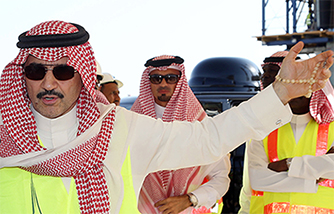
On January 11, 2014, Saudi Prince Alwaleed bin Talal attributed his country’s decision to not reduce oil production to economic considerations and lack of trust between the oil producers. He stated that had Saudi Arabia cut production by 1-2 barrels of oil a day, other countries would have increased their production at its expense. He added that if an agreement is reached to cut production, some countries would lie about their production. Bin Talal predicted that a price of $100 per barrel would not recur. Note that the death of Saudi Arabian King Abdullah on January 23, 2015 did not affect the global oil industry.

In general, low oil prices have a positive effect on global economic growth, since most countries are energy importers. The drop in prices is especially beneficial for most European countries and Japan, which are subject to economic difficulties, and for countries like China, where continued rapid economic growth is a strategic goal. At the same time, low prices encourage the demand for oil, slow development of alternative energy, and reduce investment in the production of expensive oil (a trend that has already begun), so that in the future, the price of oil will again soar and ultimately drop again, until in the long term cheap alternatives to oil are found.

A state of low oil prices, insofar as it continues, is liable to have a negative effect on countries conducting large scale trading with the oil countries and exporting labor to them. Estimates are that more than three million Egyptians, 600,000 Jordanians, 300,000 Palestinians from the West Bank and the Gaza Strip, and many Syrians and Lebanese are working in the Persian Gulf. In 2012 the monetary transfers by these workers were estimated around $15 billion by Egyptians, $5 billion by Jordanians, and $350 million for the Gaza Strip.

Strategic Significance

Insofar as the low oil prices continue, the major oil producers will have to adapt their spending to the new situation. This process is liable to affect the internal stability of producers suffering from economic difficulties. The other side of the coin is that Iran will have fewer economic resources available for aid to terrorist organizations and subversion in the Middle East. At the same time, this activity will likely not cease, and may even become more extreme in order to obtain more influence for less money.

The decline of oil prices has heightened the tension between Iran and Saudi Arabia. Accusing Riyadh of waging an oil war against it, Iran has threatened to attack the kingdom. On December 10, 2014, Iranian President Hassan Rouhani, hinting at Saudi Arabia, said, “The Iranian people will not forget this treason, and will respond to it.” A website associated with the Revolutionary Guards explained that Saudi Arabia was trying to compel Iran to accept a bad nuclear deal, pressure Russia and Iran to abandon their positions on Syria, and keep the global oil market under its control. The tension between Saudi Arabia and Iran may develop into a violent conflict, even though it is currently in Iran’s interest to avoid incidents that cast it in a bad light, at least until an agreement satisfactory to it on the nuclear issue is reached. It therefore appears that Iran’s main tool against Saudi Arabia is subversion, including from Yemen, Saudi Arabia’s back door. Iranian subversion is likewise liable be discovered as targeting other oil producers in the Persian Gulf.

Developments in the oil market are relevant to the decision point in the nuclear crisis with Iran. Iran’s threats against Saudi Arabia and its involvement in subversion in the Persian Gulf underscore the risk posed by Iran to stability in the region, which is the world’s key energy area. Nuclear weapons capability, if achieved, will give Iran deterrence that will enable it to dictate global oil prices, as Iraqi ruler Saddam Hussein tried to do before he attained such capability. Through control of oil, Iran can misuse its influence on many countries in both the East and West that are dependent on imported oil from the Persian Gulf. A hint of how Iran operates through a combination of oil, terrorism, and foreign policy emerges in the Argentinian affair. Prosecutor Alberto Nisman, who was found dead in his apartment in mysterious circumstances, asserted that Iran had made a secret deal with the President of Argentina, giving senior Iranian officials immunity from any investigation of their involvement in the 1994 terrorist attack on the Jewish community center, in exchange for cheap oil prices. Eighty-five people were killed in the attack, and hundreds were injured.

In order to prevent Iranian hegemony, and in view of threats from Iran pertaining to oil, which is the source of Saudi Arabia’s power, the kingdom is likely to seek to attain its own nuclear weapons capability, so that there will be “nuclear umbrellas” above the Persian Gulf, where the world’s largest oil reserves are located. The US is moving toward energy independence, but this development, if it occurs, will have a negative effect on its status as a superpower, because it will detract from its influence on those who import oil from the Persian Gulf.

At the same time, the severe economic crisis in Iran is heightening the internal pressure in the country, which should help the powers negotiating with Iran to pressure Tehran to agree to terms that will greatly increase its distance from the bomb.
The opinions expressed in INSS publications are the authors’ alone.
Publication Series INSS Insight
TopicsClimate, Infrastructure and EnergyIran
עברית

Events

All events
Israel’s National Security Conference
27 July, 2026
10:00 - 14:00

Related Publications

All publications
REUTERS (modified by INSS)
The Day After Hormuz: Can the Gulf Free Itself from the Chokepoint?
Is a True Alternative to the Strait of Hormuz Attainable?
16/09/26
Shutterstock
Red Sun: Solar Energy as China's Strategic Tool in the Middle East
Are Chinese investments in solar energy in the Middle East a response to market demand or part of a calculated geopolitical strategy, and what is their significance for Israel?
07/06/26
Shutterstock
Securing Israel’s Electricity System: Renewable Energy, Decentralization, and Climate Security
Over the past decade, the amount of natural gas in electricity generation in Israel increased significantly, while the use of coal and diesel declined. Alongside the economic and environmental advantages, the use of natural gas raises new issues of electricity security and systemic robustness, because it is supplied through only two pipelines from the offshore reservoirs to the coast, without any storage capacity within Israel. Moreover, gas-based production is concentrated at a small number of production sites, and the transmission of electricity to consumers depends on the reliability of the national transmission system. This dependence on a few sources and on a limited transmission route creates a growing risk to the reliability of supply, particularly in security or climate emergencies.
28/12/25

Stay up to date

Registration was successful! Thanks.
  • Research

    • Topics
      • Israel and the Global Powers
      • Israel-United States Relations
      • Glazer Israel-China Policy Center
      • Russia
      • Europe
      • Antisemitism and Delegitimization
      • Iran and the Shi'ite Axis
      • The Campaign Against Iran and the Shiite Axis
      • Iran
      • Lebanon and Hezbollah
      • Syria
      • Yemen and the Houthi Movement
      • Iraq and the Iraqi Shiite Militias
      • Conflict to Agreements
      • Israeli-Palestinian Relations
      • Hamas and the Gaza Strip
      • Peace Agreements and Normalization in the Middle East
      • Saudi Arabia and the Gulf States
      • Turkey
      • Egypt
      • Jordan
      • Israel’s National Security Policy
      • Military and Strategic Affairs
      • Israel's Security Strategy
      • Societal Resilience and the Israeli Society
      • Jewish-Arab Relations in Israel
      • Climate, Infrastructure and Energy
      • Terrorism and Low Intensity Conflict
      • Cross-Arena Research
      • Data Analytics Center
      • Law and National Security
      • Advanced Technologies and National Security
      • Foreign Information Manipulation and Interference
      • Economics and National Security
    • Projects
      • Preventing the Slide into a One-State Reality
      • India-Middle East-Europe Economic Corridor (IMEC)
  • Publications

    • All Publications
    • INSS Insight
    • Policy Research and Papers
    • Special Publication
    • Strategic Assessment
    • Technology Platform
    • Memoranda
    • Database
    • Posts
    • Books
    • Archive
  • About

    • Vision and Mission
    • History
    • Research Disciplines
    • Chairman of the Board
    • Board of Directors
    • Fellowship and Prizes
    • Internships
    • Annual Reports
    • Support
    • Privacy Policy and Terms of Use
  • Media

    • Communications
    • Video Gallery
    • Press Release
    • Podcast
  • Home

  • Events

  • Database

  • Team

  • Contact

  • Newsletter

  • עברית

INSS logo The Institute for National Security Studies, Strategic, Innovative, Policy-Oriented Research, go to the home page
40 Haim Levanon St. Tel Aviv, 6997556 Israel | Tel 03-640-0400 | Fax 03-744-7590 |
Developed by Daat ,Yael Group.
Accessibility Statement
This site is protected by reCAPTCHA and the Google Privacy Policy and Terms of Service apply.