


The 1967 War Model: Changes and Challenges | INSS
go to header go to content go to footer go to search
INSS logo The Institute for National Security Studies, Strategic, Innovative, Policy-Oriented Research, go to the home page
INSS
Tel Aviv University logo - beyond an external website, opens on a new page
  • Campus
  • Contact
  • עברית
  • Support Us
  • Research
    • Topics
      • Israel and the Global Powers
        • Israel-United States Relations
        • Glazer Israel-China Policy Center
        • Russia
        • Europe
        • Antisemitism and Delegitimization
      • Iran and the Shi'ite Axis
        • The Campaign Against Iran and the Shiite Axis
        • Iran
        • Lebanon and Hezbollah
        • Syria
        • Yemen and the Houthi Movement
        • Iraq and the Iraqi Shiite Militias
      • Conflict to Agreements
        • Israeli-Palestinian Relations
        • Hamas and the Gaza Strip
        • Peace Agreements and Normalization in the Middle East
        • Saudi Arabia and the Gulf States
        • Turkey
        • Egypt
        • Jordan
      • Israel’s National Security Policy
        • Military and Strategic Affairs
        • Societal Resilience and the Israeli Society
        • Jewish-Arab Relations in Israel
        • Climate, Infrastructure and Energy
        • Terrorism and Low Intensity Conflict
      • Cross-Arena Research
        • Data Analytics Center
        • Law and National Security
        • Advanced Technologies and National Security
        • Foreign Information Manipulation and Interference
        • Economics and National Security
    • Projects
      • Preventing the Slide into a One-State Reality
      • India-Middle East-Europe Economic Corridor (IMEC)
  • Publications
    • -
      • All Publications
      • INSS Insight
      • Policy Research and Papers
      • Special Publication
      • Strategic Assessment
      • Technology Platform
      • Memoranda
      • Posts
      • Books
      • Archive
  • Database
    • Surveys
    • Spotlight
    • Maps
    • Dashboards
  • Events
  • Team
  • About
    • Vision and Mission
    • History
    • Research Disciplines
    • Chairman of the Board
    • Board of Directors
    • Fellowship and Prizes
    • Annual Reports
    • Internships
  • Media
    • Communications
    • Video gallery
    • Press Releases
  • Podcast
  • Newsletter
  • Campus
Search in site
  • Research
    • Topics
    • Israel and the Global Powers
    • Israel-United States Relations
    • Glazer Israel-China Policy Center
    • Russia
    • Europe
    • Antisemitism and Delegitimization
    • Iran and the Shi'ite Axis
    • The Campaign Against Iran and the Shiite Axis
    • Iran
    • Lebanon and Hezbollah
    • Syria
    • Yemen and the Houthi Movement
    • Iraq and the Iraqi Shiite Militias
    • Conflict to Agreements
    • Israeli-Palestinian Relations
    • Hamas and the Gaza Strip
    • Peace Agreements and Normalization in the Middle East
    • Saudi Arabia and the Gulf States
    • Turkey
    • Egypt
    • Jordan
    • Israel’s National Security Policy
    • Military and Strategic Affairs
    • Societal Resilience and the Israeli Society
    • Jewish-Arab Relations in Israel
    • Climate, Infrastructure and Energy
    • Terrorism and Low Intensity Conflict
    • Cross-Arena Research
    • Data Analytics Center
    • Law and National Security
    • Advanced Technologies and National Security
    • Foreign Information Manipulation and Interference
    • Economics and National Security
    • Projects
    • Preventing the Slide into a One-State Reality
    • India-Middle East-Europe Economic Corridor (IMEC)
  • Publications
    • All Publications
    • INSS Insight
    • Policy Research and Papers
    • Special Publication
    • Strategic Assessment
    • Technology Platform
    • Memoranda
    • Posts
    • Books
    • Archive
  • Database
    • Surveys
    • Spotlight
    • Maps
    • Dashboards
  • Events
  • Team
  • About
    • Vision and Mission
    • History
    • Research Disciplines
    • Chairman of the Board
    • Board of Directors
    • Fellowship and Prizes
    • Internships
    • Annual Reports
    • Privacy Policy and Terms of Use
  • Media
    • Communications
    • Video gallery
    • Press Releases
  • Podcast
  • Newsletter
  • Campus
  • Contact
  • עברית
  • Support Us
bool(false)

Publications

Home Publications Chapters The 1967 War Model: Changes and Challenges

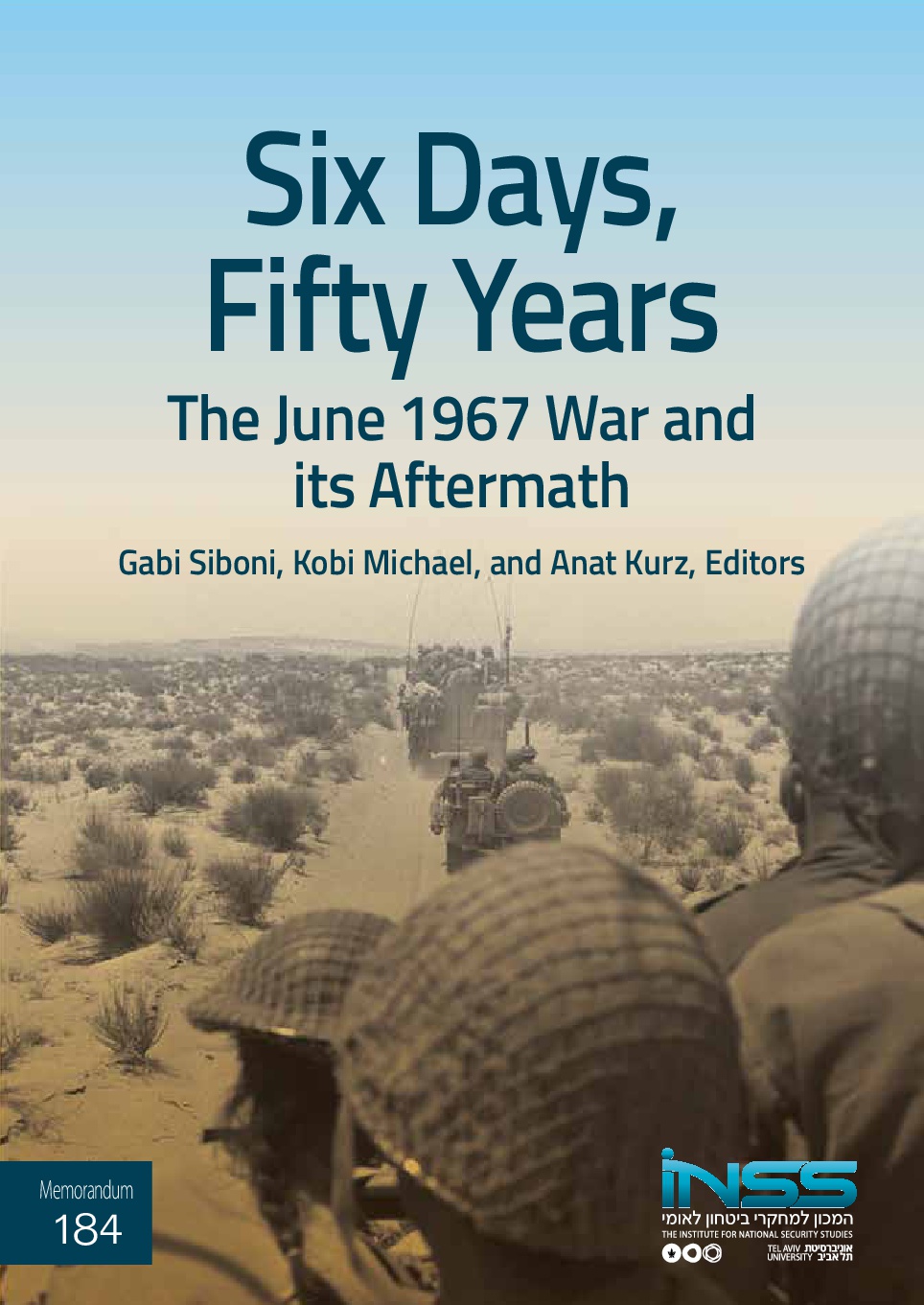
The 1967 War Model: Changes and Challenges

Tel Aviv: The Institute for National Security Studies, 2018

Follow us on Google
עברית
Avi Kober

More than just another war, the Six Day War was a major turning point in Israeli history. This essay does not discuss the war’s significance or its particular implications, such as the internal debate in Israel over the political, ideological, and strategic importance of the territories, alternative models of a negotiated settlement with the Palestinians, or the ideological activism that developed within the religious Zionist movement after 1967. Rather, it will look at a number of turning points that occurred in the military-strategic domain following the war and the differences in circumstances between 1967 and today.


The first part of the essay presents three turning points generated by the Six Day War: the beginning of the era of firepower, which subsequently became increasingly dominant and had implications for the relative weights of defense and offense and the prospects for battlefield decision; the negative impact of the spectacular success on the battlefield, the euphoria, and the subsequent complacency on Israeli military thought; and the first Arab-Israeli war conducted under the nuclear shadow. The second part of the essay discusses some of the differences between1967 and today, which have led to military-strategic challenges that likely did not even occur to anyone in 1967. The first is derived from the change in non-state actors, and in particular, the introduction of hybrid actors. The second arises from post-modern reality and constraints, among them: post heroic warfare, with its two main rules of avoiding casualties to one’s own troops, and avoiding the killing of enemy civilians; cyber warfare, which at the moment exists alongside conventional warfare but has revolutionary potential; strategic thinking that has abandoned the imperative to achieve battlefield decision via physical means and instead emphasizes the image of decision; and the gradual transformation of the IDF from the modern army of 1967 to a post-modern army.


The opinions expressed in INSS publications are the authors’ alone.
Publication Series Chapters
TopicsMilitary and Strategic AffairsSocietal Resilience and the Israeli Society
עברית

Events

All events
Israel’s National Security Conference
27 July, 2026
10:00 - 14:00

Related Publications

All publications
REUTERS and U.S. Air Force photo by Master Sgt. Donald R. Allen (modified by INSS)
The Engine and F-35 Aircraft Deal for Turkey: Implications for the Regional and Global Balance of Power
The current U.S. administration is advancing a major deal, valued at over $700 million, to sell F110 engines to Turkey for its KAAN aircraft project. Despite the administration’s attempts to bypass congressional barriers, this move is not an isolated event; rather, it is a strategic accelerator intended to pave the way for Ankara’s full return to the F-35 program. While Washington’s rationale seeks to preserve Turkey as an anchor within NATO, in practice, it creates a serious dilemma and presents a weighty, threefold strategic risk: Undermining NATO from within: Empowering an actor that is engaged in aggressive competition against Western allies (such as Greece) and is entrenching a defiant military presence in Cyprus. Fueling Regional Friction: Granting legitimacy to a competitive power that provides a safe haven for Hamas and supports the al-Sharaa regime in Syria. Creating a Systemic Risk to the Global F-35 Network: Deploying 5th-generation capabilities in proximity to Russian S-400 systems risks compromising and cracking the information security of the platform as a whole. This threat is not limited to the erosion of Israel’s qualitative edge or the exposure of its defense industries; it constitutes a direct threat to every country in the world equipped with the F-35, alongside concerns over the possible proliferation of KAAN aircraft to additional militaries across the Sunni sphere.
15/07/26
Generated with AI
Time to Break the Strategic Limbo: Israel’s Core Challenge
Israel finds itself in a continuous stagnation, wherein impressive tactical military achievements are not translating into political and strategic victory. How can this 'limbo' be resolved across the various fronts?
05/07/26
REUTERS
Alternatives for the Gaza Strip Following the Campaign Against Iran
As the campaign against Iran winds down, attention is expected to return to the Gaza Strip. In the meantime, Hamas is exploiting the strategic vacuum to rehabilitate its governance and military capabilities. Simultaneously, the Trump framework remains stalled, and the “Board of Peace” faces professional, operational, and budgetary difficulties in advancing its declared objectives. The issue of demilitarization remains trapped between Israel’s demand for the complete and immediate disarmament of Hamas and the organization’s stalling tactics. Israel faces three main alternatives: (1) Renewal of efforts to fully implement the Trump framework across the Strip, a course that carries the risk of “mock demilitarization” and depends on Hamas’s consent; (2) Gradual stabilization and reconstruction of areas cleared of Hamas while continuing to erode its control in areas still under its rule. This option is vulnerable to violent disruption and could entrench the Strip’s division; (3) A return to war and the reoccupation of the Gaza Strip, which would entail extremely heavy military, economic, and diplomatic costs for Israel. The key recommendation is to avoid perpetuating the status quo, which establishes Hamas’s rule, and instead adopt a proactive approach. Israel should allow the implementation of the Mladenov framework for gradual demilitarization, beginning with heavy weapons, while coordinating with the Trump administration regarding scenarios that would justify use of force. If Hamas obstructs the process, Israel should implement a differential alternative: the entry of a civilian committee and Palestinian police into “green zones” cleared of Hamas (alongside increasing Israeli security responsibility modeled on Judea and Samaria). Simultaneously, Hamas’s capabilities and governance in the “red zone” should be systematically degraded, including the gradual erosion of its territorial control. The alternative of returning to war and military occupation should remain a last-resort alternative, contingent on the formulation of an exit strategy and a designated body to assume civilian responsibility.
10/06/26

Stay up to date

Registration was successful! Thanks.
  • Research

    • Topics
      • Israel and the Global Powers
      • Israel-United States Relations
      • Glazer Israel-China Policy Center
      • Russia
      • Europe
      • Antisemitism and Delegitimization
      • Iran and the Shi'ite Axis
      • The Campaign Against Iran and the Shiite Axis
      • Iran
      • Lebanon and Hezbollah
      • Syria
      • Yemen and the Houthi Movement
      • Iraq and the Iraqi Shiite Militias
      • Conflict to Agreements
      • Israeli-Palestinian Relations
      • Hamas and the Gaza Strip
      • Peace Agreements and Normalization in the Middle East
      • Saudi Arabia and the Gulf States
      • Turkey
      • Egypt
      • Jordan
      • Israel’s National Security Policy
      • Military and Strategic Affairs
      • Societal Resilience and the Israeli Society
      • Jewish-Arab Relations in Israel
      • Climate, Infrastructure and Energy
      • Terrorism and Low Intensity Conflict
      • Cross-Arena Research
      • Data Analytics Center
      • Law and National Security
      • Advanced Technologies and National Security
      • Foreign Information Manipulation and Interference
      • Economics and National Security
    • Projects
      • Preventing the Slide into a One-State Reality
      • India-Middle East-Europe Economic Corridor (IMEC)
  • Publications

    • All Publications
    • INSS Insight
    • Policy Research and Papers
    • Special Publication
    • Strategic Assessment
    • Technology Platform
    • Memoranda
    • Database
    • Posts
    • Books
    • Archive
  • About

    • Vision and Mission
    • History
    • Research Disciplines
    • Chairman of the Board
    • Board of Directors
    • Fellowship and Prizes
    • Internships
    • Annual Reports
    • Support
    • Privacy Policy and Terms of Use
  • Media

    • Communications
    • Video Gallery
    • Press Release
    • Podcast
  • Home

  • Events

  • Database

  • Team

  • Contact

  • Newsletter

  • עברית

INSS logo The Institute for National Security Studies, Strategic, Innovative, Policy-Oriented Research, go to the home page
40 Haim Levanon St. Tel Aviv, 6997556 Israel | Tel 03-640-0400 | Fax 03-744-7590 |
Developed by Daat ,Yael Group.
Accessibility Statement
This site is protected by reCAPTCHA and the Google Privacy Policy and Terms of Service apply.