The Reformists in Iran: Between Conservatives and Subversives | INSS
go to header go to content go to footer go to search
INSS logo The Institute for National Security Studies, Strategic, Innovative, Policy-Oriented Research, go to the home page
INSS
Tel Aviv University logo - beyond an external website, opens on a new page
  • Campus
  • Contact
  • עברית
  • Support Us
  • Research
    • Topics
      • Israel and the Global Powers
        • Israel-United States Relations
        • Glazer Israel-China Policy Center
        • Russia
        • Europe
        • Antisemitism and Delegitimization
      • Iran and the Shi'ite Axis
        • Operation Roaring Lion
        • Iran
        • Lebanon and Hezbollah
        • Syria
        • Yemen and the Houthi Movement
        • Iraq and the Iraqi Shiite Militias
      • Conflict to Agreements
        • Israeli-Palestinian Relations
        • Hamas and the Gaza Strip
        • Peace Agreements and Normalization in the Middle East
        • Saudi Arabia and the Gulf States
        • Turkey
        • Egypt
        • Jordan
      • Israel’s National Security Policy
        • Military and Strategic Affairs
        • Societal Resilience and the Israeli Society
        • Jewish-Arab Relations in Israel
        • Climate, Infrastructure and Energy
        • Terrorism and Low Intensity Conflict
      • Cross-Arena Research
        • Data Analytics Center
        • Law and National Security
        • Advanced Technologies and National Security
        • Foreign Information Manipulation and Interference
        • Economics and National Security
    • Projects
      • Preventing the Slide into a One-State Reality
      • India-Middle East-Europe Economic Corridor (IMEC)
  • Publications
    • -
      • All Publications
      • INSS Insight
      • Policy Research and Papers
      • Special Publication
      • Strategic Assessment
      • Technology Platform
      • Memoranda
      • Posts
      • Books
      • Archive
  • Database
    • Surveys
    • Spotlight
    • Maps
    • Dashboards
  • Events
  • Team
  • About
    • Vision and Mission
    • History
    • Research Disciplines
    • Chairman of the Board
    • Board of Directors
    • Fellowship and Prizes
    • Annual Reports
    • Internships
  • Media
    • Communications
    • Video gallery
    • Press Releases
  • Podcast
  • Newsletter
  • Campus
Search in site
  • Research
    • Topics
    • Israel and the Global Powers
    • Israel-United States Relations
    • Glazer Israel-China Policy Center
    • Russia
    • Europe
    • Antisemitism and Delegitimization
    • Iran and the Shi'ite Axis
    • Operation Roaring Lion
    • Iran
    • Lebanon and Hezbollah
    • Syria
    • Yemen and the Houthi Movement
    • Iraq and the Iraqi Shiite Militias
    • Conflict to Agreements
    • Israeli-Palestinian Relations
    • Hamas and the Gaza Strip
    • Peace Agreements and Normalization in the Middle East
    • Saudi Arabia and the Gulf States
    • Turkey
    • Egypt
    • Jordan
    • Israel’s National Security Policy
    • Military and Strategic Affairs
    • Societal Resilience and the Israeli Society
    • Jewish-Arab Relations in Israel
    • Climate, Infrastructure and Energy
    • Terrorism and Low Intensity Conflict
    • Cross-Arena Research
    • Data Analytics Center
    • Law and National Security
    • Advanced Technologies and National Security
    • Foreign Information Manipulation and Interference
    • Economics and National Security
    • Projects
    • Preventing the Slide into a One-State Reality
    • India-Middle East-Europe Economic Corridor (IMEC)
  • Publications
    • All Publications
    • INSS Insight
    • Policy Research and Papers
    • Special Publication
    • Strategic Assessment
    • Technology Platform
    • Memoranda
    • Posts
    • Books
    • Archive
  • Database
    • Surveys
    • Spotlight
    • Maps
    • Dashboards
  • Events
  • Team
  • About
    • Vision and Mission
    • History
    • Research Disciplines
    • Chairman of the Board
    • Board of Directors
    • Fellowship and Prizes
    • Internships
    • Annual Reports
    • Privacy Policy and Terms of Use
  • Media
    • Communications
    • Video gallery
    • Press Releases
  • Podcast
  • Newsletter
  • Campus
  • Contact
  • עברית
  • Support Us
bool(false)

Publications

Home Publications INSS Insight The Reformists in Iran: Between Conservatives and Subversives

The Reformists in Iran: Between Conservatives and Subversives

INSS Insight No. 1085, August 12, 2018

עברית
Raz Zimmt
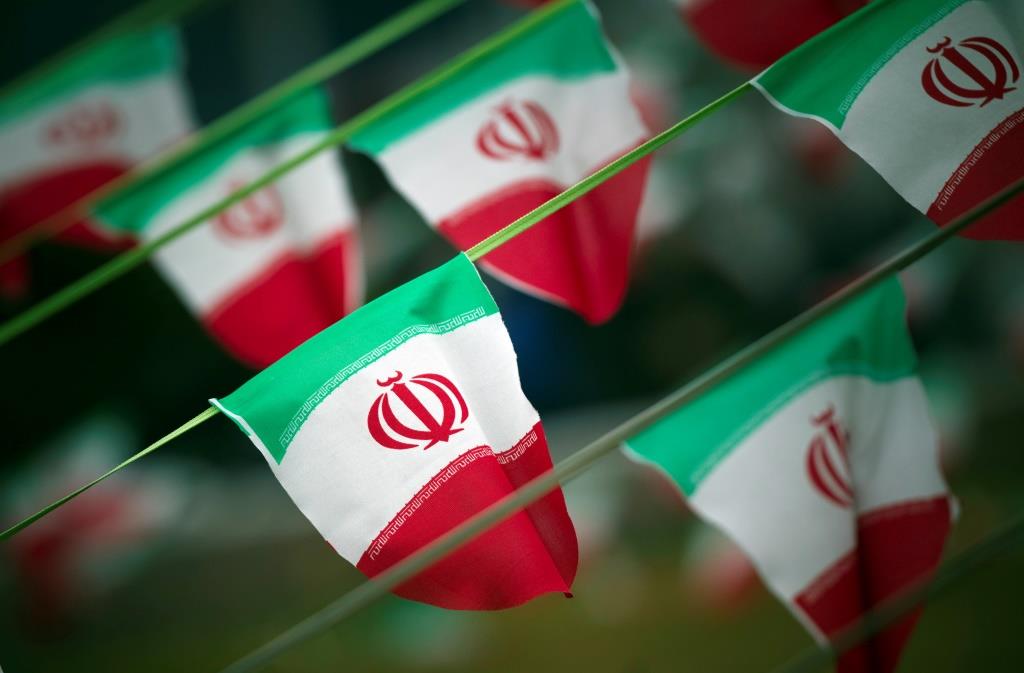
Iran's national flags are seen on a square in Tehran February 10, 2012.

In recent months the reformist camp in Iran has been engaged in an intense debate about the movement’s future. This internal debate reflects growing concern among various sections of the Iranian establishment regarding the increasing influence of radical elements (“subversives”) who oppose both main political camps (the conservatives and the reformists) and challenge the very existence of the regime. The debate also reflects the distress of the reformists, who over the last decade have lost their positions of political influence, and is evidence that the dominant faction in the reformist camp still prefers gradual change within the law to violent revolutionary change. In the short run, the growing external pressure on Iran could encourage portions of the Iranian people to stand behind the regime, for fear of political chaos or damage to Iran’s territorial unity and integrity. However, the heightened internal troubles, the failure of the regime to provide a response, and the sense that the pragmatists are unable to bring President Rouhani and the reformists to offer an effective political alternative, could aggravate the sense of despair in the public and strengthen trends towards extremism and populism.


In recent months, reformist intellectuals have been engaged in an intense debate regarding the future of the reformist movement in Iran. This debate is underway against the background of ongoing protests, which began in December 2017, and the recent confrontational statements by President Hassan Rouhani. At this stage the demonstrations are essentially local, spontaneous and sectorial protests that do not pose an immediate challenge to the regime’s stability, but they do express a growing sense of despair in view of the failure of the regime and the government to provide a response to the citizens’ demands. The slogans heard during the demonstrations, to the tune of “conservatives, reformists, your time is up!" reflect the loss of trust in both the central political camps.

In parallel with the public’s growing alienation from the regime’s institutions, and against a background of increasingly hostile relations with the American administration, President Rouhani has adopted more hardline rhetoric. The escalation between Tehran and Washington reinforces the need of the Iranian elite to demonstrate unity, if only for domestic and international consumption. In early July 2018, the President issued a veiled threat to close the Strait of Hormuz if an oil embargo were placed on Iran. On July 22, Rouhani warned President Trump against “playing with the lion’s tail,” referring to growing US pressure against Iran. He repeated his threats to close the Strait of Hormuz and claimed that “war with Iran will be the mother of all wars and peace with Iran will be the mother of all peace agreements.” The President’s declarations enjoyed full backing from Supreme Leader Ali Khamenei and from senior officials of the Revolutionary Guards, who expressed their willingness to implement the threat to close the Strait. The belligerent line adopted by Rouhani reinforces the impression that he is “veering to the right,” and since his election to a second term in May 2017, he has expressed views that ignore the demands of the reformists, who supported him in the elections.

In view of the rising confrontation between the public and the regime, the growing external pressure led by the Trump administration, and the government’s failure to provide a response to the civilian distress, prominent reformist intellectuals have recently warned of the activity of “subversives” (barandazan, in Persian), such as the activists of the exiled opposition organization Mojahedin-e Khalq and opponents of the regime who support the return of the monarchy. These groups are not satisfied with gradual reform, seek total regime change, and challenge both central political camps in Iran, the conservatives and the reformists. According to the reformists, although the activity of the radical opposition is at this stage mainly focused outside Iran, their impact on the Iranian public could broaden as the internal distress deepens and the government fails to remedy it.

In a series of interviews to the media, the reformist intellectuals and political activists called for a review of the reformist movement’s strategy, so that it can position itself as a relevant alternative to both the conservatives and the radical opposition, which is undermining the foudnations of the Islamic Republic. While the debate in the reformist camp reflects some disagreement over the extent of the threat from the “subversives,” it also exhibits fairly broad consensus regarding the need to promote processes of change in the reform movement, review its relations with the government, and sharpen its message so that it can differentiate itself from both the conservatives and the radical groups who prefer rapid change (revolution) to gradual change (evolution).

Abbas Abdi, one of the most prominent reformist thinkers, said recently in an interview to the daily Etemaad that too much importance should not be given to the radical opposition operating outside Iran that presents the reformists as collaborators with the regime. However, he stressed that in order to respond to the growing criticism, the reformists must launch a process of organizational and ideological resonstruction, involve the younger generation in movement leadership, redefine their relations with the government, and not shy away from criticism of its policy.

Reformist Majlis member Mahmoud Sadeghi called for the adoption of a more critical and assertive line in order to gain public trust. In a press interview, Sadeghi said that the reformists must frustrate the “subversives’ plots” to bring about violent regime change in Iran, with the help of foreign elements. He stressed that it is not possible to promote reform by violent means, and that the reformists will not tolerate harm to Iran’s national interests, security, or territorial integrity. At the same time, he stressed that the radicals are exploiting the government’s failure and the apathy of the reformists to challenge and denigrate them. Therefore, the reformists must break their silence, expand their activities, and formulate a clear plan on how to deal with Iran’s economic, political, social, and cultural difficulties. Meanwhile, former President Mohammad Khatami, at meeting with former Majlis members on August 5, 2018, presented fifteen guidelines for what he called essential reforms to solve the crisis in Iran. He estimated that the Islamic Republic is not facing collapse, since most of the public is not interested in revolution, but rather in stability and security. However, he did warn that public despair at the chances for reform will cause serious and irreversible damage to the regime. “As long as the reforms are alive, there is no place for subversion,” said Khatami.

The internal debate in the reformist camp is important for several reasons. First, it reflects growing concern among various sections of the Iranian establishment of the increasing influence of subversive elements that challenge the very existence of the regime. For example, expressions of affection for the Shah, who was deposed in the Islamic Revolution in 1979, are still a fairly marginal aspect of protests in Iran, but they show the intensity of the alienation between the regime and the general public, and repreent flagrant defiance of the political regime as a whole. Second, it reflects the distress of the reformists, who over the last decade have been pushed out of positions of political influence and forced to support moderate conservative candidates, such as Rouhani, as the least undesirable option. The internal and external challenges facing the Islamic Republic highlight the dilemma of the reformists, between the need to support the President as a necessary evil and the fear of being identified with his failures, which could strengthen extremist forces on either left or right. Third, it shows that the dominant factionin the reformist camp still differentiates itself from the radical groups seeking to topple the regime. Reformists are increasingly aware of the need to sharpen their messages and intensify their criticism of the regime and the government, in order to gain public trust. However, there is still a widely held view in this camp that the solution to the country’s problems lies in structural reforms rather than regime change, which could lead to chaos and endanger Iran’s security, unity, and territorial integrity.

It is too soon to assess whether the reformist movement has the power to position itself as a political alternative that can attract significant public support. The growing external pressure on Iran could encourage some sections of the public to stand behind the regime, for fear of political chaos or harm to essential national interests. At the same time, the worsening internal distress, the regime’s failure to provide a response, and the growing feeling that the pragmatists led by the President are unable to offer effective solutions could add to the public’s despair and lack of trust in the establishment, and reinforce extremist and populist tendencies. These processes could be expressed in the next parliamentary elections, expected to be held in 2020, and in the next presidential elections, in 2021.

The opinions expressed in INSS publications are the authors’ alone.
Publication Series INSS Insight
TopicsIran
עברית

Events

All events
Iran, US, Israel, and the Global Jewish Community
10 March, 2026
12:00 - 13:00
Shutterstock

Related Publications

All publications
Nir Alon/ZUMA Press Wire via REUTERS
“Operation Roaring Lion”: Summary of the First Phase
“Operation Roaring Lion,” the war against Iran and its proxies, has not yet reached its conclusion. Although the final outcome remains unclear and the current situation may soon shift, the campaign’s distinctive characteristics allow for an interim assessment. This is the most extensive war fought in the Middle East since the Second Gulf War, and the first in which Israel is fighting as an active partner in a coalition with the United States. While its global implications have yet to fully emerge, it is already clear that the war carries significant implications for the Gulf States, the global energy market, Israel’s international standing, and great-power competition.
17/05/26
REUTERS (modified by INSS)
More Than a Mediator: The Egyptian Stake in Ending the War with Iran
Why and how Cairo worked to achieve and maintain the U.S.-Iran ceasefire — and what conclusions should be drawn in Israel?
17/05/26
Shutterstock
In the Wake of “Roaring Lion”: Preliminary Insights, Hypotheses, and Dilemmas for Israel
More than two months after the outbreak of Operation “Roaring Lion,” the Islamic Republic stands with significant vulnerabilities and a new leadership, yet it also has certain achievements to its credit. These include surviving a joint American-Israeli attack and exploiting levers of pressure created during the fighting, including attacks against the Gulf states and the closure of the Strait of Hormuz. While it is premature to assess the full implications of the war, the conclusion of which remains uncertain, prominent trajectories can already be identified across six key domains: the Iranian domestic arena; the nuclear program; the missile array; the regional proxy network; Iran’s standing in the regional order; and Iran’s position in the global arena. Insights in these contexts are intended to serve as a foundation for analyzing subsequent developments in the coming months, once the “dust of war” settles and its long-term implications become evident. At present, the current status quo (“neither war nor peace”), characterized by the closure of the Strait of Hormuz alongside an American naval blockade, remains unstable. It is doubtful whether such a state can be sustained over time. For Israel, this reality implies that Iran continues to maintain its nuclear capabilities while rehabilitating its missile array. This increases the risk of a “breakout” toward nuclear weapons and the resumption of hostilities under more difficult conditions. Against this backdrop, Israel faces a fundamental question: Should it continue to strive for a resolution to the Iranian problem through a decisive victory—the achievability of which is highly questionable, particularly without active U.S. participation? Or should it adopt a policy of “conflict management” through intermittent enforcement, until a political shift occurs within Iran?
06/05/26

Stay up to date

Registration was successful! Thanks.
  • Research

    • Topics
      • Israel and the Global Powers
      • Israel-United States Relations
      • Glazer Israel-China Policy Center
      • Russia
      • Europe
      • Antisemitism and Delegitimization
      • Iran and the Shi'ite Axis
      • Operation Roaring Lion
      • Iran
      • Lebanon and Hezbollah
      • Syria
      • Yemen and the Houthi Movement
      • Iraq and the Iraqi Shiite Militias
      • Conflict to Agreements
      • Israeli-Palestinian Relations
      • Hamas and the Gaza Strip
      • Peace Agreements and Normalization in the Middle East
      • Saudi Arabia and the Gulf States
      • Turkey
      • Egypt
      • Jordan
      • Israel’s National Security Policy
      • Military and Strategic Affairs
      • Societal Resilience and the Israeli Society
      • Jewish-Arab Relations in Israel
      • Climate, Infrastructure and Energy
      • Terrorism and Low Intensity Conflict
      • Cross-Arena Research
      • Data Analytics Center
      • Law and National Security
      • Advanced Technologies and National Security
      • Foreign Information Manipulation and Interference
      • Economics and National Security
    • Projects
      • Preventing the Slide into a One-State Reality
      • India-Middle East-Europe Economic Corridor (IMEC)
  • Publications

    • All Publications
    • INSS Insight
    • Policy Research and Papers
    • Special Publication
    • Strategic Assessment
    • Technology Platform
    • Memoranda
    • Database
    • Posts
    • Books
    • Archive
  • About

    • Vision and Mission
    • History
    • Research Disciplines
    • Chairman of the Board
    • Board of Directors
    • Fellowship and Prizes
    • Internships
    • Annual Reports
    • Support
    • Privacy Policy and Terms of Use
  • Media

    • Communications
    • Video Gallery
    • Press Release
    • Podcast
  • Home

  • Events

  • Database

  • Team

  • Contact

  • Newsletter

  • עברית

INSS logo The Institute for National Security Studies, Strategic, Innovative, Policy-Oriented Research, go to the home page
40 Haim Levanon St. Tel Aviv, 6997556 Israel | Tel: 03-640-0400 | Fax: 03-744-7590 | Email: info@inss.org.il
Developed by Daat ,Yael Group.
Accessibility Statement
This site is protected by reCAPTCHA and the Google Privacy Policy and Terms of Service apply.