Publications
Home Publications Chapters The Delegitimization Threat: Roots, Manifestations, and Containment
The Delegitimization Threat: Roots, Manifestations, and Containment
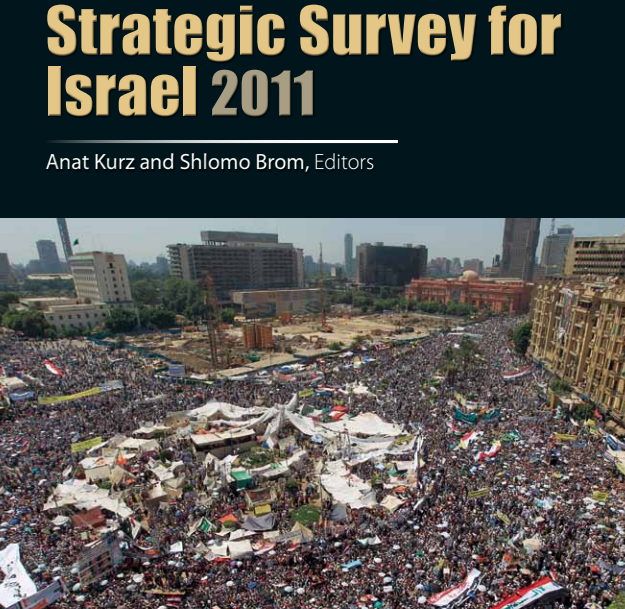
in Strategic Survey for Israel 2011, eds. Anat Kurz and Shlomo Brom, Tel Aviv: Institute for National Security Studies, 2011
Follow us on Google
The opinions expressed in INSS publications are the authors’ alone.
Publication Series Chapters
Related Publications
All publications Shutterstock
The Token Economy: Understanding the Infrastructure Behind the AI Revolution
A Guide to the Token Economy - The Key to Understanding the AI Industry's Business Model and the Global Competition over Computing Infrastructure and Technological Sovereignty.
18/08/26 IMAGO/APAimages via Reuters Connect
A Departure from Détente? The Roots and Limits of Saudi Arabia’s New Assertiveness
Shifts in Saudi strategy? The implications of the Kingdom's recent steps that may be interpreted as a departure from a policy based primarily on dialogue, containment, and de-escalation
17/08/26When Strength Becomes a Trap: A Structural Lens on Israel's Strategic Trajectory
This article applies Paul Kennedy’s thesis of imperial overstretch as a structural lens through which to examine Israel’s strategic trajectory in 2026. It does not contend that Israel is an empire, nor that decline is foreordained. Rather, it argues that the mechanism Kennedy identified, namely the tendency for strategic commitments to outgrow the productive base that must finance them, combined with the political incapacity of governing coalitions to redistribute burdens before the corrective window closes, operates at any scale; and that its early structural signatures are now visible in Israeli data. The analysis examines three historical cases: Habsburg Spain, apartheid South Africa, and the late Soviet Union, compared across seven structural dimensions, with each yielding a distinct implication for Israel. It then reviews the Israeli indicators in detail, with particular attention to the simultaneous narrowing of the productive base, the erosion of allied political capital documented in contemporary polling, and the transfer of the strategic burden from the foreign balance sheet to the domestic one. The argument is that the analytically and morally decisive variable is not strength itself, but the sustainability of strength; and that the central question for Israeli strategy is whether recalibration is undertaken voluntarily, from a position of strength, or imposed by crisis on terms one no longer controls.
16/08/26