


Turkey after the Presidential Election: A Difficult Challenge for Israel’s Foreign Policy | INSS
go to header go to content go to footer go to search
INSS logo The Institute for National Security Studies, Strategic, Innovative, Policy-Oriented Research, go to the home page
INSS
Tel Aviv University logo - beyond an external website, opens on a new page
  • Campus
  • Contact
  • עברית
  • Support Us
  • Research
    • Topics
      • Israel and the Global Powers
        • Israel-United States Relations
        • Glazer Israel-China Policy Center
        • Russia
        • Europe
        • Antisemitism and Delegitimization
      • Iran and the Shi'ite Axis
        • The Campaign Against Iran and the Shiite Axis
        • Iran
        • Lebanon and Hezbollah
        • Syria
        • Yemen and the Houthi Movement
        • Iraq and the Iraqi Shiite Militias
      • Conflict to Agreements
        • Israeli-Palestinian Relations
        • Hamas and the Gaza Strip
        • Peace Agreements and Normalization in the Middle East
        • Saudi Arabia and the Gulf States
        • Turkey
        • Egypt
        • Jordan
      • Israel’s National Security Policy
        • Military and Strategic Affairs
        • Israel's Security Strategy
        • Societal Resilience and the Israeli Society
        • Jewish-Arab Relations in Israel
        • Climate, Infrastructure and Energy
        • Terrorism and Low Intensity Conflict
      • Cross-Arena Research
        • Data Analytics Center
        • Law and National Security
        • Advanced Technologies and National Security
        • Foreign Information Manipulation and Interference
        • Economics and National Security
    • Projects
      • Preventing the Slide into a One-State Reality
      • India-Middle East-Europe Economic Corridor (IMEC)
  • Publications
    • -
      • All Publications
      • INSS Insight
      • Policy Research and Papers
      • Special Publication
      • Strategic Assessment
      • Technology Platform
      • Memoranda
      • Posts
      • Books
      • Archive
  • Database
    • Surveys
    • Spotlight
    • Maps
    • Dashboards
  • Events
  • Team
  • About
    • Vision and Mission
    • History
    • Research Disciplines
    • Chairman of the Board
    • Board of Directors
    • Fellowship and Prizes
    • Annual Reports
    • Internships
  • Media
    • Communications
    • Video gallery
    • Press Releases
  • Podcast
  • Newsletter
  • Campus
Search in site
  • Research
    • Topics
    • Israel and the Global Powers
    • Israel-United States Relations
    • Glazer Israel-China Policy Center
    • Russia
    • Europe
    • Antisemitism and Delegitimization
    • Iran and the Shi'ite Axis
    • The Campaign Against Iran and the Shiite Axis
    • Iran
    • Lebanon and Hezbollah
    • Syria
    • Yemen and the Houthi Movement
    • Iraq and the Iraqi Shiite Militias
    • Conflict to Agreements
    • Israeli-Palestinian Relations
    • Hamas and the Gaza Strip
    • Peace Agreements and Normalization in the Middle East
    • Saudi Arabia and the Gulf States
    • Turkey
    • Egypt
    • Jordan
    • Israel’s National Security Policy
    • Military and Strategic Affairs
    • Israel's Security Strategy
    • Societal Resilience and the Israeli Society
    • Jewish-Arab Relations in Israel
    • Climate, Infrastructure and Energy
    • Terrorism and Low Intensity Conflict
    • Cross-Arena Research
    • Data Analytics Center
    • Law and National Security
    • Advanced Technologies and National Security
    • Foreign Information Manipulation and Interference
    • Economics and National Security
    • Projects
    • Preventing the Slide into a One-State Reality
    • India-Middle East-Europe Economic Corridor (IMEC)
  • Publications
    • All Publications
    • INSS Insight
    • Policy Research and Papers
    • Special Publication
    • Strategic Assessment
    • Technology Platform
    • Memoranda
    • Posts
    • Books
    • Archive
  • Database
    • Surveys
    • Spotlight
    • Maps
    • Dashboards
  • Events
  • Team
  • About
    • Vision and Mission
    • History
    • Research Disciplines
    • Chairman of the Board
    • Board of Directors
    • Fellowship and Prizes
    • Internships
    • Annual Reports
    • Privacy Policy and Terms of Use
  • Media
    • Communications
    • Video gallery
    • Press Releases
  • Podcast
  • Newsletter
  • Campus
  • Contact
  • עברית
  • Support Us
bool(false)

Publications

Home Publications INSS Insight Turkey after the Presidential Election: A Difficult Challenge for Israel’s Foreign Policy

Turkey after the Presidential Election: A Difficult Challenge for Israel’s Foreign Policy

INSS Insight No. 594, August 20, 2014

Follow us on Google
עברית
Gallia Lindenstrauss
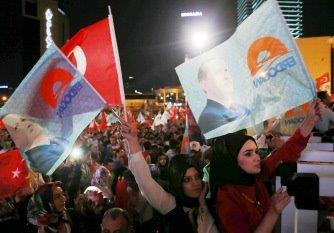
Turkish Prime Minister Recep Tayyip Erdogan’s victory in the first round of the presidential election (with 52 percent of the vote) signals the continuing dominance of the Justice and Development Party (AKP) in Turkish politics. Erdogan has controlled Turkey for more than a decade, and is now planning on remaining in office for two presidential terms. During the election campaign, which overlapped with Operation Protective Edge, Erdogan devoted a great deal of attention to the situation in the Gaza Strip, voicing much harsh criticism of Israel. Erdogan also said that as long as he is in power, no improvement in relations between the two countries could be expected. His success in being elected president in the first round for a five-year term gives rise to the concern that if he makes good on this promise, no improvement in Turkey-Israel relations can be expected in the foreseeable future.

Turkish Prime Minister Recep Tayyip Erdogan’s victory in the first round of the presidential election (with 52 percent of the vote) signals the continuing dominance of the Justice and Development Party (AKP) in Turkish politics. Erdogan has controlled Turkey for more than a decade, and is now planning on remaining in office for two presidential terms. As he made clear before the election, he has no intention of limiting himself to the ceremonial aspects of his new job, but wants to endow the position with substantive content. It is still unclear how in practice Turkey will function under this still unregulated form of executive authority, but because successful organization and obedience to the party are hallmarks of the AKP (and figure among the factors explaining the party’s years-long success), it is safe to assume that appropriate solutions will be found to ensure smooth governance without public expressions of tension that may arise along the way.

During the election campaign, which overlapped with Operation Protective Edge, Erdogan devoted a great deal of attention in his speeches to the situation in the Gaza Strip; the issue also garnered much attention from the opposition. While it is almost certain that Erdogan would have been elected regardless of his harsh criticism of Israel (he would have found another target to attack), there is no doubt that the topic of Gaza was relatively convenient for him. The Israel-Hamas issue sidelined accusations in the domestic and foreign policy arenas that could have been much more prominent on the Turkish political agenda were it not for the Gaza crisis, such as the crisis of the Turkish diplomats and their families abducted in Iraq and still in captivity. Moreover, the Palestinian issue unites large segments of the Turkish public, and therefore dealing with it marginalized existing accusations against Erdogan that he has sown rifts among the Turkish population.

The particularly harsh criticism Turkey leveled against Israel during Operation Protective Edge figured among the reasons Israel decided not to cooperate with mediation efforts led by Qatar and Turkey, unlike previous rounds of fighting between Israel and Hamas where Israel did not completely rule out the idea of Turkey as mediator, although in practice the role played by Ankara was minor. It also seems that this time, the damage to the economic ties between Israel and Turkey will be more significant than in the past, because of the cumulative effect of the frequent crises between them in recent years. This is evident, for example, in tourism: Turkish Airlines has already announced the cancellation of one-quarter of its flights to Israel. At the same time, Turkey and Israel have managed relatively well to coordinate Turkey’s humanitarian assistance to the Gaza population. Other than shipments of food and medicine from Turkey, Israel has also facilitated the transfer of generators and fuel to operate them, and has allowed for wounded Palestinians to be flown to Turkey through Ben Gurion International Airport. It is almost certain that the lessons of the Mavi Marmara affair are fresh in the memory of both sides as they approach the issue of humanitarian aid. While the Turkish organization IHH, which led the flotilla to Gaza in 2010, declared immediately after the Turkish presidential election its intention to send another flotilla to Gaza during 2014, perhaps the fact that Israel is complying with Turkish requests to ship aid will result in pressure from the Turkish government to delay the realization of the plan. This development would be particularly welcome, given the concern that this time a flotilla to Gaza would incur the risk of a potential confrontation (even if limited) between the Turkish and Israeli navies. Still, the overall experience gathered by Turkish aid organizations in recent years (internationally but specifically in Gaza) and the emphasis on large projects, such as the construction of a hospital in the Gaza Strip, should be viewed positively by Israel, as these indicate greater probability that the aid will go to benefit the Gaza population, rather than to misuse by Hamas.

Relations between Turkey and Israel have thus suffered another blow as a result of Operation Protective Edge. It is hard to imagine how the two sides will overcome the most recent crisis, and in the near future, it is doubtful that there will even be any desire to resolve it. Other than a scenario in which Operation Protective Edge leads to a fundamental change in the situation in the Gaza Strip, tensions between Israel and Turkey over Gaza will remain. During the operation, Erdogan said that as long as he is in power, no improvement in relations between the two countries could be expected. His success in being elected president in the first round for a five-year term gives rise to the concern that if he makes good on this promise, no improvement in relations can be expected in the foreseeable future.

For some years there has been an ongoing debate among the Israeli government and public on the right way to advance Turkish-Israeli relations. In many ways, those who have represented a pessimistic approach, whereby under Erdogan’s leadership there are no prospects for Israel and Turkey, have – at least for now – been proven right. On the other hand, there is also truth to the claim from the opposite camp, that Erdogan and what he represents are not a passing phenomenon, and therefore it is necessary to fully utilize possible ways of cooperation, even if limited.

At present, and given the challenges Israel must tackle in the reality of Operation Protective Edge, Turkey need not be a priority on the Israeli government’s political agenda. The brick wall that relations with Turkey have hit and the desire to prevent any further deterioration suggests that Israel’s policy should be to ensure as little friction with Turkey as possible. After the election results were in, Erdogan, in his victory speech, sounded relatively relaxed and conciliatory compared to his earlier speeches. Perhaps this opening tone and his assumption of the presidency, which requires a less antagonistic approach both at home and toward the world, will ease at least a small portion of the profound tension between Turkey and Israel. Still, given Erdogan’s blunt remarks on Israel in the past, it is very possible that this hope will remain unfulfilled.
The opinions expressed in INSS publications are the authors’ alone.
Publication Series INSS Insight
TopicsTurkey
עברית

Events

All events
Israel’s National Security Conference
27 July, 2026
10:00 - 14:00

Related Publications

All publications
Israel’s Red Line in Syria—and the Price of Confrontation with Turkey
Should Israel have taken military action in Syria at the risk of escalating tensions with Turkey, and how should it address Turkish entrenchment in Syria moving forward?
27/08/26
Shutterstock
The Mecca Agreement: Real Substance or Mere Intent?
An analysis of the implications of the defense agreement between Saudi Arabia, Turkey, and Pakistan through four possible scenarios – and recommendations for Israel
20/08/26
REUTERS and U.S. Air Force photo by Master Sgt. Donald R. Allen (modified by INSS)
The Engine and F-35 Aircraft Deal for Turkey: Implications for the Regional and Global Balance of Power
The current U.S. administration is advancing a major deal, valued at over $700 million, to sell F110 engines to Turkey for its KAAN aircraft project. Despite the administration’s attempts to bypass congressional barriers, this move is not an isolated event; rather, it is a strategic accelerator intended to pave the way for Ankara’s full return to the F-35 program. While Washington’s rationale seeks to preserve Turkey as an anchor within NATO, in practice, it creates a serious dilemma and presents a weighty, threefold strategic risk: Undermining NATO from within: Empowering an actor that is engaged in aggressive competition against Western allies (such as Greece) and is entrenching a defiant military presence in Cyprus. Fueling Regional Friction: Granting legitimacy to a competitive power that provides a safe haven for Hamas and supports the al-Sharaa regime in Syria. Creating a Systemic Risk to the Global F-35 Network: Deploying 5th-generation capabilities in proximity to Russian S-400 systems risks compromising and cracking the information security of the platform as a whole. This threat is not limited to the erosion of Israel’s qualitative edge or the exposure of its defense industries; it constitutes a direct threat to every country in the world equipped with the F-35, alongside concerns over the possible proliferation of KAAN aircraft to additional militaries across the Sunni sphere.
15/07/26

Stay up to date

Registration was successful! Thanks.
  • Research

    • Topics
      • Israel and the Global Powers
      • Israel-United States Relations
      • Glazer Israel-China Policy Center
      • Russia
      • Europe
      • Antisemitism and Delegitimization
      • Iran and the Shi'ite Axis
      • The Campaign Against Iran and the Shiite Axis
      • Iran
      • Lebanon and Hezbollah
      • Syria
      • Yemen and the Houthi Movement
      • Iraq and the Iraqi Shiite Militias
      • Conflict to Agreements
      • Israeli-Palestinian Relations
      • Hamas and the Gaza Strip
      • Peace Agreements and Normalization in the Middle East
      • Saudi Arabia and the Gulf States
      • Turkey
      • Egypt
      • Jordan
      • Israel’s National Security Policy
      • Military and Strategic Affairs
      • Israel's Security Strategy
      • Societal Resilience and the Israeli Society
      • Jewish-Arab Relations in Israel
      • Climate, Infrastructure and Energy
      • Terrorism and Low Intensity Conflict
      • Cross-Arena Research
      • Data Analytics Center
      • Law and National Security
      • Advanced Technologies and National Security
      • Foreign Information Manipulation and Interference
      • Economics and National Security
    • Projects
      • Preventing the Slide into a One-State Reality
      • India-Middle East-Europe Economic Corridor (IMEC)
  • Publications

    • All Publications
    • INSS Insight
    • Policy Research and Papers
    • Special Publication
    • Strategic Assessment
    • Technology Platform
    • Memoranda
    • Database
    • Posts
    • Books
    • Archive
  • About

    • Vision and Mission
    • History
    • Research Disciplines
    • Chairman of the Board
    • Board of Directors
    • Fellowship and Prizes
    • Internships
    • Annual Reports
    • Support
    • Privacy Policy and Terms of Use
  • Media

    • Communications
    • Video Gallery
    • Press Release
    • Podcast
  • Home

  • Events

  • Database

  • Team

  • Contact

  • Newsletter

  • עברית

INSS logo The Institute for National Security Studies, Strategic, Innovative, Policy-Oriented Research, go to the home page
40 Haim Levanon St. Tel Aviv, 6997556 Israel | Tel 03-640-0400 | Fax 03-744-7590 |
Developed by Daat ,Yael Group.
Accessibility Statement
This site is protected by reCAPTCHA and the Google Privacy Policy and Terms of Service apply.