


Publications
INSS Insight No. 573, July 15, 2014
Follow us on Google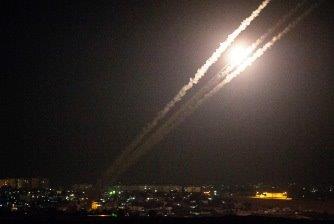
This essay deals with the time dimension of Operation Protective Edge and contends that it is best to avoid, at least for now, a ground operation. During the first five days of the operation, all the strategic clocks have moved together slowly, but this pace is now changing. The clock hands may start moving much faster under the following circumstances: more Israeli casualties; a ground campaign; more Palestinian casualties. Attempts at mediation should be given a chance, and a short unilateral ceasefire declared for this purpose. Such measures will strengthen Israel’s position, and buy additional time if a more extensive response becomes necessary.
Hamas and Islamic Jihad continue to launch rockets at population centers in Israel.1 Thus far Israel has suffered few casualties, but the regular disruption of daily life in Israel since Hamas gained power in the Gaza Strip in 2007 has created a difficult atmosphere. According to Palestinian sources, counterattacks by the Israeli Air Force have to date (July 12, 2014) caused over 125 fatalities in the Gaza Strip, many hundreds of wounded, and much destruction. The Israeli government continues to deliberate the value of a ground operation.
This essay deals with the time dimension of Operation Protective Edge and contends that it is best to avoid, at least for now, a ground operation. Attempts at mediation should be given a chance, and a short unilateral ceasefire declared for this purpose. Such measures will strengthen Israel’s position, and buy additional time if a more extensive response becomes necessary.
The Strategic Clocks
The internal clock measures the time in which the Israeli government has the ability and willingness to continue the operation. Key parameters affecting this are the stability of the government and the political system, an assessment of the military and political capabilities, a cost-benefit assessment of the operation, and the ability to withstand pressures from internal, local, and external players. As of now, the IDF has given the government a great deal of room to maneuver, but there is no simple and cheap solution for halting the bombardment from the Gaza Strip, and each blueprint for action carries its costs and risks. As time passes, the disagreements within the government between those seeking to “eliminate Hamas rule in Gaza,” which requires the occupation of Gaza, and those who wish to settle for a ceasefire along the lines of the understandings that ended Operation Pillar of Defense will intensify.
The domestic clock measures the patience of the Israeli population and the related pressures on the political leadership. Key parameters include how close or far the goals of the operation are from being achieved, the population’s expectations, the number of casualties among citizens and soldiers, and the operation’s socioeconomic burden, as well as a rise in tension with Israeli Arabs. At this stage, the Israeli government has time to act, mainly because the number of casualties in Israel is low, thanks to the effective defense systems on the home front. At the same time, as more time passes, greater achievements will be expected, in view of the cost to the Israeli population.
The regional clock measures the time in which leaders and civilians in the Middle East (including the Palestinian Authority) lose their tolerance for Israeli operations against Hamas and pressure the Israeli government. Key parameters include how Israel is coping; the state of the population in the Gaza Strip; and pressure on Israel from the leaders of Jordan, Egypt, and Turkey. Pressure on Israel, which has kept to a moderate level, is expected to increase in the coming days. For example, at a July 11, 2014 elections conference, Turkish Prime Minister Recep Tayyip Erdogan said, “We will not be able to normalize relations with Israel while our brothers and sisters are being bombed and dying in Gaza.” That same day Jordanian King Abdullah said, “This dangerous escalation will cause increased suffering by the Palestinians, and will affect the chances of a return to the negotiating table.” Egypt expressed concern about escalation, and formulated an initial draft of an outline for a ceasefire, including Hamas’ demand for the release of its operatives arrested during Operation Brother’s Keeper. According to this clock, the Israeli government still has time for action along the current lines, mainly because of Hamas’ inferior position in the regional system and the Israeli government’s policy of restraint.
The global clock measures the time in which international leaders, audiences, and organizations lose patience for Israel’s operation and pressure the Israeli government. Key parameters include how Israel deals with the situation, the formation of an international consensus for ending the event, the media campaign, the assessment of proportionality or lack thereof in Israel’s response, and above all, the number of Palestinian civilian casualties. While Israel benefited from worldwide understanding during the first days of the operation, concern is now directed at Israel given the losses and distress among the Gazan population. On July 12, 2014, the UN Security Council called for a ceasefire between Israel and the Palestinians and expressed concern for the security of civilians on both sides: “The Security Council members called for de-escalation of the situation, restoration of calm, and reinstitution of the November 2012 ceasefire.” Foreign media outlets stress the high ratio of Palestinian casualties to Israeli casualties, creating the impression of an unfair conflict. Thus while Israel still has time on the global clock for operations in the current format, signals from around the world to halt the operation have already begun. President Obama asked Prime Minister Netanyahu to refrain from a further escalation in the situation (i.e., from a ground campaign), and proposed US mediation between Israel and the Palestinians.
The enemy clock measures the time, ability, and desire of Hamas and Islamic Jihad to continue fighting. Key parameters include a sense of achievement or failure, damage, erosion of military capability, loss of motivation, and pressure from the civilian population on the organizations. There are as yet no signs of a decline in the organizations’ desire or ability to continue attacks on Israel. At the same time, the number of long range rockets in the hands of the two organizations is limited. Hamas is currently refusing to discuss a ceasefire framework, which shows that is unable to claim even the semblance of achievement.
Overall, during the five days of the operation, all the strategic clocks have moved together slowly, but this pace is now changing. The clock hands may start moving much faster under the following circumstances:
a. A ground campaign: This would include a massive incursion and presence (in contrast to raids) in parts of the Gaza Strip. It appears that Israel does not intend to conduct a ground campaign in order to occupy the Gaza Strip, which would require different preparations. At the same time, any massive ground campaign would be perceived by the relevant actors as a material change in the situation, which would mean a change in the speed of the clocks. In this situation, they will move forward rapidly as the penetration into the Gaza Strip becomes deeper and more prolonged, accompanied by casualties on both sides. In tandem, there is a risk that other security fronts will become active. The risk of being dragged into a large scale and prolonged ground campaign of limited depth involves the possibility that the government could find it necessary to end the operation without satisfactory achievements, and at a high price.
b. Increased casualties and distress among the Gazan population: The number of civilian casualties and the humanitarian situation in the Gaza Strip is a significant factor in the international and regional theaters. For example, following Palestinian reports, the World Health Organization called on the nations of the world to provide economic aid to the Palestinian Authority, saying, “The recent escalation of violence in the Gaza Strip raises concern about the ability of the government and the Ministry of Health of the occupied Palestinian territory to cope with the increased burden of medical emergencies on the health system, given the high levels of shortages of medicines, medical disposables and hospital fuel supplies, and rising healthcare debt.” The UK foreign minister also expressed concern about the state of the population in Gaza. This situation heightens the importance of avoiding damage to essential supplies in Gaza among Israel’s considerations, and this factor can be expected to grow in importance the longer the operation lasts.
c. Increased Israeli casualties: Such circumstances are liable to occur even in the current format, and certainly if a ground operation is launched. In this case, pressure will rise on the government to intensify the Israeli attack in the Gaza Strip.
Conclusion
Thus far it is premature to launch a ground operation in the Gaza Strip, and it is better to give the various mediation efforts a chance. In addition, Israel would do well to adopt a unilateral ceasefire, which will enable the other side to stop shooting, for the purpose of reaching an agreement on Israel’s terms, and in order to highlight Israel’s wish to end the violence. If the shooting does not stop, this mode of conduct will enable Israel to win points in the regional and international environment, which will make it possible to continue fighting from a better position. The alternative of starting a large scale ground operation now will change the speed of the strategic clocks, and it is doubtful whether this would facilitate a better end to the operation.
_____________________________________
1 This article was written on late July 12, 2014.
_____________________________________
1 This article was written on late July 12, 2014.
The opinions expressed in INSS publications are the authors’ alone.
Publication Series INSS Insight