


Publications
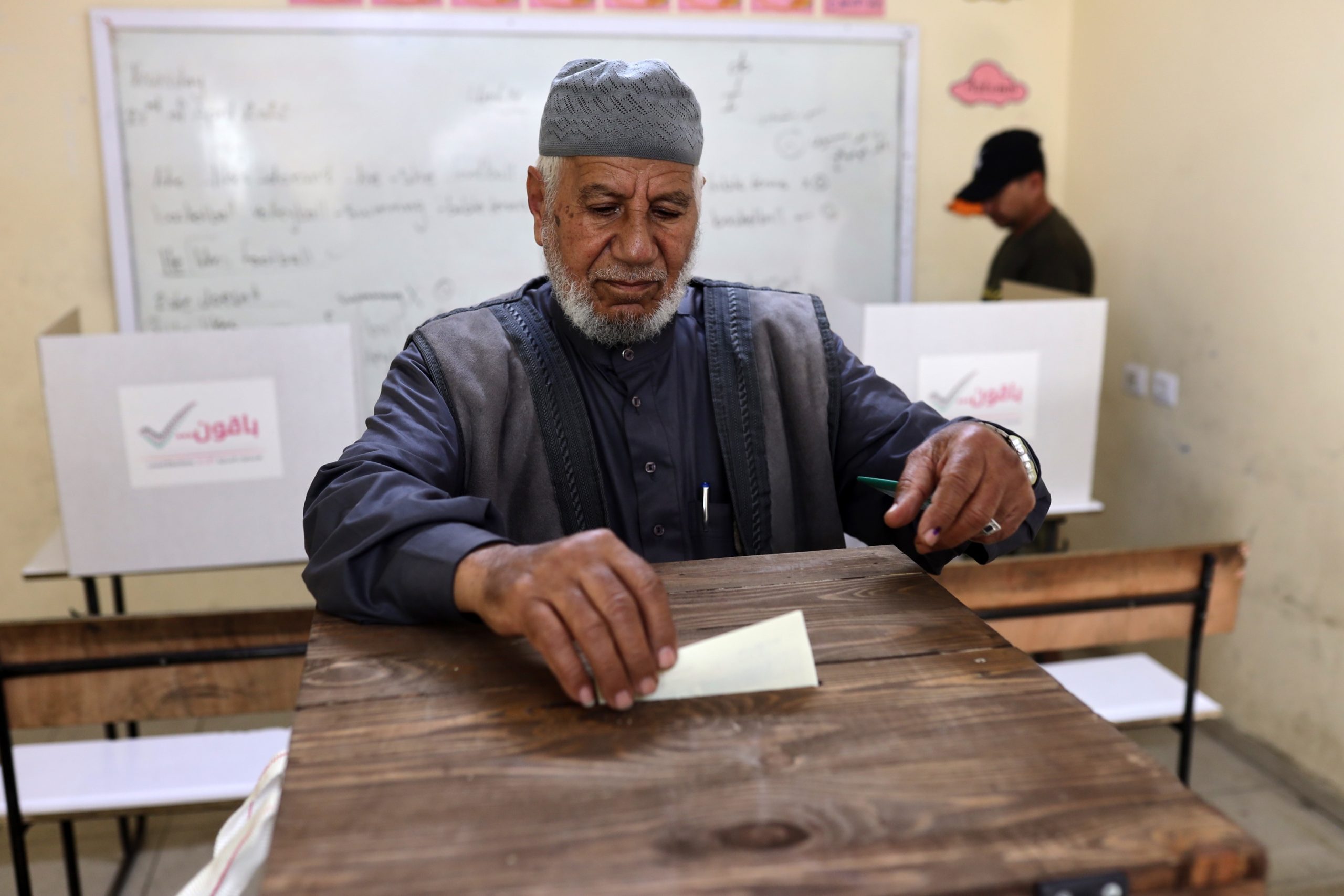
What lessons can be drawn from the local elections held in Judea and Samaria and Gaza, looking toward future general elections?
INSS Insight No. 2140, May 18, 2026
Follow us on GoogleOn April 25, 2026, local elections were held across the Palestinian Authority territories—in the West Bank and in Deir al-Balah within the Gaza Strip. The elections took place across 403 cities and local municipalities, yielding a relatively low overall voter turnout of approximately 53%. Hamas boycotted the elections and did not officially participate, despite being the most popular political organization among the Palestinian public. An analysis of the elections reveals a complex picture of a society attempting to maintain a democratic process under heavy international pressure and grueling political and security conditions. The elections expose a paradox between a desire for routine and deep political despair; between hope for a change in reality at the daily municipal level, and profound disillusionment regarding the current situation, alongside the erosion of Fatah’s standing and a marked lack of trust in the Palestinian Authority. As such, these elections should be viewed more as a “municipal-social barometer” than a “political-national barometer,” given that they do not provide a basis for determining what the results of genuine general elections would look like. In light of this, the present article examines whether the elections constitute an expression of an actual democratic process, or rather a symbolic institutional practice aimed at preserving both internal and external legitimacy.
Introduction
On April 25, 2026, local elections were held across the Palestinian Authority territories—in Judea and Samaria (the West Bank) and in Deir al-Balah within the Gaza Strip. The elections took place across 403 cities and local municipalities, yielding a relatively low overall voter turnout of approximately 53%: roughly 56% in Judea and Samaria, and about 23% in Deir al-Balah. Hamas boycotted the elections and did not officially participate due to restrictions imposed by the Palestinian Authority on all competing candidates, requiring them to recognize the Palestine Liberation Organization (PLO) as well as agreements with Israel.
The Palestinian Authority was quick to declare the elections an expression of the progress made on reforms demanded by the international community, and as a step toward general parliamentary and presidential elections. At the same time, Fatah, the movement identified with the Palestinian Authority, declared a decisive victory in the elections.
However, it is doubtful whether one can extrapolate from these local elections to general elections, and it is equally questionable whether the results can truly be considered a victory for Fatah. This is because the political context in which the elections were held—most notably Hamas's non-participation—raises fundamental questions regarding their representativeness and legitimacy. Furthermore, in 197 municipalities (nearly half of the total number of localities where elections were held), only a single list competed. Nearly 90% of the lists that ran in the elections were classified as independent lists, with only a portion of them being affiliated with Fatah. In many municipalities, clan-based lists prevailed, while in major, significant cities such as Hebron and Tulkarm, local lists unaffiliated with Fatah won the vote.
It is also necessary to understand the factors behind the low voter turnout in these elections. In Deir al-Balah, voter registries were outdated, and the harsh conditions in the Gaza Strip overshadowed public interest in the elections or a belief that they could bring about meaningful change. In Judea and Samaria, the low turnout stemmed from a lack of trust in the Palestinian Authority and its ability to change the reality on the ground, particularly regarding settlement expansion and the security of the Palestinian population. This was further compounded by a lack of faith in the possibility of effecting real change through electoral participation. Additionally, in localities where only a single list ran uncontested, or in municipalities where clan-based lists competed, potential voters saw little reason to participate and viewed their vote as meaningless and incapable of influencing the results.
In fact, because the elections lacked any connection to the broader political and diplomatic context, and because Hamas—the most popular political organization among the Palestinian public—did not participate, it would be accurate to treat them as a localized affair that cannot reliably indicate the potential outcomes of general elections, if and when they are held.
To examine whether these elections expressed an actual democratic process, or instead served as a symbolic façade for preserving internal and external legitimacy, the following issues must be addressed: the conduct of the elections, their characteristics, and their results; the reflection of the Palestinian public mood in the elections; the status of Hamas as a present-absentee in the elections; the implications for future general elections; and the functioning of the Palestinian Authority alongside the status of clans in Palestinian society.
The Elections: Conduct and Outcomes
The local elections were held as a result of international pressure placed on the Palestinian Authority to advance reforms and democratization. Within this framework, certain regulations were amended, including the introduction of separate voting for independent candidates running on nonpartisan lists. This enabled many candidates affiliated with clans, or running independently, to compete outside the framework of closed party lists.
As a result, the Central Elections Commission and various media outlets reported that nearly 90% of the candidates were formally classified as "independents," meaning they were not affiliated with official party lists. At the same time, in 197 municipalities across Judea and Samaria, only a single list competed. This phenomenon also occurred in major, central cities, such as Ramallah and Nablus. Elsewhere, independent lists either won outright or shared power with Fatah. In practice, even if many candidates were unofficially tied to Fatah, local and clan-based lists, as well as independent candidates, became more significant than the political parties themselves.
In Gaza, where for the first time in twenty years some form of voting took place, the situation was similar. In Deir al-Balah—the only area in the Gaza Strip included in the elections—the list perceived as being close to Hamas won only 2 out of 15 seats, while the list ostensibly backed by Fatah secured 6 seats. However, this list is not necessarily identified with the Fatah movement of the West Bank, but rather with Fatah dissidents and outcasts, such as Mohammed Dahlan. In other words, even in the Gazan case, where there was relative competition, more than half of the seats went to independent local lists unaffiliated with Fatah. Granted, Fatah declared a "sweeping victory," claiming that the organization won a majority in the local councils, including in Jenin—a city in which the Palestinian Authority had previously lost operational control to Palestinian Islamic Jihad and local terrorist networks, some of which were also associated with Hamas (particularly since the wave of terrorism that began in northern Samaria in March 2022).
Yet, the reality on the ground is entirely different. In many local authorities, including major cities like Hebron and Tulkarm, local lists of candidates unaffiliated with the Palestinian Authority emerged victorious. In other localities where lists ostensibly affiliated with Fatah prevailed, the candidates themselves were not necessarily publicly recognized as active Fatah members or genuine supporters of the movement. It can be said that Fatah won "on paper" in most municipalities, but in practice, a significant share of local political power shifted into the hands of independent, nonpartisan lists. Consequently, the overall picture emerging from the election results is far more complex than the headlines suggested: Fatah's apparent victory should be regarded as a "victory with an asterisk," given that it is a purely technical win, primarily due to the absence of its central rival, Hamas.
Nevertheless, it is important to emphasize that the very holding of elections under the prevailing conditions in Judea and Samaria, and especially in the Gaza Strip (even if limited to Deir al-Balah), serves as proof of competence on the part of the Palestinian Authority. This achievement is an encouraging development for both the Palestinian Authority and the international actors pressuring it to implement reforms. Indeed, Palestinian Authority Prime Minister Mohammad Mustafa, was quick to define the elections as "another step on the path toward full independence." The Palestinian Authority is also likely to argue that the elections represented a renewed connection between the Gaza Strip and Judea and Samaria, pointing to the very fact that the elections were held in Deir al-Balah, as well as to their results, as an indication of its strengthening position in the Gaza Strip ahead of a return there. In practice, however, there is considerable doubt as to whether the exceptionally low voter turnout in Deir al-Balah and the election results there can indicate an imminent reunification.
More broadly, an analysis of the local elections reveals a complex picture of a society attempting to maintain a democratic process under harsh political and security conditions. The elections expose a paradox between a desire for routine and deep political despair—between hope for a change in reality at the daily municipal level, and profound disillusionment regarding the current situation, alongside the erosion of Fatah's standing and a marked lack of trust in the Palestinian Authority.
Accordingly, it is accurate to view these elections as a "municipal-social barometer" rather than a "political-national barometer." They do not provide a basis for determining what the outcome of genuine general elections would look like. Therefore, if parliamentary or presidential elections are eventually held with the participation of all political actors—especially Hamas—the picture could look fundamentally different.
To What Extent Do the Elections Reflect Palestinian Public Sentiment?
The elections that took place hardly reflect the ideological dimension or the national balance of power within Palestinian society. According to all public opinion polls, Hamas is still perceived as the more popular party among those who continue to place faith in political parties. The Palestinian public is weary of the existing political system and no longer believes in it. Trust in the major factions, Fatah and Hamas, has also eroded.
On the other hand, the Palestinian public craves change and an improvement in their daily life. Yet, even when it came to local elections—where the public could theoretically use their vote to influence their daily reality—many chose not to exercise their right to vote. This was driven by a sense of despair and a deep-seated internal conviction that they lack the ability to make an impact, particularly in municipalities where only a single list competed, and in localities where lists were backed by powerful families and clans.
In fact, a substantial gap can be identified between the narrative the Palestinian Authority sought to shape and the reality on the ground. This gap can be identified on three levels:
- What the elections do reflect: A desire among a portion of the population for a calmer, more stable civic routine, an expectation for reliable municipal services, and a basic desire for a democratic process, however limited. For example, some voters in Gaza stated that they cast their ballots as an act of defiance against their current reality and as an expression of their will to live despite the destruction.
- What the elections do not reflect: The full scope of Hamas's political strength, the public's genuine positions regarding a resolution to the conflict with Israel, or the actual level of public trust in the Fatah leadership. The results may also indicate a calculated belief among residents that holding these elections, under international pressure, will facilitate the influx of funds necessary for the continuous and proper functioning of local municipalities. Therefore, their participation in the elections, and even their voting for Fatah-affiliated lists, does not necessarily signify satisfaction with Fatah itself.
- A possible conclusion: The 2026 municipal elections expose a paradox. On one hand, they represent an attempt to shape a public consciousness centered on the adoption of democratic norms and the continuity of the Palestinian Authority’s institutional functioning as a central governing body. On the other hand, they reveal the fragility of the political system and the widening chasm between the leadership (the Palestinian Authority and the Fatah movement) and society at large.
Hamas: Present Yet Absent
Although Hamas did not participate in the elections through official party lists, its presence was distinctly felt. In several locations, candidates identified with Hamas were elected (including Deir al-Balah, Hebron, Tulkarm, and additional localities across Judea and Samaria). In the Gaza Strip, the Hamas police forces provided security for the elections. A Hamas spokesperson even referred to the elections as an important step toward general elections. Consequently, the phrasing "Hamas did not participate" is only partially accurate.
The real picture, however, is far more complex. In its official response to the elections, Hamas displayed a dual position. The organization's spokesperson, Hazem Qassem, described the very holding of the elections as a "positive and important step," while simultaneously calling for presidential and parliamentary elections. Hamas thus demonstrated a form of tactical support intended to avoid appearing as an obstacle to democracy, while at the same time rejecting the official framework under which the elections were conducted.
From Hamas's perspective, the elections were engineered to keep the organization out of the race. Candidates were required to accept the PLO platform, which rejects any armed struggle and recognizes Israel, thereby effectively excluding Hamas and other factions. However, Hamas's boycott in the West Bank turned Fatah's "victory" into a merely tactical win, overshadowed by protest. In practice, Hamas did not “lose” in an election whose architects established conditions for a competition involving only one major player, precisely out of concern over the other. From this, it is clear that, according to Hamas, the elections do not reflect a national consensus and therefore lack national legitimacy. The organization's decision to boycott the elections fundamentally alters their significance. This is because previous elections, as well as public opinion polls conducted over the years, have shown that Hamas constitutes a significant political force, especially in the Gaza Strip, but also in the West Bank (where, since the October 7 attack, it has enjoyed broader support than in the Gaza Strip itself).
Accordingly, any attempt to extrapolate the national Palestinian balance of power from the local elections held in Judea and Samaria and Gaza is limited, given that:
- The results do not reflect a genuine competition between the two primary camps—Hamas versus Fatah.
- A portion of voters identified with Hamas abstained from participating, skewing the results in favor of Fatah or local lists.
- Voter turnout rates were low and are therefore not fully representative.
Due to the weakening of the major political parties and Hamas' absence from the race, the elections became more clan- and family-oriented and less ideological in nature. In places where there was no intense clan-based rivalry over local honor and influence, many residents saw little reason to go out and vote.
Can These Elections Serve as a Prelude to General Elections?
The local elections were characterized by a combination of a functional and operational achievement for the Palestinian Authority, alongside severe limitations regarding the democratic nature of the vote. Consequently, they cannot serve as a prelude for general elections, for the following reasons:
- Lack of legitimacy: General elections held without the participation of Hamas would not be regarded as legitimate by a substantial segment of the population.
- Gap between polls and reality: While Fatah emerged victorious in the local elections, public opinion polls indicate that Hamas remains the most popular organization in both Gaza and the West Bank.
- Leadership concerns: The local election results, which point to an erosion of Fatah's strength in the face of independent lists, may paradoxically deepen Palestinian Authority President Mahmoud Abbas's fear of losing general elections, potentially reinforcing his preference for postponing them.
In this sense, the elections underscore the Palestinian Authority’s complex condition. Alongside maintaining institutional continuity through the successful conduct of a formal democratic process and the restoration of its authority in Jenin—a city perceived as a symbol of lost control—the Authority's structural weakness was exposed. The lack of competition in the central cities of Ramallah and Nablus, together with the victory of local lists, some of whose representatives are identified with Hamas in Hebron and Tulkarm, testify to the weakness of Fatah and, mainly, to the Palestinian Authority's highly limited control over its territories.
Furthermore, the fact that 88% of the lists were classified as "independent" points to the weakening of the “Fatah” brand and to the erosion of public trust in the existing establishment. Indeed, one of the most prominent findings emerging from the elections was the strengthening of local politics rooted in clan- and family-based loyalties at the expense of party ideology. Many lists were built around familial or local structures, while the national dimension carried no real weight in voters’ considerations or in the broader electoral agenda.
It is also vital to emphasize that the very holding of the elections reflected an inherent weakness on the part of the Palestinian Authority. The elections took place as a result of international pressure to implement reforms and the Authority’s need to demonstrate progress. In addition, they were conducted under international supervision and within a space subject to Israeli security control.
Summary and Implications
The local elections held on April 25 across the Palestinian Authority constitute a significant political event, but they must be analyzed with considerable caution—primarily due to the context in which they were conducted and the fact that Hamas did not participate. The findings indicate that the elections do not reflect a fully democratic system, but rather a hybrid mechanism combining a formal electoral process with political and structural constraints. The gap between the official narrative, which emphasizes a democratic success, and the reality on the ground, characterized by a lack of competition and political exclusion, underscores the fragility of the Palestinian political system.
The elections represent a logistically and politically meaningful step from the perspective of the Palestinian Authority, particularly in the context of integrating Gaza into an electoral framework for the first time since 2006. From its viewpoint, Fatah's victory strengthens the Authority’s standing within the Palestinian sphere as well as in the eyes of its international partners, creating the initial semblance of a response to the international community's demands for reform. However, these developments cannot be considered reliable indicators of genuine Palestinian public opinion, whether regarding questions of internal leadership or weightier strategic issues. Elections that exclude the most popular political faction from the race, that are conducted in hundreds of municipalities without any opposition, and that take place under regional Israeli military control and in the shadow of war, cannot be viewed as a reliable reflection of the Palestinian public's preferences.
Furthermore, the elections point to a paradox in the functioning of the Palestinian Authority. On the one hand, they demonstrate a logistical and institutional capacity to conduct an electoral process under complex conditions. On the other hand, they expose a profound crisis of legitimacy, manifested in a lack of public trust and the failure to integrate all political actors. Moreover, the absence of general elections for approximately two decades reinforces the perception that local elections serve more as a tool for image management rather than as a fully democratic mechanism.
The leadership of the Palestinian Authority, headed by Mahmoud Abbas, has already postponed general elections in the past. Consequently, the results of these local elections are likely to reinforce the fear of defeat and demonstrate that, even in the absence of Hamas, support for Fatah is far from guaranteed. For this reason, the Palestinian Authority leadership may once again prefer to postpone general elections. Abbas and the Palestinian Authority leadership are well aware that if and when Hamas participates, it could capitalize on public dissatisfaction and on its greater popularity relative to Fatah.
The elections also reflect the duality and deep fragmentation within the Palestinian public. Alongside a yearning for stability and an improvement in daily life, there is profound disillusionment with the Palestinian Authority and a strengthening of familial and clan-based frameworks. Alongside the desire for change, elections, and democratization, there are also clear signs of apathy and low voter turnout stemming from a loss of faith in the possibility of meaningful change. The election results point to a society suffering from political fatigue, one that appears to prefer, at least in the local context, reliance on traditional familial structures over national political commitment.
Although the Palestinian Authority and the international community attempt to portray the local elections as a first step toward reform and the renewal of the Authority’s legitimacy, it would be more accurate to treat them merely as a "test run," and a highly questionable one at that.
The findings indicate that the elections reflected a merely procedural democratic process under restrictive structural conditions, yielding results that fail to reflect genuine political competition. One can clearly point to three central processes: the erosion of institutional legitimacy (of the Palestinian Authority), the fragmentation of party politics, and the rise of local, clan-based political organization. Therefore, rather than serving as evidence of democratization, these elections constitute a façade of governance and structural reforms carried out within the framework of an undemocratic regime that lacks broad public legitimacy.