


Publications
How is China leveraging BRICS's transition from declarations to practical mechanisms to advance its global agenda, and what are the strategic implications for the Middle East and Israel?
INSS Insight No. 2205, October 25, 2026
Follow us on GoogleThe BRICS summit held in New Delhi in September 2026 demonstrated the organization’s gradual evolution from a forum based primarily on declarations and political and economic coordination into a framework that is also developing practical mechanisms in technology, industry, health, agriculture, and space. For China, this process carries additional significance: BRICS enables it to advance ideas and initiatives originating in Beijing within a multilateral framework it does not control, thereby contributing to the internationalization of China’s global agenda. The article examines these trends, how they were reflected at the New Delhi summit, and their potential implications for the Middle East and Israel.
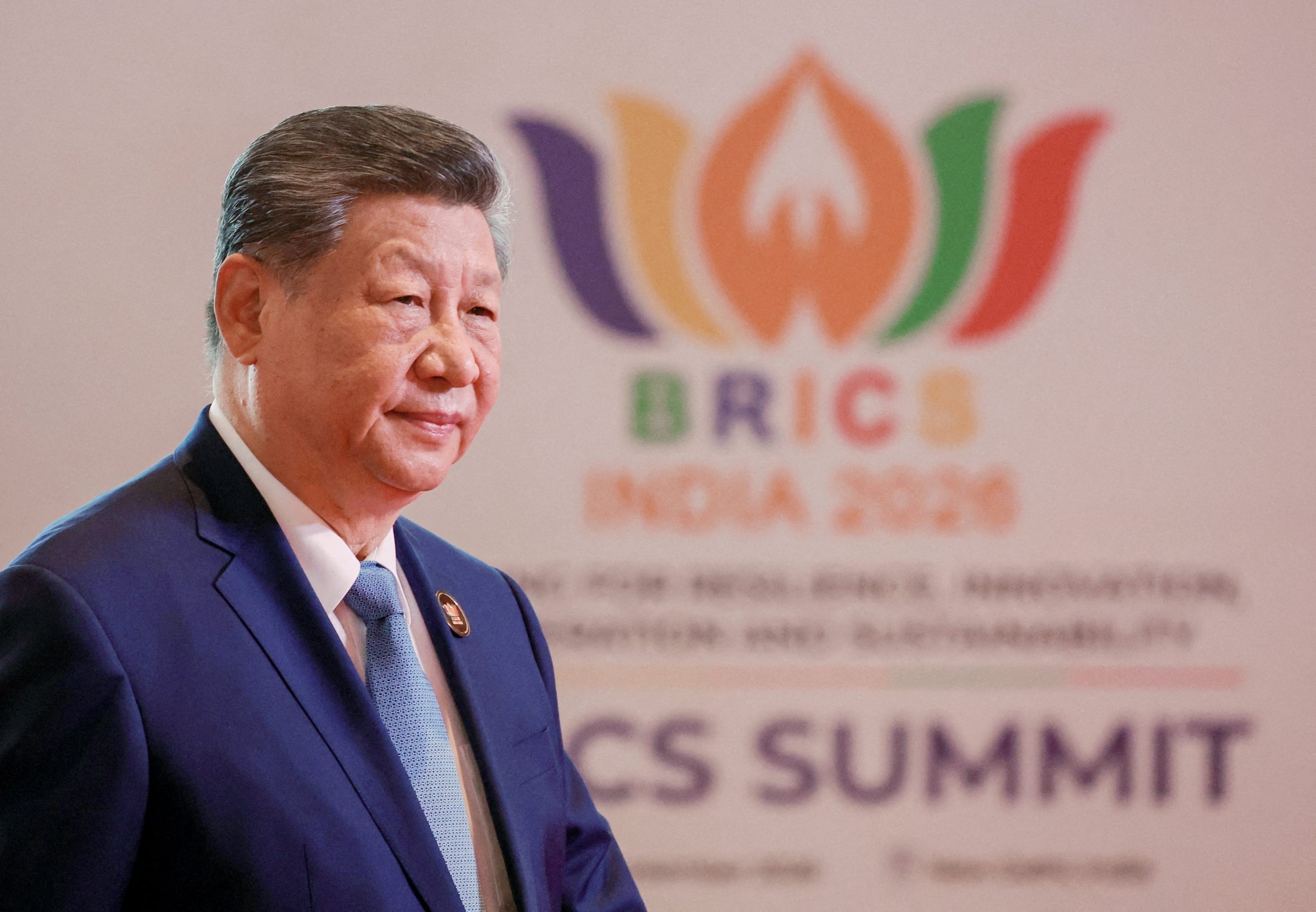
The 18th BRICS Summit, held in New Delhi on September 12–13, 2026, was marked by an effort to deepen cooperation among member states and give it more practical expression. Alongside familiar positions on multipolarity, strengthening the status of the "Global South," reforming international institutions, and expanding the representation of developing nations, the summit highlighted two interconnected trends. The first is BRICS’s gradual evolution from a forum for political and economic coordination into a framework that is also building professional, technological, and institutional networks in industry, technology, health, agriculture, and space. The second is China’s effort to use this process to advance ideas, areas of activity, and mechanisms that it is developing itself within a multilateral framework not under its exclusive control. Precisely because India, Brazil, South Africa, and other countries help shape the agenda and make decisions, turning ideas originating in Beijing into BRICS initiatives is intended, under this approach, to give them a broader international foundation and legitimacy. In other words, the forum can be viewed as an additional platform for internationalizing the Chinese agenda.
Both trends remain a work in progress. In many instances, the summit continued trends and decisions announced at earlier summits, including in artificial intelligence, which generated considerable headlines. It is therefore important to distinguish among three stages: announcing initiatives, establishing mechanisms and institutions to advance them, and implementing them in practice. In many areas, BRICS has already advanced from the first stage to the second, but whether many of these mechanisms will be implemented and will have a practical impact remains an open question. The summit's significance, then, lies in serving as another building block in a process of the gradual accumulation of mechanisms that may, over time, give cooperation among member states a more practical and institutionalized dimension—even without the emergence of a cohesive economic or political bloc.
From Declarations to Mechanisms
In the economic sphere, the summit continued efforts to connect payment systems, expand the use of local currencies, and strengthen the New Development Bank (NDB). At the same time, industrial cooperation expanded in smart manufacturing and robotics, solar energy, small and medium-sized businesses, and standardization. The New Delhi Declaration places particular emphasis on value and supply chains, technological cooperation, and increasing the share of developing countries in higher value-added stages of global production. Cooperation in standardization is especially important in this context, as it demonstrates how political coordination can gradually be linked to production, trade, and shared technical standards.
The expansion of these mechanisms, however, does not in itself indicate that BRICS is consolidating into an economic bloc. Although trade among member states has grown rapidly, reaching approximately $1.17 trillion in 2024, part of this increase stemmed from external shocks and trade diversion, as well as the expansion of the organization itself in that year, which reclassified existing trade flows with Egypt, the United Arab Emirates, Iran, and Ethiopia as "intra-BRICS trade." Furthermore, while BRICS countries account for roughly 24 percent of global goods exports, trade among them amounts to less than five percent of that total, characterized by considerable asymmetry and China's central role. These figures support the possibility of gradually expanding the use of national currencies in transactions among member states, but provide a much weaker basis for the idea of a common BRICS currency. In addition, as intra-bloc trade becomes more concentrated around China, de-dollarization in some cases may actually expand the use of the yuan rather than create a balanced, multi-currency system. This limits the appeal of such de-dollarization for many member states.
A similar trend of shifting from declarations to the creation of mechanisms is evident in health and agriculture. During 2026, BRICS advanced mechanisms for cooperation in combating infectious diseases, networks of health institutes and centers of excellence, vaccine development, and coordination among regulatory authorities for medical products. It also advanced a digital agriculture network, cooperation on agricultural inputs and genetic resources, and a network of centers of excellence for ecological and regenerative agriculture. Work continued on the idea of a BRICS grain exchange. These mechanisms are still taking shape, but they are laying the groundwork for cooperation in areas that could eventually have a direct impact on production, regulation, and trade.
Space cooperation, too, has moved beyond declarations to some extent. BRICS operates a mechanism that pools data from member states’ remote-sensing satellites for disaster management, agriculture, and environmental monitoring. In 2026, work advanced on extending this mechanism to the organization's new member states and developing a broader institutional framework for space cooperation, including discussions on establishing a BRICS space council. This area is particularly interesting because it brings existing national capabilities—including those of China, India, and Russia—into a multilateral framework. Space cooperation also intersects with many other fields, from agriculture to further scientific and technological collaboration.
Internationalizing the Chinese Agenda
Against this backdrop, the nature of the initiatives presented by Chinese President Xi Jinping in New Delhi stands out. They are not intended to turn BRICS into an economic union, create a common currency, or establish a common market. Rather, they would add layers of cooperation in areas where China itself has significant capabilities and advantages. Xi presented five concrete initiatives: in artificial intelligence, promoting an open-source community and cooperation in the development and application of large models; in trade and investment, deepening cooperation among special economic zones and establishing a BRICS Forum on Trade in Services in China in 2027; in the digital economy, establishing a cloud platform for the organization's digital ecosystem; in smart manufacturing, cooperating on smart factories, standards, and norms; and in human capital, expanding cooperation in engineering education and vocational training, mutual recognition of professional qualification standards, and youth exchanges in science and technology. These proposals share a common denominator: building additional layers of connectivity, standardization, knowledge, and shared institutions. Xi also linked the initiatives to China’s 15th Five-Year Plan, which he described as both a blueprint for China’s development and a “list of cooperation” with the world.
For China, the summit is also a step toward preparing to assume the organization’s chairmanship in 2027, when it will host the 19th summit. The New Delhi Declaration explicitly expresses the member states’ support for China’s upcoming chairmanship, and Beijing itself is already emphasizing continuity between the Indian and Chinese presidencies. Xi’s five initiatives could enable China to enter 2027 with some of the agenda it seeks to advance already extending beyond a purely Chinese initiative: it has been placed on the BRICS table, discussed in a multilateral forum, and, in some areas, may begin to be institutionalized.
This points to BRICS’s broader significance for Chinese foreign policy. Beijing does not have to establish organizations under its control or persuade its partners to explicitly adopt a “Chinese model” in order to expand its influence. It can advance parts of its agenda through multilateral institutions over which it has no formal or exclusive control. BRICS is a good example of this: India led the organization in 2026, decisions are made by consensus, and its members have different, and sometimes conflicting, interests. Precisely because of this, the adoption of ideas promoted by China in such a forum gives them additional significance. Ideas concerning the "Global South," sovereignty and equality among states, changes to global governance, AI, smart manufacturing, or the concept of "common, comprehensive, cooperative, and sustainable security" can undergo a process of internationalization: moving from proposals and concepts originating in China to a common language, initiatives, and multilateral mechanisms. In doing so, they gain broader legitimacy as international ideas, rather than being seen solely as part of an agenda originating in Beijing.
From the Regional to the Global
In this respect, there is also interesting continuity between BRICS and the Shanghai Cooperation Organization (SCO). The SCO Summit in Bishkek, held about two weeks earlier, illustrated how China operates within a regional framework to connect sovereignty, security, development, and cooperation with concrete institutions and mechanisms. BRICS operates on a global scale, giving similar principles broader reach among a larger number of countries. The two organizations differ in their membership and roles, and should not be viewed as parts of a single structure controlled from Beijing. From China’s perspective, however, they can fulfill complementary roles: the SCO as a regional framework for developing mechanisms for security and cooperation, and BRICS as a broader forum for advancing concepts of governance, economics, development, and technology. Over the years, the areas promoted by the two organizations have also increasingly overlapped: the SCO is giving greater prominence to economic issues, while BRICS is gradually expanding its engagement with security issues.
The connection between the regional and global levels is especially evident in the initiative Xi presented in Egypt in early September, immediately following the SCO Summit, for a "new security architecture in the Middle East." This initiative emphasizes greater responsibility for regional states in ensuring their own security, a comprehensive concept of security, links between security and development, and international coordination, alongside sovereignty and non-interference. According to this approach, responses to conflicts should emerge first and foremost from within the region and its states, while broader frameworks provide an international envelope. The BRICS Declaration does not adopt the Chinese initiative as such, but it includes some of the same concepts: indivisible security, political and diplomatic solutions, and a significant role for regional organizations.
The Middle East in the New Delhi Declaration
The Middle East features prominently in the New Delhi Declaration. Regarding the Palestinians, the declaration addresses the ceasefire in Gaza, humanitarian aid, opposition to forced displacement, and support for a sovereign and viable Palestinian state within 1967 borders, encompassing the Gaza Strip and the West Bank, with East Jerusalem as its capital. It supports full UN membership for Palestine and also references the proceedings brought by South Africa against Israel before the International Court of Justice.
Regarding Lebanon, the wording of the New Delhi Declaration is particularly direct: BRICS calls for the implementation of Resolution 1701, condemns continued violations of the ceasefire and of Lebanese sovereignty, and calls on Israel to honor its understandings with the Lebanese government and withdraw its forces from Lebanese territory where they are still present. The declaration also addresses UNIFIL, in which several BRICS countries participate, condemning attacks on its personnel and facilities. Regarding Syria, the declaration emphasizes sovereignty and territorial integrity, calls for a Syrian-led political process, and demands the withdrawal of "occupying forces," without explicitly naming Israel in that clause. Iran is likewise not mentioned in connection with the war in the Middle East/West Asia, with the emphasis in this context being on the general principle of sovereignty and territorial integrity, a call for restraint and diplomacy, and concern over attacks on civilian nuclear facilities subject to IAEA safeguards—a formulation that is, of course, also relevant to the Russia-Ukraine War.
In this context, it is interesting to consider how much the New Delhi Declaration differs from the SCO's Bishkek Declaration, published in early September. In Bishkek, Iran’s rights received extensive attention, while Israel was not mentioned by name. In New Delhi, the emphasis regarding the regional war was on restraint, preventing escalation, and returning to dialogue and diplomacy, while Israel received significant attention. Iran was at the center of the Middle East discussion in Bishkek; in New Delhi, the discussion of the region was much broader. The difference also illustrates the limits of Chinese influence: the two organizations’ different memberships and the interests of their other members affect the joint output. Precisely because of this, when an idea or formulation promoted by Beijing manages to win support within such a forum, it holds a multilateral value for China that is absent from a unilateral Chinese declaration.
Against the backdrop of this broad agenda, the limited scope of Xi's visit to India stood out. He arrived in New Delhi on the afternoon of September 12 and stayed in India for only about twenty-four hours, amid a gradual and cautious effort to stabilize China–India relations following the 2020 border crisis. Relations have improved since, but the border issue, trade imbalance, supply chains, and market access remain central points of contention. Based on official reports, Xi held only one official bilateral meeting—with Indian Prime Minister Narendra Modi—and did not attend the leaders' gala dinner, without giving an official explanation. This is a reminder that the deepening institutionalization of BRICS does not eliminate disagreements or competition among its members, particularly between Asia’s two largest members.
Implications for Israel
From Israel's perspective, these processes warrant examination across three interconnected levels: the technological-economic, the diplomatic, and in the long term, the strategic. On the first level, the significance is not merely the volume of trade with China, but the evolution of BRICS as a more practical network of technological, industrial, and institutional cooperation. Standardization, smart factories, AI, space, health, and agriculture gain added weight when they connect China with key Middle Eastern countries, including Egypt, Iran, and the United Arab Emirates. Israel should therefore monitor not only its bilateral relations with China, but also the systems, standards, and mechanisms China is developing with third parties in the region.
The second level is diplomatic and security-related. The New Delhi Declaration illustrates that the expanded BRICS is capable of reaching agreement on detailed language regarding conflicts in the Middle East. On several issues, above all Lebanon and the Palestinian issue, the language is distinctly critical of Israeli policy. At the same time, the differences between the BRICS and SCO declarations show that their positions are not simply a reflection of China’s own; they result from negotiations among countries with different interests.
In the long term, the more important question for Israel is whether the two processes—the development of practical mechanisms within BRICS and the SCO, and China’s effort to advance broader approaches to governance and regional and global security—will converge. China does not need formal control over these organizations to influence the language, agenda, and mechanisms evolving within them. As ideas originating in Beijing find expression within a multilateral framework, they can become part of a broader international discourse and action. The new security architecture for the Middle East proposed by Xi is an important test of this process: will it remain primarily a Chinese conceptual and rhetorical framework, or will it gradually connect with regional and international institutions, partners, and mechanisms, and translate into practical influence? The evidence will lie less in further declarations than in the establishment of permanent institutions, the allocation of resources, the adoption of shared standards, the creation of cross-border projects, and the formation of active coordination mechanisms.
The possible impact of these processes on the standing of the United States must also be considered. The question is not necessarily whether BRICS, the SCO, or new Chinese initiatives will replace the United States in the Middle East, but whether they expand the options available to regional states and gradually reduce their reliance on an international framework in which Washington holds a dominant status. This does not necessarily mean distancing themselves from the United States: countries in the region can expand their participation in frameworks that include China while simultaneously maintaining close security and economic ties with Washington. However, as alternatives proliferate in trade, technology, finance, security, and diplomacy, their room for maneuver may also expand. For Israel, the central question is how the expansion of these frameworks and alternatives will affect the position and involvement of the United States in the region—and, in turn, Israel’s room for maneuver.