


Publications
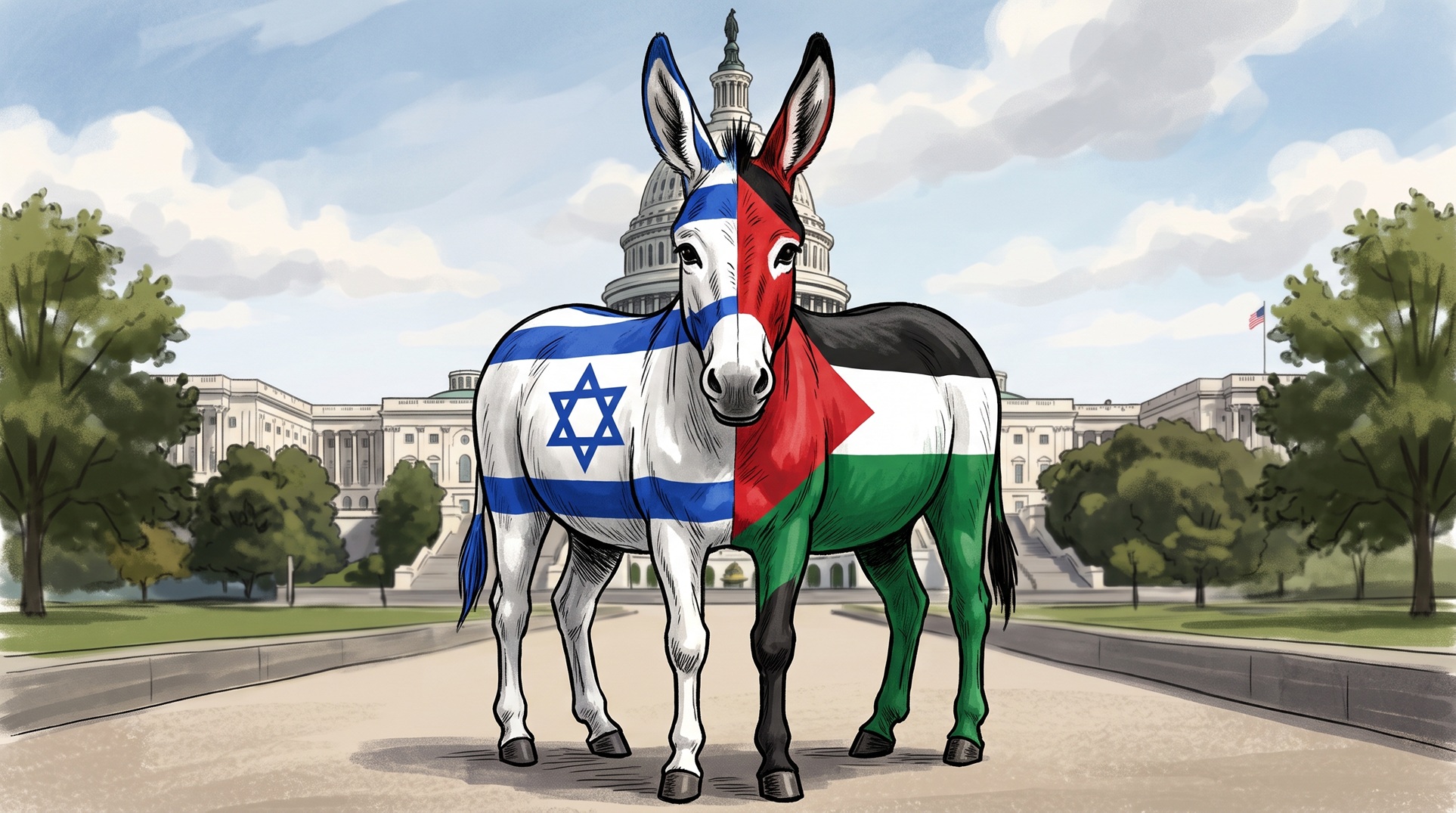
Ahead of the midterm elections, an analysis conducted by the INSS researchers indicates that despite the media attention surrounding Left Progressive victories in the primaries, this faction will remain by far the smallest in the incoming Congress. How should Israel act in light of these findings?
Special Publication, September 22, 2026
Follow us on GoogleThe victory of Dr. Abdul El-Sayed in Michigan’s 2026 Senate primary has been widely viewed as evidence that the Democratic Party is shifting sharply leftward on Israel. This report evaluates that claim by classifying all 259 Democratic incumbents in Congress, along with viable Democratic candidates for safe and contested seats in the upcoming November elections, into three factions. Classification drew on three sets of indicators, including each member’s stance on military aid to Israel, rhetoric used to describe Israel, and sources of campaign funding and endorsement. We identify a small Left Progressive camp that opposes all military aid and invokes charges of genocide and apartheid; a larger Mainstream Progressive camp that favors conditioning aid while avoiding those terms; and a Pro-Israel Establishment that defends the U.S.-Israel alliance while increasingly criticizing specific Israeli policies. Despite the media attention surrounding Left Progressive victories in the primaries, our estimates indicate that this faction will remain by far the smallest in the incoming Congress. Mainstream Progressives will remain the largest faction, while the Pro-Israel Establishment is expected to hold steady. In light of these findings, we recommend that Israel pursue a strategy of active engagement with the Democratic Party, one that challenges the narratives of Israel’s harshest critics while addressing the concerns of other Democrats by undertaking policy steps toward a political resolution to the Israeli-Palestinian conflict.
Much attention in the global media has focused on the wave of victories of left-wing critics of Israel in the U.S. Democratic primaries. The victory of Dr. Abdul El-Sayed in the Michigan primary for a seat in the U.S. Senate has been interpreted as new evidence of a profound shift in the party’s stances on Israel and Palestine. El-Sayed campaigned on a platform calling for an end to all military assistance to Israel, charging the country with having committed genocide in Gaza and practicing apartheid, and denouncing AIPAC’s funding of his opponent’s campaign. His victory, in the wake of extensive AIPAC spending and in a race in a moderate, swing state, demonstrates for the first time the viability of Israel’s harshest critics within a broad and diverse electorate.
But what of the Democratic party as a whole? To what extent has the party’s orientation toward Israel come under the control of its left-wing, pro-Palestinian flank? Is it true that the left-wing progressives are poised for major gains in the new U.S. Congress? What are the main factions within the party in regard to Israel and Palestine, and where is the party headed? This report aims to answer these questions and provide a foundation for understanding the current direction of the Democratic Party at the national level, with regard to Israel.
Mapping the Factions
To map the Democratic Party’s factions in relation to Israel, we began by examining speeches, public statements, and voting records of Democratic members of the U.S. Congress. Based on this analysis, we identified three sets of fault-lines that distinguish members’ approaches and perspectives on Israel.
- Position on military assistance and arms sales. Members of Congress differed in their positions on the issue of military assistance and arms sales to Israel, along a continuum including: a) ending all military assistance and banning arms sales; b) conditioning military assistance and arms sales on Israel’s human rights record; and c) unconditional support for existing aid and future arms sales.
- Language used to describe Israel. Members of Congress differed in relation to the terms they use to describe Israel’s conduct in Gaza, which is increasingly perceived as a litmus test of positionality within the Party. The members’ rhetoric ranges along a continuum from: a) accusing Israel of genocide and apartheid; b) describing Israel’s conduct in Gaza using other harsh language such as “slaughter,” “moral failure,” and“ethnic cleansing”; and c) expressing muted criticism or no criticism at all.
- Sources of campaign funding and endorsement. Members received support from a range of (sometimes overlapping) political organizations. These include: a) left-wing or pro-Palestinian groups, such as Citizens Against AIPAC Corruption (CAAC) and the Democratic Socialists of America (DSA); b) the liberal pro-Israel organization J Street; and c) the mainstream pro-Israel organizations American Israel Public Affairs Committee (AIPAC) and Democratic Majority for Israel (DMFI).
Next, based on these indicators, we classified all Democratic members of Congress and viable congressional candidates into (or, in some cases, between) three factions.
- The Left Progressives include members and candidates who support an arms embargo on Israel, accuse the country of genocide and apartheid, and typically receive support from Citizens Against AIPAC Corruption or DSA.
- The Mainstream Progressives are members or candidates who support conditioning military aid and arms sales to Israel based on human rights and legal standards; use strong language to criticize Israel’s wartime conduct while tending to avoid the terms genocide and apartheid; and generally receive support from J Street.
- The Pro-Israel Establishment includes members or candidates who oppose conditioning military aid to Israel, generally avoid harsh language when criticizing Israeli policy, and typically receive support from AIPAC and DMFI.
By including congressional candidates who have a reasonable chance of winning in November, while also taking into account expected retirements among incumbents, we were able to estimate not only the size and influence of each of the three factions in the current Congress but also within the Congress that will take shape after the November elections.
Findings
Our findings are summarized in Table 1 and Figures 1 and 2. Table 1 shows the number of Democratic incumbents in the current 119th Congress by faction, as well as low and high estimates for each faction in the incoming 120th Congress. The lower boundary is a count of all candidates (including incumbents running for reelection and candidates for open seats) who are competing in “solid blue” Democratic districts. The upper boundary includes all of those candidates plus those who are running contested races in districts classified as “leaning blue,” “leaning red,” or “toss-up.”
Figure 1 shows the distribution of members across factions in the current U.S. Congress. Figure 2 shows the expected distribution of members in the incoming Congress, based on the midpoint of our low and high estimates. Further details on our methods, including how we built the data set, classified members and candidates, and estimated the composition of the incoming Congress, are provided in the methodological appendix.
Left Progressives
The Left Progressives advocate for ending all U.S. military aid and arms sales to Israel, including through legislative measures such as the Block the Bombs Act (a bill proposed in 2025 to prohibit transfer of certain offensive munitions to Israel). Some members of this faction previously supported the supply of defensive weapons, such as the Iron Dome antimissile system, but have more recently pledged to oppose all military aid, i.e., including defensive systems. They typically accuse Israel of committing genocide in Gaza and describe Israel as a country that practices apartheid. In their discourse about Israel and the Palestinians, they emphasize human rights, international law, the value of keeping U.S. taxpayer dollars in the United States and what they describe as the legitimate rights of the Palestinian people. They oppose the war against Iran and often blame Israel for drawing the United States into the conflict. They have also made the rejection of AIPAC funding a centerpiece of their political rhetoric, accusing AIPAC of being a “foreign agent.”
The faction’s core consists of “The Squad,” a group of progressive Democrats who were elected to Congress in 2018, including Alexandria Ocasio-Cortez (NY-14), Ilhan Omar (MN-05), Ayanna Pressley (MA-07), and Rashida Tlaib (MI-12). Recent election cycles added three new members to the group: Greg Casar (TX-35), Summer Lee (PA-12) and Delia Ramirez (IL-03). Many, though not all, of the figures in this camp are aligned with the Democratic Socialists of America (DSA), of which New York City Mayor Zohran Mamdani has emerged as a leading figure.
During the current election cycle, this faction of the party has grown to include members who won their primary races and will contribute at least a few additional members to the U.S. Congress. In addition to Abdul El-Sayed, who won Michigan’s Senate primary and now faces a competitive race against the state’s Republican nominee, the list includes Chris Rabb (PA-03), Melat Kiros (CO-01), William Lawrence (MI-07), Darializa Avila Chevalier (NY-13) and Claire Valdez (NY-07). During the 2026 primaries, almost all of the Left Progressive candidates received campaign funding from the newly established Citizens Against AIPAC Corruption.
El-Sayed exemplifies both the perspective and the rhetorical tone of this camp. In an interview following his primary victory on the national television program MS NOW, he articulated his views as follows:
"I understand that Netanyahu is a big reason why they've gotten so aggressive and frankly so bloodthirsty under his reign, but I also understand that it's impossible for us to say we want a two-state solution while we've been aiding, arming and abetting the very people who have been trying to foreclose on the possibility of a Palestinian state…. [The United States must] hold foreign actors accountable to international law…. [Israel has] conducted a genocide, has at baseline done apartheid and has taken us into a war we have no business fighting. So why, of course, are we sending money to that country to fund their military?"
Currently, the Left Progressive faction is comprised of three senators and 21 members of the House of Representatives. Despite the media attention it garners, its political momentum, and its broader influence on the direction of the party’s discourse on Israel, the faction is by far the smallest of the three. Factoring in retirements, the faction is expected to gain between four and twelve seats in the current election cycle, potentially including two new senators: Abdul El-Sayed (MI) and Troy Jackson (ME).
Mainstream Progressives
Positioned between the Left Progressive faction and the traditional Pro-Israel Establishment are the Mainstream Progressives. These are senators and members of the House who favor new restrictions on arms sales to Israel, sharply criticize the Netanyahu government's conduct in Gaza, and advocate for Palestinian statehood, while stopping short of charges of genocide and calls for a total embargo on arms sales.
Georgia Senator Jon Ossoff exemplifies this position. In 2025, he voted to block the sale of certain fully automatic rifles to Israel, citing the “mass deprivation of civilians in Gaza” and the likelihood that the rifles would equip police forces under the ministerial control of Itamar Ben Gvir. At the same time, Ossoff voted against a related resolution blocking air-to-ground munitions, maintaining that “Israel’s capacity to strike those who would launch missiles and rockets at Israeli civilians depends upon the deterrence provided by the Israeli Air Force.” He has called the civilian death toll in Gaza “a moral failure,” while affirming the U.S.-Israel alliance and categorically condemning Hamas.
In the Senate, Chris Murphy (CT) also exemplifies this orientation, as he recently sought to convey in an interview on the NBC News program, Meet the Press: “I want there to be a strong U.S.-Israel relationship. I support Israel. I cannot support this government’s actions. They are not aligned with U.S. national security objectives.”
In the House of Representatives, the faction’s notable members include Jamie Raskin (MD-08) who backed the Block the Bombs Act while avoiding accusations of genocide, and the number two ranking Democratic, Katherine Clark (MA-5) who voted in favor of the 2026 Massie Amendment (a resolution to suspend $3.3 billion in military aid promised to Israel under the 2016 Memorandum of Understanding). In a press release following the vote, Clark took care to emphasize that her vote for the amendment should not be interpreted as opposition to the U.S.-Israel alliance:
“We should not provide a blank check for military aid to any country that does not comply with U.S. law, interests, and values. The Netanyahu government has failed to meet that standard. I will be voting yes, not because I agree with the entirety of the amendment… but because I believe we must change course…
Israel has the right to exist as a sovereign, secure, and democratic Jewish state. They have the right to defend their people and their territory. The United States should continue to have a strong strategic alliance with Israel and support its defense against governments and proxy groups that seek its destruction. We must continue to support Israel’s defensive systems…
There must be a new and sustainable path for true security in the Middle East. It cannot be achieved without surging aid to Gaza, halting construction of settlements in the West Bank, ending settler violence, and upholding the Palestinian people’s right to self-determination. We cannot give up on peace and our work to build a better future for all children.”
Many Mainstream Progressives have a history of AIPAC alignment. In the current election cycle, however, a significant number have either rejected AIPAC funding or announced their intention to do so. Most are backed by J Street, the liberal advocacy organization that champions a two-state solution, or more recently, a regional initiative it calls the 23-State Solution. The positions of Mainstream Progressives on aid and arms sales hew closely to those of J Street. None of the Mainstream Progressives is aligned with DSA or receives funding from CAAC.
Mainstream Progressives are the largest faction within the Democratic Party, accounting for 28 senators and 81 members of the House. While the faction may lose a few seats following the upcoming election, it will remain the largest of the three in the incoming Congress.
Pro-Israel Establishment
The Democratic Party’s Pro-Israel Establishment is composed of members who ardently support the U.S.-Israel alliance, affirm Israel’s right to exist as a Jewish state and defend itself against its adversaries, and support continued U.S. military assistance and cooperation. Members of this camp have garnered the most support from and are most closely aligned with AIPAC and DMFI.
The most prominent Establishment Democrats in the Senate include Minority Leader Chuck Schumer of New York, and Senators Jacky Rosen of Nevada and John Fetterman of Pennsylvania. In the House, the group includes members such as Brad Schneider (IL-10) and Ritchie Torres (NY-15).
While members of the Pro-Israel Establishment support continued U.S. military aid and reject restrictions on weapons transfers, most pair these positions with support for humanitarian aid to Gaza, criticism of some policies of the Netanyahu-led government, and advocacy for a two-state solution. Ritchie Torres’s remarks to a group of pro-Israel college students exemplify the tone and content of the Pro-Israel Establishment’s orientation:
“We have to remind the world that despite the amnesia, Hamas is the central cause of [Israel’s] war in Gaza… The accusations against Israel, whether it’s genocide, apartheid or [deliberate] starvation, are all false. It’s all a propaganda campaign. But we also have to recognize there is a humanitarian crisis in Gaza … We should be doing everything we can to alleviate the human suffering in Gaza.”
Members of the Pro-Israel Establishment have come under increasing pressure as the rest of the Democratic Party has grown more critical of the Jewish state. Representative Haley Stevens (MI-11), who was defeated in the Democratic primary in Michigan for a U.S. Senate seat, dramatized this predicament. Although experienced, institutionally backed, and the beneficiary of tens of millions of dollars in AIPAC funding, she was largely on the defensive regarding Israel as her opponents—including primary winner Dr. Abdul El-Sayed and State Senator Mallory McMorrow—positioned themselves to her left. For members of this camp, the main challenge is no longer merely defending Israel. Rather, it is how to flourish within a party in which previously mainstream positions have become political liabilities and at a time when incumbents and “the Establishment” are viewed with suspicion by disaffected voters.
The Pro-Israel Establishment remains a large faction of the Democratic Party in the U.S. Congress, occupying almost 100 seats across the two chambers. However, most members of the camp are in the House; only 7 senators clearly belong to this faction. This was demonstrated most clearly by the April 2026 vote on a resolution introduced by Senator Bernie Sanders (VT) to ban certain arms sales, which only 7 Democratic senators opposed. Moving forward into the incoming Congress, the faction is expected to maintain its approximate current size and decrease slightly as a share of all Democratic members of Congress.
In-Betweens
In addition to the three primary factions, there are a number of incumbents and candidates who straddle adjacent camps. Positioned between the Left Progressives and the Mainstream Progressives are figures who harshly criticize Israeli policy but refrain from using the terms genocide and apartheid, or who use such rhetoric but stop short of advocating a total arms embargo. Such figures may receive support from either CAAC or J Street. The category, exemplified by Brad Lander (NY-10) and Joaquin Castro (TX-20), currently includes six members and has the potential to grow to 12.
At the other end of the spectrum are incumbents and candidates who straddle the Mainstream Progressives and the Pro-Israel Establishment. This group comprises figures who have historically been strong supporters of Israel, but recently voted in favor of limiting aid (e.g., by supporting the Massie Amendment). Most characterized their support for such resolutions as intended to signal concern over Israel’s current policies in relation to Gaza and the West Bank. In the Senate, members of this category include Cory Booker of New Jersey and Mark Kelly of Arizona. In the House, the category includes Jake Auchincloss (MA-4) and Laura Friedman (CA-30). This in-between category is somewhat larger, including 27 members, and has the potential to grow to 39 following the November election.
Analysis
Despite the attention focused on the gains of the Left Progressives during the current election cycle, the camp is projected to increase in size by a maximum of two seats in the Senate and four to ten seats in the House of Representatives. In the broader picture, the harshest critics of Israel—members of Congress who oppose all weapons transfers to Israel, describe Israel as an apartheid state that committed genocide in Gaza, and devote much of their campaign energy to opposing AIPAC as a distinctively malign force in U.S. political life—will remain the smallest of the three camps in the next U.S. Congress.
Moreover, the modest growth of the Left Progressive camp will likely coincide with a net gain in Democratic seats in the incoming Congress. In relative terms, the Left Progressive camp is poised to gain only a few percentage points relative to all Democratic members of Congress, barely changing the overall distribution of influence within the Party.
Across the Democratic Party’s factions, however, the momentum very clearly favors the voices that are calling for conditioning future aid to Israel and a broader reassessment of the U.S.-Israel alliance. This was evident, for example, in the widespread Democratic support in July 2026 for the Massie Amendment to suspend U.S. military assistance to Israel—a resolution that had no realistic chance of passing but that many Democrats viewed as “symbolic” and intended to communicate “disapproval of the status quo.” It was also evident during Michigan’s Democratic primary for the U.S. Senate, in the tepid defense by erstwhile Pro-Israel Establishment figures such as Haley Stevens of their voting records and sponsorship by AIPAC.
Moreover, during the tenure of the current Congress, the mainstream view within the party, and even more so among its voters, has shifted dramatically on the clearest of policy questions discussed here—aid to Israel. Fueled in part by statements from Israel’s leaders themselves, it is now the prevailing view that financial military aid to Israel should end, with the only question being how quickly and what will take its place. There is also a much broader willingness to restrict and examine arms transfers on a case-by-case basis. Other issues of U.S. policy not used for classification here reveal a similar pattern, such as support for sanctions on certain Israeli individuals and organizations for their involvement in settlement activity and violence against Palestinians. The overall pattern is one of growing impatience and disillusionment with Israel that does not quite match the extent of disillusionment seen in polling among self-identified Democrats, but is nonetheless on the rise.
Notably, each of the camps includes figures who indicate that they would be willing to recalibrate their policy positions should Israel enact policies that align more closely with their values. The growing Democratic support for arms sales restrictions as the war in Gaza progressed certainly indicates a willingness to change positions, albeit in the opposite direction. How much action would be required by Israel to affect such a movement, and how dramatic the response might be, remains to be seen.
Recommendations
At this stage, a quick return to the pre-war near-consensus on support for Israel among elected Democrats is impossible. But the data presented here do not support the view that most Democratic members of Congress are—or will be following the upcoming elections—antagonistic toward Israel or resolutely opposed to the U.S.-Israel alliance. Therefore, bi-partisan support must remain the goal of Israeli policy in Washington. This is essential due to the structural nature of the two-party system in the United States—including close election results and frequent turnovers in partisan control over the presidency and Congress—as well as the shifting winds among Republicans that we have discussed elsewhere. The centrality of close relations with the U.S. for Israel’s national security concept means that Israel cannot afford to rely on the presidential prospects of any specific individual or on the likelihood of continued dominance of friendly political forces.
In light of this, Israel’s approach to the U.S. political arena should seek to disrupt the momentum and gravitational pull of the far left. This can be done by challenging its exaggerated claims, identifying the dangers it poses for both Israeli and U.S. national security, and demonstrating—through both policy initiatives and public diplomacy—that its concerns about human rights and the rights of Palestinians can be pursued within the framework of a strong U.S.-Israel alliance. At the same time, Israel’s approach should seek to address the concerns of the Mainstream Progressives and strengthen the standing of the Pro-Israel Establishment. The overall aim should be to establish conditions that are conducive to the long-term staying-power of the U.S.-Israel alliance.
Some observers of U.S. politics argue that Israel will only be able to make the case for Democratic Party support under a new national leadership. Such observers are keenly focused on Israel’s national elections, scheduled in October, as a critical opportunity for a reset in relations with the United States.
However, under any government, rebuilding support for the U.S.-Israel alliance within the Democratic party will necessitate changes in Israeli policy. This is especially true on the Israeli-Palestinian issue where there is an expectation, even among Israel’s supporters, that an incoming Israeli government will act to stop settler violence and settlement expansion, and halt attacks in Gaza while moving forward toward a political resolution of the conflict. Such policy changes may or may not move Democratic public opinion on Israel, though they are likely to elicit a positive response from lawmakers. Words alone may have some effect, while action is likely to be received positively.
Moreover, in recent years Israel has been seen as choosing a side in the American domestic political arena. To rebuild bi-partisan support, Israel must formally reach out and reestablish dialogue with the Democratic party. (This should include a much more intentional and sustained dialogue with the American Jewish community, most of which identifies with the Democratic party). Such a dialogue will necessarily entail uncomfortable conversations. We propose conducting such conversations in a spirit of openness and a willingness to listen, even though Israeli leaders should not be expected to adopt American, let alone Democratic, viewpoints wholesale. Where one sits is often where one stands, and Israelis have a justifiably different perspective on Israeli interests and needs than Americans do.
Lastly, with regard to the Left Progressives, the State of Israel will not benefit from official channels of communication with this camp in the near future. However, Israel should seek Track II and other informal channels of communication with individuals in this faction whose critical posture is not rooted in a fundamental rejection of the idea of Jewish nationhood. Such a dialogue should be carried out, on behalf of Israel, by actors who view the U.S. relationship with Israel positively, are themselves either Israeli or connected to Israel. The aim of such dialogue should be to reduce animosity, make Israel a less prominent policy priority for those senators and representatives, and, over time, identify ways to advance shared interests where possible. This is especially important in relation to senators whose individual influence tends to be greater than members of the House, as a consequence of length of terms, chamber size, and chamber rules.
Methodological Appendix
The data set for the research includes all incumbent Democrats serving in the U.S. Congress, as well as two independents (Senator Bernie Sanders (VT) and Senator Angus King (ME), who caucus with the Democrats. It also includes all Democratic candidates for the November 2026 election who have a reasonable chance of defeating their Republican opponents. The threshold for “reasonable chance” was designed to be comprehensive and inclusive: we included all candidates who satisfied any of the following criteria: a Cook Political Report rating of “Lean Democrat, “Toss Up” or “Lean Republican”; a Democratic Congressional Campaign Committee rating of “Red to Blue” or “District in Play”; or a gap of five percent or less in the New York Times polling average. The Kalshi prediction market was also checked for cross-validation.
The data set as a whole included 259 incumbents (31 of whom are expected to retire at the end of the current session); 29 candidates for safe seats; and 42 candidates in contested races.
To derive the factions of the Democratic party in relation to Israel and Palestine, the speeches, statements, social media posts, voting records, interviews, and websites of current members of the U.S. Congress were examined.
Members of Congress and viable candidates were then assigned to camps on the basis of three sets of indicators:
- The member or candidate’s stance on military aid to Israel ranging from a) opposing all military aid and arms sales; to b) conditioning aid and arms sales on human rights and international law; to c) supporting unconditional military assistance.
- The member or candidate’s language used to describe Israel ranging from a) describing Israel as having committed genocide and apartheid; to b) describing Israel as having committed other severe offenses, such as war crimes or ethnic cleansing, while avoiding the charge of genocide; to c) expressing more cautious criticism or none at all.
- The member or candidate receives campaign funding or endorsement during the current electoral cycle from a) CAAC or DSA; b) J Street; or c) AIPAC or DMFI. Table 2 shows campaign funding/endorsement by faction.
In general, members and candidates who oppose all arms sales to Israel, describe Israel as having committed genocide and practicing apartheid, and receive support or endorsement from CAAC or DSA were classified as Left Progressives. Members and candidates who support conditioning military aid and arms sales on Israel’s adherence to legal standards, describe Israel as having committed serious offenses while refraining from allegations of genocide, and receive support from J Street, were classified as Mainstream Progressives. Members and candidates who support military assistance without conditions, avoid severe characterizations of Israel, and receive support from AIPAC or DMFI were classified as the Pro-Israel Establishment.
The three sets of indicators were not used as a formal algorithm to mechanically determine classification. Rather, each was consulted as evidence bearing on the likelihood that a member belonged to a particular camp. All assignments were made qualitatively, based on the weight of the evidence stemming from the three sets of indicators.
Although the distinction between “progressives” and “the establishment” is commonplace in research and commentary on the Democratic Party, the mapping used in this research is tailored specifically to members’ and candidates’ stances on Israel and Palestine and does not necessarily align with mappings that concern other policy issues.
Democratic incumbents running for reelection are nearly all expected to retain their seats, in an election projected to result in Democrats gaining seats in both the House and Senate. The lower boundary estimate includes all incumbents and candidates for “safe seats” in solidly Democratic districts who therefore have a very high likelihood of winning in the fall. The upper boundary estimate includes all incumbents and all candidates for both safe and contested seats. The range between lower and upper boundaries and midpoint estimates (see Figure 2) generally aligns with widely cited election forecasts.