


Publications
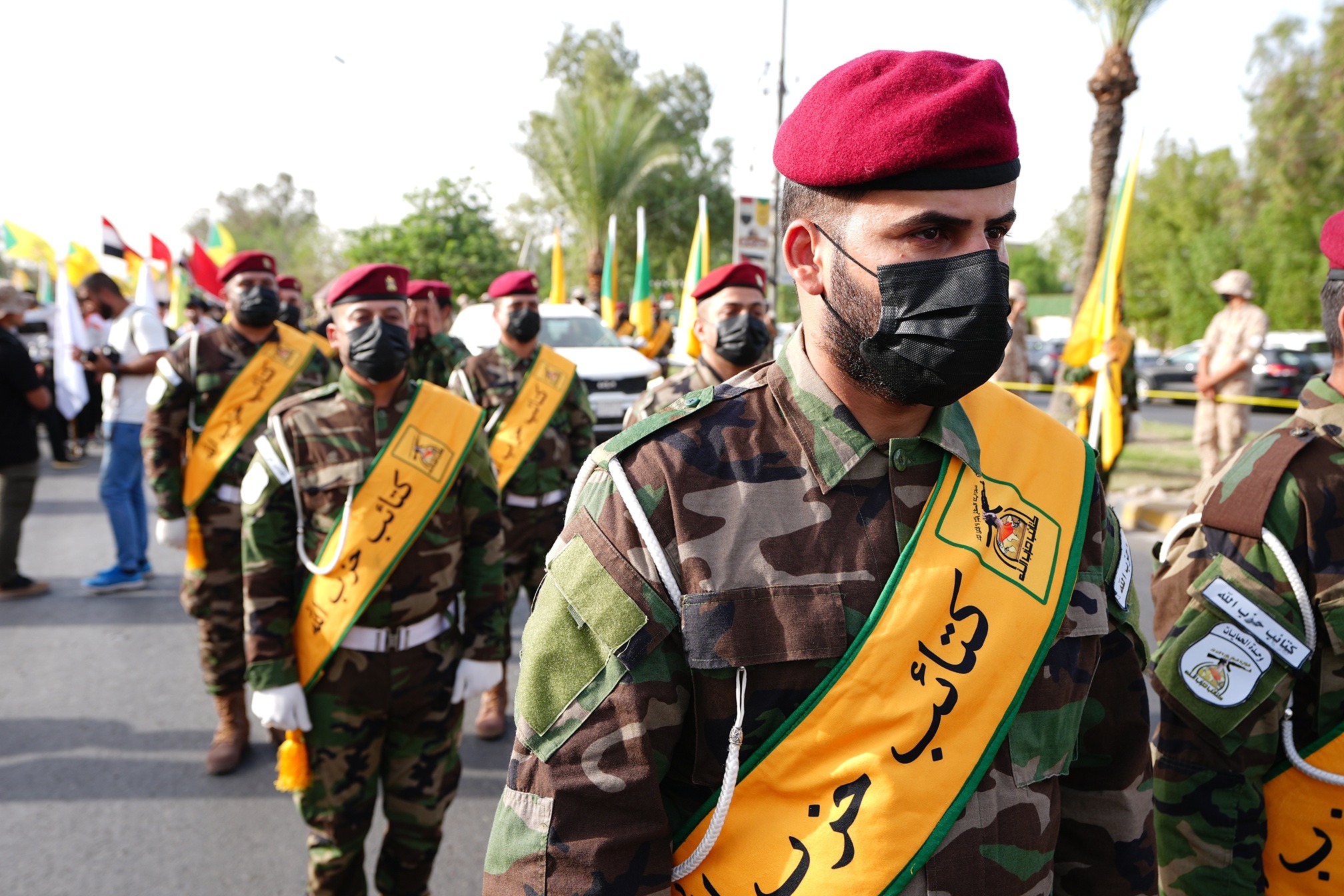
The challenges facing the Iraqi government's ambitious plan to disarm militias loyal to Tehran
INSS Insight No. 2193, September 2, 2026
Follow us on GoogleFollowing American pressure, Iraqi Prime Minister Ali al-Zaidi presented an ambitious plan to disarm the pro-Iranian militias. He even set an ultimatum for its implementation: September 30, the date on which the U.S.-led international coalition’s mission against ISIS is scheduled to conclude. As the deadline approaches, the magnitude of the challenge is becoming increasingly apparent amid internal divisions among the militias. While pragmatic militias, whose leaders seek to strengthen their own political influence, have declared their support for the plan, the hardline militias and those most loyal to Iran have firmly rejected it. They have even attempted to disrupt the initiative through military escalation in neighboring countries, prompting a joint U.S.-Saudi retaliatory strike. At the same time, an intensified Iranian effort to thwart or delay the plan’s implementation is further escalating tensions.
Parallel to the emerging internal conflict in Lebanon between Hezbollah and the government seeking to disarm it, a similar process has been unfolding in Iraq in recent months. In June 2026, Prime Minister Ali al-Zaidi announced a plan to disarm the pro-Iranian militias. As in the Lebanese case, the initiative in Iraq is being driven by the U.S. administration with the aim of strengthening state sovereignty, including the rule of law and the state's monopoly on the use of force.
As a first step, al-Zaidi launched a broad wave of arrests targeting corrupt politicians and officials, leading to the seizure of vast, illicitly acquired fortunes. Concurrently, al-Zaidi outlined the stages of his plan to disarm militias operating outside state authority and to integrate their operatives into the country's legitimate security frameworks.
However, a gap between al-Zaidi’s ambitious objectives and the capacity to achieve them is already apparent. Iraq remains a central link in the Iranian-led "Shiite Axis," and according to media reports, the Iranian regime has been working there in recent months to rebuild its proxy network and establish new covert cells. The result is mounting tension and even military escalation by the hardline militias most loyal to Iran. In an effort to challenge al-Zaidi, these militias have launched attacks in recent weeks against several neighboring countries, chief among them Saudi Arabia. In an unusual move, the Kingdom retaliated, joining the U.S. military in strikes against the militias. Consequently, Iraq’s internal dynamics led to an escalatory spiral that has extended beyond its borders, merging into the broader war between Iran and its proxies on one side, and the United States and regional states on the other.
Internal Division
On September 30, the ultimatum set by al-Zaidi for the disarmament of all militias operating outside state authority is set to expire. Al-Zaidi, who assumed office as prime minister in May, is pursuing an ambitious and unprecedented initiative since the collapse of Saddam Hussein’s regime, with the stated objective of placing all weapons in the country exclusively under the control of the legitimate security institutions. The deadline is certainly no coincidence: it aligns with the end of the military mission of the U.S.-led international coalition that has fought ISIS since 2014 and the withdrawal of the remaining U.S. forces still operating from bases in Iraq as part of that mission. In the past, pro-Iranian militias have cited the end of the U.S. military presence in Iraq as a precondition for discussing their own disarmament. Yet despite al-Zaidi’s declaration that there will no longer be any justification for the militias to remain armed after that date, the Iraqi government has signaled in recent days that the deadline may be postponed in light of steadfast resistance by some militias to reaching understandings with the government.
When looking at which actors have formally expressed support for and joined the process, a clear lack of consensus among Shiite militia leaders is revealed. Thus far, Muqtada al-Sadr, leader of the political movement that bears his name, and Saraya al-Salam, a militia affiliated with his movement, have declared their support. Al-Sadr’s movement withdrew from parliament in 2022 following a bitter dispute with the current Shiite governing bloc, the Coordination Framework. By backing the plan, al-Sadr is clearly seeking to bolster his political and public legitimacy at the expense of his rivals. The initiative has also won the support of a senior partner in the governing coalition, Qais al-Khazali, leader of the Asa’ib Ahl al-Haq militia. He, too, appears to be motivated by political considerations and by the recognition that, without a formal response to Washington’s explicit demand that the militias disarm, the government could lose a significant portion of the U.S. assistance on which it depends. These two militias are among the largest in Iraq and together number tens of thousands of members. A smaller pro-Iranian Shiite militia, Kata’ib Imam Ali, has also publicly joined the process.
Concurrently, a roadmap for implementation has been established to take effect once the militias' independent command structures are disbanded. It includes establishing a government committee tasked with collecting arms and integrating disarmed militia operatives into the military or into the legally recognized umbrella organization known as the Popular Mobilization Forces (PMF). In addition, law enforcement authorities will move to close illegal militia offices and conduct raids on sites where weapons are illegally stored or manufactured.
The governing coalition, the "Coordination Framework," has announced its support for consolidating arms under state control and for separating the activities of the PMF from any political, partisan, or social activity. Other politically active militias are weighing their options, conditioning their participation on preserving their political gains or securing ministerial posts in the government, some of which have yet to be filled.
By contrast, at least two militias known for playing a central role in terrorist activity as part of the Iranian-backed “Axis of Resistance”—Kata’ib Hezbollah and Harakat al-Nujaba—have issued condemnations and threats since the announcement of the disarmament ultimatum. These threats have translated into attacks on neighboring countries, likely intended to deter Prime Minister al-Zaidi from following through on his plan. Iraqi media reported that several militias even proposed "freezing" the use of their weapons for a two-year period, a proposal the Iraqi government outright rejected.
The decision to advance the disarmament of the militias by a government that itself relies on the support of the pro-Iranian Shiite bloc in parliament is far from trivial, given these forces’ ideological affinity with the Iranian regime and the fact that a significant number of the governing coalition’s partners are themselves members of the very militias slated for disarmament. However, when examining the constraints currently acting upon Iraq's governing partners, it becomes evident that economics holds the key to understanding the move. Iraq has fallen into a severe financial crisis following the closure of the Strait of Hormuz, which caused a sharp drop in oil exports. In the absence of an available alternative capable of restoring oil exports to prewar levels, or anywhere close to them, the country faces an ongoing fiscal deficit that has made it difficult to pay state employees' salaries. This comes alongside efforts to advance agreements and investments with U.S. companies (which were the focus of al-Zaidi’s visit to the United States in July) as well as with companies from the Gulf states in the energy and gas sectors, in an effort to secure revenue for the state. Given Iraq's precarious economic situation in recent months, the al-Zaidi government was therefore left with little choice but to comply with the conditions for obtaining urgently needed international assistance, including the U.S. administration’s unequivocal demand that the militias disarm.
Nevertheless, looking at the broader picture beyond al-Zaidi’s public declaration and target date, it remains unclear how his government will meet such an ambitious timeline. It also raises the question of whether this is merely a partial or even symbolic initiative, given two fundamental legislative hurdles. The first is the absence of legislation regulating the disarmament process, amid reports of disagreements among the parties comprising the Shiite governing coalition, the Coordination Framework, that have prevented such legislation from advancing. The second is al-Zaidi’s consent, as prime minister on behalf of the Coordination Framework, to advance new legislation regulating the status of the Popular Mobilization Forces. This law is intended to strengthen their autonomous status (which until now has also helped reinforce Iranian influence in Iraq through these forces) rather than integrate them into state security bodies, as required under the disarmament plan and its goal of placing all military activity under state sovereignty.
Alongside these formal difficulties, the clash between the government and militias refusing to join the process has already triggered, as noted, a regional escalation that forced Iraq into an exchange of blows with neighboring states without the central government's involvement. In late July 2026, militias in Iraq launched dozens of missiles and UAVs at Saudi energy infrastructure, U.S. forces in Jordan, and, according to IDF assessments, targets in Israel. Beyond signaling their willingness to use force, the attacks were intended to achieve several goals: to test al-Zaidi's resolve in the face of military pressure, to put U.S. backing for Iraq to the test, and to sabotage Iraq's path of rapprochement with the West and the Gulf states.
In practice, however, the escalation proved to be a double-edged sword. In response to the strikes on infrastructure and military bases, the United States and Saudi Arabia carried out a series of joint airstrikes deep inside Iraq, targeting headquarters, weapons depots, and logistics facilities belonging to Iran-backed militias and the Popular Mobilization Forces. The militias that came under attack threatened to retaliate, but, fearing further escalation and at the urging of Hadi al-Amiri, leader of the Badr Organization and a senior partner in the Coordination Framework, they announced that they would postpone their response.
Moreover, following the escalation, Saudi Arabia reportedly demanded that the Iraqi government take punitive measures against the Iraqi militias that had attacked it. Since late July, the Iraqi government has taken limited steps to prevent additional attacks against Saudi Arabia and other countries. In addition, informed sources reported that Saudi Arabia decided to refrain from striking Jurf al-Sakhar—a hub of Shiite militia activity south of Baghdad, which Riyadh claimed had been used to carry out the attacks—after al-Zaidi requested time to address the situation there himself. Al-Zaidi also reportedly plans to tighten security measures and deploy a special unit of the Iraqi Counter Terrorism Service near Jurf al-Sakhar to “monitor” militia movements.
At the same time, as the process advanced, tensions escalated with Iran, which views the disarmament of the militias as a blow to the assets of the Iranian-led axis. Thus, while the United States exerted heavy pressure on al-Zaidi to disarm the militias, Iran backed those that refused. During meetings with their representatives, the commander of the IRGC Quds Force, Esmail Qaani, made clear that Tehran was prepared to allow the militias to commit to discussing the matter of their arms, but that their actual surrender constituted a "red line" for Tehran, since Iran is, in effect, the "owner of the weapons." It is clear that Tehran continues to view the militias that cooperate with it as an indispensable strategic asset—whether Hezbollah, the Houthis, or the Iraqi militias. This also forms the backdrop for the August 2026 visit to Iraq by the Speaker of the Iranian Parliament, Mohammad Bagher Ghalibaf. Like Qaani, Ghalibaf expressed support for the "resistance organizations," implicitly signaling his opposition to the militias’ disarmament. According to reports in the Arab media, he also suggested "freezing" or concealing the militias' heavy weapons, or transferring them to Iran until the militias reach a political settlement with the Iraqi government. However, by the end of the visit, Iraqi sources claimed that he had failed to persuade al-Zaidi to soften his position regarding the consolidation of all weapons under state control once the ultimatum expires.
Interim Conclusions and Implications for the Region and Israel
The ongoing internal debate in Iraq between supporters and adamant opponents over the ultimatum to consolidate weapons under state control, coupled with the Iranian regime’s efforts to enable the continued use of the Iraqi arena as part of the Shiite Axis’s activities, points to significant challenges still facing the Iraqi government. It also leaves Iran with considerable means to exert influence and mobilize its proxies in Iraq. Moreover, the deliberate escalation by rogue Iraqi militias through the “export” of the crisis, with assistance from Iran and other elements of the Shiite axis (such as the Houthis, who announced launching attacks from Iraq during one of the recent strikes on Saudi Arabia), demonstrates that the Iraqi arena is, at this particular juncture, no less challenging or dangerous than it was previously. This holds true for the U.S. forces remaining in the region, for neighboring Arab states, and also for Israel, considering the pattern of recent attacks. Moreover, against the backdrop of previous incidents of violent clashes between extreme militias (particularly Kata'ib Hezbollah) and Iraqi security forces during law enforcement operations, any attempt to forcibly seize the militias’ weapons is likely to trigger an internal confrontation that could even deteriorate into civil war. In an attempt to allay fears, al-Zaidi clarified that there is no intention to enter into a military confrontation with the militias and that a constructive dialogue with them is underway.
However, recent military events demonstrate that a firm military response against pro-Iranian militias in Iraq, as demonstrated by the unusual joint U.S.-Saudi operation, can serve to restrain their actions. Likewise, an explicit threat to respond to any further militia attack can help establish new rules of the game that constrain these militias’ freedom of action, even if they have no intention of disarming voluntarily.
Furthermore, proactive regional cooperation ahead of a potential escalation originating from the Iraqi arena—selecting targets and response methods that will inflict pain on the militias and restrict their movements—is a necessary step in which Israel could also take part. Such cooperation would form part of broader regional preparations for continued attacks by Iran and its proxies, on the assumption that the patterns of activity that have emerged in recent months may persist.
Finally, despite the challenges overshadowing its chances of success, the process launched in Iraq carries inherent benefits for the Iraqi state. Even if it does not lead to the immediate elimination of unlawfully operating militias or the eradication of Iranian influence in the near term, it marks a milestone in building the Iraqi state's capacity to enforce its sovereignty, first and foremost against non-state actors undermining it from within. If the Iraqi government acts decisively to implement its decision to consolidate arms under state control, the initiative could reduce the scale of illegal militia activity and the potential threat it poses, which carries significance for the prolonged struggle between the United States and Iran for influence in Baghdad. The ultimate test of Iraq's sovereignty will lie primarily in enforcing the disarmament decision once the ultimatum expires, particularly through the actions of state security forces in areas such as Jurf al-Sakhar, which have been considered extraterritorial since the militias' surge in power over the past decade.