


Publications
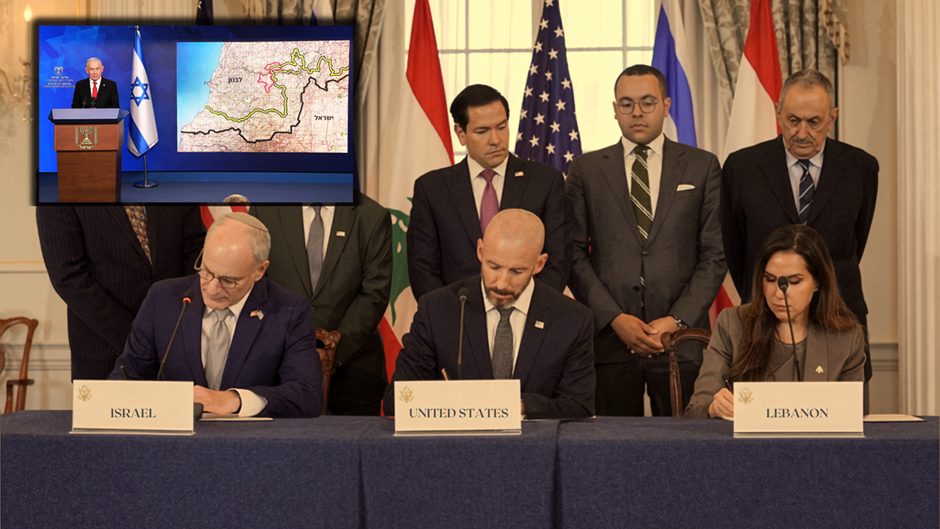
What are the strengths and weaknesses of the historic framework agreement signed between Israel and Lebanon, and what are its implications for Israel?
INSS Insight No. 2164, July 2, 2026
Follow us on GoogleThe signing of the framework agreement between Israel and Lebanon constitutes an important and positive development in relations between the two countries, reflecting their shared interest in working toward the disarmament of Hezbollah and the reduction of Iranian influence in Lebanon. At the same time, the implementation of the agreement is expected to be slow, prolonged, and fraught with challenges, and its success is not assured — primarily due to Hezbollah’s firm opposition and the weakness of the Lebanese army and state. Nevertheless, from Israel’s perspective, it is advisable to adhere to the framework outlined in the agreement, both to seize the opportunity to reshape the security reality and relations with Lebanon, and to realize its potential for enhancing Israel’s regional and international standing.
On June 26, Israel and Lebanon signed a framework agreement at the conclusion of the fifth round of direct talks between them under U.S. auspices in Washington. The signing of the agreement constitutes an important development in relations between the two countries, which declared their shared objective of achieving peace and security, ending the state of war, and acting decisively through direct negotiations to reach a comprehensive solution as sovereign states.
The agreement outlines a shared vision for a future peace arrangement and charts a path toward achieving their respective objectives through a gradual and reciprocal process, in which each side can find responses to its core demands:
▪ Lebanon stands to gain several key achievements: recognition of its sovereignty and a commitment to preserving its territorial integrity, implying a full Israeli withdrawal at the end of the process; recognition of the state’s monopoly over arms, to be consolidated under the Lebanese Armed Forces (LAF) to ensure effective sovereign control over its entire territory, alongside a commitment to dismantle all armed militias, foremost among them Hezbollah; a demand for non-interference by external actors in its internal affairs, implicitly referring to Iran, without naming it; an Israeli commitment to refrain from military action against Lebanon following Hezbollah’s disarmament, including a declaration that Israel has no territorial ambitions in Lebanon; and a U.S. commitment to mobilize economic assistance for Lebanon’s reconstruction and the return of displaced populations, including efforts to enlist international partners for this purpose.
▪ Israel stands to gain the following: commitment to its primary demand — the disarmament of Hezbollah — alongside agreement on a concrete framework for achieving this objective under close U.S. supervision; recognition that Israel’s withdrawal from Lebanon will be gradual, beginning with pilot areas, and conditioned on progress in achieving its targets vis-à-vis Hezbollah; implicit agreement that the IDF may, for the time being, continue to maintain a presence in the buffer zone (up to the Yellow Line) for the protection of northern communities; recognition of the IDF’s right to self-defense, namely its ability to act against threats directed at its forces; and a commitment by Lebanon and the United States to prevent financial flows to Hezbollah, including funds transferred from external actors for reconstruction purposes.
The framework outlined in the agreement for the disarmament of Hezbollah and the withdrawal of the IDF will proceed in the following sequence: the IDF will gradually withdraw from areas where it has completed the dismantling of Hezbollah’s infrastructure. Subsequently, the LAF will deploy in these areas under U.S. supervision and assume full security responsibility, including preventing Hezbollah’s re-entrenchment. In this context, two limited areas in the Nabatieh region have been designated for the initial pilot phase and were presented on a map during a press conference held by Prime Minister Benjamin Netanyahu on June 27.
The agreement is also accompanied by a military annex addressing its implementation, although its contents remain classified. According to media reports, it includes a detailed outline of the stages and conditions for the IDF’s phased withdrawal, to be carried out in full and continuous coordination with the LAF, with U.S. assistance, mediation, and oversight. In addition to the joint military liaison and coordination committee between the parties, diplomatic negotiations will continue under U.S. mediation.
Weaknesses of the Agreement
Despite the advantages the agreement offers both Lebanon and Israel — each of which shares an interest in disarming Hezbollah and freeing Lebanon from Iran’s grip — the path to its implementation appears long and fraught with obstacles. Given the complexity of the challenges, there is no certainty that it can be successfully implemented. The implementation process is overshadowed by several key risks, including:
▪ Hezbollah’s opposition – The organization refuses to accept the terms or relinquish its weapons, autonomous status, and ties to Iran, while issuing direct or indirect threats of civil war. It may also, as in the past, attempt to target Lebanese leaders or figures involved in negotiations with Israel. Although Hezbollah is currently weaker than before, it still retains the capacity to disrupt the implementation process — using all available means to ensure its survival and preserve its interests, including continued military activity against IDF forces operating in Lebanon.
▪ The weakness of the LAF and the Lebanese state – The LAF remain at a disadvantage vis-à-vis Hezbollah, even in its current weakened state. Past experience has demonstrated that the Lebanese army — tasked with a central role in implementing the agreement as the executive arm of the Lebanese government — lacks both the will and the capability to confront Hezbollah. To date, it has avoided violent clashes with the organization and has at times even cooperated with it. Its forces lack the necessary training, equipment, and weaponry, and in order to meet the demands placed upon it by the agreement, comprehensive reforms, significant strengthening, and a shift in its strategic posture vis-à-vis Hezbollah will be required. Although the agreement stipulates the need to reinforce the army, doing so will require substantial resources and time. This challenge is compounded by the dysfunction of Lebanese state institutions and the country’s failing economy, both of which may hinder implementation and reduce the willingness of international actors to assist Lebanon.
▪ Potential disruption by Iran – The agreement is in direct tension with ongoing U.S.–Iran discussions aimed at ending the war, following the Memorandum of Understanding signed between them on June 17. This memorandum calls for ending the state of war and respecting Lebanon’s territorial integrity (without the caveats included in the Israel–Lebanon agreement) and includes an understanding to establish a coordination mechanism for addressing violations, involving Pakistan and Qatar, without the participation of the Lebanese and Israeli governments. Iran has already demonstrated its willingness to risk the collapse of the ceasefire in order to preserve its position in Lebanon and ensure Hezbollah’s survival. Moreover, it cannot be ruled out that, in the event of difficulties in negotiations with the United States, Iran may push Hezbollah to violate the ceasefire in order to justify suspending or terminating its talks with Washington. Such a scenario would cast a shadow over the implementation of the agreement in southern Lebanon, particularly in light of what appears thus far to be President Trump’s preference for preserving U.S. interests vis-à-vis Iran over minimizing Iranian influence in Lebanon.
▪ The presence of IDF forces in the security zone – The agreement stipulates the continued presence of IDF forces in this zone for an undefined period. This reality may generate not only clashes with Hezbollah — which is seeking to obstruct implementation and already attempting to target IDF soldiers — but also friction with the Lebanese army and local residents seeking to return to their homes. All of this entails ongoing risks to IDF forces, which are constrained in their offensive operations and primarily focused on defense.
Reactions to the Agreement in Lebanon
As expected, the signing of the agreement with Israel has sparked broad internal debate in Lebanon between supporters of Hezbollah and its opponents. President Joseph Aoun and Prime Minister Nawaf Salam, who are responsible for the move, described it as a historic diplomatic achievement and a vital step toward restoring Lebanese sovereignty. They argued that this is the only way to secure a gradual Israeli withdrawal, enable displaced people to return to southern Lebanon, and begin the country’s economic reconstruction.
Their initiative is clearly supported by all Christian parties, which have long criticized Hezbollah’s negative role and called for its disarmament and for curbing Iranian interference in Lebanon’s internal affairs. Thus, for example, The Lebanese Forces party leader Samir Geagea expressed unequivocal support for the agreement and stood firmly behind the leadership, arguing that this is the most important political initiative undertaken by the Lebanese state in some fifty years. The Kataeb party leader Samy Gemayel also voiced support and warned against efforts to undermine the agreement’s implementation. Similar voices were also heard among elements of the Sunni camp. In this context, the strong support voiced by Sunni independent Member of Parliament was particularly notable, as he presented the development as an opportunity that must not be missed.
By contrast, and unsurprisingly, Hezbollah was quick to declare its total opposition to the agreement. On June 27, the organization’s Secretary-General Naim Qassem described it as a humiliating agreement of surrender to an Israeli-American dictate and an act of betrayal by the Lebanese government. Qassem argued that the agreement between Israel and Lebanon has no validity; called for the adoption of the U.S.–Iran Memorandum of Understanding; and pledged to continue military efforts to achieve a full Israeli withdrawal. Other Hezbollah spokesmen joined him in expressing deep anger and firm opposition to attempts to disarm the organization, claiming that the agreement is null and void and has no chance of being implemented.
Hezbollah, currently isolated within Lebanon’s domestic political system, received clear support only from Amal, its Shiite sister party. Its leader, Nabih Berri — who had previously expressed support for the diplomatic track with Israel, albeit with reservations regarding direct talks — adopted an extreme and confrontational stance against the agreement, arguing that it would lead to civil war as part of a plot designed to plunge Lebanon into chaos. These hardline statements by the Shiite leadership were accompanied by violent demonstrations by Hezbollah supporters in Beirut and the Beqaa, including roadblocks and the burning of signs in support of the initiative, though these were dispersed by Lebanese security forces.
It is noteworthy that, despite Hezbollah’s threat of another civil war, both its leadership and that of Amal have called for avoiding a slide into broad violence. It is possible that both organizations believe they will be able to obstruct the implementation of the agreement without paying the price of a large-scale internal confrontation.
Implications for Israel
From Israel’s perspective, the signing of the agreement holds several important gains. First, the very fact of its signing reflects recognition of the State of Israel by the Lebanese government and points to the possibility of a future transformation in bilateral relations with Lebanon (independently of the Palestinian arena). In this sense, it may also contribute to improving Israel’s regional standing. The agreement also partly offsets the negative implications of the Memorandum of Understanding signed between Iran and the United States, which acknowledged Iranian involvement in Lebanon. The Israeli–Lebanese–American framework also renders unnecessary the involvement of the states that were supposed to oversee the ceasefire alongside the United States — Iran, Pakistan, and Qatar — within the deconfliction mechanism agreed upon in the U.S.–Iran negotiations.
With regard to the Lebanese arena, the agreement creates an opportunity to reshape both the security and political reality. This opportunity stems primarily from the political change in Lebanon (the new leadership and the support of most of the population for its policy vis-à-vis Hezbollah and Iran), from Hezbollah’s current weakness after the war, and from the assessment that Hezbollah cannot be fully disarmed through military action alone. The agreement and its implementation process can reinforce Israel’s argument that it has no interest whatsoever in occupying Lebanon, but only in disarming Hezbollah, while also highlighting the negative role of Hezbollah and Iran as the principal spoilers. It is true that, under the agreement, the IDF is required to exercise greater restraint in its operations against Hezbollah; however, it appears that even without this agreement, Israel would have been compelled to halt its advance in Lebanon.
In conclusion, despite the many difficulties expected in implementing the agreement with Lebanon, and despite the lack of certainty that it will achieve all of its objectives, Israel would be well advised to adhere to the framework it sets out. This should be accompanied by a constructive dialogue with the Lebanese government and efforts to strengthen it, including a willingness to make concessions that could broaden public support for it within Lebanon. The expected gradual withdrawal of the IDF requires a reassessment of force deployment in order to formulate a dynamic defensive line that preserves Israel’s freedom of action to protect its forces and the northern communities, while at the same time reducing as much as possible friction with the Lebanese army and the local population. Continued cooperation and coordination with the United States is also essential, as its central role in the Lebanese arena has no substitute.