


Publications
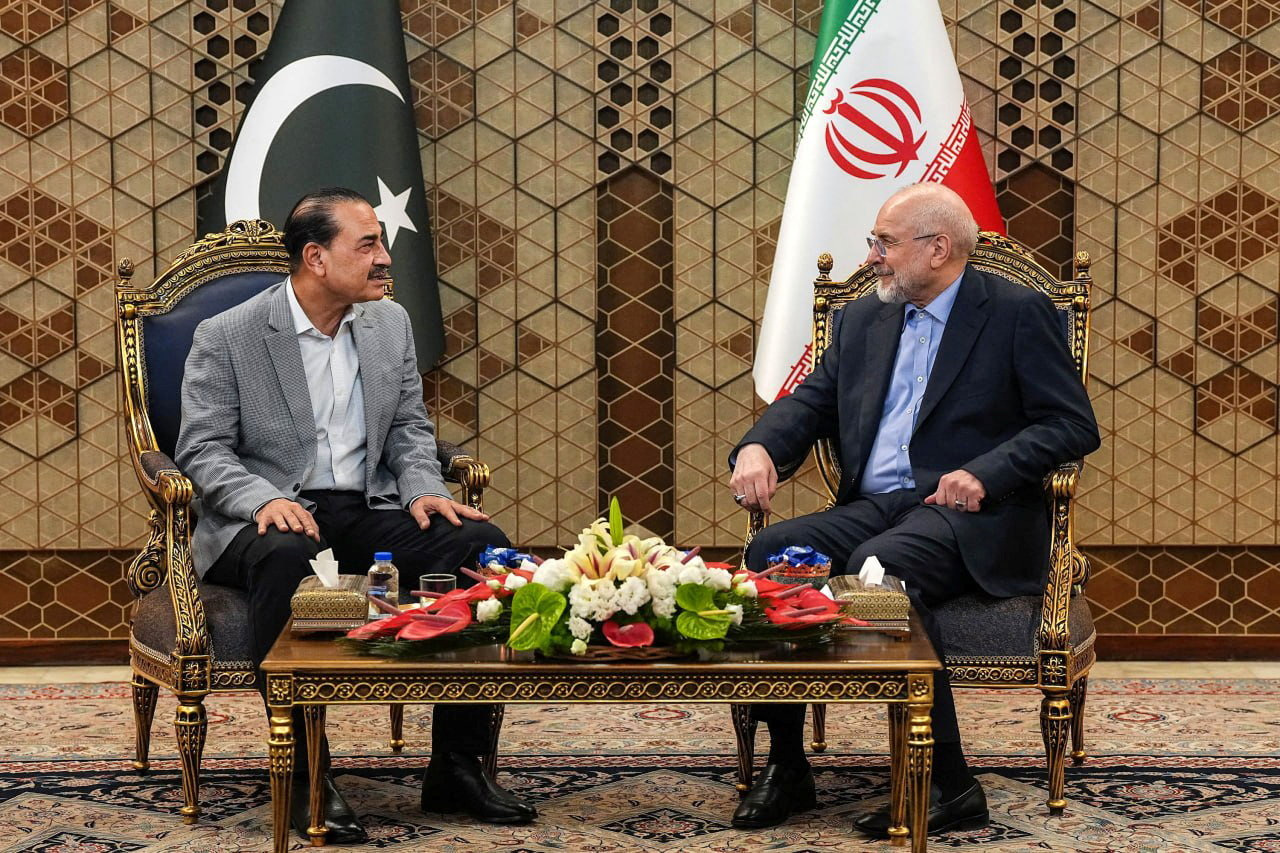
How is Pakistan transforming from a peripheral actor into one of growing strategic importance in the region?
INSS Insight, No. 2147, June 2, 2026
Follow us on GoogleThe war with Iran has highlighted Pakistan’s role as an actor with growing potential for influence in the Middle East. Pakistan has sought to position itself both as a mediator between Iran and the United States and as a security guarantor for Saudi Arabia, while maintaining a delicate balance between preserving its strategic ties with Riyadh and the need to avoid a deterioration in relations with Tehran. From the perspective of some Gulf states, Pakistan has an important role to play in the regional security architecture that will emerge after the war, as part of an existing trend toward diversifying security partnerships. Given the strategic uncertainty in the region, Pakistan’s involvement is unlikely to be merely temporary, but rather to become a lasting, structural component of the emerging regional order.
The recent war between Iran and the United States and Israel has accelerated a process in which Pakistan is shifting from a peripheral actor into one of growing strategic importance in the Middle East. During the war, Pakistan did not merely respond to events, but sought to influence their outcomes through a combination of active mediation efforts and the fulfillment of its security commitments to Saudi Arabia. The previous round of fighting against Iran (in June 2025) and the Israeli strike in Qatar (in September 2025) were among the developments that gradually drew Pakistan into deeper regional involvement—primarily bilaterally with Saudi Arabia, and multilaterally as part of an emerging political framework that also includes Turkey and Egypt.
Pakistan as the Mediator
At the core of the shift in Pakistan's role was its emergence as a mediator between Iran and the United States. Pakistan played a central role in pushing for a ceasefire and hosted talks on its territory aimed at extending it and reaching an agreement between the United States and Iran. The mediating role that Pakistan assumed did not stem from extensive diplomatic experience, but rather from a unique combination of circumstances. These included its functional ties with both sides, the absence of American military bases on its territory, its geographic proximity to the centers of conflict, and the fact that it had not been targeted by Iran.
Pakistan’s ability to maintain open channels of communication with Iran, alongside its ties with the United States, enabled it to position itself as a unique mediator. Beyond the attempt to generate value and strengthen ties with the Trump administration, Pakistan also aims to contribute to its own stability and prevent a deterioration in its relations with Iran, with which it shares a 909 km border in the Balochistan region. Already entangled in a conflict with Afghanistan, Pakistan acted cautiously to avoid being drawn into direct involvement in yet another war, particularly given Iran’s considerable influence over Pakistan’s large Shiite population. The war sparked mass demonstrations among both Shias and Sunni extremists in Pakistan who took to the streets in support of the Iranian regime. Islamabad may also have feared economic repercussions from a prolonged war in the Gulf, given its dependence on the Gulf states, which provide it with economic assistance and host large numbers of Pakistani foreign workers.
Another motivation underpinned the Pakistani mediation attempts. Saudi Arabia, Pakistan's ally, had sustained Iranian attacks since the very first day of the war. By pursuing mediation, Pakistan sought to shorten the duration of the war in general and curb Iranian attacks on the Kingdom's territory in particular. This was also intended to prevent Pakistan from finding itself in a situation in which growing Saudi pressure would force it to “choose sides,” in light of the defense agreement between Islamabad and Riyadh. The Pakistani Foreign Minister even claimed to have conveyed a message to his Iranian counterpart regarding Pakistan's commitment to Saudi Arabia. The significance of this message was the drawing of a limit on Pakistani assistance to Iran, though it did not prevent the Ayatollah regime from continuing its attacks against Saudi Arabia. Throughout the hostilities, Riyadh maintained an open channel of communication with Iran, adopting a somewhat conciliatory approach that drew criticism from the United Arab Emirates. Later, as reported, the Kingdom even reached a secret de-escalation agreement with Iran in order to prevent further attacks. It is possible that, as part of these Saudi-Iranian understandings, Riyadh offered Tehran economic assistance.
Pakistan as a Security Provider
Throughout the war, Saudi Arabia was subjected to Iranian attacks utilizing surface-to-surface missiles and UAVs (drones). Against this backdrop, it is likely that Saudi Arabia expected earlier Pakistani involvement. The relatively limited number of attacks on Saudi territory may also have been the result of messages passed between Pakistan and Iran, in line with the Pakistani foreign minister’s remarks. However, even if understandings did exist between Pakistan and Iran—and between Saudi Arabia and Iran—they did not completely halt the attacks on the Kingdom's territory (some of which also originated from Iran's proxies in Iraq).
In practice, Pakistan fulfilled its commitment to the Kingdom only after the ceasefire took effect on April 8. On April 11, 2026, the Saudi Ministry of Defense announced that Pakistani fighter jets and additional personnel had arrived at King Abdulaziz Air Base in the Kingdom's Eastern Province. Subsequent reports indicate that, in April, Pakistan deployed approximately 8,000 troops, a fighter jet squadron, UAVs, and air defense systems to the Kingdom.
Riyadh and Islamabad have maintained extensive security relations for decades, within the framework of which Pakistan sustains a military presence in Saudi Arabia. Prior to the war, Pakistani military personnel were stationed in the Kingdom in training, advisory, and security roles. There are even reports, the reliability of which remains unclear, claiming that Pakistani soldiers are responsible for protecting senior members of the Saudi leadership. Since the 1960s, Pakistan has trained Saudi soldiers and, at Saudi request, deployed military units to the Kingdom in order to help defend its extensive borders and signal to both internal and external adversaries that it stands alongside Riyadh.
For Riyadh, this partnership strengthens deterrence capabilities through a major Muslim military partner that is neither Western nor Arab. Saudi Arabia views Pakistan—and its strategic position flanking Iran—as an important asset in containing Iranian influence. The Pakistani military also provides Saudi Arabia with a large, experienced professional force that poses no political threat to the stability of the royal house. Pakistan supplies the Kingdom with strategic depth, military personnel, and operational experience, alongside potential nuclear deterrence capabilities. In return, Pakistan enjoys extensive economic assistance, influence in the Gulf arena, and a role in safeguarding Islam’s holy sites. The result is a relationship of mutual dependence in which security and economics are closely intertwined.
Underlying this dependence is Saudi Arabia’s own security weakness. Despite enormous investment in advanced Western weaponry, the Saudi military remains relatively small, insufficiently trained, and is not widely perceived — even within the Kingdom itself — as fully capable of effectively confronting Iran, which maintains asymmetric military superiority in the Gulf. This security vulnerability led the Saudis to seek even closer security ties with Pakistan in 2025.
Within this framework, in September 2025, Saudi Crown Prince Mohammed bin Salman and Pakistani Prime Minister Shehbaz Sharif signed a security agreement in Riyadh. According to reports, the agreement’s central clause stipulates that an attack on one of the two countries would be considered an attack on both, ostensibly modeled on Article 5 of the NATO treaty. However, this agreement integrates into a sequence of historical collaborations and does not constitute a true turning point. By signing it, the two nations transformed a covert relationship that spanned decades into a formal, binding alliance, at least "on paper." Yet, it remains unclear whether the agreement includes clear implementation mechanisms or automatic response clauses, or whether its wording is deliberately ambiguous and leaves room for flexibility on both sides.
One of the most sensitive aspects of the relations between the two countries concerns the nuclear dimension. When Pakistan developed its nuclear program, Saudi Arabia provided significant financial support for the effort. From Riyadh’s perspective, investment in Pakistan’s program was long viewed as a form of “strategic insurance” for the future.
At the same time, it may be assumed that the agreement between the two countries does not include a commitment to provide strategic assistance under all circumstances and in every scenario. Nonetheless, the deployment of Pakistani forces in Saudi Arabia illustrates that military cooperation between the nations remains relevant. The move signals that Riyadh can rely on the military capabilities of a major ally without relying exclusively on the United States. In this sense, the relationship with Pakistan constitutes an important pillar in the Kingdom's policy of strategic diversification.
The timing of the Pakistani troop deployment to Saudi Arabia—approximately six weeks after the onset of the Iranian attacks against the Kingdom—may have been linked to Islamabad's need to balance its role as a mediator seeking to avoid confrontation with Iran against the fulfillment of its security commitment to Saudi Arabia. It is likely that the Pakistani military deployment in the Kingdom came following a Saudi request and stemmed from a sense of vulnerability within the Kingdom, which needed to rebuild its deterrence in the face of Iranian attacks. Accordingly, the dispatch of Pakistani forces served not only as an emergency measure, but also as a strategic signal to Tehran to avoid further escalation.
At the same time, much like Pakistan’s refusal to join the Saudi-led war in Yemen in 2015, this episode also exposed the limitations of the alliance. Not only did Pakistan fulfill its commitment to Saudi Arabia only after the ceasefire agreement had been reached, but the move also appears to have been conditional upon:
- A Saudi request for assistance: The deployment took place after the Pakistani Prime Minister and Foreign Minister held talks with their Saudi counterparts and traveled to the Kingdom at least twice—in March and again in April—for meetings with the Saudi Crown Prince.
- Guaranteed Saudi aid: The deployment followed Riyadh’s pledge to provide Islamabad with $3 billion in aid to help cover its budget deficits. It is also likely that the Saudis financed the full range of expenses associated with the Pakistani military deployment in their territory.
A Potential Diplomatic Quartet
Pakistan's mediation role during the war and its deployment of military forces in Saudi Arabia are part of broader possible shifts, including the potential emergence of new diplomatic “blocs,” even if temporary and loosely structured. The Gulf states are actively working to reduce their dependence on the United States and to build more diversified partnership networks that include regional actors. Within this framework, Pakistan plays a role in a regional balancing mechanism designed to address the current instability. Pakistan’s mediation efforts aimed at ending the war were not exclusive, but rather took place alongside additional diplomatic channels led by Egypt, Turkey, and Qatar. At the same time, there has been an increase in the frequency of meetings and political coordination efforts among the members of the "Quartet"—Pakistan, Egypt, Saudi Arabia, and Turkey.
The frequency of meetings between the leaders of these countries throughout the war indicates growing coordination. However, it would be a mistake to view this political framework as a defense alliance, as there is no expectation of mutual defense among its members in times of crisis. The only existing security commitment is not multilateral but bilateral—between Pakistan and Saudi Arabia—and even this commitment, as noted, is conditional and dependent on circumstances. Another drawback of this political framework is the underlying mistrust among some of its members, particularly between Egypt and Saudi Arabia on the one hand and Turkey on the other, which is perceived as a revisionist actor with regional ambitions. In addition, there has been a certain degree of disappointment in Saudi Arabia and the Gulf states regarding Egypt’s conduct during the war with Iran, which was viewed as weak and conciliatory. This political configuration is reminiscent of the "blocs" that emerged after the Arab Spring and proved short-lived because they were circumstantial, established ad-hoc, and not based on permanent values or interests. Therefore, from an Israeli perspective, this does not yet constitute a profound shift in the regional system, but rather a development that warrants close monitoring.
At the same time, the war has brought about changes in Pakistan's relations with the Gulf states. In this context, Pakistan-Qatar relations have been characterized by expanding economic and humanitarian cooperation. Qatar provided Pakistan with significant assistance during the COVID-19 pandemic and following the severe floods of 2022, and in recent years their relationship has become increasingly centered on the energy sector: Qatar is a major supplier of liquefied natural gas (LNG) to Pakistan. Gas shipments from Qatar to Pakistan continued uninterrupted throughout the war, illustrating Pakistan’s energy dependence and Qatar’s importance as a strategic partner. Notably, alongside Saudi aid to Pakistan, there were also reports of approximately $2 billion in Qatari assistance intended to help Pakistan manage an expected debt repayment to the United Arab Emirates.
In contrast, Pakistan's relations with the United Arab Emirates are at a low point following years of close partnership. Tensions between the two countries escalated following Pakistan's stance in the war against Iran, which Abu Dhabi perceived as a lack of support for the Gulf states. The UAE has not only insisted on the repayment of a $3.5 billion loan it granted to Pakistan (contrary to the common Gulf practice of forgiving such debts), but has also begun deporting Pakistani workers from its territory. Furthermore, it is seeking to deepen its economic and security ties with Pakistan's rival, India. From the UAE's perspective, Pakistan's growing regional involvement is viewed in a negative light and could affect the internal balances within the Arab world, particularly against the backdrop of tensions between Saudi Arabia and the UAE.
In a reality marked by prolonged regional war and tremendous uncertainty, Pakistan is emerging as another key actor shaping the evolving balance of power. Despite its limitations, security cooperation between Riyadh and Islamabad is an important component of Saudi national security and reflects a broader trend toward the creation of parallel and partial regional security networks that do not rely solely on the United States.
From Israel’s perspective, a deepening of cooperation within the emerging regional “Quartet” would constitute a negative development. Such a quartet could give rise to a political framework with an anti-Israel orientation. Moreover, it could draw Saudi Arabia closer to states hostile toward Israel and encourage Riyadh itself to adopt a more confrontational rhetoric toward Israel, thereby diminishing the prospects for future rapprochement between the two countries.