


Publications
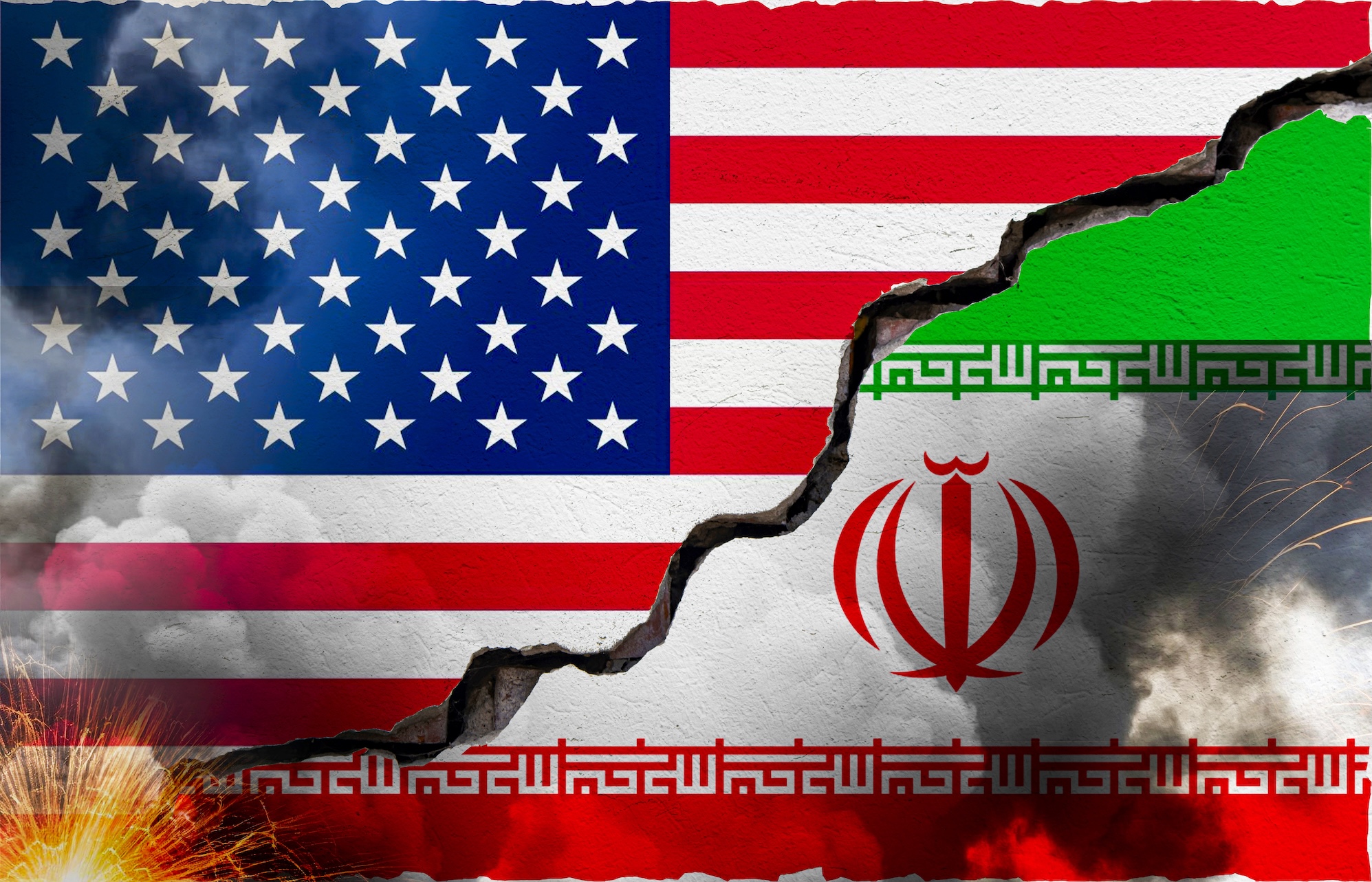
Blockade, agreement, or escalation: Where is the US–Iran negotiation crisis headed?
INSS Insight No. 2127, April 13, 2026
Follow us on GoogleThe Islamabad summit ended without a breakthrough, underscoring that the nuclear issue remains at the core of the dispute between the United States and Iran. From Washington’s perspective, Iran’s clear commitment not to develop nuclear weapons and not to retain breakout capability is a fundamental precondition for any agreement. Tehran, for its part, insists on its right to continue enriching uranium and sees the US demand as an attempt to impose political capitulation under unilateral terms. In this context, President Trump’s decision to shift from a track of diplomatic pressure to one of maritime coercion by imposing a blockade on traffic to and from Iranian ports marks a new phase in the crisis. From the American perspective, the move is intended to deny Iran the leverage inherent in its ability to threaten the freedom of navigation in the Strait of Hormuz. However, this maneuver has risks, including the disruption of energy markets and the renewal of direct confrontation between the two sides. Iran has warned that if its ports cease to function, no port in the region will be safe. At this stage, three possible trajectories are emerging: further escalation of pressure and confrontation; continued contacts under conditions of a naval blockade; or preservation of a fragile pause without an agreement.
From Israel’s perspective, this moment requires close strategic-political coordination with the United States to ensure that the American effort does not focus solely on Hormuz but also continues to address Iran’s nuclear, missile, and regional threat components.
The summit meeting in Islamabad between the US administration and the Iranian regime was the first at such a senior level between the two countries since the establishment of the Islamic Republic, and the first direct encounter since the Trump administration withdrew from the nuclear agreement in 2018. Iran’s willingness to participate, after weeks of sustained attacks, reflected both recognition of the seriousness of Trump’s threats if no agreement is reached and the regime’s desire to project strength after confronting, and surviving, a global superpower alongside Israel.
The appointment of Vice President JD Vance as the US negotiator was seen as a positive step by the Iranians. This was due both to his reputation as one of the more cautious figures in the Trump administration regarding military action and to his comparatively weaker ties to Israel relative to President Trump and his other envoys, Jared Kushner and Steve Witkoff. Precisely for this reason, however, the failure of the talks, after prolonged discussions, has now moved him closer to the president’s position. Trump has reiterated that while he prefers a diplomatic solution, Iranian intransigence may compel him to escalate military measures.
As expected, both sides blamed each other for the failure. Vice President Vance stated that Iran was unwilling to commit to abandoning its pursuit of nuclear weapons or its capability of rapidly attaining them. Iran, for its part, claimed that the United States had presented excessive demands aimed at imposing a unilateral position all while refusing Tehran’s fundamental demand, namely recognition of its right to a civilian nuclear program, including continued enrichment on Iranian soil. Nonetheless, neither side closed the channel for further contacts. Pakistan, which hosted and mediated the talks, called for continued dialogue and preservation of the pause in military confrontation (set to expire on April 22). According to the Wall Street Journal, regional actors, led by Egypt, Turkey, and Qatar, are pressing Washington to return to negotiations, and additional talks may take place within days.
As in the past, the Islamabad summit reached a deadlock on the issue President Trump considers paramount: the nuclear file. For the administration, an explicit Iranian commitment not to develop nuclear weapons is not merely a negotiating clause but the foundation of any agreement. Vance made this clear after the talks, presenting Iran’s refusal as the primary cause of failure.
Beyond the nuclear issue and the status of the Strait of Hormuz, two additional disputes remain unresolved. The first concerns frozen Iranian assets. An Iranian source claimed Washington had in principle agreed to release funds, including approximately $6 billion held in Qatar, but a US official denied that such an understanding had been reached. The second is deep Iranian mistrust of the United States. Following the talks, Tehran emphasized that Washington had failed to “build trust,” and the swift shift from diplomacy to coercive maritime measures—threatening a blockade—only reinforces Iran’s perception that the United States uses diplomacy to legitimize pressure rather than seeking to reach a balanced agreement.
Against this backdrop, President Trump announced a shift from diplomatic pressure to maritime coercion, ordering the US Navy to impose an “immediate” blockade on the Strait of Hormuz. The US Central Command subsequently declared that as of April 13 (17:00 Israel time), restrictions would be imposed on vessels departing from or heading to Iranian ports in the Gulf of Oman and the Arabian Gulf, although other shipping would not be restricted. At the same time, Iran is threatening this maritime activity. US media have reported that the president is also considering renewed limited strikes in Iran, and he has reiterated on social media that threats against Iranian infrastructure remain in force.
The decision to impose a blockade represents a significant escalation in the crisis. In an interview following the decision, Trump stated that it would take “some time” for the measure to become effective, noted that additional countries may assist, and added that at an appropriate moment the United States could resume strikes in Iran to complete unfinished objectives. These remarks conveyed a dual message: a preference for gradual maritime pressure over an immediate large-scale campaign but without relinquishing a credible military threat—and implicitly leaving the door open to further negotiations.
In response, Tehran has issued threats to counter the blockade. Speaker of the Parliament of Iran Mohammad Bagher Ghalibaf warned that the United States would come to “miss today’s oil prices,” clearly alluding to the potential consequences while also threatening to disrupt the functioning of Gulf ports. Iran continues to view control over Hormuz and its impact on the global economy as a central lever of pressure on the United States. Through the blockade, Washington seeks to break Iran’s monopoly over this lever and deny it political and economic gains from de facto control of the passage. However, US policymakers are also aware of the costs: rising oil prices, market disruptions, and economic pressure on the United States itself. At this stage, the Trump administration appears willing to bear these costs, assuming that the economic and strategic damage inflicted on Iran will cause it to moderate its positions.
At the same time, the crisis with Iran is spilling over into the Lebanese arena. Ahead of talks between Israel and Lebanon expected to take place this week in Washington, the US administration is seeking to minimize the risk of escalation in the north, which could undermine the broader effort vis-à-vis Iran. However, a gap is already evident: Israel views the process as a political-security track aimed at altering the strategic reality vis-à-vis Hezbollah, while Lebanon seeks to tie it to a ceasefire. This divergence could become another point of friction between Jerusalem and Washington, especially if the White House views Israeli restraint in Lebanon as a condition for preserving regional stability.
At present, President Trump’s dilemma centers on whether military escalation or restraint will carry the lower cost. First, he seeks to project an image of a leader who has not compromised on the core nuclear demand, even after pursuing diplomacy; any softening would be seen as weakness. Second, he needs a tangible achievement that can be clearly presented to the American public: reopening the Strait of Hormuz, undermining Iran’s leverage, and demonstrating that pressure has yielded results. Third, there is a clear domestic political consideration: The fact that Vance—seen as one of the more cautious voices on military intervention—led the talks and then declared that Iran refused to compromise helps Trump argue that Washington first exhausted a serious diplomatic track. While this strengthens his domestic position, it does not resolve his strategic dilemma, as he still needs a “victory image.” Thus, even if he prefers to avoid a broader war, he may conclude that escalating pressure is unavoidable if the blockade fails to deliver results.
From the Iranian side, the logic is different but complementary. The regime understands that the Strait of Hormuz is its primary leverage, and it is unwilling to relinquish the strait without significant compensation: economic relief, asset releases, and some recognition of its regional status. At the same time, it does not want to be seen as closing the door entirely to diplomacy, and therefore leaves a narrow opening for continued contacts. However, the faster Washington shifts from diplomacy to coercive measures, the stronger the perception is in Tehran that the United States does not seek an agreement but a capitulation on American terms. Iran’s approach thus combines resilience under pressure with a strategy of buying time: preserving leverage, delaying concessions on the nuclear issue, and testing whether Trump will ultimately prefer extending the pause and continuing negotiations over renewed military escalation.
That said, the fact that neither side currently seeks a return to full-scale war does not preclude escalation. Both sides seem to believe that they held the upper hand in the recent military exchanges, reinforcing their reluctance to compromise on core demands.
From here, there are three main scenarios:
- Further escalation. This could take the form of an effective blockade, more aggressive maritime enforcement, and possibly direct strikes on Iranian naval infrastructure—or alternatively a return to broader military escalation if Iran responds forcefully, leading to direct confrontation at sea. This scenario becomes more likely if Trump assesses that the blockade alone is insufficient.
- Continued contacts under blockade. In this scenario, the United States maintains maritime pressure all while keeping the door open for renewed diplomacy, possibly extending the pause beyond April 22. Trump could combine displays of force with openness to an agreement; Iran could avoid closing the door while not immediately conceding.
- A fragile pause without an agreement. This would entail ongoing maritime friction and increasing US enforcement—a “no war, no peace” situation. While the pause would not collapse immediately, meaningful progress toward an agreement would not occur. In such a scenario, any maritime incident, enforcement failure, or escalation by Iran’s regional proxies could reignite a broader crisis. For Israel, this is particularly complex, as it combines prolonged uncertainty with potential US pressure to avoid actions that could undermine maritime stabilization efforts.
Implications for Israel: Three practical conclusions can be made. First, Israel must make clear to Washington that reopening the Strait of Hormuz is important, but it cannot be the sole metric of success; meaningful constraints on Iran’s nuclear and missile capabilities are essential. Second, Israel must maintain close coordination with the US regarding the Lebanese arena, defining in advance the conditions for temporary restraint in the campaign against Hezbollah and its own red lines. Third, Israel should prepare for possible future US pressure to scale back its northern activities if the White House concludes that this is necessary to preserve even partial maritime gains vis-à-vis Iran.
The end result is that the crisis between the United States (and Israel) and Iran has entered a new phase. Trump has shifted from negotiation to maritime coercion—not merely to address the Strait of Hormuz, but to force movement on the nuclear issue, his core demand. Yet as long as fundamental disagreements persist, and as long as Iran views the shift from diplomacy to blockade as confirmation of its deep mistrust of the United States, the prospects for a stable agreement will remain limited. For Israel, this stage demands heightened diplomatic vigilance, close coordination with Washington, and a sustained effort to ensure that the strategic discussion does not narrow solely to the question of the Strait of Hormuz.