


Bringing China to Punish Nuclear Proliferators | INSS
go to header go to content go to footer go to search
INSS logo The Institute for National Security Studies, Strategic, Innovative, Policy-Oriented Research, go to the home page
INSS
Tel Aviv University logo - beyond an external website, opens on a new page
  • Campus
  • Contact
  • עברית
  • Support Us
  • Research
    • Topics
      • Israel and the Global Powers
        • Israel-United States Relations
        • Glazer Israel-China Policy Center
        • Russia
        • Europe
      • Iran and the Shi'ite Axis
        • Iran
        • The Israel–Iran War
        • Lebanon and Hezbollah
        • Syria
        • Yemen and the Houthi Movement
        • Iraq and the Iraqi Shiite Militias
      • Conflict to Agreements
        • Israeli-Palestinian Relations
        • Hamas and the Gaza Strip
        • Peace Agreements and Normalization in the Middle East
        • Saudi Arabia and the Gulf States
        • Turkey
        • Egypt
        • Jordan
      • Israel’s National Security Policy
        • Military and Strategic Affairs
        • Societal Resilience and the Israeli Society
        • Jewish-Arab Relations in Israel
        • Climate, Infrastructure and Energy
        • Terrorism and Low Intensity Conflict
      • Cross-Arena Research
        • Data Analytics Center
        • Law and National Security
        • Advanced Technologies and National Security
        • Cognitive Warfare
        • Economics and National Security
    • Projects
      • Preventing the Slide into a One-State Reality
      • Contemporary Antisemitism in the United States
      • Perceptions about Jews and Israel in the Arab-Muslim World and Their Impact on the West
  • Publications
    • -
      • All Publications
      • INSS Insight
      • Policy Papers
      • Special Publication
      • Strategic Assessment
      • Technology Platform
      • Memoranda
      • Posts
      • Books
      • Archive
  • Database
    • Surveys
    • Spotlight
    • Maps
    • Dashboards
  • Events
  • Team
  • About
    • Vision and Mission
    • History
    • Research Disciplines
    • Board of Directors
    • Fellowship and Prizes
    • Internships
    • Newsletter
  • Media
    • Communications
    • Video gallery
    • Press Releases
  • Podcast
  • Newsletter
  • Campus
Search in site
  • Research
    • Topics
    • Israel and the Global Powers
    • Israel-United States Relations
    • Glazer Israel-China Policy Center
    • Russia
    • Europe
    • Iran and the Shi'ite Axis
    • Iran
    • The Israel–Iran War
    • Lebanon and Hezbollah
    • Syria
    • Yemen and the Houthi Movement
    • Iraq and the Iraqi Shiite Militias
    • Conflict to Agreements
    • Israeli-Palestinian Relations
    • Hamas and the Gaza Strip
    • Peace Agreements and Normalization in the Middle East
    • Saudi Arabia and the Gulf States
    • Turkey
    • Egypt
    • Jordan
    • Israel’s National Security Policy
    • Military and Strategic Affairs
    • Societal Resilience and the Israeli Society
    • Jewish-Arab Relations in Israel
    • Climate, Infrastructure and Energy
    • Terrorism and Low Intensity Conflict
    • Cross-Arena Research
    • Data Analytics Center
    • Law and National Security
    • Advanced Technologies and National Security
    • Cognitive Warfare
    • Economics and National Security
    • Projects
    • Preventing the Slide into a One-State Reality
    • Contemporary Antisemitism in the United States
    • Perceptions about Jews and Israel in the Arab-Muslim World and Their Impact on the West
  • Publications
    • All Publications
    • INSS Insight
    • Policy Papers
    • Special Publication
    • Strategic Assessment
    • Technology Platform
    • Memoranda
    • Posts
    • Books
    • Archive
  • Database
    • Surveys
    • Spotlight
    • Maps
    • Dashboards
  • Events
  • Team
  • About
    • Vision and Mission
    • History
    • Research Disciplines
    • Board of Directors
    • Fellowship and Prizes
    • Internships
  • Media
    • Communications
    • Video gallery
    • Press Releases
  • Podcast
  • Newsletter
  • Campus
  • Contact
  • עברית
  • Support Us
bool(false)

Strategic Assessment

Home Strategic Assessment Bringing China to Punish Nuclear Proliferators

Bringing China to Punish Nuclear Proliferators

Research Forum | April 2019
Taehwa Hong

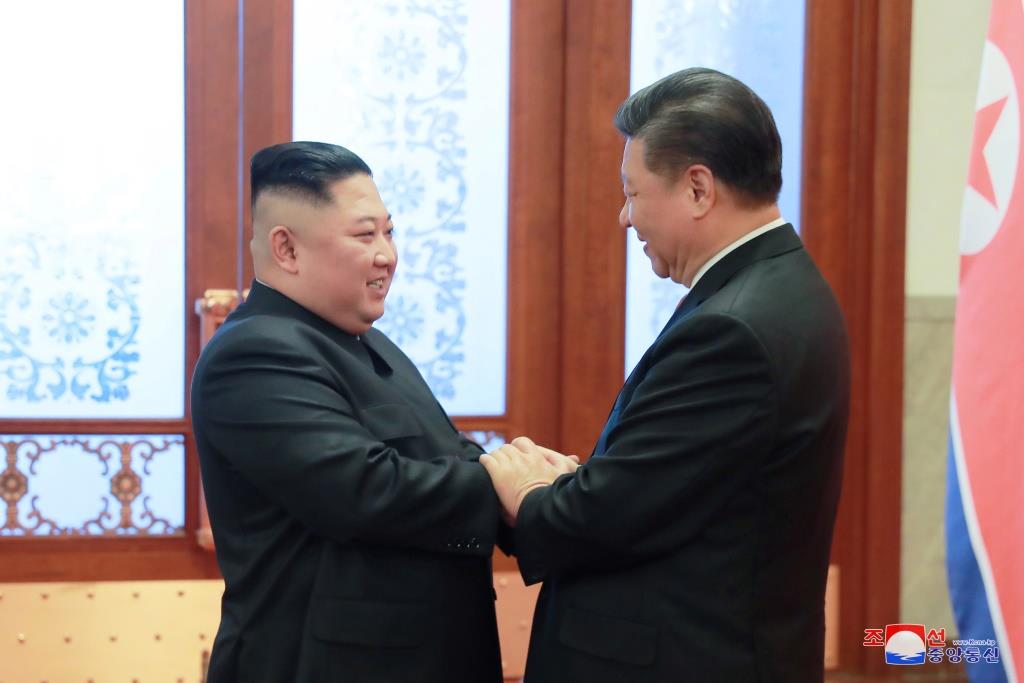
Along with its rapid rise in global stature, China has become a key actor in the global nonproliferation regime. Striving to present an image of a responsible superpower, Beijing has largely sought to keep rogue states from acquiring weapons of mass destruction. However, when it comes to denuclearizing regimes that have already reached nuclear capacity, China has proved to be a relatively unreliable enforcer of the international sanctions regime. How does China provide hedging space for Iran and North Korea, and which key factors affect Beijing’s calculations? This essay contends that China is motivated primarily by threats to its own economic interests and the risk of military confrontation.


The opinions expressed in INSS publications are the authors’ alone.
Publication Series Research Forum

Events

All events
Iran in Africa: Global Reach Regional Impact and Israeli Implications
26 October, 2025
14:00 - 17:00

Related Publications

All publications
Shutterstock
Gulf Involvement in Africa: Motives and Implications
The growing involvement of the Gulf states in Africa: interests, opportunities, and implications for the region and for Israel
11/11/25
Israel on Ice: Israel’s Interests in the Arctic
A review of Israel’s security, diplomatic, and economic interests in the northernmost part of the globe
11/11/25
Shutterstock (modified by INSS)
Seven Sons and Mullahs: Chinese–Iranian Defense-Linked Academic Collaboration
China’s relations with Iran were recently tested during the twelve-day Israel–Iran war and the US strike on Iran’s nuclear sites. While China’s diplomatic statements supported Iran verbally, they did little else. Chinese media reports covered the Iranian minister of defense’s visit to Beijing in June and mentioned the possible supply of air defense systems and fighter jets to Tehran, although China denied the former. As Beijing is typically cautious in its security, defense, and military cooperation with Iran, most public attention in the West and the Middle East tends to focus on Chinese–Iranian relations in energy, trade, economy, infrastructure, and diplomacy. Publications addressing their security relations usually emphasize surveillance systems supplied to Iran, joint military and naval exercises, and the ongoing transfer of technological components and materials to Iran’s defense industry. In the aftermath of the war, one may also expect to see sharing of techno-operational learning between China and Iran, possibly involving their other network partners, Russia and North Korea. This study examines a lesser-known aspect of security-technological cooperation between Beijing and Tehran: joint and expanding academic-technological research linked to the defense establishments of both countries, in fields such as nuclear energy, aerospace, missiles, UAVs, underwater vehicles, and cyber. Drawing on recent academic articles co-authored by Chinese and Iranian experts, it reveals joint research efforts and some convergence between the two countries’ defense innovation ecosystems. This cooperation between China and Iran—respectively the main national security threats to the United States and Israel—poses a potential risk not only to these two allied states but also to their partners in Europe, the Asia-Pacific, and the Middle East. This risk should be recognized, monitored, analyzed, and addressed, both separately and collectively.
10/11/25

Stay up to date

Registration was successful! Thanks.
  • Research

    • Topics
      • Israel and the Global Powers
      • Israel-United States Relations
      • Glazer Israel-China Policy Center
      • Russia
      • Europe
      • Iran and the Shi'ite Axis
      • Iran
      • The Israel–Iran War
      • Lebanon and Hezbollah
      • Syria
      • Yemen and the Houthi Movement
      • Iraq and the Iraqi Shiite Militias
      • Conflict to Agreements
      • Israeli-Palestinian Relations
      • Hamas and the Gaza Strip
      • Peace Agreements and Normalization in the Middle East
      • Saudi Arabia and the Gulf States
      • Turkey
      • Egypt
      • Jordan
      • Israel’s National Security Policy
      • Military and Strategic Affairs
      • Societal Resilience and the Israeli Society
      • Jewish-Arab Relations in Israel
      • Climate, Infrastructure and Energy
      • Terrorism and Low Intensity Conflict
      • Cross-Arena Research
      • Data Analytics Center
      • Law and National Security
      • Advanced Technologies and National Security
      • Cognitive Warfare
      • Economics and National Secutiry
    • Projects
      • Preventing the Slide into a One-State Reality
      • Contemporary Antisemitism in the United States
      • Perceptions about Jews and Israel in the Arab-Muslim World and Their Impact on the West
  • Publications

    • All Publications
    • INSS Insight
    • Policy Papers
    • Special Publication
    • Strategic Assessment
    • Technology Platform
    • Memoranda
    • Database
    • Posts
    • Books
    • Archive
  • About

    • Vision and Mission
    • History
    • Research Disciplines
    • Board of Directors
    • Fellowship and Prizes
    • Internships
    • Support
  • Media

    • Communications
    • Video Gallery
    • Press Release
    • Podcast
  • Home

  • Events

  • Database

  • Team

  • Contact

  • Newsletter

  • עברית

INSS logo The Institute for National Security Studies, Strategic, Innovative, Policy-Oriented Research, go to the home page
40 Haim Levanon St. Tel Aviv, 6997556 Israel | Tel: 03-640-0400 | Fax: 03-744-7590 | Email: info@inss.org.il
Developed by Daat A Realcommerce company.
Accessibility Statement
This site is protected by reCAPTCHA and the Google Privacy Policy and Terms of Service apply.