


Publications
What conclusions should Israel draw from the episode rattling the tech world?
INSS Insight No. 2220, November 18, 2026
Follow us on GoogleThe Nvidia episode began as gossip surrounding the personal life of a celebrity CEO, yet within days it became an issue at the very heart of national security: espionage and foreign influence, export controls on advanced chips, unprecedented concentration in artificial intelligence infrastructure, and the dependence of countries and corporations on a single person and company. For Israel, home to Nvidia’s largest center of operations outside the United States, the episode poses potential economic, technological-strategic, and intelligence risks, and necessitates accelerating the establishment of a national computing infrastructure based on diversified suppliers.
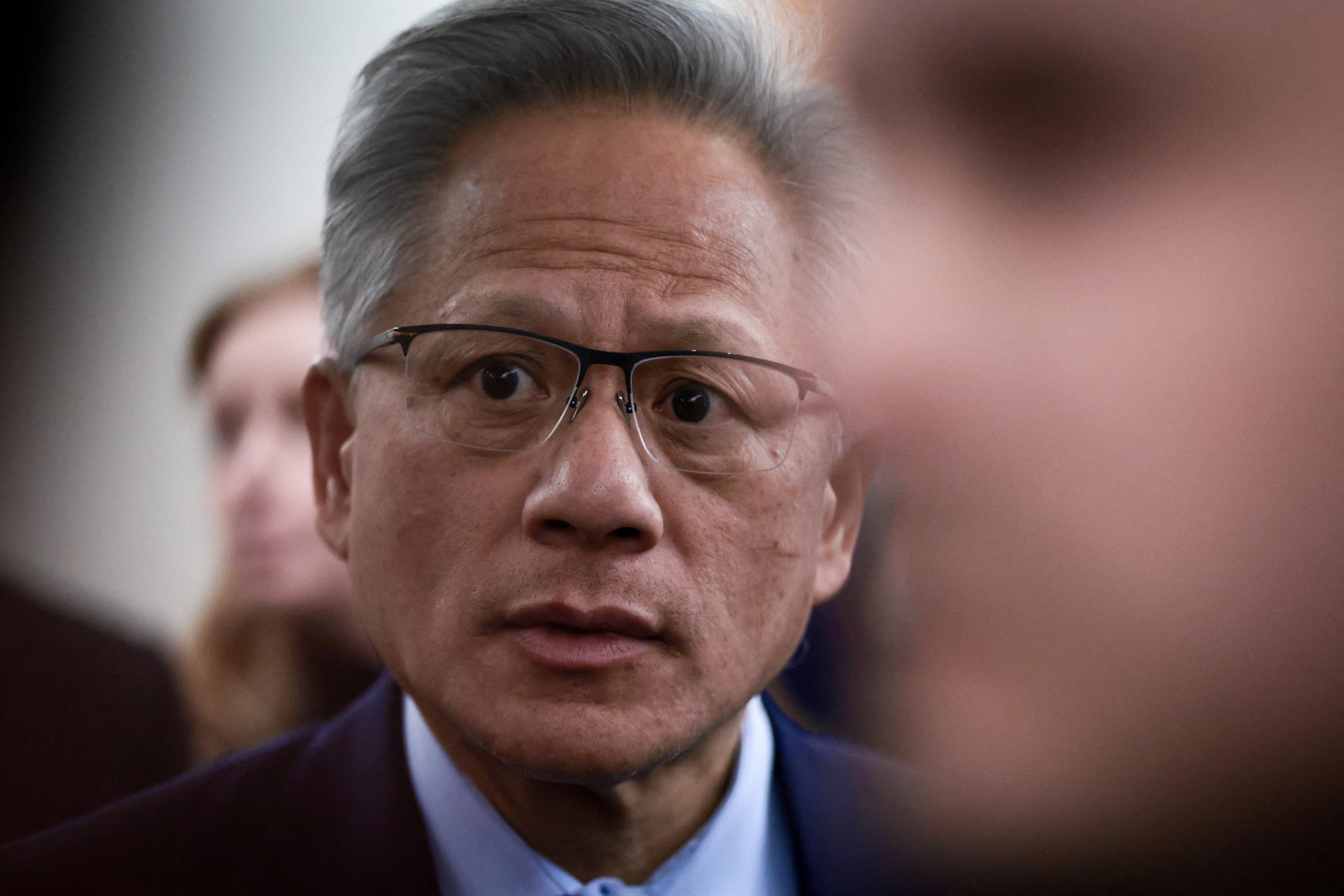
Jensen Huang, founder and CEO of Nvidia for more than three decades, resigned from his positions at the company following reports of an intimate relationship with a businesswoman from a major Singaporean company that purchased Nvidia chips. U.S. officials suspect that both Huang and the company had ties to Chinese intelligence. It is important to emphasize that the espionage allegations are still under investigation and have not been proven, and that China has denied them. Yet the mere possibility that the CEO of the most important company in the AI race was the target of a foreign influence operation was enough to turn a personal crisis into a national crisis of confidence.
This is not just another tech company. Nvidia’s chips and networking systems form the infrastructure on which the world's most advanced AI models are trained and operated. Access to information about its technology roadmap, clients, systems, and positions vis-à-vis the U.S. government is therefore a strategic asset of the highest order.
The immediate impact may be seen in U.S. policy toward China. Huang was the most prominent voice calling for the sale of certain chips to the Chinese market. His argument was strategic, not merely commercial: a total ban on China would incentivize it to rapidly build an independent infrastructure around companies such as Huawei, whereas continued dependence on American technology would preserve the United States' advantage and influence.
That argument has not disappeared, but its leading advocate has lost credibility. In Congress, bipartisan pressure is already mounting to tighten restrictions, increase oversight of government decisions, require location tracking of advanced chips, and close the "remote access" loophole that allows Chinese entities to rent computing power at data centers outside China. Some of these measures may be incorporated into the U.S. defense budget bill, the NDAA.[1]
This is perhaps the most significant shift: chip sales to China are no longer framed solely as a dilemma between national security and revenue. They have become a test of whether the AI industry can protect itself from infiltration, deception, and foreign influence. In Washington’s new political climate, anyone seeking to ease the restrictions will have to prove that doing so does not endanger national security—not the other way around.
What Does This Mean for Israel?
Nvidia is now one of the most important anchors of Israel’s tech sector. It employs approximately 6,200 people in Israel, and its local operations are the company’s largest outside the United States. A significant part of the high-speed communications technologies that connect thousands of processors in data centers was developed in Israel, building on Nvidia’s acquisition of Mellanox. The company is also advancing major research and computing infrastructure projects, as well as a massive campus in Kiryat Tivon designed to accommodate up to 10,000 employees.
Huang’s departure therefore creates three types of risk for Israel:
The first is economic: Volatility in Nvidia's stock, a shift in investment priorities, or delays in expansion plans could affect thousands of employees, state tax revenues, and the development of employment hubs in the north. Nvidia’s existing operations in Israel are too deeply integrated into the company’s core products to disappear overnight. Future investments, however, especially the planned campus, are more vulnerable to a change in leadership or a slowdown in the AI market.
The second is technological-strategic: Israel is a central hub for developing Nvidia’s technology, but it does not control decisions about chip supply, export licenses, or the allocation of computing power. A chip designed in part in Israel is still subject to U.S. policy and the decisions of a foreign corporation. The impressive presence of multinational companies in Israel is therefore no substitute for secure, continuous national computing capacity.
The third is intelligence-related: The episode illustrates that civilian tech companies, their executives, and their supply chains are targets for intelligence services just like defense establishments. Israel, too, needs a broader concept of technology security: protecting key personnel, vetting partners and intermediaries, sharing information between the state and the private sector, and managing risks surrounding access to sensitive computing systems.
Israel should not distance itself from Nvidia. On the contrary, it should anchor the company's local operations through early dialogue with the new leadership, emphasize the business importance of the Israeli development center, and work to secure continued investment. At the same time, Israel should accelerate the establishment of a national computing infrastructure, diversify its suppliers and architectures, enable critical models to run locally, and prepare for new U.S. requirements concerning client identity, end-users, and remote access.
For Israel, this is yet another sign that artificial intelligence is not merely a growth engine. It is strategic infrastructure, and such infrastructure demands not only innovation, but also redundancy, protection, and sovereignty.
[1] The FY2027 NDAA is expected to proceed to final debate and approval in early to mid-December, with the aim of completing its legislation by the end of 2026, though no binding timetable has yet been set.