


Publications
Memorandum No. 107, Tel Aviv: Institute for National Security Studies, March 2011
Follow us on Google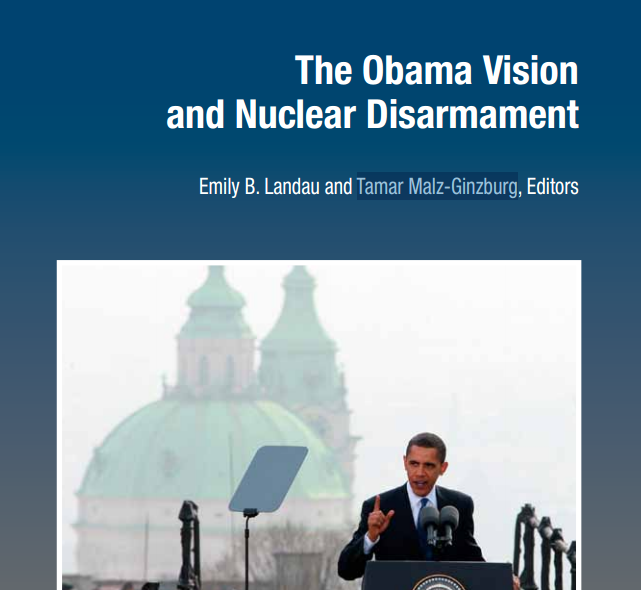
The study analyzes the major developments in nuclear arms control and disarmament in the first two years of the Obama presidency, focusing on the impact of the new disarmament agenda on the nuclear nonproliferation regime. The essays compiled here probe the Obama administration’s at times conflicting emphases on nuclear arms control and disarmament, and their implications for deterrence and the determination to confront proliferators such as North Korea and Iran. Also explored here are international treaties for control and disarmament of other weapons of mass destruction; the tension in US-Russia relations over the American missile defense program; and implications of the new agenda for the Middle East, particularly as it relates to Israel and the nuclear realm.
Part I: A New Arms Control Agenda Led by the United States
Obama’s Nuclear Disarmament Agenda: Blurred Aims and Priorities
Emily B. Landau
The Obama Administration: Caught between Disarmament and Deterrence
Jonathan Schachter
Part II: The Obama Vision and International Constraints
Between Vision and Reality: New START, the Nuclear Posture Review, and the Nuclear Security Summit
Tamar Malz-Ginzburg
The Missile Defense Program: Tension between the United States and Russia
Uzi Rubin
International Nuclear Nonproliferation Agreements: Current Status and Future Prospects
Ephraim Asculai
Preventing Chemical and Biological Weapons Proliferation
David Friedman
Part III: The New Agenda and the Middle East
Between Israel and Iran: Egypt and the 2010 NPT Review Conference
Shimon Stein
Israel and the Nuclear Nonproliferation Regime
Yair Evron
Appendix: Remarks by President Barack Obama, Prague, Czech Republic, April 5, 2009