


The Decision by Arab Leaders in Israel Not to Attend the Peres Funeral: An Act of Defiance or a New Trend? | INSS
go to header go to content go to footer go to search
INSS logo The Institute for National Security Studies, Strategic, Innovative, Policy-Oriented Research, go to the home page
INSS
Tel Aviv University logo - beyond an external website, opens on a new page
  • Campus
  • Contact
  • עברית
  • Support Us
  • Research
    • Topics
      • Israel and the Global Powers
        • Israel-United States Relations
        • Glazer Israel-China Policy Center
        • Russia
        • Europe
        • Antisemitism and Delegitimization
      • Iran and the Shi'ite Axis
        • The Campaign Against Iran and the Shiite Axis
        • Iran
        • Lebanon and Hezbollah
        • Syria
        • Yemen and the Houthi Movement
        • Iraq and the Iraqi Shiite Militias
      • Conflict to Agreements
        • Israeli-Palestinian Relations
        • Hamas and the Gaza Strip
        • Peace Agreements and Normalization in the Middle East
        • Saudi Arabia and the Gulf States
        • Turkey
        • Egypt
        • Jordan
      • Israel’s National Security Policy
        • Military and Strategic Affairs
        • Israel's Security Strategy
        • Societal Resilience and the Israeli Society
        • Jewish-Arab Relations in Israel
        • Climate, Infrastructure and Energy
        • Terrorism and Low Intensity Conflict
      • Cross-Arena Research
        • Data Analytics Center
        • Law and National Security
        • Advanced Technologies and National Security
        • Foreign Information Manipulation and Interference
        • Economics and National Security
    • Projects
      • Preventing the Slide into a One-State Reality
      • India-Middle East-Europe Economic Corridor (IMEC)
  • Publications
    • -
      • All Publications
      • INSS Insight
      • Policy Research and Papers
      • Special Publication
      • Strategic Assessment
      • Technology Platform
      • Memoranda
      • Posts
      • Books
      • Archive
  • Database
    • Surveys
    • Spotlight
    • Maps
    • Dashboards
  • Events
  • Team
  • About
    • Vision and Mission
    • History
    • Research Disciplines
    • Chairman of the Board
    • Board of Directors
    • Fellowship and Prizes
    • Annual Reports
    • Internships
  • Media
    • Communications
    • Video gallery
    • Press Releases
  • Podcast
  • Newsletter
  • Campus
Search in site
  • Research
    • Topics
    • Israel and the Global Powers
    • Israel-United States Relations
    • Glazer Israel-China Policy Center
    • Russia
    • Europe
    • Antisemitism and Delegitimization
    • Iran and the Shi'ite Axis
    • The Campaign Against Iran and the Shiite Axis
    • Iran
    • Lebanon and Hezbollah
    • Syria
    • Yemen and the Houthi Movement
    • Iraq and the Iraqi Shiite Militias
    • Conflict to Agreements
    • Israeli-Palestinian Relations
    • Hamas and the Gaza Strip
    • Peace Agreements and Normalization in the Middle East
    • Saudi Arabia and the Gulf States
    • Turkey
    • Egypt
    • Jordan
    • Israel’s National Security Policy
    • Military and Strategic Affairs
    • Israel's Security Strategy
    • Societal Resilience and the Israeli Society
    • Jewish-Arab Relations in Israel
    • Climate, Infrastructure and Energy
    • Terrorism and Low Intensity Conflict
    • Cross-Arena Research
    • Data Analytics Center
    • Law and National Security
    • Advanced Technologies and National Security
    • Foreign Information Manipulation and Interference
    • Economics and National Security
    • Projects
    • Preventing the Slide into a One-State Reality
    • India-Middle East-Europe Economic Corridor (IMEC)
  • Publications
    • All Publications
    • INSS Insight
    • Policy Research and Papers
    • Special Publication
    • Strategic Assessment
    • Technology Platform
    • Memoranda
    • Posts
    • Books
    • Archive
  • Database
    • Surveys
    • Spotlight
    • Maps
    • Dashboards
  • Events
  • Team
  • About
    • Vision and Mission
    • History
    • Research Disciplines
    • Chairman of the Board
    • Board of Directors
    • Fellowship and Prizes
    • Internships
    • Annual Reports
    • Privacy Policy and Terms of Use
  • Media
    • Communications
    • Video gallery
    • Press Releases
  • Podcast
  • Newsletter
  • Campus
  • Contact
  • עברית
  • Support Us
bool(false)

Publications

Home Publications INSS Insight The Decision by Arab Leaders in Israel Not to Attend the Peres Funeral: An Act of Defiance or a New Trend?

The Decision by Arab Leaders in Israel Not to Attend the Peres Funeral: An Act of Defiance or a New Trend?

INSS Insight No. 865, October 31, 2016

Follow us on Google
עברית
Meir Elran
Muhammed Abu Nasra
Doron Matza
The decision by the Joint List MKs not to attend the Peres funeral can be seen as a kind of challenge, a mirror image of the government’s policy toward the Arabs in Israel. As such, it reflects the Arab leaders’ adoption of the concept of economic inclusion, alongside a tendency toward political self-exclusion. In this context, they are willing to cooperate with the government on implementing most of the five-year program to provide economic aid to the Arab population, and at the same time, by demonstrating an independent posture, they seek to segregate themselves from issues and symbols considered by the majority as the core of the national consensus, which is decidedly Jewish. In itself, such an approach contains potentially problematic and risky elements of isolation. Precisely against this backdrop, the Israeli government would do well to listen closely to the other nuances in Arab society that still seek to preserve bridges to the Jewish majority, and avoid steps that exclude – not to mention boycott – the Arab leadership. It should continue to encourage the social integration of Arab society, so as to serve the shared interests of  Israel’s majority and minority populations.

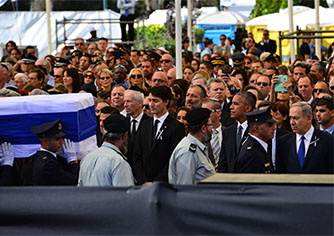
The Joint List's decision not to participate in the state funeral of Shimon Peres, ninth President of the State of Israel, on September 30, 2016, prompted surprise and anger among the Israeli public and political arena. From the Jewish public’s point of view, the decision exposed the limited ability of Ayman Odeh, head of the Joint List, to conduct a consistent pragmatic policy, and raised questions as to the political direction of the Arab leadership on the central issue of Arab integration into the Israeli social fabric.

The establishment of the Joint List prior to the 2015 elections was perceived by many as a significant step meant not only as a tactical response to the newly raised electoral threshold for Knesset elections, but also as a way to reposition local Arab politics, emphasizing the strategy of integration. Thus, the process was accompanied by a new approach that sought to advance Israel’s Arab sector by adopting a social approach as a leading growth engine. The social discourse proposed by Odeh since the elections was positioned between two older approaches: the Palestinian national discourse, which took a blow after the 2006-7 publication of the “Arab Future Vision Documents,” which challenged the perception of Israel as a Jewish democratic state; and the Islamic religious discourse led by the Islamic Movement, which suffered a serious blow after the Northern Faction was outlawed, against the background of the escalation on the Temple Mount that began in the fall of 2015.

Not disclaiming the older approaches, the Joint List’s main social discourse was meant to launch an updated agenda. Without giving up on the national narrative, the purpose of the present policy was to create a common denominator for all of the rival political components, from Balad on one side to Hadash on the other. No less significant, the updated approach was meant to create an agreed-upon political platform to promote the status and condition of the Arab minority through joint discourse and action by Jews and Arabs, focusing on civilian issues, including the cost of living, housing, education, and employment. Based on this strategy, Odeh expressed pragmatic willingness for close cooperation with the Netanyahu government on promoting the five-year plan for the Arab sector (government decision no. 922, December 30, 2015).

Since its formulation, the social strategy has been challenged repeatedly by the political circumstances. The wave of terrorism that began in September 2015 brought the extreme nationalist discourse back to the political arena. The fault lines between Jews and Arabs in Israel on Palestinian issues again took center stage, nourished further by the turbulence in the Arab world. The strengthening of the national discourse in Israel undermined Odeh’s ability to consolidate the social strategy, which relied on the hope to forge connections with significant groups in Israeli society. It also exposed the fragility of the political seam lines inside the Joint List, against the background of the involvement of some – mostly Balad – in extremist activities with a clear nationalist character, such as public identification with Palestinians killed during terrorist attacks.

The mood of the Jewish public, which includes extremist and harsh language, as well as the actions and statements of the Israeli government, have impacted negatively on the chances of success of the strategy led by Odeh. The government adopted a dual policy toward the Arab minority, based on two ostensibly conflicting dialectical patterns: on the one hand, an effort to integrate the Arab minority into the Israeli economy, as part of the efforts to decrease the near total dependence of the weak sectors – Arab and haredi – on public coffers; and on the other hand, an effort to exclude the Arabs as an ethnic group from the Israeli cultural-political space, expressed in successive statements and steps, such as outlawing the Northern Faction of the Islamic Movement and promoting the Impeachment Law.

Under these circumstances, the decision of the Joint Arab List not to participate in the funeral of President Peres can be seen as a kind of challenge, a mirror image of the government’s policy toward the Arabs in Israel. As such, it testifies to adoption of the concept of economic inclusion, alongside a tendency toward political self-exclusion on the part of the Arabs themselves. In this context, they are willing to cooperate with the government on implementing most of the five-year program to provide economic aid to the Arab population, and at the same time, by demonstrating an independent posture, they seek to segregate themselves from issues and symbols considered by the majority as the core of the national consensus, which is decidedly Jewish.

The decision by members of the Joint List not to attend the Peres funeral likely indicates a new trend: endorsing the integration and cooperation with the government, while at the same time emphasizing a degree of segregation and an inward focus to Arab society. This approach might sharpen political and cultural barriers with regard to the Jewish majority, while attempting to direct energy to address the severe internal ills of Arab society. In itself, such an approach contains potentially problematic and risky elements of isolation.

It is too early to determine whether the Arab leadership is determined to adopt this new strategy in full. Following the defiant boycott of the funeral, there was a heated debate about the political reasoning of this decision. The most recent Peace Index of the Israel Democracy Institute survey indicates that more Arabs think that boycotting the funeral was unjustified and unwise than those who think the opposite. According to a poll conducted by Statnet, an institute that studies Arab society, the rate of those opposing the decision was very high (over 80 percent), even among Joint List voters. These findings, as well as articles published by Arabs in the Arab and Hebrew press, clearly indicate a sharp disagreement between Arab citizens on the issue and seemingly also expose the existence of an Arab majority that supports full integration in Israeli society and understands the potential damage of boycotts and the negative implications of segregation.

Precisely against this backdrop, the government would do well to listen closely to the other nuances in Arab society that still seek to preserve bridges to the Jewish majority, and avoid steps that exclude – not to mention boycott – the Arab leadership. Such steps are perhaps consistent with the policy of sidelining Arabs within the Israeli political sphere, but are also likely in the long term to prove to have destructive consequences on the ability to conduct reasonable majority-minority relations. Therefore, the government should not fall prey to oversimplified discourse on the complex relationships between the Jewish majority and the Arab minority. Instead, it should continue to encourage the social integration of Arab society, in cooperation with the pragmatic elements of the Arab leadership that are in need of support, so as to serve the wide shared interests of  Israel’s majority and minority populations.

The opinions expressed in INSS publications are the authors’ alone.
Publication Series INSS Insight
TopicsJewish-Arab Relations in Israel
עברית

Events

All events
Israel’s National Security Conference
27 July, 2026
10:00 - 14:00

Related Publications

All publications
Shutterstock
Neglecting the Struggle Against Crime in Arab Society Is a Threat to Israel’s National Security
Against the backdrop of the ongoing war, which has lasted for 8 months, it appears that the problem of crime in Arab society is noticeably absent from the list of priorities of the Israeli government and the law enforcement system. With over 100 murders in the Arab sector during the first half of the year, the persistent neglect in combating the growing violence has dangerous implications for Israel’s national security
26/06/24
Mostafa Alkharouf / Anadolu Agency
Between Restraint and Protest: Arab Society in Israel After Seven Months of War
After seven months of war in Gaza, calm has been maintained between the Jewish and Arab sectors in Israel—even during the month of Ramadan, despite concerns expressed by the security and political establishments. However, amid the harsh reality of the ongoing war, potential dangers could undermine the stability of these delicate relations. What are these dangers, and how should they be addressed?
19/05/24
REUTERS/Carlos Barria
Cutting the Budgets for the Arab Sector’s Five-Year Plans Threatens Israel’s National Security and Resilience
Despite the need for budget cuts across the board because of the war in Gaza, a significant cut in the five-year plans for Arab society could severely harm not only Arab society but also the Israeli economy and national security
07/02/24

Stay up to date

Registration was successful! Thanks.
  • Research

    • Topics
      • Israel and the Global Powers
      • Israel-United States Relations
      • Glazer Israel-China Policy Center
      • Russia
      • Europe
      • Antisemitism and Delegitimization
      • Iran and the Shi'ite Axis
      • The Campaign Against Iran and the Shiite Axis
      • Iran
      • Lebanon and Hezbollah
      • Syria
      • Yemen and the Houthi Movement
      • Iraq and the Iraqi Shiite Militias
      • Conflict to Agreements
      • Israeli-Palestinian Relations
      • Hamas and the Gaza Strip
      • Peace Agreements and Normalization in the Middle East
      • Saudi Arabia and the Gulf States
      • Turkey
      • Egypt
      • Jordan
      • Israel’s National Security Policy
      • Military and Strategic Affairs
      • Israel's Security Strategy
      • Societal Resilience and the Israeli Society
      • Jewish-Arab Relations in Israel
      • Climate, Infrastructure and Energy
      • Terrorism and Low Intensity Conflict
      • Cross-Arena Research
      • Data Analytics Center
      • Law and National Security
      • Advanced Technologies and National Security
      • Foreign Information Manipulation and Interference
      • Economics and National Security
    • Projects
      • Preventing the Slide into a One-State Reality
      • India-Middle East-Europe Economic Corridor (IMEC)
  • Publications

    • All Publications
    • INSS Insight
    • Policy Research and Papers
    • Special Publication
    • Strategic Assessment
    • Technology Platform
    • Memoranda
    • Database
    • Posts
    • Books
    • Archive
  • About

    • Vision and Mission
    • History
    • Research Disciplines
    • Chairman of the Board
    • Board of Directors
    • Fellowship and Prizes
    • Internships
    • Annual Reports
    • Support
    • Privacy Policy and Terms of Use
  • Media

    • Communications
    • Video Gallery
    • Press Release
    • Podcast
  • Home

  • Events

  • Database

  • Team

  • Contact

  • Newsletter

  • עברית

INSS logo The Institute for National Security Studies, Strategic, Innovative, Policy-Oriented Research, go to the home page
40 Haim Levanon St. Tel Aviv, 6997556 Israel | Tel 03-640-0400 | Fax 03-744-7590 |
Developed by Daat ,Yael Group.
Accessibility Statement
This site is protected by reCAPTCHA and the Google Privacy Policy and Terms of Service apply.