


Publications
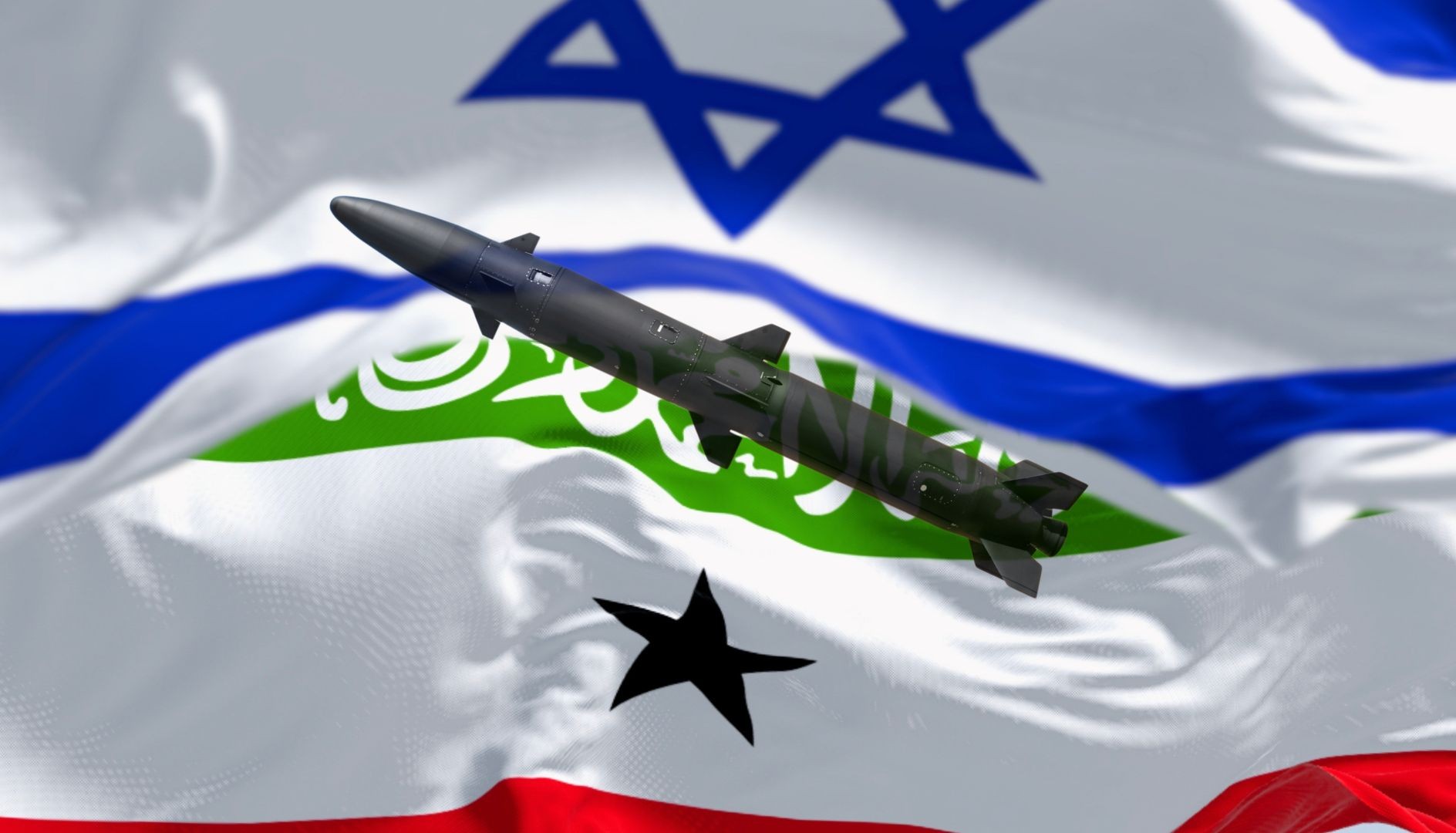
A joint INSS-ISIR (Somaliland) study: How the Yemenite threat impacts Jerusalem and Hargeisa, and how to address the shared challenge
INSS Insight No. 2134, April 29, 2026
Follow us on GoogleThe Houthi threat has evolved into a multidimensional challenge with direct implications for Israel and growing relevance for Somaliland. While the Houthis lack the capacity to defeat Israel militarily, they have demonstrated an ability to expand the geographic scope of confrontation, disrupt critical maritime routes in the Red Sea, and serve as a key instrument of Iran’s regional strategy. At the same time, emerging dynamics suggest increasing strain on Iran’s proxy network, potentially rendering actors such as the Houthis more central, yet also more unpredictable. Against this backdrop, the emerging relationship between Israel and Somaliland reflects broader geopolitical shifts linking the Middle East and the Horn of Africa. While this convergence offers strategic opportunities, particularly in maritime security and regional positioning, it also carries significant risks, including escalation, retaliation, and diplomatic backlash.
Addressing these challenges requires a calibrated, multi-domain strategy that integrates military, economic, and diplomatic tools while avoiding destabilizing overreach. To address this shared challenge, INSS and the ISIR research institute in Somaliland have partnered to produce a joint analysis of the Houthi threat to both Israel and Somaliland, including policy recommendations on how the two sides should respond to this common threat.
Somaliland’s mutual recognition has arrived at a time when regional geopolitics in both the Horn of Africa and the Middle East are reshaping. While Somaliland and Israel have different contexts and power relations, the two have found exchangeable interests—Somaliland has been struggling to secure international recognition for its statehood for the past three decades. For this reason, it is leveraging its geographic location. Israel, on its side, is struggling for its national security interests in the Middle East and has leveraged its “recognition vote.” Jointly concerned by the Houthi disruptions in the Red Sea since 2023, Somaliland has been receiving international attention, as it is regarded as a potential partner in any attempt to improve Red Sea security.
The Houthis currently pose a multifaceted challenge, incorporating military, economic, and geopolitical elements. For Israel, their importance lies not in their ability to defeat Israel militarily, but in their capacity to expand the geographic scope of confrontation, disrupt maritime trade, and serve as a key lever in Iran’s regional strategy. At the same time, evolving regional dynamics suggest that Iran’s reliance on proxy warfare is under increasing strain, potentially making actors such as the Houthis more central—but also more unpredictable. For Somaliland, the Houthi movement represents multifaceted risk, involving direct physical attacks in the form of retaliation, complicating trade navigation, potentially affecting the cost of living, strategic entanglements in regional conflicts, and complex geopolitical rivalries.
The Missile, UAV, and Maritime Threat
The Houthis’ military capabilities have improved significantly due to sustained Iranian and Hezbollah support, including technology transfers, training, and weapons supply. Their arsenal includes long-range ballistic missiles, cruise missiles, advanced UAVs, and maritime strike capabilities. These capabilities have effectively erased the strategic distance between Yemen and Israel. While Israel’s missile defense systems intercept many threats, they cannot provide full protection. Even limited successful strikes or the constant need for defensive readiness impose psychological, operational, and economic costs.
Beyond direct attacks, the Houthis have demonstrated their ability to weaponize maritime disruption. Their attacks on commercial shipping in the Red Sea and the Bab el-Mandeb Strait impose indirect but substantial costs on Israel and the global economy, transforming the challenge into a broader strategic issue involving freedom of navigation and regional stability.
Expanding Threat Vectors: Land and Networked Actors
Beyond missile and maritime threats, the Houthis are signaling ambitions to expand their operational reach. Their ties with Shiite militias in Iraq raise the possibility of multi-front coordination, including potential land-based threats via Syria or Jordan.
At the same time, reports of interaction with non-state actors such as Al-Shabaab and ISIS affiliates point to the emergence of cross-regional destabilization networks. While operational coordination remains limited, shared interests in weakening state structures and disrupting maritime control increase long-term strategic risk.
The African Dimension: Somaliland Between Opportunity and Risk
The Houthi threat is no longer confined to the Middle East; it increasingly intersects with the Horn of Africa, particularly Somaliland, which has gained attention as a potential partner in securing Red Sea maritime routes. For Israel, Somaliland represents a potential strategic foothold near critical shipping lanes and in proximity to Yemen. For Somaliland, engagement with Israel offers opportunities in technology, agriculture, and diplomatic advancement, especially in its pursuit of international recognition. However, this convergence introduces significant risks. Alignment with Israel against the Houthis could expose Somaliland to direct retaliation, trigger regional backlash, and undermine its recognition strategy. Somaliland’s limited defense capabilities further heighten these risks.
Strategic Considerations in Israel–Somaliland Relations
The emerging relationship between Israel and Somaliland reflects broader geopolitical shifts across the Red Sea and the Horn of Africa. Somaliland’s geographic position, particularly around the Berbera port, makes it strategically attractive. However, framing the relationship primarily in military terms risks destabilization. For Somaliland, careful calibration is essential: maximizing economic and technological benefits while minimizing exposure to geopolitical risks and regional backlash.
Integrated Policy Approach
Given the multi-dimensional nature of the Houthi threat, responses must move beyond narrow military solutions and adopt a broader strategic framework:
- Strengthening Maritime Security—Israel and Somaliland should deepen cooperation with international and regional partners to ensure freedom of navigation in the Red Sea. A sustained naval presence and coordinated maritime defense architecture are essential to counter Houthi disruption.
- Expanding Intelligence and Disruption Efforts—Enhanced intelligence-sharing, particularly targeting supply lines and smuggling networks, can slow the Houthis’ military buildup and limit their operational reach.
- Adopting a Multi-Theater Perspective—The Houthi challenge should be integrated into a broader strategic framework spanning the Middle East and Africa. This includes monitoring potential expansion into Iraq, Syria, and North Africa, as well as their growing influence along maritime corridors.
- Building Regional Coalitions—Israel should prioritize flexible coalition-building with both Middle Eastern and African partners. Such cooperation can mitigate operational burdens and improve regional resilience against non-state actors.
- Calibrating Engagement with Somaliland—For both Israel and Somaliland, cooperation should focus on low-risk, high-benefit domains such as trade, agriculture, and technology. However, avoiding the establishment of an Israeli military base in Somaliland is critical, as it would likely provoke escalation and regional backlash. Instead, gradual trust-building and economic engagement can provide strategic value without triggering destabilizing responses.
- Preventing Regional Polarization—Somaliland should avoid exclusive alignments that could lead to diplomatic isolation. Maintaining balanced relations with Gulf states, Turkey, and other regional actors is essential to preserving its strategic flexibility.
Conclusion
The Houthis represent a new type of threat: a geographically distant actor capable of exerting significant strategic pressure through military capabilities, maritime disruption, and networked alliances. As proxy-based deterrence erodes, actors like the Houthis are likely to play a more central and less predictable role. For Israel, the challenge is managing an expanding multi-theater confrontation. For Somaliland, it is balancing opportunity with risk. In both cases, success will depend on careful calibration of alliances, multi-domain coordination, and long-term strategic restraint.