


Publications
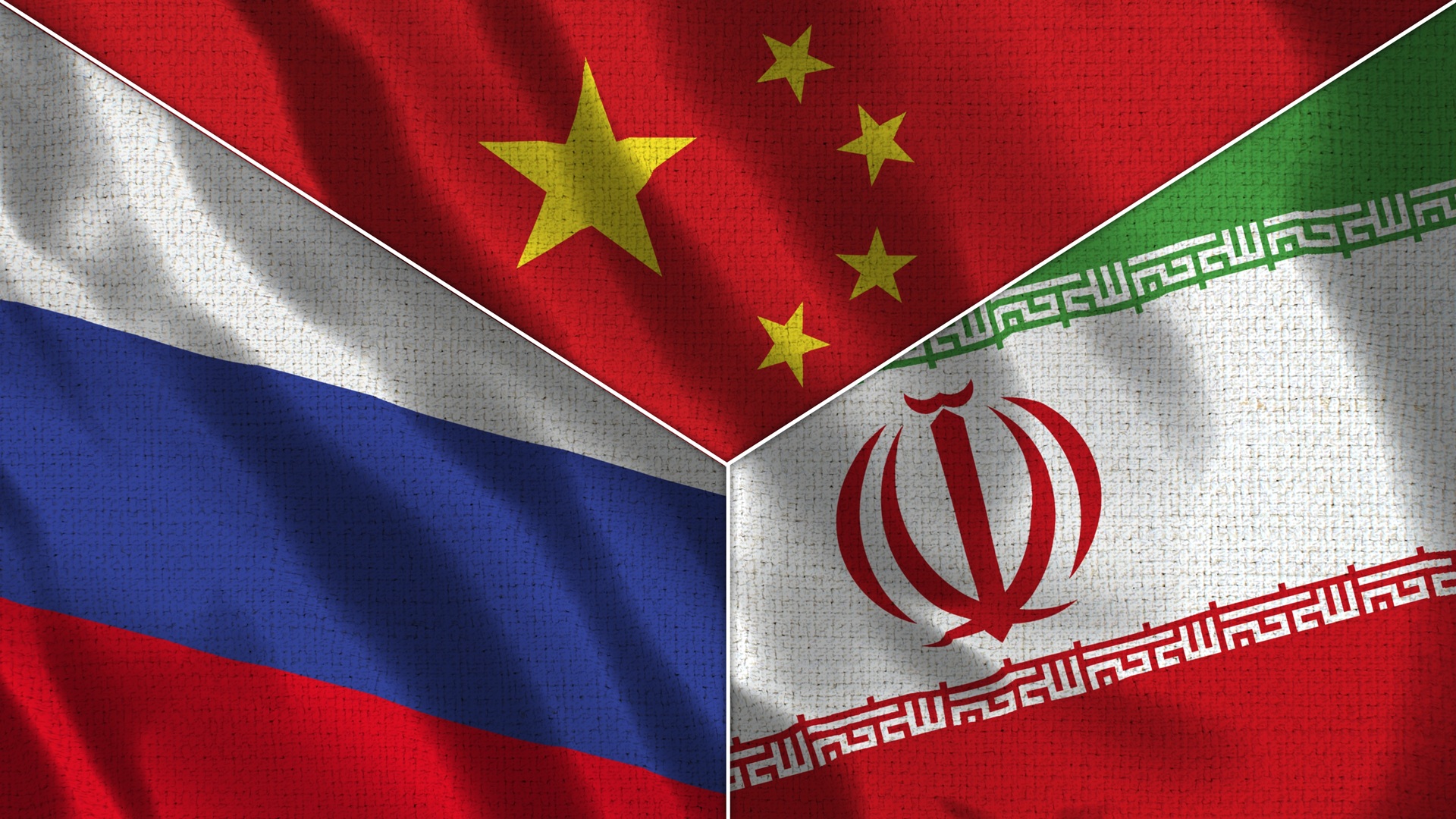
What can be learned about the nature of the relationship between Moscow, Beijing, and Tehran following the test of their ties during the 12-day war?
INSS Insight No. 2031, August 31, 2025
The policy of Moscow and Beijing, which consisted of fairly mild condemnations of the Israeli and US strikes in Iran, sparked criticism and disappointment in Tehran. It also reinforced the Iranian assessment that its reliance on Russia and China remains limited, particularly in the event of a military confrontation with Israel and the United States. Nevertheless, it is clear that for now, Iran has no viable alternative to continuing its political, economic, and security partnership (as limited as it may be) with Russia and China, especially given the escalating tensions between Tehran and Europe. Likewise, Russia and China, who view Iran as a junior partner in a coalition against the West and the United States, have no real alternative to Tehran, and they are expected to continue the partnership as long as it serves their interests.
The Iranian–Russian–Chinese partnership, which has intensified and expanded in recent years amid global developments such as the war in Ukraine and growing tensions between China and the United States, was put to the test during the 12-day war between Israel and Iran. At the conclusion of Operation Rising Lion, pragmatic circles in Iran voiced criticism mainly at Russia and, to a lesser extent, China for refraining from providing assistance to Iran during the war and limiting themselves to condemning the Israeli and American strikes, especially given Iran’s significant military support for Russia since its invasion of Ukraine in February 2022.
This criticism echoes earlier claims made by the same circles about the need to avoid developing absolute dependence on Russia and China within the framework of Iran’s “Look to the East” policy adopted by Iran’s leadership in recent years. This concern stems from the recognition that both countries act according to their own interests, including their ties with the United States, and would not hesitate to sacrifice Iran to advance important strategic goals, such as improving relations with Washington. The tensions between Tehran and Moscow are related not only to the 12-day war but also to other developments, including disagreements regarding the situation in Syria, particularly Russia’s official dialogue with the al-Sharaa regime and its efforts to improve ties with Syria, as well as developments in the South Caucasus, particularly in light of the emerging agreement between Azerbaijan and Armenia.
In contrast, circles identified with the conservative and hardliner wing of Iran’s leadership refrained from voicing similar criticism and instead expressed understanding of Russia and China’s conduct. For example, Yadollah Javani, the head of the political bureau of the Islamic Revolutionary Guards Corps, declared that Iran had not requested assistance from Russia or China during the war, emphasizing that the military cooperation agreement between Tehran and Moscow does not obligate Russia to support Iran in wartime.
Nonetheless, Iran’s leadership is well aware that the Islamic Republic has no political, military, or economic substitute for Russia and China, especially given the deterioration of relations with European states and the prospect of the E3 countries (Germany, Britain, and France, partners in the 2015 nuclear deal) activating the “snapback” mechanism to renew sanctions on Iran. Even if Tehran is disappointed with Russia’s conduct, continued cooperation between the countries is evident. For example, Ali Larijani, the supreme leader’s advisor and incoming secretary of the Supreme National Security Council, and Aziz Nasirzadeh, Iran’s minister of defense, visited Moscow in July 2025, while the two countries held a joint naval drill in the Caspian Sea that same month. In addition, there have been increasing reports (still unconfirmed) about Russia’s intention to supply Iran with an S-400 air defense system and China’s intention to supply Iran with advanced J-10 fighter aircraft, which have recently proven effective in the conflict between India and Pakistan. In the economic realm, Iran’s dependence on oil exports to China continues, despite efforts by the Trump administration to enforce sanctions on Iranian oil exports. It should be noted that despite the 25-year cooperation agreement signed between Tehran and Beijing in March 2021, the partnership between the two countries remains very limited, and China does not provide solutions to most of Iran’s economic difficulties, including the need for infrastructure investment.
At the political level as well, it appears that China and Russia continue to provide Iran with strategic backing, mainly through their support in international institutions such as the UN Security Council. Even if Russia and China cannot prevent the activation of the snapback mechanism, they still pose an obstacle to American and Western efforts to increase pressure on Tehran and deepen its international isolation.
It is clear that Moscow also wishes to preserve its ties with Iran, mainly because it sees Tehran as an important component of the anti-Western partnership that also includes China and North Korea. Russia is expected to continue supporting Iran politically, economically, and perhaps even militarily, as long as this support does not threaten to undermine its own war effort in Ukraine. However, Russia’s growing domestic production of UAVs, which has reduced its dependence on Iranian drones, has lowered the pressure on Moscow to assist Tehran. The relationship between Iran and Russia had been characterized by greater symmetry following Russia’s invasion of Ukraine, thanks to Tehran’s support for Moscow; now, however, it has once again become asymmetrical, with Iran more dependent on Russia rather than the reverse.
Russia was surprised by Israel’s opening strike against Iran, the United States joining the campaign, and the significant operational achievements of Israel and the United States against Iran. During the war, a debate unfolded in Moscow between ultra-nationalist circles, who called for increased support for Iran, and those favoring a more neutral approach. For now, it is clear that Russia is still formulating its stance. Alongside preserving ties with Tehran, President Vladimir Putin also maintains direct dialogue with Prime Minister Benjamin Netanyahu, including on the Iranian issue. Officially, Russia continues to oppose the development of nuclear weapons by Iran. Moreover, an unverified report that was later denied indicated that Russia pressured Iran to give up uranium enrichment on its soil in exchange for receiving nuclear fuel from Russia for civilian purposes. However, Russia’s commitment to taking meaningful action to block Iran’s path to nuclear weapons remains doubtful.
China, too, was disappointed by Iran’s performance in the campaign, particularly Tehran’s limited ability to mobilize its regional proxies on its behalf. Beijing was also very concerned by Tehran’s threats to close the Strait of Hormuz, a move that, if carried out, could have seriously harmed the Chinese economy. The prospect of internal instability in Tehran also alarmed Beijing, since regime change in Iran could jeopardize bilateral agreements and, in an extreme scenario, even lead to Iran’s disintegration and chaos, which could affect China’s own borders. In addition, China was also concerned about the possibility of Israel emerging as an unrestrained regional hegemon.
In light of Iran’s weakness in the campaign, China preferred to adopt a largely neutral stance in the war and was careful not to intervene—much to Tehran’s disappointment. Similar to Moscow, China also considers it important to maintain ties with Iran within the coalition opposing American hegemony in the Middle East. For the time being, Chinese supplies of weapons and air defense systems to Iran are in doubt, partly due to Beijing’s concern that such systems might be tested directly against American and Israeli military technologies in the event of any renewed fighting. Nonetheless, such a possibility cannot be ruled out over the long term. With regard to Iran’s nuclear program, China still opposes the development of nuclear weapons by Iran, as it seeks to preserve as much stability as possible in the Gulf region.
Policy Recommendations for Israel
Israel’s primary goal should be to minimize the risks posed by Russian and Chinese assistance in rebuilding Iran’s military capabilities, particularly in the realms of nuclear development, ballistic missiles, air force, and air defense, while also leveraging Moscow’s and Beijing’s influence over Iran to encourage a willingness to pursue political arrangements and to abandon its quest for nuclear weapons. The aim is to translate Israel’s operational successes in the war into a long-term political-strategic achievement that denies Iran the ability to develop nuclear weapons, whether through a political settlement or through enforcement mechanisms, including the use of force.
Nonetheless, Israel should also recognize that, at present, there is no realistic prospect of driving a wedge between Iran and its partners in Moscow and Beijing. At most, Israel can continue dialogue with China and Russia (in coordination with the United States) in an effort to reduce the risks inherent in continued cooperation within the Iran–Russia–China triangle, particularly regarding possible weapons supplies to Iran. In parallel, Israel should emphasize to both Russia and China its firm opposition to the transfer of advanced weapons to Iran, as well as its determination to act against any weapons system that could threaten its security.
___________
* This paper is based on teamwork with the participation of Dr. Rémi Daniel, Galia Lavi, Dr. Gallia Lindenstrauss, Dr. Jesse Weinberg, Arkady Mil-Man, Eldad Shavit, Sima Shine, and Pnina Sharvit Baruch.