


Publications
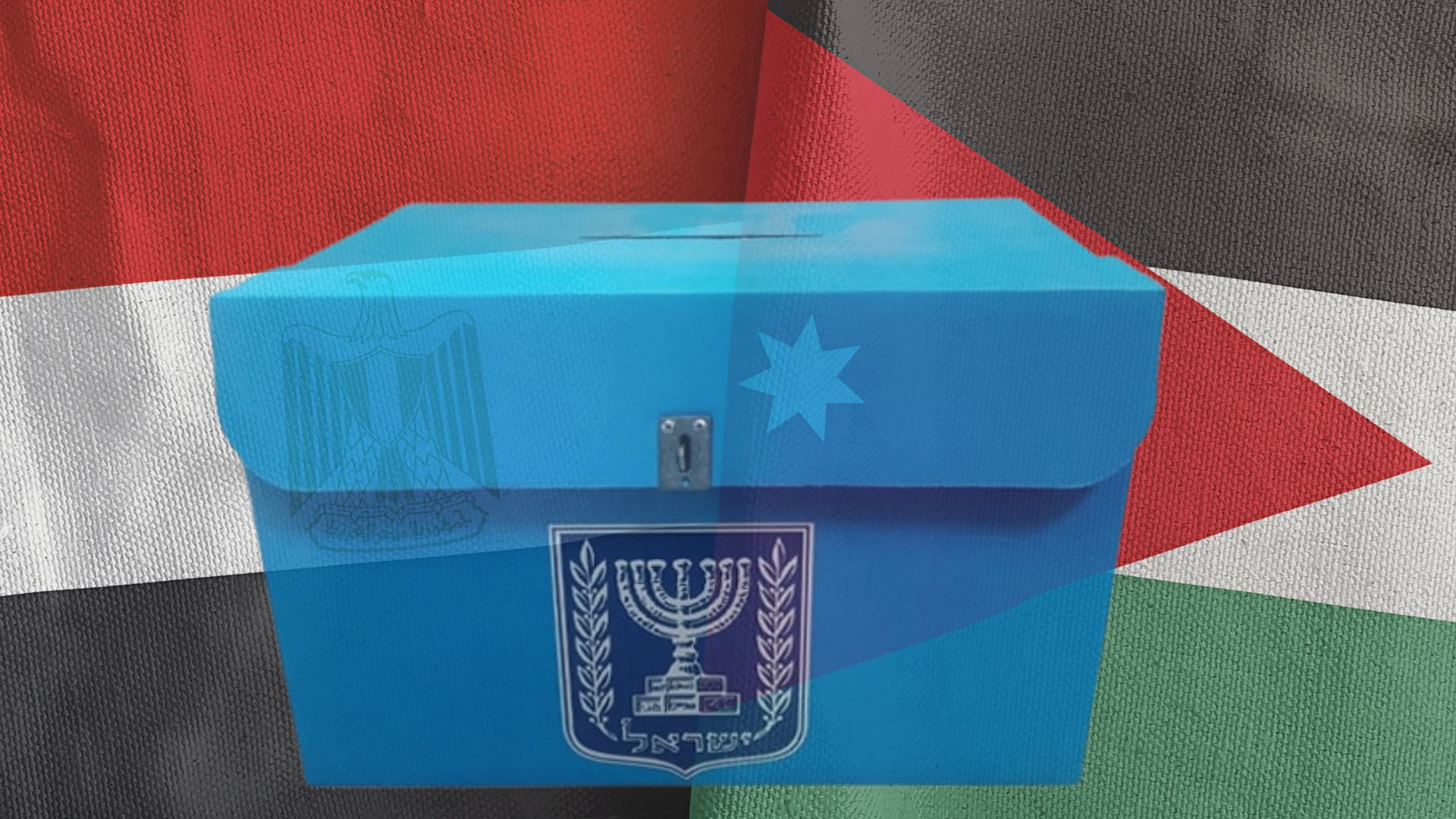
An examination of the discourse in Israel’s eastern and southern neighbors ahead of the 26th Knesset elections, and implications for the new government that will emerge
INSS Insight No. 2173, July 28, 2026
Follow us on GoogleThe upcoming elections in Israel, to be held on October 27, are not perceived in Egypt and Jordan as a purely internal Israeli affair. Rather, they are depicted in mainstream media in both countries as a strategic junction that could impact their direct interests, the future of the Palestinian issue, and the broader regional landscape. At the same time, an analysis of the public discourse in both countries reveals an ambivalence. On the one hand, many commentators make no secret of their hope that Israel’s current government will be replaced. On the other hand, those same commentators express pessimism regarding the likelihood of any meaningful policy change under an alternative Israeli government, particularly on fundamental issues concerning the Palestinian arena. According to the official line in Egypt and Jordan, the elections are not between “right” and “left,” but rather between parties representing “different shades of right”: a religious-oriented right that advocates territorial expansion, annexation, and altering the status quo in Jerusalem; and a security-oriented right that, while potentially a more pragmatic partner, is not expected to advance fundamental solutions to fundamental problems clouding their relations with Israel. Despite the prevailing doubts in Egypt and Jordan, a unique window of opportunity will open for the next government in Jerusalem—one that should be seized—to rehabilitate peace relations with Cairo and Amman and lift them out of the low point to which they have sunk.
An examination of the discourse in Egypt and Jordan ahead of Israel's 26th Knesset elections reveals two seemingly contradictory premises that shed considerable light on how both countries view Israeli politics and society. The first is that the elections are of paramount importance and represent a critical turning point. For instance, in May, Egyptian columnist Osama Saraya wrote in the state-owned daily Al-Ahram that the elections could prove to be "a turning point that will shape the next phase for the entire region," partly due to the current government's efforts to permanently and irreversibly block any future progress toward a two-state solution.
A similar—and at times even sharper—approach is evident in Jordan. An example of this can be found in the remarks of Jordanian journalist Bassam Al-Badarin. In an article he wrote in July in the pan-Arab daily Al-Quds Al-Arabi, he argued that "dethroning the corrupt ruling junta in Tel Aviv has now become a public, national, and moral imperative for Jordan." According to a view shared by many supporters of the monarchy, the actions taken by the current Israeli government contradict the peace treaty with Jordan and threaten the kingdom's national security interests, harm Hashemite guardianship over the Al-Aqsa Mosque compound, encourage Palestinian migration from the West Bank to Jordan, and ultimately seek to resolve the Palestinian issue within Jordan's borders and at its expense.
The second premise, which exists alongside the desire to replace the current Israeli government, is a skeptical attitude toward the alternative offered by the Israeli opposition. The elections are portrayed not as a struggle between two blocs with distinct ideologies, but rather as a contest between different currents within the right-wing camp. According to this reading, Israeli society shifted rightward following the October 7, 2023, Hamas massacre, leaving Israel's peace camp all but erased from the political map. Consequently, differences between the two sides primarily concern domestic issues, including judicial reform, Haredi conscription into the IDF, and the establishment of a state commission of inquiry into the events of October 7. From the perspective of Israel's neighbors, however, these are secondary concerns; they judge Israel primarily by its conduct in the regional and Palestinian arenas.
For example, in May, Major General (ret.) Mohamed Ibrahim Al-Duwairi, Deputy Director of the Egyptian Center for Strategic Studies (ECSS), assessed that "any future [Israeli] government—whether led by Benjamin Netanyahu, Naftali Bennett, Yair Lapid, or [Avigdor] Liberman—will adhere to current policies." Saraya of Al-Ahram likewise noted that there is no fundamental difference between the government and the opposition in Israel on what he defined as " fateful" issues. Furthermore, he maintained that "extreme" and hawkish stances yield greater electoral returns in Israel's prevailing political and social reality.
Choosing "The Lesser of Two Evils"
Despite the prevailing skepticism in Egypt and Jordan regarding the Israeli opposition, both countries display a clear preference for a government replacement after the elections. There are three main explanations for this:
The first is personal. Over the years, Prime Minister Benjamin Netanyahu has become a figure of deep aversion among the publics in Egypt and Jordan. This was true even prior to the bloody war that erupted on October 7, 2023, and it is likely that the situation has only worsened since. A public opinion survey conducted by the Washington Institute in late 2022 found that only 5% of Egyptians viewed Netanyahu’s return to power favorably. Meanwhile, polls published in June 2023 showed that roughly two-thirds of Egyptians and 72% of Jordanians viewed the protests against Netanyahu's government as a positive development.
These public sentiments also project onto the leadership in both nations. Relations between Netanyahu and Egyptian President Abdel Fattah el-Sisi were once functional, and even relatively close. Following Sisi’s inauguration as president in 2014, the two leaders spoke frequently and met several times in front of the cameras on the sidelines of the UN General Assembly in New York. Jerusalem encouraged Washington to support the new regime in Cairo, and both countries tightened cooperation in security and energy domains. Gradually, relations between the leaders deteriorated, due in part to the reality in the Palestinian arena. Since the outbreak of the war in Gaza, the Egyptian president has refrained from holding public meetings or official phone calls with Netanyahu, despite repeated requests from both Israel and the United States.
The rift between King Abdullah II of Jordan and Netanyahu is no less severe. The underlying friction between the Hashemite court and the Israeli prime minister’s office dates back to the era of King Hussein, following the failed 1997 assassination attempt against senior Hamas official Khaled Mashal in the Jordanian capital, Amman. Subsequent incidents further strained relations between the leaders. For example, in 2017 Netanyahu gave a highly publicized welcome to the Israeli security guard who fatally shot both a terrorist and a Jordanian civilian at the Israeli embassy compound in Amman. The episode was deeply offensive to King Abdullah, after he had agreed to allow the guard’s return to Israel.
Recently, it was reported that Netanyahu sought to meet with Abdullah for the first time since January 2023, but the King demanded a series of clarifications on various issues as a condition for holding the meeting—in part to avoid handing Netanyahu a political achievement "for free" ahead of the elections. In an interview with the BBC in October 2025, the King testified that he had learned from experience not to trust anything Netanyahu says. He estimated that the Prime Minister and his political partners are striving for "perpetual conflict" in order to stay in power. At the same time, he noted that there are other political forces in Israel who desire a change in the current government's course, describing them as "builders of peace" with whom he would be prepared to work once there is an opportunity to do so.
A second explanation for the Egyptian-Jordanian anticipation surrounding the elections is the relatively positive memory left by the "Government of Change," alongside the hope that once the election campaign concludes, the opposition will swap its hawkish slogans for a more pragmatic policy. The Bennett-Lapid government was far from the ideal government in the eyes of either country. It did not demonstrate diplomatic moderation, nor did it bring about a profound change in Israeli policy in the territories or act to renew the peace process. Nevertheless, it is remembered as a more credible, attentive, and cooperative interlocutor than the current government. When former Egyptian intelligence chief Abbas Kamel was asked in November 2021 about the differences between Netanyahu and Bennett, he stretched his arms wide, gesturing that the two were "worlds apart." Similarly, Jordanian journalist and commentator Osama Al-Sharif remarked in November 2022 that, while Bennett is not a moderate, "anyone is better than Netanyahu."
An article published in July 2026 on the pro-government Jordanian news website Ammon went even further, proclaiming in its headline that "Yashar" Party chairman Gadi Eisenkot is "The Last Chance for Peace." Its author, Israeli affairs commentator Ayman Al-Hunaiti, expressed hope that Eisenkot's success in recent public opinion polls reflected that "the Israeli public has begun to free itself from the madness of extremism which Netanyahu has fed it for three decades." According to Al-Hunaiti, Eisenkot, as a former Chief of Staff and a bereaved father, understands the true cost of war and recognizes that genuine security cannot be built on expanding settlements and clashing with the world, but rather on a path of political accommodation that would transform Israel into a credible regional partner.
Indeed, the third—and most central— reason Egypt and Jordan hope to see Israel's ruling coalition replaced is that neither country views the Israeli elections as a choice between good and evil, but rather as a choice between two problematic alternatives, one of which is considerably more dangerous than the other. In their view, the current government represents a right that is frequently labeled in the media of both countries as "extremist," "religious," "messianic," and "aggressive." The opposition, by contrast, is seen as representing a predominantly "security-oriented," "pragmatic," and "secular" right and is therefore viewed as the lesser of two evils.
Egypt and Jordan understand that both potential coalitions will prioritize security considerations over diplomatic compromise and are unlikely, in the foreseeable future, to advance a permanent settlement to the Palestinian issue along the lines they envision. Even so, they see significant differences between the two. The current government is associated with an attempt to resolve the conflict without addressing Palestinian national aspirations; with ideas of expansion and territorial annexation; with promoting the "voluntary migration" of Palestinians to Egypt and Jordan—a move the two countries regard as a direct threat to their identity, security, and economy; and with undermining regional stability while eroding the status quo at the Al-Aqsa compound. By contrast, Egypt and Jordan hope that an alternative security-oriented, right-wing coalition would seek to manage the conflict without definitively burying any future prospect of a two-state solution, or at the very least would refrain from taking unilateral steps that would pose direct threats to their own interests.
Furthermore, a leadership change in Israel could grant them greater domestic public legitimacy to expand the framework of normalization. In this context, Jordanian researcher and former Brig. General in the Jordanian General Intelligence Directorate Dr. Omar al-Radad claimed in July that Arab states that have peace agreements with Israel are anxiously awaiting the outcome of the October elections. In his words, "It can be assumed that a new government with a more pragmatic face will grant these countries political cover to accelerate joint economic and security projects, while mitigating the internal criticism they face due to their ties with Israel. By contrast, Netanyahu's continued rule or the rise of far-right forces would confront those countries with difficult choices."
Additional Egyptian-Jordanian Concerns on the Road to the Ballot Box
Egyptian and Jordanian concerns ahead of the Israeli elections extend beyond the outcome itself. Both countries fear efforts by Netanyahu—backed by US President Donald Trump—to achieve a "victory photo" in the time remaining before election day to boost his prospects at the ballot box. From their perspective, such an achievement could take the form of a military operation in Lebanon or Iran, presented as the fulfillment of his promise to "change the face of the Middle East," or an ambitious diplomatic move aimed at expanding the Abraham Accords without Israel offering meaningful concessions on the Palestinian issue.
A concrete Egyptian-Jordanian concern in this context is that Netanyahu’s failure to achieve "total victory" against Hamas, Iran, and Hezbollah could prompt his government to take aggressive steps that would serve his election campaign while posing threats to both countries and to the Palestinians. Threat scenarios highlighted in public discourse in both states include a renewal of the war in the Gaza Strip, annexation measures, the promotion of voluntary emigration in Gaza and the West Bank, and unilateral moves threatening the status quo in East Jerusalem.
For example, in June, former Jordanian minister Dr. Mohammad Abu Rumman, who serves as an academic adviser at the Jordanian Institute of Politics and Society, warned of an Israeli intention to establish an "alternative homeland" for Palestinians in Jordan. According to Abu Rumman, "The realization of this nightmare—which Jordan has always feared—is closer today than ever, in light of the Israeli schemes [expected] in the months ahead of the elections in Israel and the midterm elections in the United States, which will determine Netanyahu's future and significantly impact President Trump's [standing]."
Another concern occasionally voiced in Egypt and Jordan pertains to the stability of Israel's next government. The experience of the "Government of Change," which lasted only about a year, taught both countries that a less accommodating but more stable government may be preferable to one that is more accommodating yet fragile. The reasoning is that long-term regional initiatives require a strong Israeli partner capable of making decisions and honoring commitments over time.
At the same time, voices on the margins of the discourse in Egypt and Jordan suggest that an unstable government—plagued by repeated election cycles—would actually be more restrained and limited in taking hostile measures. According to this logic, a Netanyahu caretaker government would be preferable to a permanent and stable government under his leadership because it would have less room for maneuver and would find it more difficult to implement far-reaching political and military initiatives. Another advantage of such a government, as implied in the public discourse, is that it would be easier for Arab states to isolate it internationally than a new Israeli government that succeeds in improving Israel's international standing without making any significant changes to its policies.
Recommendations
The discourse in Egypt and Jordan ahead of Israel's elections suggests several practical recommendations for any coalition that emerges after the vote and seeks to strengthen Jerusalem's relations with Cairo and Amman:
First, the next government will have a golden opportunity to rehabilitate peace relations with Egypt and Jordan and lift them out of the low point to which they have sunk over the course of the war. The low bar of expectations in both countries regarding the next government works to its advantage. Furthermore, numerous shared interests—including joint projects in security, economy, trade, energy, water, tourism, transportation, and industry—await an Israeli leadership capable of creating the diplomatic framework and public climate necessary for their realization. At the same time, a more significant and profound improvement in relations with Egypt and Jordan will require the future coalition to move from ambiguity to a clear policy that represents a meaningful departure from the current government's approach to the Palestinian arena.
Second, Israel must demonstrate greater attentiveness to the concerns of Egypt and Jordan. Projecting military power creates a stabilizing and deterrent regional effect, but it must be managed with sensitivity and prudence. Declarations and moves aimed at "changing the face of the Middle East" risk being interpreted as aggression if executed unilaterally and perceived as a threat to the interests of neighboring states. A policy of "peace through strength" will not achieve its objectives unless it alleviates concerns in Cairo and Amman over measures such as encouraging migration, unilateral annexation, territorial expansion, and prioritizing military solutions over diplomacy.
Finally, there is tremendous importance in restoring high-level ties between the leadership in Israel and those in Egypt and Jordan. Interpersonal relations, mutual trust, and the ability to maintain candid and direct dialogue are of critical importance to Israel's capacity to bridge disputes with its neighbors, overcome existing tensions, and shape a shared, agreed-upon vision for the region's future. Therefore, productive discourse between the leaders—with the hope that it will gradually trickle down to the security establishments, governments, and societies—will lay a healthy foundation for robust peace relations that are more resilient to crises.