


Confidence Building at Sea: Advancing Maritime Security in the Mediterranean in a Regional Framework | INSS
go to header go to content go to footer go to search
INSS logo The Institute for National Security Studies, Strategic, Innovative, Policy-Oriented Research, go to the home page
INSS
Tel Aviv University logo - beyond an external website, opens on a new page
  • Campus
  • Contact
  • עברית
  • Support Us
  • Research
    • Topics
      • Israel and the Global Powers
        • Israel-United States Relations
        • Glazer Israel-China Policy Center
        • Russia
        • Europe
        • Antisemitism and Delegitimization
      • Iran and the Shi'ite Axis
        • The Campaign Against Iran and the Shiite Axis
        • Iran
        • Lebanon and Hezbollah
        • Syria
        • Yemen and the Houthi Movement
        • Iraq and the Iraqi Shiite Militias
      • Conflict to Agreements
        • Israeli-Palestinian Relations
        • Hamas and the Gaza Strip
        • Peace Agreements and Normalization in the Middle East
        • Saudi Arabia and the Gulf States
        • Turkey
        • Egypt
        • Jordan
      • Israel’s National Security Policy
        • Military and Strategic Affairs
        • Israel's Security Strategy
        • Societal Resilience and the Israeli Society
        • Jewish-Arab Relations in Israel
        • Climate, Infrastructure and Energy
        • Terrorism and Low Intensity Conflict
      • Cross-Arena Research
        • Data Analytics Center
        • Law and National Security
        • Advanced Technologies and National Security
        • Foreign Information Manipulation and Interference
        • Economics and National Security
    • Projects
      • Preventing the Slide into a One-State Reality
      • India-Middle East-Europe Economic Corridor (IMEC)
  • Publications
    • -
      • All Publications
      • INSS Insight
      • Policy Research and Papers
      • Special Publication
      • Strategic Assessment
      • Technology Platform
      • Memoranda
      • Posts
      • Books
      • Archive
  • Database
    • Surveys
    • Spotlight
    • Maps
    • Dashboards
  • Events
  • Team
  • About
    • Vision and Mission
    • History
    • Research Disciplines
    • Chairman of the Board
    • Board of Directors
    • Fellowship and Prizes
    • Annual Reports
    • Internships
  • Media
    • Communications
    • Video gallery
    • Press Releases
  • Podcast
  • Newsletter
  • Campus
Search in site
  • Research
    • Topics
    • Israel and the Global Powers
    • Israel-United States Relations
    • Glazer Israel-China Policy Center
    • Russia
    • Europe
    • Antisemitism and Delegitimization
    • Iran and the Shi'ite Axis
    • The Campaign Against Iran and the Shiite Axis
    • Iran
    • Lebanon and Hezbollah
    • Syria
    • Yemen and the Houthi Movement
    • Iraq and the Iraqi Shiite Militias
    • Conflict to Agreements
    • Israeli-Palestinian Relations
    • Hamas and the Gaza Strip
    • Peace Agreements and Normalization in the Middle East
    • Saudi Arabia and the Gulf States
    • Turkey
    • Egypt
    • Jordan
    • Israel’s National Security Policy
    • Military and Strategic Affairs
    • Israel's Security Strategy
    • Societal Resilience and the Israeli Society
    • Jewish-Arab Relations in Israel
    • Climate, Infrastructure and Energy
    • Terrorism and Low Intensity Conflict
    • Cross-Arena Research
    • Data Analytics Center
    • Law and National Security
    • Advanced Technologies and National Security
    • Foreign Information Manipulation and Interference
    • Economics and National Security
    • Projects
    • Preventing the Slide into a One-State Reality
    • India-Middle East-Europe Economic Corridor (IMEC)
  • Publications
    • All Publications
    • INSS Insight
    • Policy Research and Papers
    • Special Publication
    • Strategic Assessment
    • Technology Platform
    • Memoranda
    • Posts
    • Books
    • Archive
  • Database
    • Surveys
    • Spotlight
    • Maps
    • Dashboards
  • Events
  • Team
  • About
    • Vision and Mission
    • History
    • Research Disciplines
    • Chairman of the Board
    • Board of Directors
    • Fellowship and Prizes
    • Internships
    • Annual Reports
    • Privacy Policy and Terms of Use
  • Media
    • Communications
    • Video gallery
    • Press Releases
  • Podcast
  • Newsletter
  • Campus
  • Contact
  • עברית
  • Support Us
bool(false)

Publications

Home Publications INSS Insight Confidence Building at Sea: Advancing Maritime Security in the Mediterranean in a Regional Framework

Confidence Building at Sea: Advancing Maritime Security in the Mediterranean in a Regional Framework

INSS Insight No. 821, May 8, 2016

Follow us on Google
עברית
Shlomo Brom
Emily B. Landau
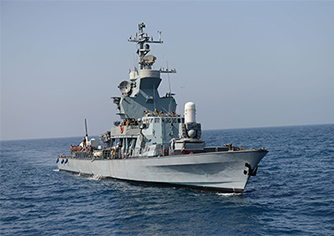
Today there is a basis for revisiting maritime security as a realm for advancing a confidence-building approach between Israel and some of its neighbors, in order to reduce potential sources of friction and escalation in the Mediterranean Sea, especially its eastern portion. The East Mediterranean has always been important for the bordering states because of their dependence on maritime transportation for international trade. However, since vast natural gas reservoirs were discovered in Israel’s maritime exclusive economic zone, its importance to these states’ national economies has greatly increased, and they will likely sense a need to increase their military presence in the Mediterranean in order to protect their gas facilities. With the increase in military naval activities comes the risk of friction among military vessels of the various bordering states. It is in Israel’s interest to suggest discussions on this subject, with all states that border the Eastern Mediterranean invited to participate. Talks should focus on the Eastern Mediterranean, rather than on more general discussions of maritime CSBMs. Finally, it is important to decide whether to aim for more ambitious steps, or whether it would be best to focus on a softer version of CSBMs geared to enhancing channels of communication.

One category of Confidence and Security Building Measures (CSBMs) discussed during the Middle East Arms Control and Regional Security talks (ACRS) in the early 1990s focused on the maritime realm, specifically in the areas of search and rescue (SAR) and incidents at sea (INCSEA). The idea was drawn from the European experience with maritime CSBMs, and the thinking at the time was that CSBMs among navies could be a potentially fruitful area for building confidence in the conflict-ridden Middle East for at least two reasons. First, maritime issues are certainly militarily significant, but at the same time tend to be seen by states as having some “softer” aspects than other military areas, and therefore incur less problematic "risks" of cooperation when the overall atmosphere is still quite confrontational. An additional advantage is that navies have codes of conduct – and even a common language – that are specific to this branch of the military and that cut across national boundaries. The hope was that the commonalities in this regard might help interlocutors overcome some of the ingrained constraints on cooperation that are grounded in their national differences.

The achievements in the ACRS working group were two documents on SAR and INCSEA that were endorsed at the final plenary, which took place in Tunis in late 1994, and agreement in principle to hold an exercise at sea and a meeting of senior naval officers from the region. Since the talks were put on hold in late 1995, nothing further was attempted in this area. Today, however, there is a basis for revisiting maritime security as a realm for advancing a confidence-building approach between Israel and some of its neighbors, in order to reduce potential sources of friction and escalation in the Mediterranean Sea, especially its eastern portion.

What has changed in the East Mediterranean that warrants renewed consideration of maritime CSBMs? The East Mediterranean Sea has always been important for the bordering states because of their dependence on maritime transportation for international trade. However, since vast natural gas reservoirs were discovered in Israel’s maritime exclusive economic zone in 1999 – and subsequently also in Cyprus’s exclusive zone – its importance to the national economies of these states has greatly increased, and it is expected that they will sense a need to increase their military presence in the Mediterranean in order to protect their gas facilities. With the increase in military naval activities in this part of the Mediterranean comes the risk of friction among military vessels of the various bordering states.

Israel has already allocated an especially large budget to build up its capabilities to protect the gas facilities. While Israel and Cyprus currently have a friendly relationship and are closely coordinated, other states that are less friendly, such as Lebanon and Syria, might become involved, particularly as both are assumed to have the potential to discover gas in their exclusive zones. This situation should forge a common interest among these states to create mechanisms to prevent unintended and unnecessary friction between their navies.

The potential for friction, coupled with a common interest to avoid unnecessary friction, creates ripeness for considering the adoption of maritime CSBMs. Experience in Europe and Southeast Asia can provide some guidance on how to carve out a new approach. While the European experience is quite well known in this region (through its adoption in ACRS), the Southeast Asian model of Code for Unplanned Encounters at Sea (CUES), adopted by 21 member states in 2014, is less so. CUES is described as a tension-reduction mechanism. It is a voluntary and nonbinding agreement designed to enhance communication between navies – to provide guidelines for maneuvers when ships and aircraft meet each other unexpectedly at sea. The goal is to avoid unintended incidents at sea that are born out of miscalculation. In other words, in the spirit of CSBMs, the goal is not to deal with intentional confrontational behavior, but rather to clarify intentions, in order to avoid cases where there is no hostile intent, but due to tensions, certain behavior might be misinterpreted and misconstrued, and thus inadvertently encourage mis-escalation, leading to possible conflict.

It is in Israel’s interest to suggest discussion on this subject, but this time the nature of the discussion should differ in some respects from the ACRS talks. First, the participants should be different, and all states that border the Eastern Mediterranean should be invited to participate. That includes states that participated in ACRS, such as Egypt and Israel, but also Arab states that were not invited to ACRS, or were not willing to participate, such as Lebanon, Syria, and perhaps Libya. In addition, Turkey and European states such as Cyprus and Greece, as well as the great powers that operate in the Mediterranean – the US, Russia, and the UK – should take part. Second, and in contrast to ACRS, discussions should focus on a specific maritime arena, the Eastern Mediterranean, rather than on more general discussions of maritime CSBMs. Finally, one of the decisions that will have to be taken during the discussions is whether to aim for the more ambitious goal of steps more similar to INCSEA, or whether it would be best to focus on a softer version of CSBMs geared to enhancing channels of communication, which would be more in line with CUES.

Despite the common interest to advance this process, states such as Syria (which in any case lacks a strong, effective central government in Damascus) and Lebanon might still refuse to participate in discussions on maritime CSBMs because of Israel’s participation. One possible way to overcome this opposition is for the US and Russia to work together and take the lead in organizing the framework, with Russia using its influence to have Syria participate. Another option could be to organize these discussions in a broader UN framework. The participants would be invited by the UN, which would also nominate a facilitator state for the purpose of setting up a framework for discussion. It is a model similar to the model of the conference on the establishment of a WMD-free zone in the Middle East, which has yet to be convened. Success regarding the much more modest idea of maritime CSBMs might help overcome some of the obstacles that surfaced in attempts to convene the WMDFZ conference, and ease the path to a much more necessary process of dialogue on a wide range of security issues that demand cooperation among states in the Middle East.

The opinions expressed in INSS publications are the authors’ alone.
Publication Series INSS Insight
עברית

Events

All events
Israel’s National Security Conference
27 July, 2026
10:00 - 14:00

Related Publications

All publications
US Force Posture in the Middle East vis-à-vis Iran: Situation Report, November 1–7, 2026
08/11/26
Interactive Live Map: U.S. Forces Posture in the Middle East (CENTCOM)
This interactive map highlights the deployment of U.S. military assets and other relevant actors in the region. The current U.S. posture signals deterrence and readiness for offensive military operations, while reflecting a strong preference to avoid a protracted conflict. Combined with intensified ISR activity and diplomatic signaling, this configuration supports coercive diplomacy but also increases the risk of escalation through miscalculation in an already volatile theater. The map is updated regularly and as accurately as possible, based on open-source intelligence assessments and media reporting.
07/11/26
What the Democratic Tidal Wave Means for Israel
How will the Democrats’ sweeping midterm victory affect Israel, and how should it respond?
05/11/26

Stay up to date

Registration was successful! Thanks.
  • Research

    • Topics
      • Israel and the Global Powers
      • Israel-United States Relations
      • Glazer Israel-China Policy Center
      • Russia
      • Europe
      • Antisemitism and Delegitimization
      • Iran and the Shi'ite Axis
      • The Campaign Against Iran and the Shiite Axis
      • Iran
      • Lebanon and Hezbollah
      • Syria
      • Yemen and the Houthi Movement
      • Iraq and the Iraqi Shiite Militias
      • Conflict to Agreements
      • Israeli-Palestinian Relations
      • Hamas and the Gaza Strip
      • Peace Agreements and Normalization in the Middle East
      • Saudi Arabia and the Gulf States
      • Turkey
      • Egypt
      • Jordan
      • Israel’s National Security Policy
      • Military and Strategic Affairs
      • Israel's Security Strategy
      • Societal Resilience and the Israeli Society
      • Jewish-Arab Relations in Israel
      • Climate, Infrastructure and Energy
      • Terrorism and Low Intensity Conflict
      • Cross-Arena Research
      • Data Analytics Center
      • Law and National Security
      • Advanced Technologies and National Security
      • Foreign Information Manipulation and Interference
      • Economics and National Security
    • Projects
      • Preventing the Slide into a One-State Reality
      • India-Middle East-Europe Economic Corridor (IMEC)
  • Publications

    • All Publications
    • INSS Insight
    • Policy Research and Papers
    • Special Publication
    • Strategic Assessment
    • Technology Platform
    • Memoranda
    • Database
    • Posts
    • Books
    • Archive
  • About

    • Vision and Mission
    • History
    • Research Disciplines
    • Chairman of the Board
    • Board of Directors
    • Fellowship and Prizes
    • Internships
    • Annual Reports
    • Support
    • Privacy Policy and Terms of Use
  • Media

    • Communications
    • Video Gallery
    • Press Release
    • Podcast
  • Home

  • Events

  • Database

  • Team

  • Contact

  • Newsletter

  • עברית

INSS logo The Institute for National Security Studies, Strategic, Innovative, Policy-Oriented Research, go to the home page
40 Haim Levanon St. Tel Aviv, 6997556 Israel | Tel 03-640-0400 | Fax 03-744-7590 |
Developed by Daat ,Yael Group.
Accessibility Statement , Privacy Policy
This site is protected by reCAPTCHA and the Google Privacy Policy and Terms of Service apply.