


Publications
INSS Insight No. 610, September 23, 2014
Follow us on Google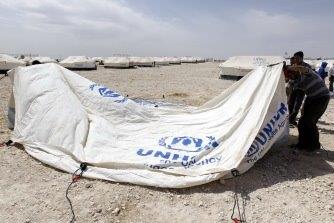
Jordan has a history of opposing extremism and presents a model of co-existence and acceptance of others. However, the phenomenon of normalizing extremism that has recently begun to emerge can be linked to social injustice, economic marginalization, and the failure to find a just solution to the Palestinian issue. All of these issues affect the public mood, creating a strained environment that poses an advantage for extremist ideologies in the Middle East. Three areas could help preempt adverse developments in this regard. One, the international community should do its part to help Jordan cope with the huge economic and social burden of hosting refugees. Two, Jordanian and democratic values should be bolstered, among them pluralism, diversity, moderation, human rights, and rule of law, along with a commitment to reform. Three, steps should be taken to reach a just, comprehensive two-state solution between Israel and the Palestinians in order to end the larger regional conflict and encourage security and stability.
Amid the regional turmoil on the threshold of autumn 2014, Jordan today appears safe and stable. At the same time, the current political and security chaos in Iraq and Syria, and the failure to find a solution to the Palestinian-Israeli conflict, has created a highly fertile environment for militancy and extremism. This developing threat poses unprecedented challenges to Jordan, namely, the fear of normalized extremism.
In an August 2014 interview with the newspaper al-Ghad, King Abdullah II said that the internal front is immune to extremist and apostatizing ideologies, since the hothouse of sectarian conflict where these ideologies are nurtured is not welcome in Jordan. Former Prime Minister Marouf al-Bakhit was of a similar opinion, adding that there is no real danger of militant groups like ISIS in Jordan for three reasons. First, Jordan has strong defense capabilities, which were improved a decade ago when leaders recognized the new challenges posed by unconventional warfare. Forces were developed to cultivate efficiency of movement and combat accuracy, and are accompanied by strong intelligence with a reputation of trapping extremist groups in the region. Second, the open and vast expanse of the eastern and northern desert presents a natural defense advantage. Third, the internal structure of IS/ISIS is weak and the organization is unable to fully utilize the weapons seized from the Iraqi army. Another factor to consider is the Islamic State’s pragmatic behavior in choosing battles and appreciating the power of its enemies, indicating that Jordan is out of the IS calculations, at least in the near future.
On the other hand, Hizbollah Secretary General Hassan Nasrallah said that ISIS could be a threat to Jordan: “Wherever there are followers of the ideology there is ground for [ISIS], and this exists in Jordan,” he explained, referring to the proliferation of pro-ISIS groups in various parts of the country, whether in the Palestinian camps or even in Salt and Ma’an. Indeed since the inauguration of Abu Bakr al-Baghdadi as caliph to the Muslims, his supporters in Ma’an have sung for him and unfurled Islamic State flags. On the first day of Eid al-Fitr, supporters of IS in Zarqa’ gathered and displayed banners while chanting for the State and its emir. Meanwhile, Jordanian Salafist Jihadist leader Abu Mohammad al-Tahawi swore allegiance to Baghdadi, and al-Jazeera reported that the number of Jordanian jihadists fighting alongside ISIS and al-Nusra in Syria has reached 2000.
Yet while ISIS support in Jordan might appear substantial, this does not amount Jordan’s being a social incubator. Former Prime Minister al-Bakhit has indicated that the economic environment – including high poverty rates, unemployment, and marginalization in peripheral areas – helps create the “right” conditions to promote IS ideology among Jordanian tribes; however, this represents a short term strategic vulnerability only. The threats posed by the organization are limited to internal ISIS infiltration to perform operations on the inside, as in 2005 (when a series of coordinated bomb attacks in Amman claimed by al-Qaeda in Iraq under the leadership of Abu Musab Zarqawi, killed 60 people and injured 115 others), targeting Jordanian interests abroad, and reviving sleeper cells trying to mature in peripheral areas.
Jordan is currently part of the US-led coalition to fight ISIS, and this in itself could pose another potential threat. If the international community fails to defeat the terrorists through military and political recourses, the results will be quite adverse and the popularity of radical groups could increase. It will come as no surprise, then, if Jordanian public opinion begins to sympathize with Sunni communities in Syria and Iraq. Moreover, if the conflict in the region deteriorates and the political process in Iraq fails, a significant number of Iraqi refugees will add to the already existing 1.4 million Syrian refugees in Jordan. Amid estimates and conflicting figures about sudden demographic shifts in recent years, another wave of refugees to Jordan poses a heavy burden on education, health, and other infrastructures. This scenario is considered a possible nightmare reality for Jordanians already struggling with an existing refugee population.
The estimated additional cost of hosting Syrian refugees is $2.1 billion in 2013 and $3.2 billion in 2014, whereas the international aid Jordan received for this purpose amounted to only $777 million (no more than 15 percent of the total cost). The remaining 85 percent falls on Jordan and is intensified by the additional pressures on health, education, and water infrastructures as well as the need to subsidize basic commodities. Moreover, Jordanians face increased competition in finding jobs and securing housing. Many necessary projects were postponed as a result of the treasury’s inadequate spending reserves and insufficient financial allocations considering that 21 percent of government spending is directed towards military security, while 22 percent is distributed among health, education, and employment necessities.
Jordan has a history of opposing extremism and presents a model of co-existence and acceptance of others. However, the phenomenon of normalizing extremism has recently begun to emerge and can be linked to social injustice, economic marginalization, and the failure to find a just solution to the Palestinian issue. All of these consequences affect the public mood, creating a strained environment that poses an advantage for extremist ideologies in the Middle East. Three areas could help preempt such adverse developments. One, the international community should do its part to help Jordan cope with the huge economic and social burden of hosting refugees. Two, Jordanian and democratic values should be bolstered, among them pluralism, diversity, moderation, human rights, and rule of law, along with a commitment to reform. Three, steps should be taken to reach a just, comprehensive two-state solution between Israel and the Palestinians in order to end the larger regional conflict and encourage security and stability.
___________________________________________________________
Farah Yousef has been involved in a number of research projects with the Center for Applied Negotiations (CAN) at INSS, where she served as an intern.
___________________________________________________________
Farah Yousef has been involved in a number of research projects with the Center for Applied Negotiations (CAN) at INSS, where she served as an intern.
The opinions expressed in INSS publications are the authors’ alone.
Publication Series INSS Insight
TopicsJordan