


The Limited View from the Amman Summit | INSS
go to header go to content go to footer go to search
INSS logo The Institute for National Security Studies, Strategic, Innovative, Policy-Oriented Research, go to the home page
INSS
Tel Aviv University logo - beyond an external website, opens on a new page
  • Campus
  • Contact
  • עברית
  • Support Us
  • Research
    • Topics
      • Israel and the Global Powers
        • Israel-United States Relations
        • Glazer Israel-China Policy Center
        • Russia
        • Europe
        • Antisemitism and Delegitimization
      • Iran and the Shi'ite Axis
        • The Campaign Against Iran and the Shiite Axis
        • Iran
        • Lebanon and Hezbollah
        • Syria
        • Yemen and the Houthi Movement
        • Iraq and the Iraqi Shiite Militias
      • Conflict to Agreements
        • Israeli-Palestinian Relations
        • Hamas and the Gaza Strip
        • Peace Agreements and Normalization in the Middle East
        • Saudi Arabia and the Gulf States
        • Turkey
        • Egypt
        • Jordan
      • Israel’s National Security Policy
        • Military and Strategic Affairs
        • Israel's Security Strategy
        • Societal Resilience and the Israeli Society
        • Jewish-Arab Relations in Israel
        • Climate, Infrastructure and Energy
        • Terrorism and Low Intensity Conflict
      • Cross-Arena Research
        • Data Analytics Center
        • Law and National Security
        • Advanced Technologies and National Security
        • Foreign Information Manipulation and Interference
        • Economics and National Security
    • Projects
      • Preventing the Slide into a One-State Reality
      • India-Middle East-Europe Economic Corridor (IMEC)
  • Publications
    • -
      • All Publications
      • INSS Insight
      • Policy Research and Papers
      • Special Publication
      • Strategic Assessment
      • Technology Platform
      • Memoranda
      • Posts
      • Books
      • Archive
  • Database
    • Surveys
    • Spotlight
    • Maps
    • Dashboards
  • Events
  • Team
  • About
    • Vision and Mission
    • History
    • Research Disciplines
    • Chairman of the Board
    • Board of Directors
    • Fellowship and Prizes
    • Annual Reports
    • Internships
  • Media
    • Communications
    • Video gallery
    • Press Releases
  • Podcast
  • Newsletter
  • Campus
Search in site
  • Research
    • Topics
    • Israel and the Global Powers
    • Israel-United States Relations
    • Glazer Israel-China Policy Center
    • Russia
    • Europe
    • Antisemitism and Delegitimization
    • Iran and the Shi'ite Axis
    • The Campaign Against Iran and the Shiite Axis
    • Iran
    • Lebanon and Hezbollah
    • Syria
    • Yemen and the Houthi Movement
    • Iraq and the Iraqi Shiite Militias
    • Conflict to Agreements
    • Israeli-Palestinian Relations
    • Hamas and the Gaza Strip
    • Peace Agreements and Normalization in the Middle East
    • Saudi Arabia and the Gulf States
    • Turkey
    • Egypt
    • Jordan
    • Israel’s National Security Policy
    • Military and Strategic Affairs
    • Israel's Security Strategy
    • Societal Resilience and the Israeli Society
    • Jewish-Arab Relations in Israel
    • Climate, Infrastructure and Energy
    • Terrorism and Low Intensity Conflict
    • Cross-Arena Research
    • Data Analytics Center
    • Law and National Security
    • Advanced Technologies and National Security
    • Foreign Information Manipulation and Interference
    • Economics and National Security
    • Projects
    • Preventing the Slide into a One-State Reality
    • India-Middle East-Europe Economic Corridor (IMEC)
  • Publications
    • All Publications
    • INSS Insight
    • Policy Research and Papers
    • Special Publication
    • Strategic Assessment
    • Technology Platform
    • Memoranda
    • Posts
    • Books
    • Archive
  • Database
    • Surveys
    • Spotlight
    • Maps
    • Dashboards
  • Events
  • Team
  • About
    • Vision and Mission
    • History
    • Research Disciplines
    • Chairman of the Board
    • Board of Directors
    • Fellowship and Prizes
    • Internships
    • Annual Reports
    • Privacy Policy and Terms of Use
  • Media
    • Communications
    • Video gallery
    • Press Releases
  • Podcast
  • Newsletter
  • Campus
  • Contact
  • עברית
  • Support Us
bool(false)

Publications

Home Publications INSS Insight The Limited View from the Amman Summit

The Limited View from the Amman Summit

INSS Insight No. 630, November 16, 2014

Follow us on Google
עברית
Oded Eran
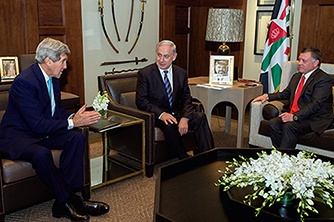
The hastily-arranged summit in Amman on November 13, 2014 produced the desired – albeit short term – benefits.  King Abdullah appeared to be a voice of responsibility and moderation in an otherwise tense, hostile, and volatile region. He reemphasized his role as custodian of the Islamic holy sites in Jerusalem, a reliable partner of the United States, and a key ally in the battle against ISIS. However, the results of the summit should be seen as tenuous and temporary. Lip service was paid to efforts to resume a peace process, and attempts to deal with a single issue such as the Temple Mount in the absence of a broader framework may prove insufficient. The summit was therefore a noble effort to calm the situation on a very limited issue, and Prime Minister Netanyahu may not have had much choice in deciding whether to attend. Nonetheless, there is still a need to look at the clouds gathering over the Israeli-Palestinian conflict.

The hastily-arranged summit in Amman on November 13, 2014 may have given the participants some instant gratification. In the long run, however, it will join the long list of similar summits in Aqaba, Jordan, Sharm al-Sheikh, Egypt, Washington, DC, and elsewhere that ended with no lasting impact.

The host, King Abdullah II of Jordan, needed the summit to continue the pressure on Prime Minister Netanyahu to take steps to reduce the tensions in Jerusalem, particularly in the Temple Mount / Haram a-Sharif area. Jordan had already recalled its ambassador from Israel, and King Abdullah himself issued some unusually harsh statements. The summit produced the desired – albeit short term – benefits.  The King appeared to be a voice of responsibility and moderation in an otherwise tense, hostile, and volatile region. He reemphasized his role as custodian of the Islamic holy sites in Jerusalem, a reliable partner of the United States, and a key ally in the battle against ISIS. The guest of honor at the summit, Secretary of State Kerry, used the event to regain the perception of his country's role as actively engaged in the three major issues of the current Middle East: the battle against ISIS, the negotiations with Iran on the future of its nuclear program, and the Israeli-Palestinian conflict. The participants who were not present, Palestinian President Abbas (who met Kerry in Amman before the summit) and Egyptian President el-Sisi (who was reached by phone during the summit) scored small, trivial gains in their efforts to wrestle with domestic problems and political rivals. Abbas agreed to "reduce the rhetoric" (as Secretary Kerry said in his press conference immediately following the summit), and el-Sisi said he was prepared "to do whatever I can in order to advance the cause of peace between Israelis and Palestinians." Neither case suggests a major or concrete concession or commitment.

The third guest present at the trilateral summit, Prime Minister Netanyahu, was “left to pay the bill.” In their joint press conference after the summit, Kerry and his Jordanian counterpart, Nasser Judeh, repeatedly referred to "firm commitments," "constructive steps," and "specific and practical actions" that all parties involved were willing to make. It is clear, though, that the onus was and will be put on Israel. Kerry and Judeh refused to stipulate what measures were expected, but presumably they included permission for all Arabs to pray at Haram a-Sharif (and not limit the visitors to specific age groups) and prevention of politically oriented actions by certain Israelis such as visits covered by the press. For Netanyahu, repeating the statement in Amman he had made earlier that Israel is committed to maintain the status quo on the Temple Mount may prove to be the easier commitment. Ordering the Israeli police to block the access to Israeli politicians, some from his own party, to the Temple Mount maybe prove more difficult and politically costly, especially with the buzz about earlier than scheduled general elections in Israel.

The declared purpose of the summit was to deescalate the situation on the Temple Mount, but did Prime Minister Netanyahu make any commitment to build housing units in suburbs of Jerusalem? If so, then clearly his political troubles at home will increase. And even if he did not make such a commitment, any new Israeli action in this respect will incite the other parties and prompt accusations that Israel is undermining the efforts to restore calm on the Temple Mount.

The understandings of the Amman summit are also problematic from Israel’s point of view because it is not clear, for example, whether the Palestinian efforts to gain a Security Council resolution will continue – and if a reference to East Jerusalem as the capital of the future Palestinian state will be incorporated in the draft and final text, if adopted.

Not clear in this respect is what role Jordan will assume as a member of the Security Council. Furthermore, it is not clear how the US will respond to the various versions of a draft resolution submitted to the Security Council. Thus, Netanyahu may emerge as the only one asked to take concrete steps while all the other participants at the summit, present or not, exited with vague and immeasurable commitments only. The fact that he was received in an Arab capital and spoke to the King of Jordan, the President of Egypt, and the US Secretary of State on the other major problems of the region will buy him very few points in his political campaigns expected at home.

The results of the summit in Amman should therefore be seen as tenuous and temporary. Any group of Palestinians or Israeli Arabs can easily provoke a situation that will nullify these results. Lip service was paid in Amman to efforts to resume a peace process, and attempts to deal with a single issue such as the Temple Mount, sensitive as it is, in the absence of a broader framework may prove insufficient. The summit was therefore a noble effort to calm the situation on a very limited issue and Prime Minister Netanyahu may not have had much choice in deciding whether to attend, but there is still a need to look at the clouds gathering over the Israeli-Palestinian conflict.
The opinions expressed in INSS publications are the authors’ alone.
Publication Series INSS Insight
TopicsIsrael-United States RelationsIsraeli-Palestinian RelationsJordan
עברית

Events

All events
Israel’s National Security Conference
27 July, 2026
10:00 - 14:00

Related Publications

All publications
From Military Force to Economic Isolation: The New Phase in Trump's Iran Policy
The complete guide to the Trump administration’s economic campaign against Iran—and the implications for Israel
27/08/26
The U.S.–Saudi Nuclear Agreement: Opportunities, Risks, and Policy Recommendations
The complete guide to the nuclear deal signed between Washington and Riyadh — and policy recommendations for Israel
29/07/26
The Crisis in Hormuz: The American Strategy, Trump's Dilemmas, and the Implications for Israel
Escalation in the Gulf: What is the current state of the intensifying conflict between Iran and the United States, what is driving Trump’s strategy, and how should Israel act as long as it remains outside the conflict?
26/07/26

Stay up to date

Registration was successful! Thanks.
  • Research

    • Topics
      • Israel and the Global Powers
      • Israel-United States Relations
      • Glazer Israel-China Policy Center
      • Russia
      • Europe
      • Antisemitism and Delegitimization
      • Iran and the Shi'ite Axis
      • The Campaign Against Iran and the Shiite Axis
      • Iran
      • Lebanon and Hezbollah
      • Syria
      • Yemen and the Houthi Movement
      • Iraq and the Iraqi Shiite Militias
      • Conflict to Agreements
      • Israeli-Palestinian Relations
      • Hamas and the Gaza Strip
      • Peace Agreements and Normalization in the Middle East
      • Saudi Arabia and the Gulf States
      • Turkey
      • Egypt
      • Jordan
      • Israel’s National Security Policy
      • Military and Strategic Affairs
      • Israel's Security Strategy
      • Societal Resilience and the Israeli Society
      • Jewish-Arab Relations in Israel
      • Climate, Infrastructure and Energy
      • Terrorism and Low Intensity Conflict
      • Cross-Arena Research
      • Data Analytics Center
      • Law and National Security
      • Advanced Technologies and National Security
      • Foreign Information Manipulation and Interference
      • Economics and National Security
    • Projects
      • Preventing the Slide into a One-State Reality
      • India-Middle East-Europe Economic Corridor (IMEC)
  • Publications

    • All Publications
    • INSS Insight
    • Policy Research and Papers
    • Special Publication
    • Strategic Assessment
    • Technology Platform
    • Memoranda
    • Database
    • Posts
    • Books
    • Archive
  • About

    • Vision and Mission
    • History
    • Research Disciplines
    • Chairman of the Board
    • Board of Directors
    • Fellowship and Prizes
    • Internships
    • Annual Reports
    • Support
    • Privacy Policy and Terms of Use
  • Media

    • Communications
    • Video Gallery
    • Press Release
    • Podcast
  • Home

  • Events

  • Database

  • Team

  • Contact

  • Newsletter

  • עברית

INSS logo The Institute for National Security Studies, Strategic, Innovative, Policy-Oriented Research, go to the home page
40 Haim Levanon St. Tel Aviv, 6997556 Israel | Tel 03-640-0400 | Fax 03-744-7590 |
Developed by Daat ,Yael Group.
Accessibility Statement
This site is protected by reCAPTCHA and the Google Privacy Policy and Terms of Service apply.