


Publications
The Current State of Anti-Israel Boycott Initiatives in the US: Are They Paving the Way for Sanctions?
INSS Insight No. 2227, November 25, 2026
Follow us on GoogleThis paper examines prospective boycotts, divestments, and sanctions against Israel in the U.S. amid a sharp decline in the percentage of young and Democratic-leaning voters who hold a favorable view of Israelis. It asserts that the impact of BDS initiatives on the Israeli economy, including those in NYC, will likely be mitigated in the short term by legal, political, and financial constraints. However, they are liable to further normalize boycott campaigns nationally and increase pressure on Democratic lawmakers to pursue sanctions on Israeli-owned businesses. Although recent Israeli export performance demonstrates resilience to consumer-led boycotts, prospective U.S. sanctions could impose more severe economic costs by prompting capital flight, placing restrictions on Israel’s banking sector, and encouraging firms seeking to comply with sanctions legislation to avoid Israeli commerce entirely.
Young Voters
The relationship between the State of Israel and the Democratic Party is quickly heading towards a point of rupture. Over the last four years, support for Israel among Democratic-leaning voters declined 27 percentage points. Today, 8 in 10 Democratic-leaning voters say they hold an unfavorable opinion of Israel. Common explanations for this phenomenon include Democrats’ increasing identification with the plight of Palestinians, disinformation campaigns on social media platforms by actors hostile to Western interests, and the popular perception that Israel manipulated President Trump into initiating Operation Epic Fury. All of these explanations, however, fail to identify the degree to which this growing rift between Democrats and Israel stems not just from rising hostility towards Israel, but also towards Israelis themselves.
Four years ago, Pew researchers found that 55% of young Democrats aged 18–29 held a favorable opinion of Israelis as a people. By 2024, that figure had fallen to 42%. In Pew’s most recent survey, conducted May 4–17, 2026, only 26% of young Democrats expressed a favorable opinion of Israelis as a people. Young Democrats’ view of Palestinians, by contrast, has remained fairly steady over the last four years, with 70% expressing a favorable view of Palestinians in 2022 and 72% in 2026. Although young Republicans’ attitudes towards Israelis have also soured, this decline has meant nearly equal percentages of young Republicans now hold a favorable opinion of Israelis and Palestinians, with 42% expressing a favorable opinion of Israelis and 40% expressing the same sentiment towards Palestinians.
Examined collectively, the data suggests young Democrats have adopted an almost Manichean lens through which they view Israelis and Palestinians. Pew’s data also aligns with previous polling conducted in 2024 by the ADL, which found that younger generations were substantially more likely to endorse modern antisemitic tropes than older generations. Results from the same survey also showed that respondents who at least somewhat agreed with the progressive notion that “When we think about the problems of the world, it comes down to oppressor vs. the oppressed” were 2.6 times more likely than the general population to endorse six or more modern antisemitic tropes.
Highlighting the scale of antipathy towards Israelis matters because it draws attention to a major component of public opinion Democratic politicians must respond to as they run for elected office in districts with significant populations of young, liberal-leaning voters. Strong opposition to Israeli policy does not fully explain the rapid adoption of antizionist views among young Democrats. Even in the age of TikTok and generative AI, other conflicts have not resulted in a backlash against related expat communities remotely comparable in scale to the surge in hate crimes against Jews since October 7. Neither have they precipitated widespread calls for the elimination of national polities. Acknowledging that young Democrats broadly hold negative sentiments towards Israelis as a people helps elucidate the wealth of anecdotal evidence since October 7 suggesting Israelis are increasingly unwelcome within progressive spaces.
The Effect on Decision Makers
Over the last year, growing animosity towards Israelis has emboldened far-left candidates to adopt negationist positions towards Israel, normalizing anti-Israel discourse among progressive insurgents and further solidifying antizionist sentiments among their constituents. While antizionist positions were once seen as a hindrance in campaign politics, they now signal authenticity and moral clarity in more progressive areas of the U.S. Consequently, the fervently antizionist Democratic Socialists of America (DSA) has secured a string of electoral victories across the U.S. since Zohran Mamdani won the NYC mayorship in late 2025 and emerged as a leading figure within national far-left progressive politics.
Unlike the previous poster child of the DSA, Alexandria Ocasio-Cortez, Mamdani has thus far managed to maintain the backing of the DSA’s national committee, in no small part by continuing to make antizionism the centerpiece of his political identity, in line with the DSA’s position since October 7. Legacy Jewish organizations in the U.S. have watched with concern as Mamdani’s antizionist rhetoric, along with his removal of legal protections for Jews and Israelis, has accompanied a measurable spike in antisemitic hate crimes.
Municipal Divestment Initiatives, Small Business Boycotts, and Consumer Boycotts
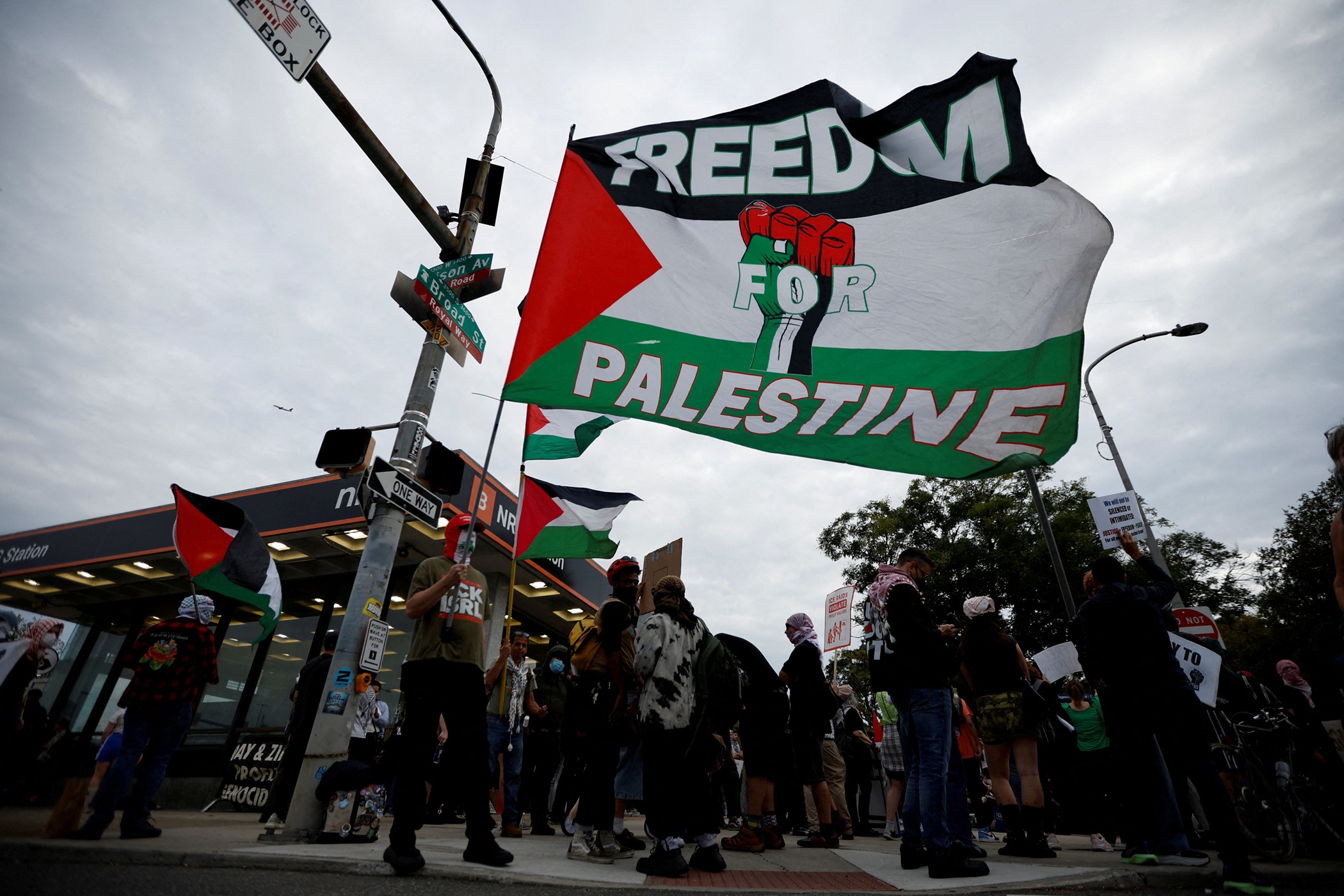
Since October 7, only a handful of city councils in the U.S. have passed resolutions supporting BDS. Nearly all are in municipalities with fewer than 125,000 residents, lacking the cultural and economic salience of larger metropolitan centers like NYC. Within the five largest cities in the U.S., Mamdani is the only mayor proudly supportive of the BDS movement. Despite the numerous political appointees in his administration aligned with his views on Israel, substantial legal and political guardrails prevent him from pursuing overt divestment from Israeli financial markets and firms.
Following former New York State Governor Andrew Cuomo’s Executive Order 157 in 2016, New York State has mandated that state agencies divest from institutions and companies identified as engaging in BDS. Mamdani’s currently proposed municipal budget includes an agreement with Governor Hochul to provide the city with nearly $8 billion in financial assistance over the next two years, making his administration potentially vulnerable to BDS-related state regulations. Even if Mamdani managed to convince the boards of municipal pension funds to divest from corporations with ties to Israel, any impact would almost certainly be negligible. Past academic studies attempting to gauge the effect size of institutional divestments from Apartheid-era South Africa failed to identify statistically significant effects on the market value of multinational corporations targeted for divestment, while studies on more recent institutional divestments from fossil fuels have demonstrated a similarly trivial impact on targeted firms. The ability of the Mamdani administration on its own to adversely affect Israeli firms is confined to the broad discretion it exercises in awarding municipal contracts. Even still, it remains contractually bound to existing public-private partnerships established under previous mayorships, most notably the 99-year lease providing the land on which Cornell Tech, a collaboration between Cornell University and the Technion, operates.
Nonetheless, Mamdani’s decision on his first day in office to reverse a prohibition on BDS-related acts has already hurt Israeli food exporters, albeit marginally. Moreover, the Brooklyn Park Slope Food Coop’s decision in late May to halt the sale of Israeli products demonstrates the ease with which businesses in NYC could boycott Israeli goods when unencumbered by financial ties to New York State. The Louis D. Brandeis Center for Human Rights Under Law—an American Jewish civil rights organization with an impressive record of legal victories against anti-Jewish discrimination—has thus far not committed to pursuing legal action against the co-op’s ban on Israeli goods. Despite publicly urging the grocery store to cancel its boycott referendum, the Brandeis Center and similar institutions lack a clear legal path to compel a reversal.
Should it ultimately decide to take legal action, the Brandeis Center would likely struggle to secure unbiased jurors or plaintiffs with sufficient legal standing and a willingness to engage in a lengthy legal battle. There is also no guarantee of prevailing on the legal merits, even in an appeals court, and there are potential political ramifications to consider as well. Turning a single high-profile boycott into a nationally scrutinized legal battle could far outweigh any financial benefit for those affected. Other civil rights groups such as the ACLU may be eager to wage a legal defense on the Park Slope Food Coop’s behalf, viewing the matter as integral to the protection of free speech. Moreover, the publicity of the case itself has the potential to inspire additional boycott initiatives by bringing further media attention to the BDS movement and its narrative of the conflict.
In the meantime, similarly minded American grocery stores or restaurateurs may take inspiration from the Park Slope Food Coop and implement their own boycott of Israeli products, provided they are neither publicly traded companies owned by state pension funds nor businesses under contract with state or federal institutions. In addition to the U.S. Department of Commerce’s explicit prohibition on boycotts not approved by the U.S. government, 38 states in the U.S. possess some sort of legislation or executive order against BDS. Anti-BDS provisions across the U.S. range from simple declarations condemning the movement to official prohibitions against investing in, contracting with, or funding entities discriminating against Israeli businesses.
The potential danger that Mamdani and like-minded American politicians pose to the short- and medium-term health of the Israeli economy rests not on the actions they themselves can take within the confines of their elected office, but on their ability to inspire future boycott efforts and move the Democratic party further leftward on policies circumscribing the U.S.-Israel relationship. Mamdani’s popularity within NYC and successful track record of political endorsements signal to strategists and aspiring candidates that antipathy towards Israel can indeed be part of a winning political formula, regardless of its relevance to the political position in question.
Threats to the Israel-U.S. Economic Relationship
A previous attempt by the INSS in the late 2010s to map out the potential economic effects of BDS demonstrated a direct correlation between decreases in export volumes and spikes in violence related to the Israeli-Palestinian conflict. This pattern, however, did not recur during the Swords of Iron War. Data from previous campaigns against Hamas suggested Israeli exports possessed a modest vulnerability to silent boycotts in the E.U., with effects observed one year following a spike in Palestinian deaths during IDF operations. The incredible resilience and record growth of Israeli exports in 2025, however, call this very premise into question.
Israeli exports of goods and services to the U.S. reached approximately $30.8 billion in 2025, roughly 18.78% of Israel’s global $164 billion export market. Both export totals represent record highs for the nation, despite its battered public image after three years of war. According to data from the U.S. Bureau of Economic Analysis, electronic integrated circuits and micro-assemblies were Israel’s most valuable export category to the U.S. in 2025, accounting for $4.42 billion and comprising 14.35% of total exports to the U.S. These products serve as components for semiconductors, themselves inputs for enterprise infrastructure. While the largest tech companies race to advance generative AI-based applications and the silicon powering them, they can ill afford to boycott Israeli engineers when doing so risks ceding market share to competitors. Israeli food and agricultural exports, by contrast, are far more sensitive to both consumer- and business-led boycotts because of the manifold alternatives available. However, they represent a small fraction of Israel’s exports to the U.S. Last year they collectively generated $400 million in U.S. sales, a mere 1.3% of total revenue from exports to the U.S.
In addition to food and agricultural products, pharmaceutical products also appear vulnerable to consumer boycotts. According to data from the U.S. Census Bureau, Israeli pharmaceuticals constituted $2.90 billion in exports to the U.S. in 2025, about 9.42% of total exports to the country. Official governmental estimates, however, are misleading as they do not factor in revenue from Israeli subsidiaries operating abroad. Teva Pharmaceuticals, for example, recorded $9.19 billion in U.S. sales last year out of a total $17.26 billion. More than half of Teva’s U.S. sales derived from generic drug products, generating $5.15 billion that same year. Although the origins of generic drugs are often opaque to U.S. consumers, patients can obtain this information by simply contacting their pharmacist. The remainder of Teva’s exports to the U.S. consists of a handful of highly profitable proprietary drugs, products Teva hopes will drive future growth. Maintaining this strategy in the medium term, however, hinges on the company’s continued ability to find firms willing to accept the reputational risks of partnering with an Israeli company. Knowing that awareness of its association with Israel can confer financial risk, the company filed a successful motion in August to prevent knowledge of its national origin from reaching jurors in a federal court in Philadelphia.
Teva is just one example of a prominent Israeli firm with heightened sensitivity to business-led boycotts. The recent announcement in September by 11 European nations and Canada to sanction Israeli settlement products highlights the potential ramifications for Israeli exporters across multiple sectors. Penalties currently under consideration for companies caught violating the ban include up to three years in prison in Norway, five years in Canada, and ten years in the U.K. The prospect of criminal liability risks incentivizing importers to engage in silent boycotts of Israeli firms due to the possibility that even products made in Israel proper might contain inputs from settlements.
More recently, prominent Democrats expressed a desire to advance similar measures in the U.S. On September 30, 42 Democratic lawmakers in the House of Representatives introduced the most comprehensive financial sanctions legislation targeting Israel to date. Titled Stop the Settlements Act (H.R. 10642), the proposed bill would outlaw all “goods produced or manufactured wholly or in part in any Israeli settlements or outposts… in the West Bank or Gaza” from September 30, 2026, onward. Additionally, it would block individuals and entities “directly or indirectly engaged” in West Bank settlement construction (as there is no Israeli construction taking place in Gaza) from carrying out transactions with assets or debt held by a U.S. entity.
The bill’s original 42 cosponsors include not only 25 members of the Congressional Progressive Caucus, but also two congresspeople from the leadership of the larger, more moderate, 110-member New Democratic Coalition. J-Street—a liberal Zionist counterweight to AIPAC increasingly preferred by Democratic Party leaders—has already endorsed the bill, describing it as advancing the goal of an independent Palestinian state. Given the near-unanimous support for a two-state solution outside of the party’s far-left progressive bloc, Democrats will struggle to find reasons to oppose H.R. 10642 should they retain their newly won congressional majorities and reclaim the White House in 2028.
Most concerning is its potential effect on the Israeli banking system. Cut off from debt and assets based in the U.S., sanctioned Israeli banks would have limited access to U.S. dollars, be unable to receive payments from U.S. bank accounts, and lose their ability to transfer funds between domestic banks in cases where the intermediary lender is an American-owned financial institution. Israel’s credit rating, already downgraded during the first year of the Swords of Iron War, could decline further.
Regardless of the macroeconomic effects of the sanctions themselves, their very implementation would encourage additional boycott efforts; BDS is liable to portray U.S. sanctions against settlements as a victory for the movement, even though BDS makes no rhetorical or tactical distinction between Israel proper and Jewish communities east of the Green Line. U.S. sanctions would also likely fuel boycott efforts by injecting political momentum into campaigns to overturn anti-BDS state legislation. In such a scenario, state anti-BDS laws that include penalties against settlement boycotts would likely face renewed judicial scrutiny.
In the short term, American sanctions would be apt to induce capital flight, devaluing the shekel as foreign investors converted liquid assets into foreign currency. This, in turn, would chill venture capital investment in Israel’s high-tech sector—the majority of which is funded by foreign nationals—as otherwise eager investors turned to less politically volatile markets. The imposition of U.S. sanctions would also send a strong signal to European nations yet to publicly commit to similar measures, especially if the next U.S. administration recommits to more friendly relations with the E.U. and to adopting a firmer stance towards Israel.
Recommendations
Winning back the support of the youngest cohort of Democratic-leaning voters is likely unattainable, at least in the short term. Over the course of the Swords of Iron War, an entire generation’s conception of Israeliness has been shaped by demonizing portrayals of Israelis on social media platforms from which the majority of young Americans now obtain their daily news. Great powers seeking to undermine American national interests by driving a wedge between the U.S. and its key strategic partners have amplified these depictions online and helped popularize antizionist slogans once confined to the Soviet Union and the fringes of academia. Fending off disinformation campaigns spearheaded by the Russian Federation, the CCP, the IRGC, and Qatari state media simultaneously is simply not a task a country of 10 million citizens can handle alone. However, winning back support among American lawmakers represents a more surmountable challenge.
In Congress, where the median age is around 60, most lawmakers’ perceptions of Israeliness were molded by legacy media and earlier moments in history when Israel’s existence was far more precarious. To revive support among moderate Democrats, Israel must attempt to re-establish the historic pillar of this relationship: an alliance upheld by shared values. Showcasing a commitment to combating Jewish vigilantism in the West Bank would go a long way towards demonstrating to Washington that Israel is indeed a democracy committed to upholding the rule of law. It would also help lay the groundwork for a constructive relationship with a future Democratic administration likely to face unprecedented pressure to respond to actions perceived as needlessly undermining the security of Palestinian civilians. In any case, Israeli lawmakers must be ready to respond preemptively to future American policy that gives rise to a costly cycle of boycotts, divestments, and sanctions.