


Publications
Spotlight, November 15, 2026
Follow us on GooglePrologue
Prologue
In exile on Saint Helena, Napoleon looked back on his Egyptian campaign of 1798–99 in conversations recorded by Emmanuel de Las Cases in The Memorial of Saint Helena. He praised the spirit of the Army of the Orient but did not hide the hardship and discontent it endured in the Middle East. No army in the world, he admitted, was less suited to the Egyptian expedition than the one he led there; in any hands but his, it is hard to say what excesses it might have committed. General Bertrand recalled seeing even the most distinguished commanders, Lannes and Murat, suddenly throw their braided hats onto the sand in fits of rage and trample them in front of their men.
More than two centuries later, a similar strain is surfacing in the same theater. US military planners have reportedly warned the Trump administration that American forces risk becoming overextended if the stalemate with Iran drags into the new year. CENTCOM is said to be concerned about the cumulative toll on its forces, looming defense budget cuts, and closer oversight from a Democratic-led Congress.
Napoleon’s soldiers, at least, vented their frustration through dark humor. Stranded in a boundless sea of sand, they openly questioned their general’s wisdom, and as the army marched through Syria, nearly every soldier had on his lips these lines from Voltaire’s Zaïre:
The French are weary now of seeking out
Climes that destiny never made for them.
They do not forsake their fertile homeland
To languish in the deserts of arid Arabia.
The lesson carries across the centuries: an expeditionary force can win its battles and still be worn down by the distance, the climate, and the open-ended nature of its mission.
US Coercion Strategy: Washington tightened the blockade and answered Iranian fire with limited strikes, maintaining its economic pressure on Iran. Blockade: CENTCOM’s 18 NOV update extended enforcement to ship-to-ship transfers: any vessel that takes on cargo loaded at an Iranian port or coastline from a blockaded ship “may be considered to be evading the blockade,” even if it never entered an Iranian port, and may be stopped, boarded, diverted, or captured. On 21 NOV, CENTCOM marked 130 consecutive days of the blockade. The energy-intelligence firm Kpler projects that Iran’s revenue from crude and condensate exports could fall to zero by mid-December. Interagency: On 18 NOV, Treasury sanctioned a Hezbollah charity front and a Hezbollah–IRGC-QF gold and cash smuggling network under “Operation Economic Outcast.” Task Force Iron Gate, the staff of ~20 in Tampa that coordinates action against transfers across Iran’s land borders and the Caspian, reported no interdictions. Kinetic: On 17 NOV, US fighters struck an IRGC missile launch site on Qeshm Island “in self-defense,” after repeated IRGC drone attacks on US facilities in Bahrain. Axios reported (19 NOV) that the US has carried out further self-defense strikes without announcing them; a US official described the two sides as “poking each other below the threshold of all-out escalation.” Cost: A Pentagon budget official told the Senate Armed Services Committee (19 NOV) that the war had cost an estimated $48.3 billion as of 13 NOV. The figure covers operations and the replacement of equipment and munitions but not damage to US bases. At a 17 NOV hearing, Sen. Elizabeth Warren cited outside estimates of about $32.5 million a day for the blockade, which acting Navy Secretary Hung Cao confirmed, and of at least $400 million in damage to the Navy’s headquarters in Bahrain.
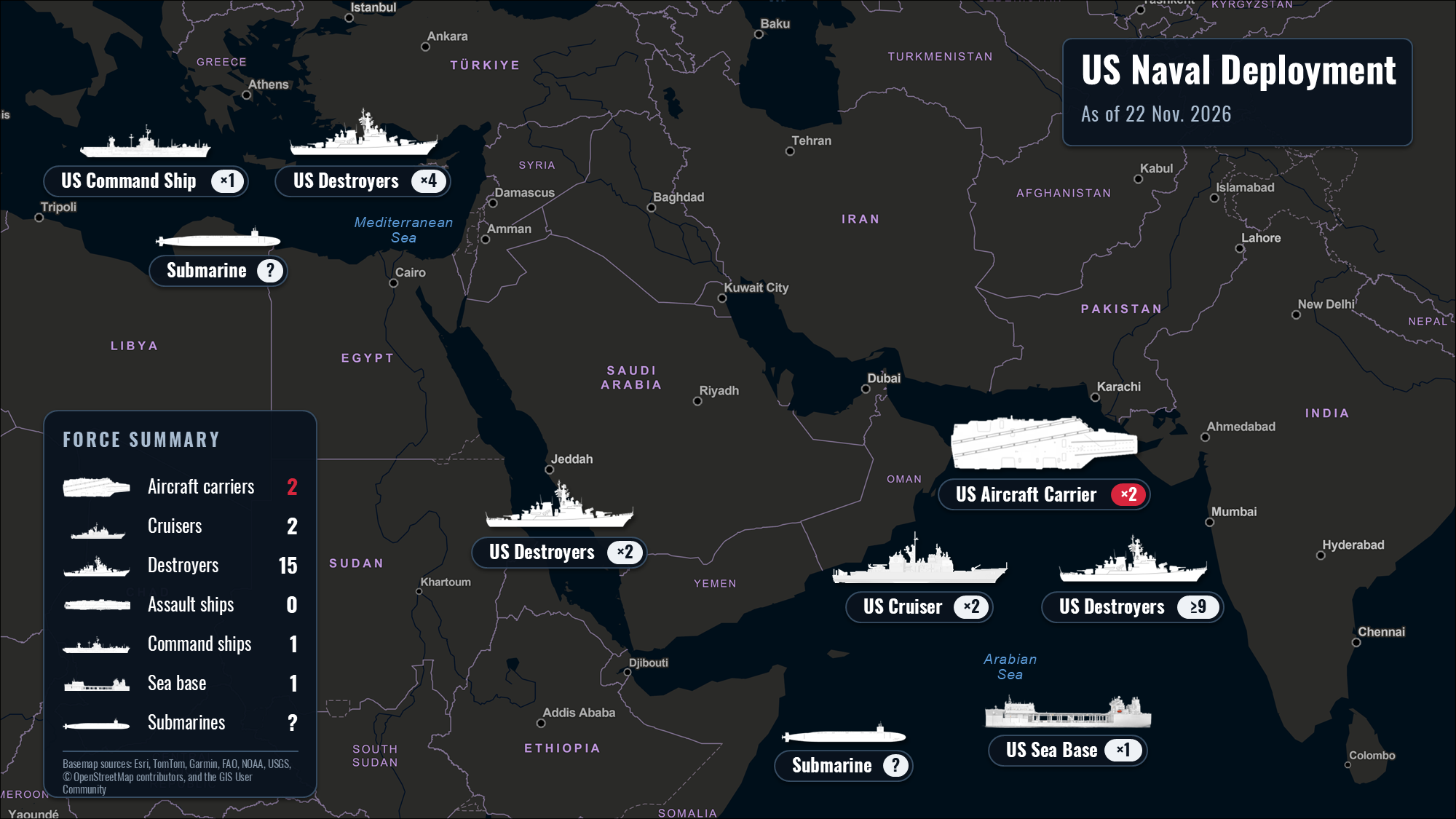
Figure 1: US naval forces deployed in the Mediterranean, the Red Sea and the Arabian Sea.
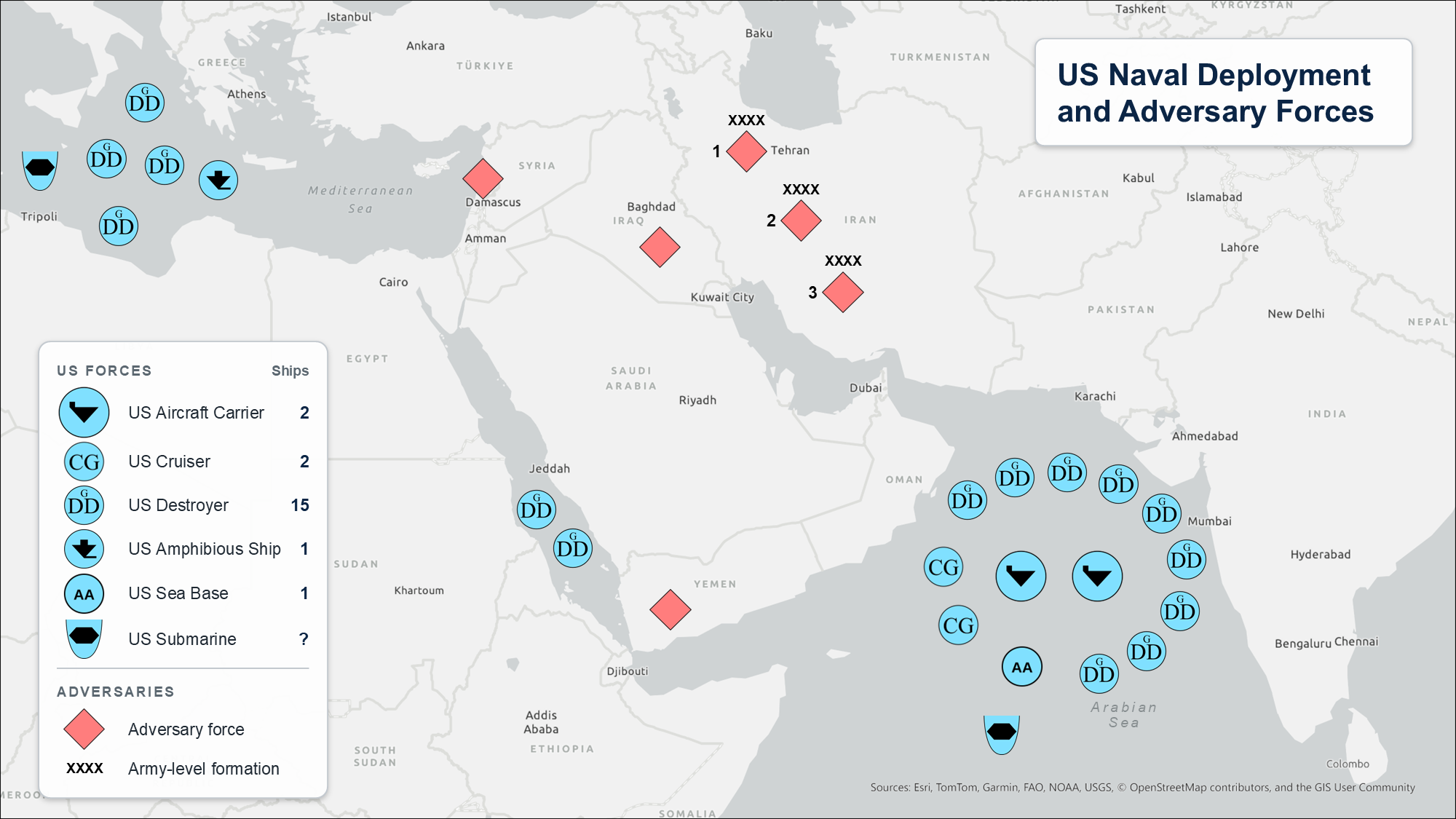
Figure 2: Tactical map of US aircraft carriers, destroyers, cruisers, amphibious ships and possible submarines, alongside adversary forces in the region.
US Adversaries’ Activity: Iran moved from harassment to direct fire on bases hosting US forces, and by the end of the week was openly contesting US escort operations in the Strait of Hormuz. Strikes on US bases: The IRGC attacked US sites in Bahrain on 15 and 17 NOV, the second aimed at a radar at Sheikh Isa Air Base; CENTCOM reported both were intercepted with no damage or injuries. After the Qeshm strike, Iran’s Army claimed drone strikes on Patriot systems at Ali Al Salem, Kuwait (18 NOV); Kuwait and Bahrain reported intercepts, and CENTCOM said no US personnel were injured. These were the first Iranian attacks on US facilities in neighboring states in about two months. Attacks on shipping: The LPG carrier TARA GAS was struck ~7 NM north of Khasab on 16 NOV and again on 17 NOV; the crew abandoned ship, and one seafarer is missing. The ADNOC L&S-managed tanker NAVIG8 MESSI was struck 13 NM north of Khasab on 17 NOV, leaving 11 injured and one missing, and UKMTO reported another tanker hit 6 NM north of Khasab (18 NOV). On 21 NOV, UKMTO reported two more tankers struck by projectiles while leaving the Gulf, with no casualties. Orbital Risk Intelligence counted seven strikes on six vessels in the Gulf, Hormuz and the Gulf of Oman in the week to 20 NOV. Mine claims (unverified): Iranian naval forces claimed near-daily mine strikes on tankers using “unauthorized” routes (15–17 NOV), including a claim that six vessels were sinking, and two more off Khasab and Ghanam Island (20–21 NOV). Iran has named none of the ships. Contesting the escort: The IRGC said (21 NOV) that US fighters, tankers, P-8s, helicopters and drones covered tanker transits on the night of 20 NOV. It warned that vessels sailing with tracking systems off, outside its designated routes, or without coordination with its traffic control center would be treated as cooperating with the US military. Claims against US aircraft: Iran’s Army claimed that its air defenses hit a US F-16 over the Gulf on 20 NOV and forced an emergency landing. Flight tracking showed an F-16CM squawking 7700 (the general emergency code) over the UAE. CENTCOM replied that “Iran did not attack a US F-16 fighter aircraft yesterday - at all” and that all US fighters are accounted for; the cause of the emergency code has not been explained.
Blockade challenge: On 17 NOV, the sanctioned tanker Olym transferred about 200,000 barrels of crude to the tanker Hao Fan south of Kharg Island, both with AIS off; it was the first observed ship-to-ship transfer of Iranian crude since July. More than 14 tankers were reported gathered at Kharg, and Fars published a hardliner proposal to sail a convoy to China and to strike Gulf oil facilities if the US intervened. FM Araghchi said, “The naval blockade must be broken.” Kpler cautioned that it was too early to conclude that Iran had moved to break the blockade, and no convoy departure had been confirmed as of 20 NOV. Capabilities: IRGC commander Ahmad Vahidi toured an underground “missile city” (21 NOV), where a twin launcher for liquid-fuel missiles was shown. Planet Labs imagery published by Arms Control Wonk (19 NOV) shows a new underground facility under construction north of Isfahan since January 2026. The author assesses that it is probably an IRGC Aerospace Force missile base whose tunnels could lie 150–200 m deep, deeper than estimates for Fordow, but calls the assessment preliminary. Threats beyond the region: CNN reported (17 NOV) US intelligence on a possible Iranian dirty-bomb or chemical attack in Washington, with no sign that it is imminent; FM Araghchi dismissed the report as “rubbish.” Israel has told Washington that Iran is expanding chemical weapons research; US officials say Iran cannot currently mount such an attack, and some doubt the Israeli claim (according to Axios).
Proxies: The Houthis kept up their campaign against Saudi Arabia: an explosion near Riyadh’s airport (18 NOV), a strike that damaged the Public Investment Fund tower in the King Abdullah Financial District (19 NOV, no injuries), and three missiles intercepted on their way to Riyadh (21 NOV). Orbital counted 25 Houthi missiles and drones intercepted between 14 and 20 NOV. Saudi authorities say at least 26 people have been killed in suspected Houthi attacks since 23 SEP, and Reuters reports that Riyadh expects the Yemen war to last “well into 2027.” King Salman reportedly replaced the coalition commander on 16 NOV.
Decision and Diplomacy: No decision to resume major US or Israeli operations was reported through 21 NOV, but renewed strikes were discussed more openly than a week earlier. Washington: Axios reported (19 NOV) that Trump is still weighing a joint attack with Israel and that the White House has asked the Pentagon and intelligence agencies how Iran would respond to each prepared strike option; Trump told Fox News (18 NOV) he would see what happens after 1 January. CBS reported (20 NOV) that the US and Israel are considering a new assault in the near term. The Financial Times reported (20 NOV) that CENTCOM has warned that sustaining the buildup beyond December could erode readiness; a US military official disputed that account. On 20 NOV, Trump said that Iran wants a deal, but not one “acceptable to me.” The Senate rejected a war powers resolution 51–48 (19 NOV), the first Iran vote since the 3 NOV midterm elections. US–Israel: CENTCOM commander Adm. Brad Cooper met IDF CoGS Lt. Gen. Eyal Zamir at the IDF HQ/Kirya (18 NOV) and then held a trilateral meeting with Mossad Director Roman Gofman; the IDF said they discussed joint readiness for a range of scenarios. Israel continues to press for renewed strikes. US–Saudi: Cooper then met Defense Minister Prince Khalid bin Salman (18 NOV) and Crown Prince Mohammed bin Salman in Riyadh, as more than three dozen US air-defense advisers arrived in the kingdom.
Shenzhen: Trump met Xi and Putin separately and then in the first-ever trilateral (19 NOV). The joint declaration covered UN reform, nuclear-risk dialogue and fuel supply and did not mention Iran or Hormuz; Trump said Xi agreed that the Strait must stay open and that Iran must not obtain a nuclear weapon. Mediation: Qatari mediators met FM Araghchi in Oman (17 NOV) without significant progress and visited Iran on 20 NOV. Gulf states are exploring a partial arrangement that would lift constraints on shipping through Hormuz in return for limited sanctions relief (AP, citing a regional diplomat). Iran: Araghchi said (reported 21 NOV) that the June memorandum of understanding is no longer on the table, while a two-day plan to reopen Hormuz remains on offer if Washington is serious about an agreement. Tehran still insists that the blockade and sanctions be lifted before the Strait reopens or talks resume. IAEA: The Board of Governors met 18–20 NOV. DG Grossi said that a return to diplomacy is “imperative” and that, without access, the Agency cannot conclude there has been no diversion. No new Board resolution on Iran was identified.
Naval Posture: Two carrier strike groups (CSGs) remain on station after a brief three-carrier overlap. The Theodore Roosevelt CSG (CVW-11, cruiser USS Chosin, destroyer USS Decatur) entered the CENTCOM AOR on 15 NOV. USS George Washington has left the Middle East after about three months and was confirmed in the Indian Ocean on 18 NOV. That leaves USS George H.W. Bush and USS Theodore Roosevelt. Surface force: The USNI tracker of 16 NOV, compiled before Washington’s departure, listed the cruisers USS Princeton and USS Chosin, 13 destroyers (11 in the Arabian Sea, 2 in the Red Sea) and the expeditionary sea base (ESB) USS Miguel Keith. About 17–18 US warships are now assessed to be in the AOR; this estimate depends on whether Washington’s escorts left with it. Amphibious: The Boxer Amphibious Ready Group (ARG) with the 11th MEU is in the Indian Ocean. USS Makin Island and USS John P. Murtha, with the 13th MEU, arrived at Sembawang, Singapore, on 20 NOV; USS Anchorage remains at Yokosuka. The group has not reached the CENTCOM AOR. Sixth Fleet: USNI lists four deployed US destroyers in the Mediterranean: USS Oscar Austin, USS Bulkeley and USS Paul Ignatius (Rota-based) and USS Stout (Norfolk). The command ship USS Mount Whitney called at Piraeus (13–15 NOV). Sustainment: The Roosevelt–Washington swap held carrier presence at two rather than raising it to three; Bush, deployed since 31 MAR, remains extended. Navy officials told the Wall Street Journal that supply problems affecting crews earlier in the war eased once goods were routed through Diego Garcia. Context: A Carnegie Endowment study (Hamzawy and Selfe, NOV 2026) notes that the current buildup reverses a long post-Iraq drawdown, during which Washington relied on arms transfers, training and permanent bases rather than large forward deployments. The authors assess that forces based in the region are exposed targets, and that the war has made the Gulf states hosting them targets as well. They add that the Hormuz disruption is spreading from energy to fertilizer and air traffic, eroding the legitimacy of the US approach even among partners that rely on US air defense.
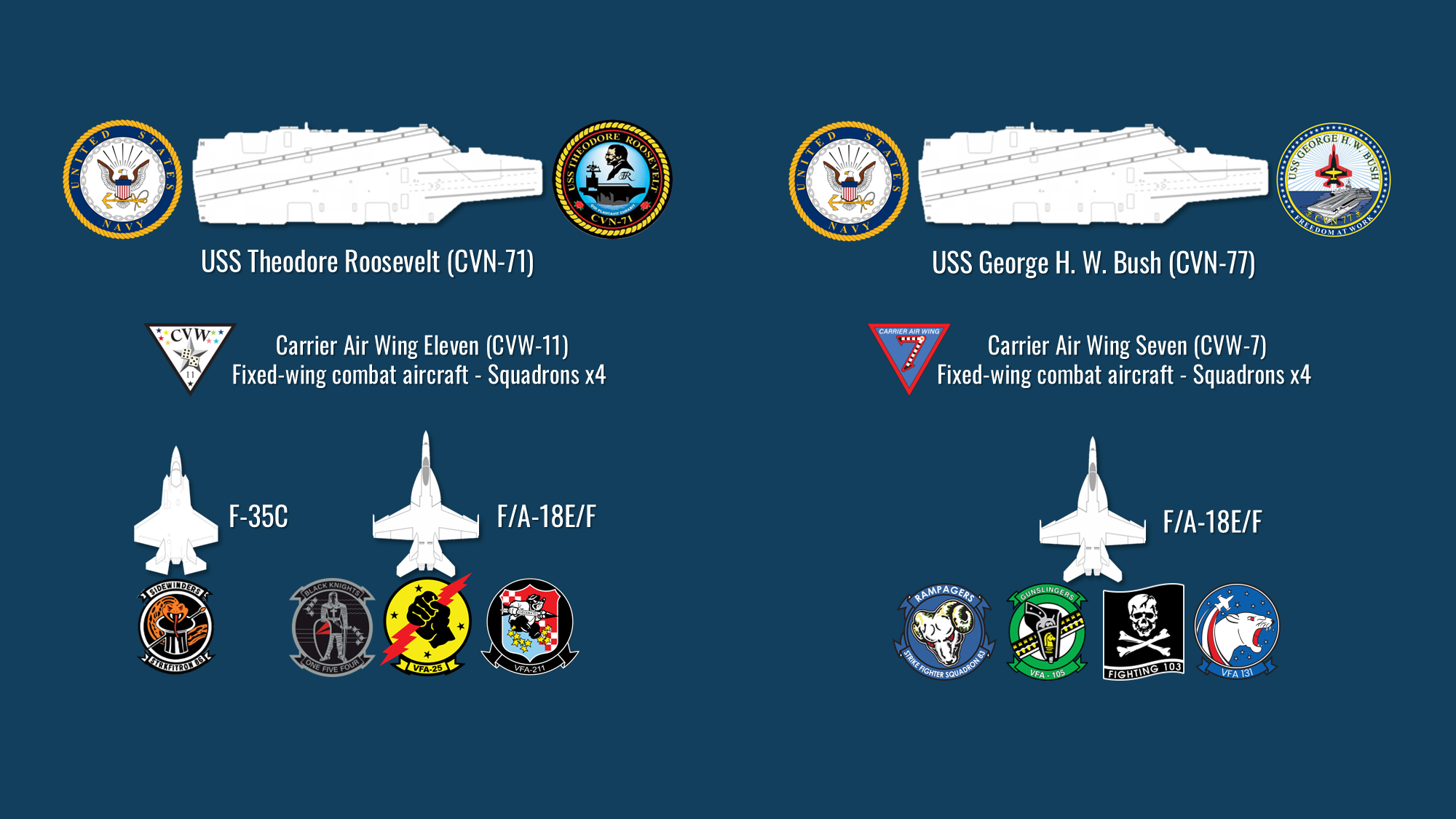
Figure 3: The aircraft carriers USS Theodore Roosevelt and USS George H.W. Bush with the strike fighter squadrons of Carrier Air Wings 11 and 7.
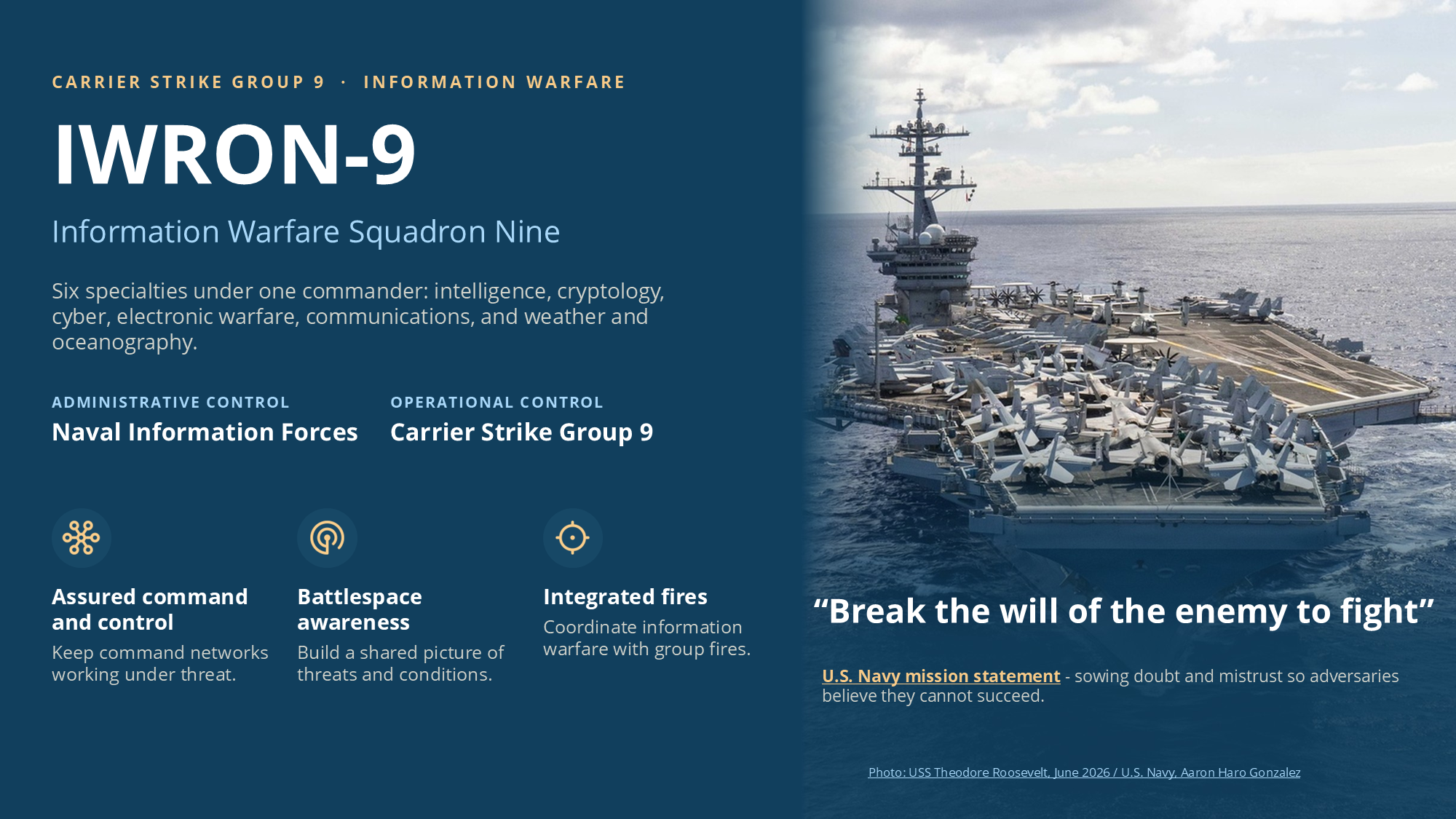
Figure 4: IWRON-9, Information Warfare Unit deployed with the USS Theodore Roosevelt
USAF/USMC Contingent: No USAF combat aircraft or bomber arrivals in theater were reported 15–21 NOV; the only fighter movement toward the region came from the USMC. About 200 land-based fighters remain in theater, with no F-22s since the summer; a 15 NOV report of F-22s leaving Langley remains unsubstantiated. US officials put the force in the region at more than 50,000 troops (16 NOV), roughly unchanged because the carrier arrival and departure offset each other. USMC aviation: Ten F-35Bs left MCAS Yuma on 18 NOV in two cells behind two KC-46As, staging through MCAS Cherry Point for the Middle East via Lajes. Heading the other way, VMFA-311’s ten F-35Cs are leaving the theater. Europe: No further drone incidents were reported at RAF Mildenhall or RAF Lakenheath through 19 NOV.
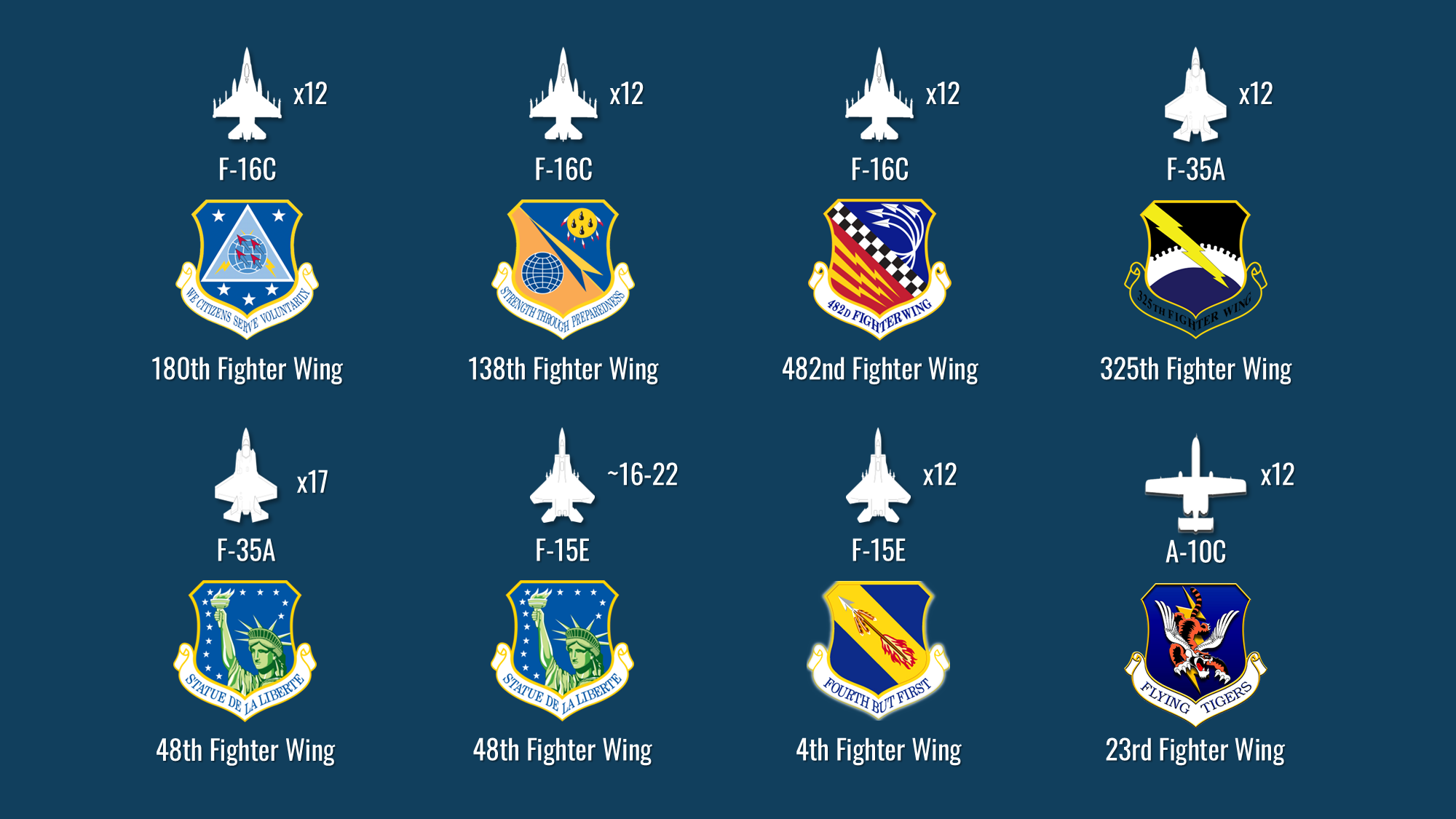
Figure 5: US Air Force fighter aircraft in theater, by wing and number of aircraft.
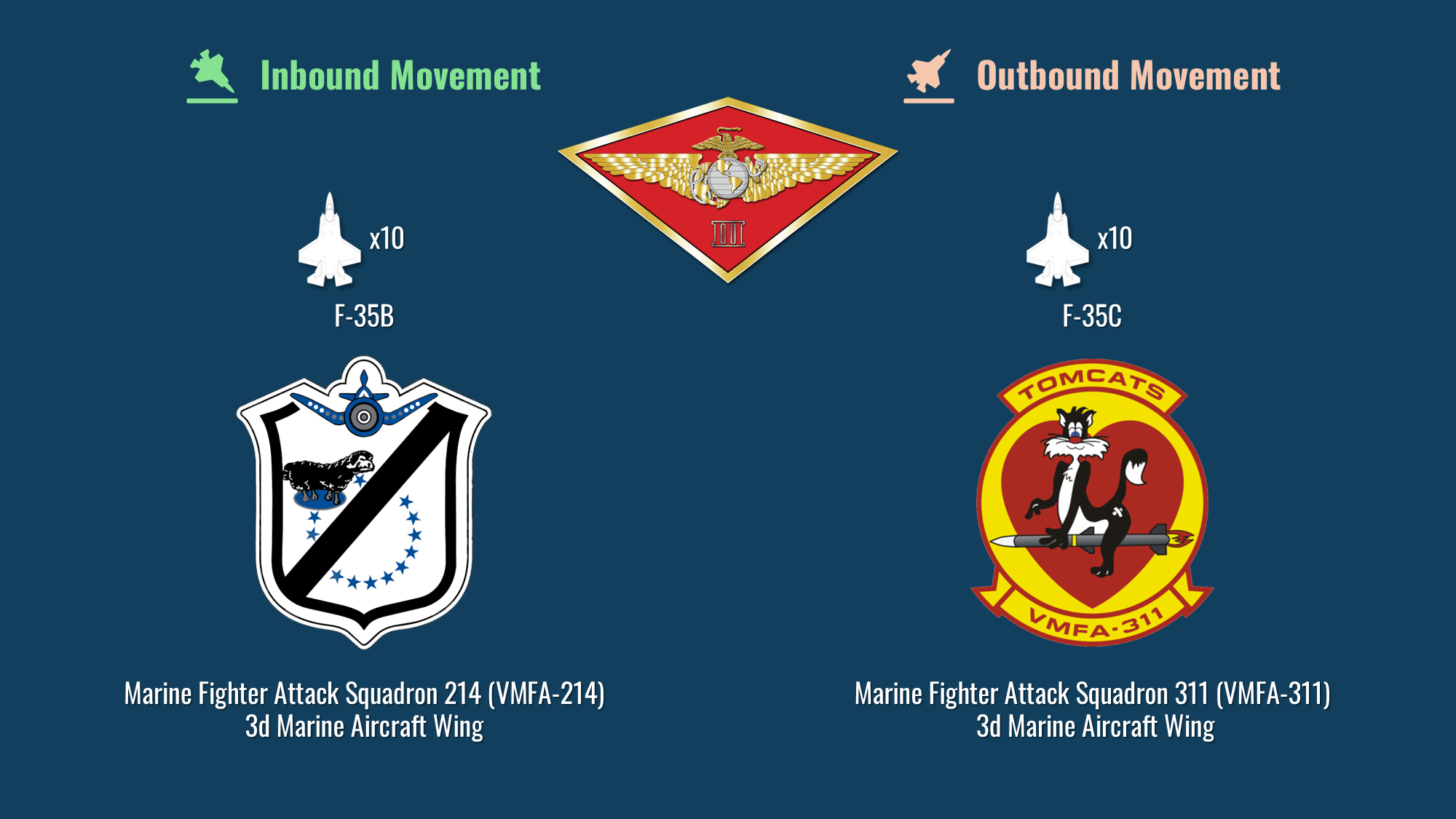
Figure 6: Inbound and outbound fighter aircraft movements.
Air Refueling Architecture: The tanker network needed to support another large-scale operation remains in place: ~200 KC-135s and KC-46s across the CENTCOM and European theaters by the last available count (203–205 on 11 NOV).
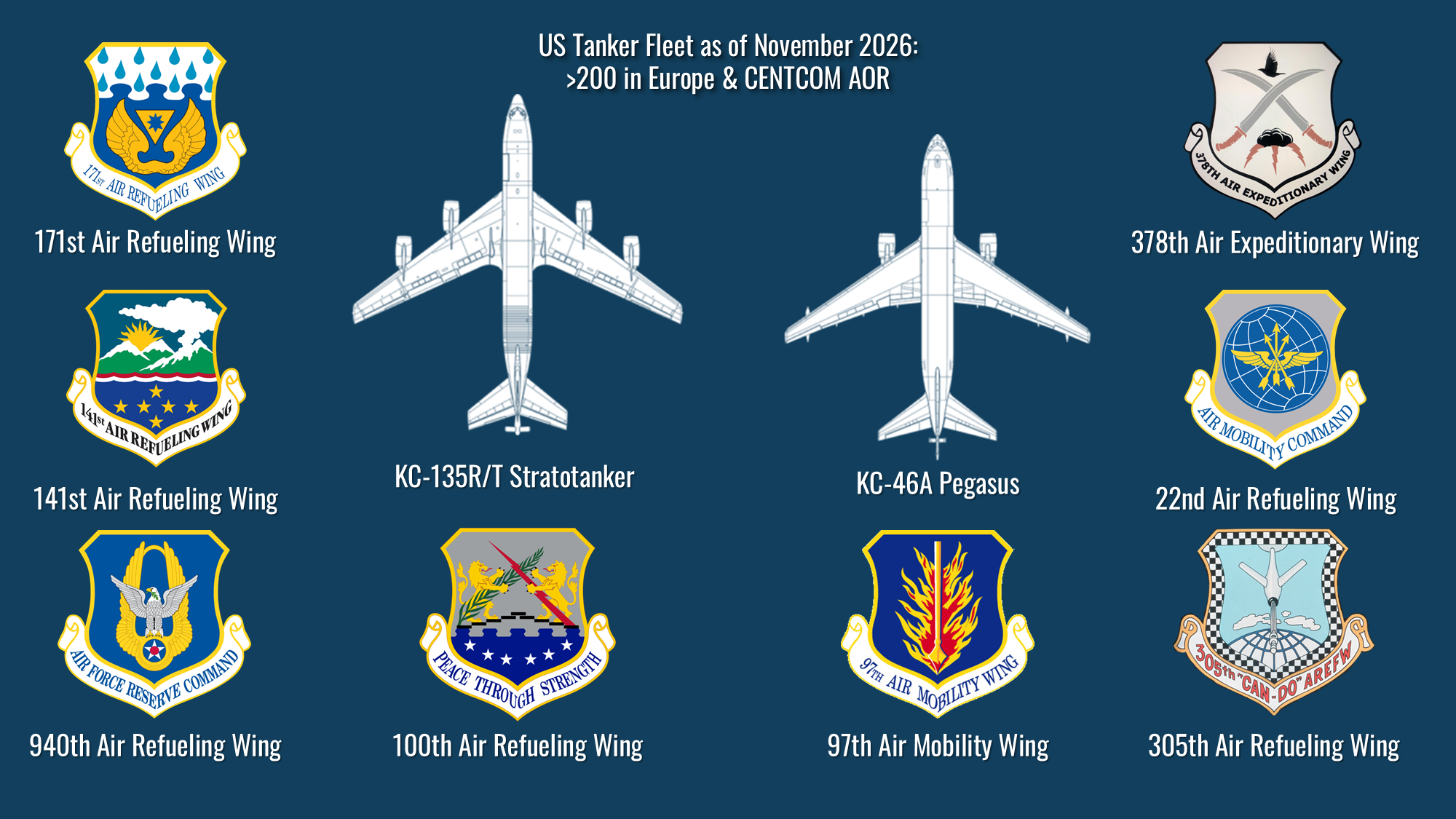
Figure 7: KC-135 and KC-46 tankers in Europe and the CENTCOM area, and the wings that operate them.
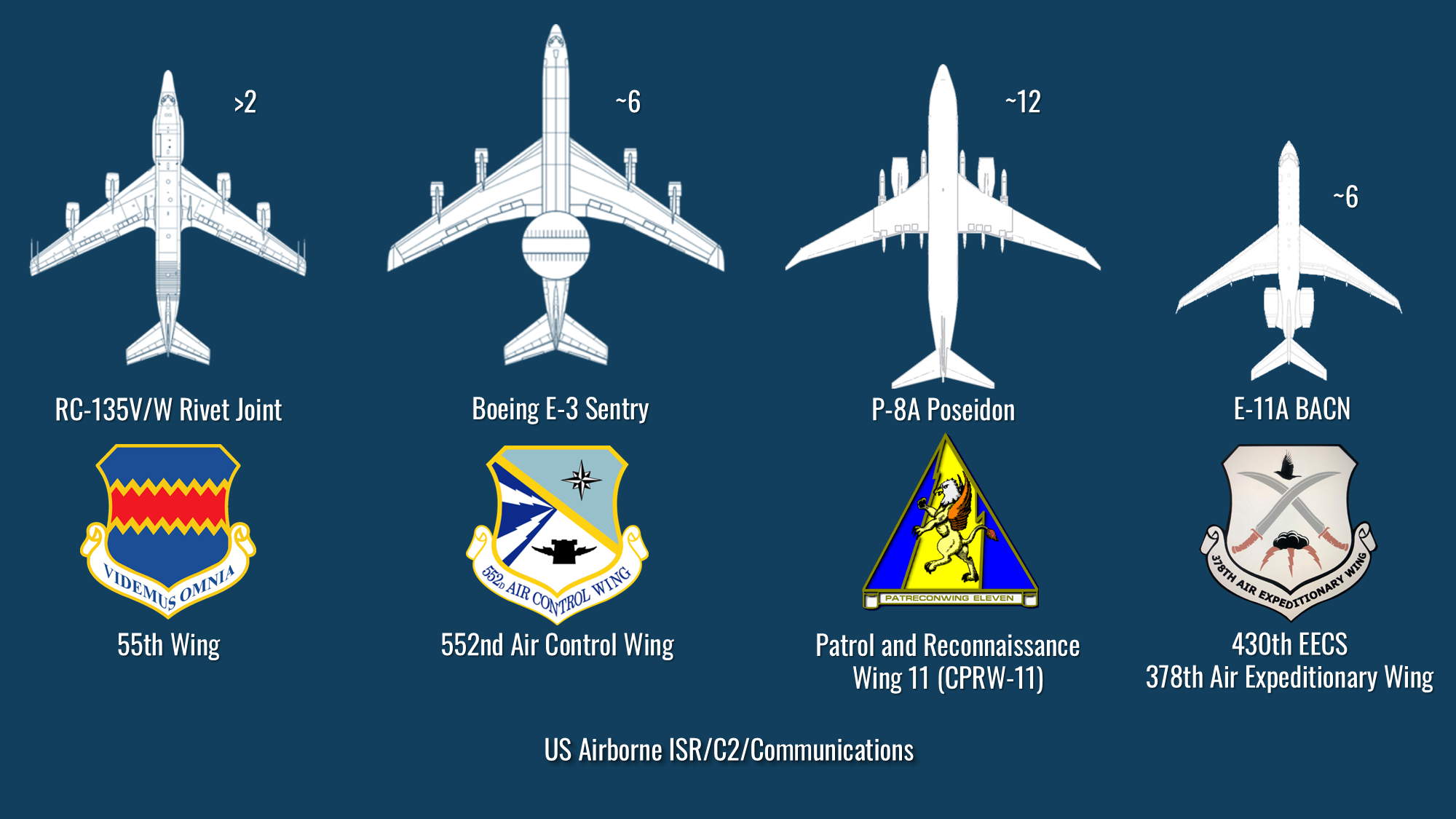
Figure 8: US airborne intelligence, command-and-control and communications aircraft in theater, by type and unit.
Forward Bomber Force: No bomber deployments to RAF Fairford, Diego Garcia, or the region were identified 15–21 NOV; Fairford has been empty since early October. On 20 NOV, a B-2A of the 509th Bomb Wing flew a training sortie from Whiteman AFB toward Europe with tanker support. OSINT trackers described it as a routine Global Strike Command mission, and it is not, by itself, an indicator of imminent action, even though it coincided with reports of renewed US–Israeli strike deliberations.
Airlift, Air Defense and Unmanned Systems: Airlift: Five C-17s were logged leaving MCAS Yuma for Ramstein on 17 NOV. No new flights into Ovda were identified. Air defense: More than three dozen US air-defense advisers have deployed to Saudi Arabia, some in place by 17 NOV, to help Riyadh counter Houthi drones and missiles. Unmanned: A US Navy MQ-4C Triton left Muwaffaq Salti AB, Jordan, late on 18 NOV, reportedly for NAS Sigonella. Iran claimed at least three US drone shootdowns: an MQ-9 east of Hormuz (18 NOV), and an MQ-9 over the western Strait and an MQ-1 over Qeshm (both 21 NOV). The IRGC’s running tally now stands at 58 MQ-9s and 19 MQ-1s.
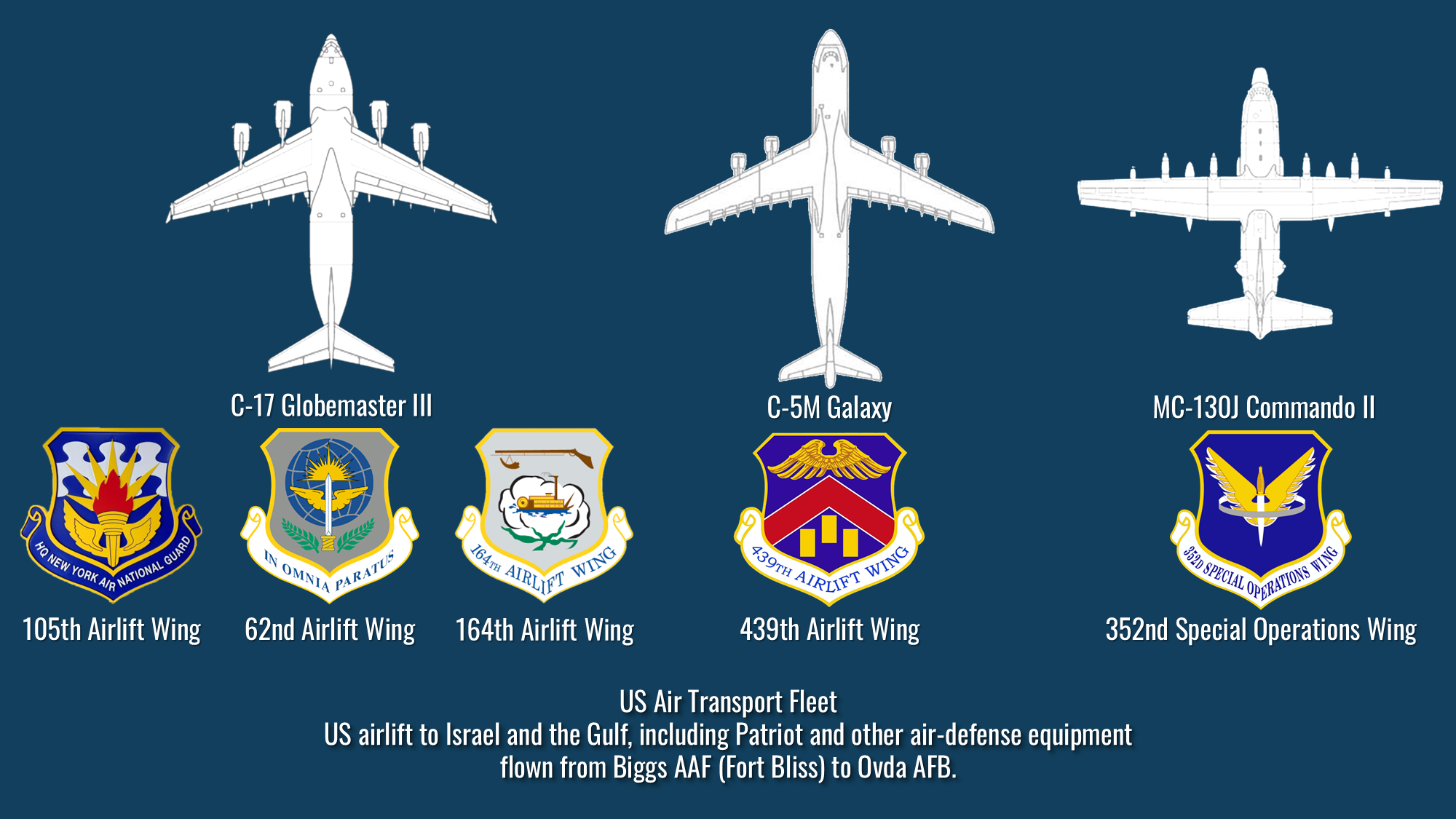
Figure 9: C-17 and C-5M transport aircraft and the wings that operate them, used in the airlift to Israel and the Gulf, and MC-130J aircraft for special missions.
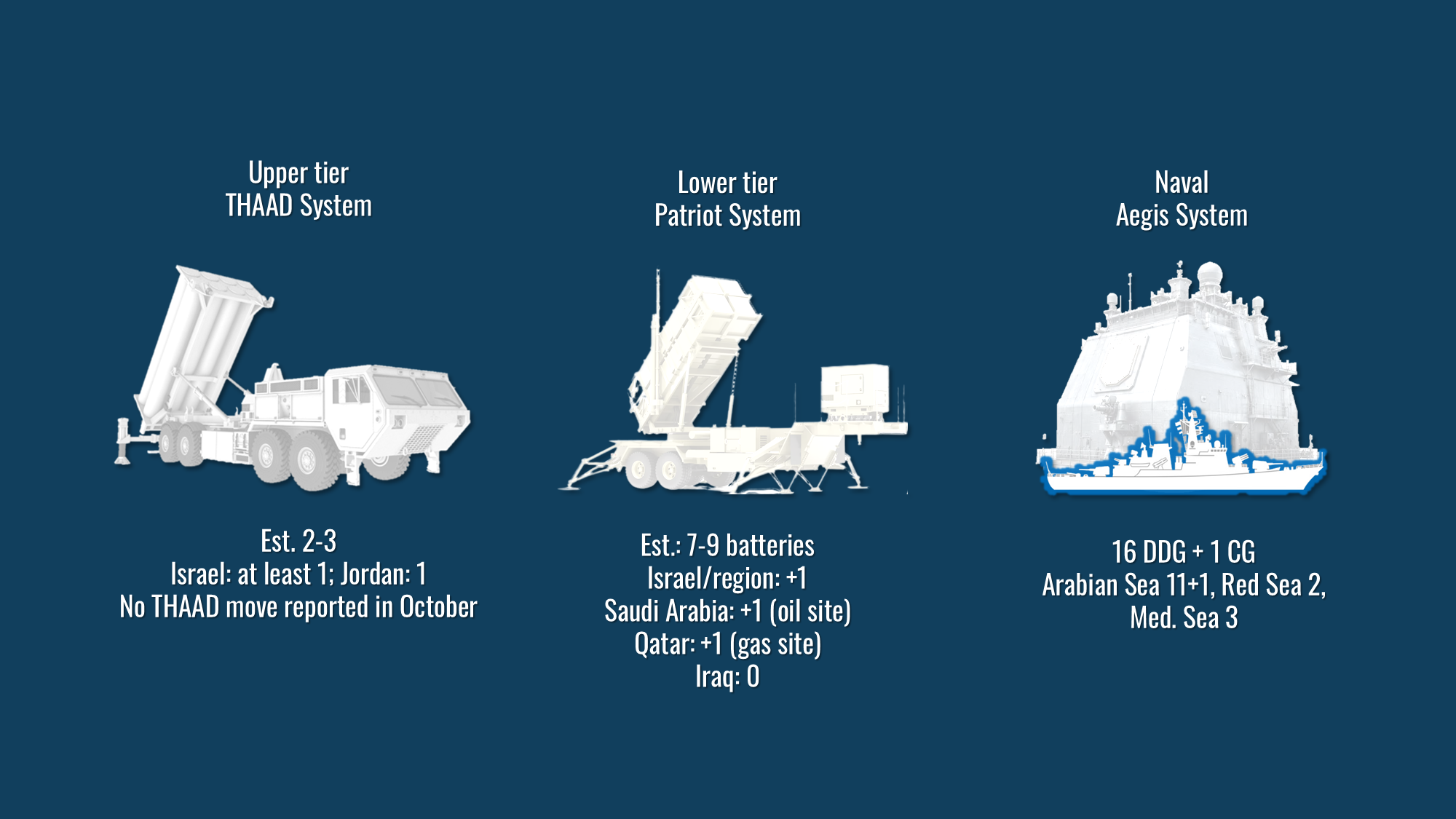
Figure 10: Missile defense systems in the region – THAAD (upper tier), Patriot (lower tier) and Aegis (naval) – and their deployment by country and area.
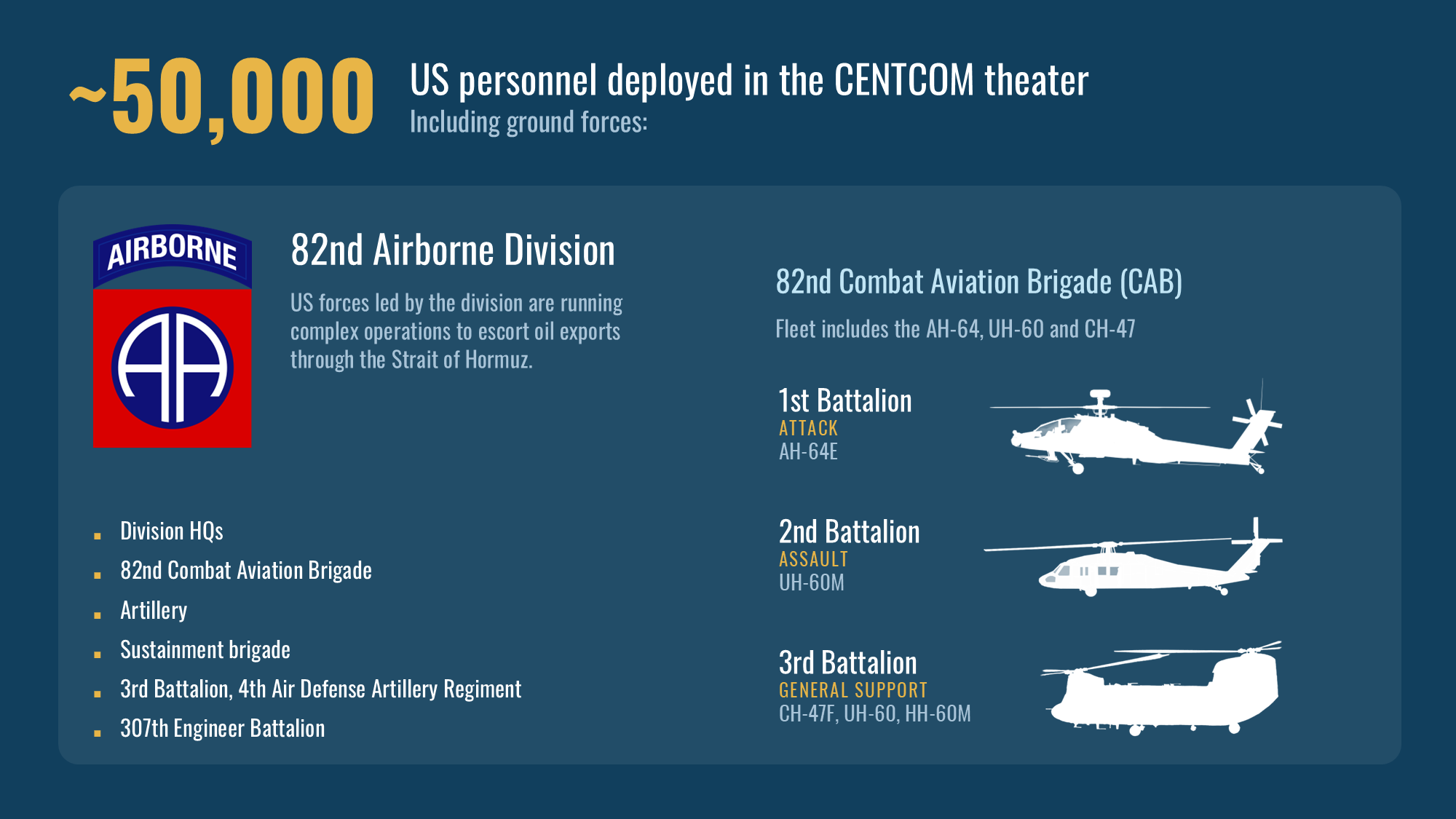
Figure 11: US personnel deployed in CENTCOM.
Allied Naval Presence, Eastern Mediterranean: Allied naval cover has not been restored: no allied carrier or destroyer was confirmed in the area during the week. NATO: SNMG2 (flagship HS Aegean, with ESPS Blas de Lezo and TCG Burgazada) conducted a PASSEX with the Egyptian Navy frigate ENS Al Aziz. Blas de Lezo has sailed with the group under Greek command since early October. These are frigates on a partnership mission, not a restored air-defense screen.