


Publications
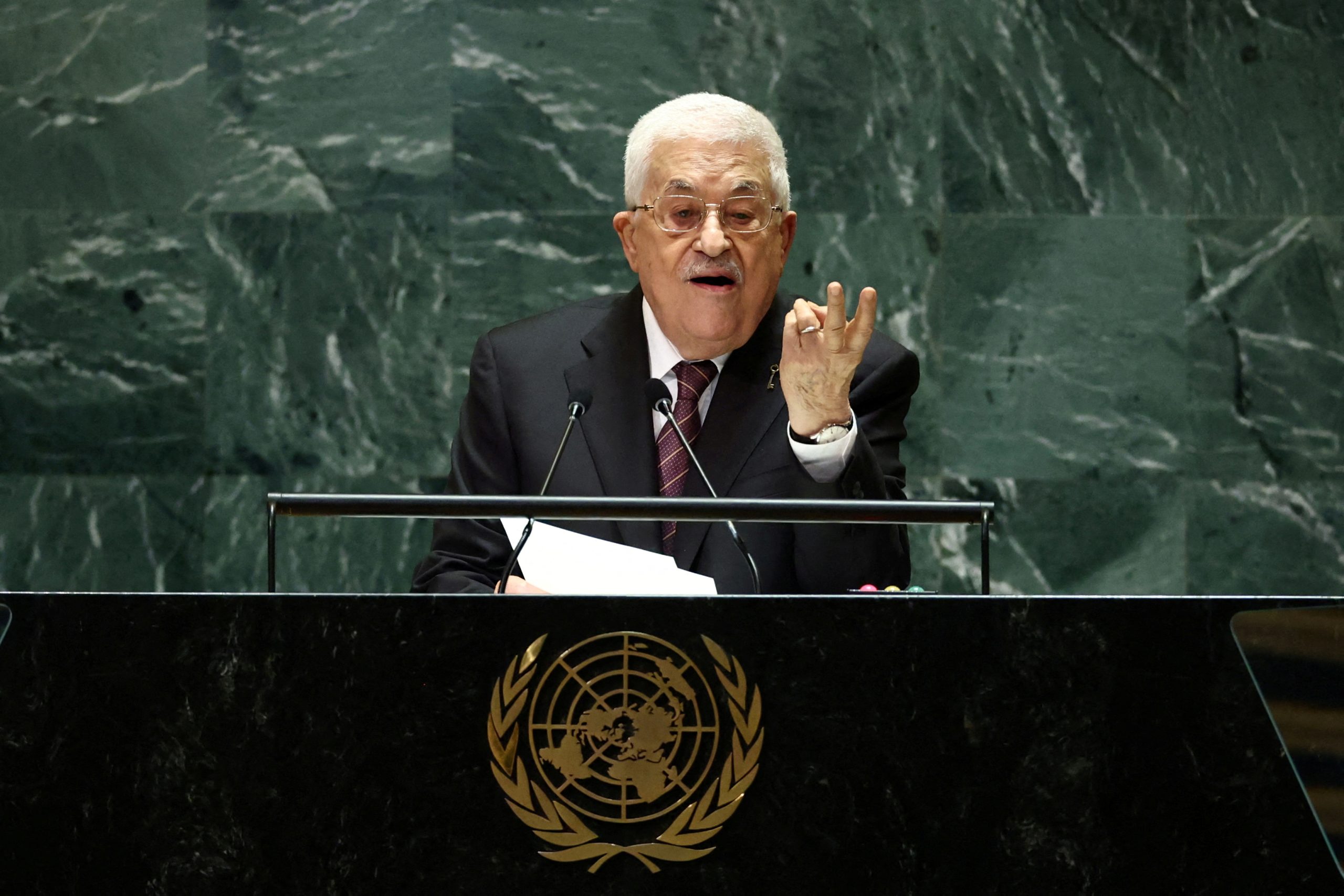
How should Israel address the fact that more and more aspects of the conflict are being debated and decided in the international arena?
INSS Insight No. 2162, June 29, 2026
Follow us on GoogleIn light of an accelerated process of internationalization of the Israeli–Palestinian conflict, Israel can no longer rely on a strategy of containment and preservation of the status quo. Instead, it must shift to an approach of “managed internationalization,” under which it takes diplomatic initiative to shape international and regional involvement, while maintaining coordination with the United States, in order to influence the security and institutional conditions of any future arrangement. Such an approach would enable Israel to transform external pressure from a strategic threat of international isolation into leverage for advancing its interests and shaping a more stable reality.
In recent years, and especially since October 7, 2023 and the war in Gaza, the Israeli–Palestinian conflict has undergone an accelerated process of internationalization. Within this process, an increasing number of aspects of the conflict are being discussed, shaped, and even decided in the international arena, outside the bilateral framework between Israel and the Palestinians, with growing influence from states and international institutions.
Over the years, Israel has sought to curb this trend and preserve, to the extent possible, its control within a bilateral framework. However, recent developments — including the wave of recognition of a Palestinian state, the growing involvement of international courts and institutions in the conflict, and the proliferation of diplomatic initiatives aimed at shaping the future of Gaza and the region, foremost among them Trump’s 20-point plan — indicate that internationalization has become a defining feature of the conflict.
In this reality, the question is no longer how to prevent internationalization, but rather how to manage it. Israel must formulate a strategy that will allow it to mitigate risks, seize opportunities, and expand its diplomatic room for maneuver.
The Palestinian Internationalization Strategy
Following the failure of successive rounds of negotiations with Israel, the Palestinian leadership adopted a strategy of internationalization as an alternative to the bilateral track. This strategy aims to shift the Palestinian issue to the international arena, based on the perception that the gaps with Israel cannot be bridged through direct negotiations. At its core lies the assumption that, by mobilizing international support and relying on international norms and institutions, it is possible to advance Palestinian national objectives — namely, the establishment of a Palestinian state along the 1967 borders, with East Jerusalem as its capital.
To this end, the Palestinian leadership has worked to strengthen its standing in the international arena through institutional and legal measures — including obtaining non-member observer state status at the United Nations in 2012, a status that was significantly expanded in May 2024; and acceding to the Rome Statute as a “state party” to the International Criminal Court. This move led, in November 2024, to the issuance of arrest warrants against Israeli Prime Minister Benjamin Netanyahu and former Defense Minister Yoav Gallant.
The impact of these measures has become even more pronounced since the outbreak of the war on October 7, with the intensification of diplomatic and legal pressure on Israel and growing international support for political initiatives aimed at advancing Palestinian statehood.
Israel’s Containment Strategy
From the Israeli perspective, the internationalization of the conflict has long been perceived as a strategic threat, as it shifts part of the decision-making authority from the parties themselves to external actors who do not support Israel’s interests. Unlike the Palestinians, Israel has sought to preserve the resolution of the conflict within a bilateral framework, based on the understanding that only direct negotiations provide the parties with flexibility, control over the terms of any arrangement, commitment to its implementation, and the preservation of diplomatic and security maneuvering space.
In practice, and particularly since Netanyahu’s return to the premiership in 2009, Israel has adopted a policy that prioritizes “conflict management” over efforts to reach a political settlement. This approach has been grounded in the assumption that preserving the status quo, alongside managing security and diplomatic risks, is preferable to pursuing a decisive resolution that could entail significant political, security, and diplomatic costs.
The internationalization of the conflict undermines this logic. As issues related to the conflict increasingly shift to discussion and decision-making in the international arena, Israel’s ability to control the process diminishes. The growing involvement of states, organizations, and international institutions creates a multilateral dynamic that is no longer controlled solely by the parties, constrains Israel’s ability to manage the conflict within the framework of the status quo, and increases pressure to advance a political settlement. In this sense, internationalization is not merely an expansion of international involvement in the conflict, but a shift in the centers of influence and decision-making about it.
From Israel’s perspective, the primary threat inherent in the internationalization of the conflict manifests along two complementary dimensions: the erosion of operational-military freedom of action and the narrowing of diplomatic-legal maneuvering space.
- The operational–military dimension – Operational freedom of action is a central and essential security asset, particularly in the aftermath of October 7. The ability to preserve such freedom enables Israel to act swiftly, proactively, and flexibly, both in the Palestinian arena and in external theaters, in accordance with its national security objectives.
In the domestic arena, increasing international involvement may constrain the way Israel employs force: it may reduce the legitimacy of using force, influence the scope of responses to terrorism, and at times require adjustments in timing, intensity, or the nature of operations. Moreover, internationalization heightens concerns regarding external involvement that strengthens the Palestinian side — militarily, politically, economically, or logistically — thereby eroding Israel’s strategic advantage.
In the international arena, the internationalization of the conflict expands the range of actors that Israel must take into account in its decision-making. As international involvement intensifies, so too does the potential for constraints on Israel’s use of force through oversight and coordination mechanisms, international criticism, or diplomatic pressure. In this sense, internationalization does not eliminate Israel’s ability to act, but it does raise the strategic cost of exercising it.
- The legal–diplomatic dimension – The process of internationalization deepens Israel’s exposure to arenas of decision-making beyond its control, foremost among them international legal institutions, UN bodies, and multilateral diplomatic frameworks. Israel’s legal concerns extend beyond proceedings against Israeli officials to a broader question: who determines the boundaries of legitimacy for Israel’s actions, the status of the territories, Israel’s obligations under the laws of armed conflict, and the parameters of any future political settlement? Considering this, a key question arises — does the strategy of containment still serve Israel’s interests?
International involvement in both the operational–military and legal–diplomatic domains reflects an erosion of Israel’s maneuvering space and a shift of the conflict from a bilateral to an international arena. The events of October 7 and the war in Gaza have returned the conflict to the center of the global agenda — initially around the legitimacy of Israeli military action, and subsequently around the humanitarian situation, the “day after” in Gaza, and the need to advance a political settlement.
In practice, discussions in international forums and external diplomatic initiatives have expanded — such as the Saudi–French initiative, reflected in the “New York Declaration” adopted by the UN General Assembly last year. This declaration calls for support for a two-state solution, includes concrete steps for its implementation, and reflects a growing trajectory of external diplomatic pressure on Israel. At the same time, activity in UN forums and international legal arenas appears to be expanding, alongside increasing use of diplomatic and economic pressure levers — from threats of sanctions and trade restrictions to setbacks in normalization processes and the expansion of the Abraham Accords.
Moreover, when Israel adopts a sweeping rejection of external diplomatic initiatives, it does not necessarily preserve its freedom of action, but rather risks isolating itself from the international arena. Such opposition also reinforces the Palestinian claim that the diplomatic track is futile, and that only international pressure succeeds in returning the Palestinian issue to the center of the global agenda. Thus, Israel effectively “doubles” the pressure exerted upon it.
These trends set limits on Israel’s ability to continue relying solely on a strategy of containment — “a policy of non-policy.” As the international arena becomes an increasingly central arena of decision-making, the absence of Israeli initiative does not preserve freedom of action; rather, it may constrain it further. Accordingly, a shift is required — from imposed internationalization to managed internationalization.
From Imposed Internationalization to Managed Internationalization
At the present juncture, the internationalization of the conflict is no longer a future scenario but an existing reality: within the international community, there is growing recognition that it should effectively serve as the central arena for resolving the conflict. Accordingly, Israel’s objective can no longer be limited to halting internationalization, but must instead focus on shaping and managing it. Rather than concentrating on curbing international involvement, Israel must formulate a policy that enables it to influence its direction and consequences in a manner that mitigates risks and advances its interests.
Israel currently faces two opposing strategic approaches. The first is a continued intensification of the use of force vis-à-vis the Palestinians, which risks deepening international isolation and pressure. The second is an effort to transform internationalization from a source of limitations and pressure into a lever for shaping a new political and security reality.
For example, there is now broad recognition of the need to implement reforms within the Palestinian Authority in order for it to serve as a relevant actor in future political arrangements. Israel should therefore adopt a position according to which the Palestinian Authority can play such a role only if it implements the necessary reforms. At the same time, Israel should call on the international community to exert pressure on the Authority to address its internal deficiencies.
Internationalization may also carry potential benefits. Israel’s political system at times struggles to make decisions on contentious issues, even when there is recognition of their strategic necessity — for example, regarding the termination of the military campaign in Gaza and the return of hostages. In such cases, external pressure or international mediation may help advance steps that the Israeli system finds difficult to promote on its own, and may provide decision-makers with arguments grounded in strategic necessity derived from the international environment. In this sense, internationalization is not only a constraint on Israel’s freedom of action, but also a potential lever for advancing difficult decisions and political and security initiatives.
Principles for Internationalization Management
- From containment to diplomatic initiative: To date, Israel has addressed internationalization primarily through blocking unilateral initiatives, contesting legal arenas, and opposing recognition of a Palestinian state. However, in the absence of an Israeli diplomatic initiative, the risk increases that the parameters of a future arrangement will be shaped externally. As long as Israel confines itself to blocking international initiatives, it effectively leaves others to define the agenda and the terms of a future settlement, thereby weakening its own position. Accordingly, managing internationalization requires Israeli willingness to engage in a political process that enables it to influence its trajectory, its conditions, and the scope of international involvement. A return to a diplomatic track — even one involving international mediation — may afford Israel greater influence than continued opposition to a process that is unfolding regardless.
- Harnessing international involvement to promote regional stability: The internationalization of the conflict need not leave Israel alone in the face of external pressure regarding the Palestinian issue. Operation “Roaring Lion” demonstrated the regional disruptive potential of Iran and its proxies, underscoring the need for a shared regional framework for burden-sharing with moderate Arab states, the United States, and other international partners. Integrating the Gaza and Palestinian issues into a broader framework of regional stability, alongside the expansion of the Abraham Accords and efforts to counter shared threats, could serve as a lever for advancing Israeli interests.
Such involvement can help establish clear conditions for the Palestinian leadership, including dismantling terrorist organizations, strengthening monitoring and verification mechanisms, and deepening the linkage between an Israeli–Palestinian arrangement and broader regional stability and normalization.
At the same time, the absence of Israeli willingness to advance along a diplomatic track contributes to the formation of regional coalitions that exclude Israel — such as the emerging regional alignment among key Sunni actors, including Saudi Arabia, Egypt, Turkey, Qatar, and Pakistan, which seek to shape a new regional architecture. For Israel, this trend carries the risk of coordinated diplomatic pressure centered on the Palestinian issue. At the same time, diplomatic initiative may enable Israel to strengthen ties with additional regional actors, including Eastern Mediterranean states, particularly Greece and Cyprus. The question for Israel, therefore, is not only how to block potential regional pressure, but how to channel parts of it into a framework that also serves its security interests.
- Shaping the security and institutional conditions of a future arrangement: As the trend of recognizing a Palestinian state continues to expand, Israel’s central interest is no longer necessarily to prevent it altogether, but to influence the conditions under which such recognition is translated into political reality. These conditions should include demilitarization, effective monitoring and verification mechanisms, international oversight of security systems, education, and infrastructure, institutional reforms within the Palestinian Authority, prevention of rearmament, and the exclusion of Hamas from any governing or security role in Gaza or in the broader Palestinian system.
In this sense, a strategy of managed internationalization does not end with a political agreement, but seeks to shape a security-institutional framework that minimizes the risk that recognition of a Palestinian state will evolve into a unilateral and unconditional outcome.
- Preserving the American anchor: For Israel, Washington is not only a security ally that provides essential military backing, but also a diplomatic umbrella that blocks unilateral moves in multilateral arenas and serves as a political shield in forums such as the UN Security Council. The United States plays a central role in mediating between Israel and regional actors and in shaping a framework for a settlement that is not imposed on Israel from the outside. Accordingly, any Israeli strategy for managing internationalization requires early and close coordination with the United States.
In conclusion, Israel cannot rely solely on opposing the internationalization of the conflict. As the international arena becomes an increasingly central arena of decision-making, a strategy based solely on containment risks leading to a gradual loss of control over the terms of a future settlement. Israel must therefore shift from viewing internationalization as a threat to be prevented at all costs to a strategy of managed internationalization — one that reduces legal, diplomatic, and security risks, restores Israel’s ability to influence the parameters of a future arrangement, and enables it to leverage external pressure and international mediation to advance difficult decisions that the political system may struggle to promote independently.
In this sense, the involvement of the United States and regional actors is not merely a constraint, but a component in shaping a more stable strategic reality.