


Publications
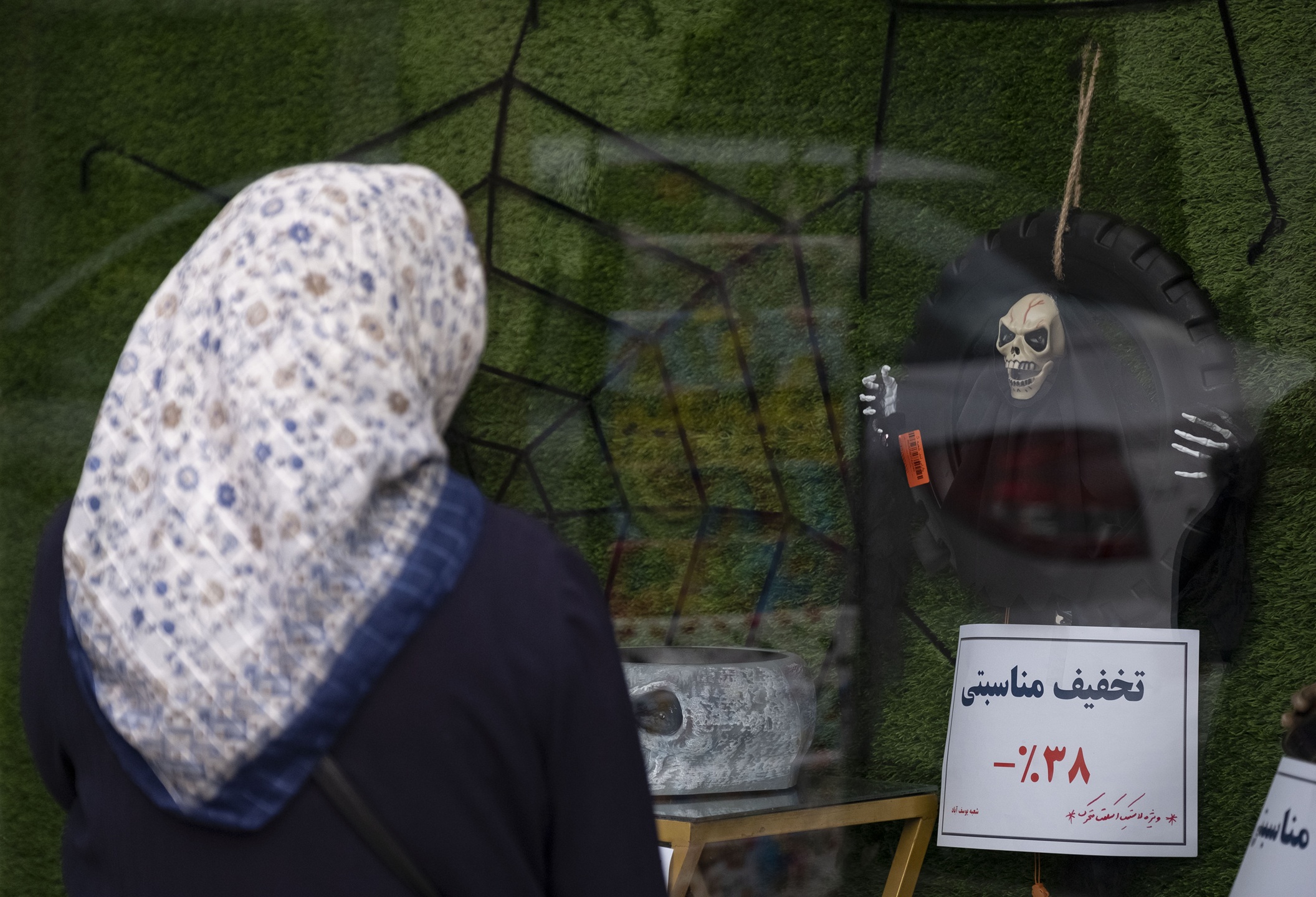
Young Iranians celebrate Halloween, while the regime erects a statue of an ancient Persian king: What explains these trends, which do not align with Iran’s Islamic identity, and how do they affect the future of the Islamic Republic?
INSS Insight No. 2060, December 2, 2025
Follow us on GoogleThe commemoration of Western holidays and pre-Islamic traditions in Iran, such as Halloween and Cyrus the Great Day, has recently sparked a public debate among conservative circles, who see these practices as a threat to the values of the Islamic Revolution and to religious faith, and those who believe that they reflect processes of change among the younger generation that must be accepted. As this debate unfolds, the authorities in Tehran are attempting to capitalize on Iranian nationalism, which swelled during Iran’s 12-day war with Israel, and to rally the public with such symbolic acts as erecting a statue of an ancient Persian king. It seems that the authorities can no longer ignore the deep-seated trends shaping Iranian society, including secularization, Westernization, and a growing identification with the Persian rather than the Islamic component of national identity, which, at this stage, do not appear reversible. Even if these trends are unlikely to generate immediate political change, they may lay the groundwork for profound transformations in the Islamic Republic once a leadership transition occurs. In particular, the post-Khamenei period could create conditions in which these social currents mature into far-reaching political developments.
On the night of October 31, 2025, thousands of young Iranians celebrated Halloween, which over the years has become popular in many countries through American pop culture and digital media. Ahead of Halloween, the Iranian authorities tried to prevent the celebrations by banning ceremonies, gatherings, and the sale of Halloween-related items, and they even threatened to close businesses that held events. Government spokesperson Fatemeh Mohajerani urged citizens to give precedence to national and religious holidays over Halloween, although she emphasized that it would be better to prevent the celebrations through “cultural education” rather than through enforcement and prohibition. In contrast, hardliner Majlis member Hamid Rasa’i argued that some imported observances, such as Halloween—based on fear and symbols of death—do not conform to Iranian cultural values and may even negatively influence the beliefs of the younger generation. He argued that rituals rooted in Iranian culture should be valued and preserved, and blind imitation of foreign customs that contradict the collective spirit and religious beliefs should be avoided. In opposition to this stance, the cleric and reformist political activist Mohammad-Ali Abtahi expressed an understanding for the young people celebrating, claiming that for them, Halloween is primarily a kind of entertainment that allows them to feel part of the global community. He maintained that there is no reason to turn this type of leisure into a cultural or political problem; rather, restrictions on entertainment events for young people should be eased.
This is not the first time Iranian authorities have failed to prevent the spread of Western traditions, such as Halloween or Valentine’s Day. Growing exposure to the West and to modernization has led young people to adopt a more Western lifestyle, distancing themselves from the values of the Islamic Revolution and embracing a more permissive way of life that includes consumption of Western culture, despite official opposition. The authorities see Western cultural penetration as a threat to Iranian society, especially to the youth. From their perspective, the expanding influence of Western consumer culture may accelerate social change and, over time, even jeopardize the stability of the regime.
The “Valentine’s phenomenon,” which has expanded significantly in Iran in recent years, particularly among young people, is seen by many in the religious establishment as an expression of the moral and social crisis afflicting the younger generation. In an effort to counter this phenomenon, the authorities have tried to provide alternatives to Valentine’s Day, such as emphasizing Iranian national traditions and even pre-Islamic traditions such as “Esfandegan Day,” a day of love according to Zoroastrian tradition, or the anniversary of the marriage of the Shiite Imam Ali and Fatemeh, the daughter of the Prophet Muhammad.
However, the Iranian authorities are not opposed solely to Western traditions. At the end of October, security forces once again blocked the main roads leading to the Pasargadae archaeological complex in Fars Province, where the tomb of Cyrus the Great is located, to prevent citizens from marking the yearly observance of “Cyrus the Great Day.” This custom, which emerged over the past decade and is not part of Iran’s official calendar, commemorates the founder of the Achaemenid Empire on October 29, the date that several historical accounts identify as the day King Cyrus entered Babylon. Over the years, “Cyrus the Great Day” has become the subject of increasing controversy as it has spread steadily among young Iranians. Some conservative-hardline circles claim that the tradition represents an effort by the regime’s enemies and exiled monarchist groups to undermine the principles of the Islamic Revolution. Others contend that public respect for the founder of the Persian Empire does not endanger national security and may even strengthen national solidarity. On the eve of “Cyrus the Great Day” this year, Qader Ashna, an adviser to the minister of culture, stated that the figure of Cyrus could reinforce national unity. He added that there is no obstacle to discussing a request to add the day to the official calendar, should such a request be formally submitted to the authorities.
While Halloween and “Cyrus the Great Day” celebrations reflect bottom-up social dynamics, the authorities’ decision to erect a statue of the Sassanian king Shapur I and the Roman Emperor Valerian in Tehran’s Enghelab (“Revolution”) Square signals a renewed effort by the regime, particularly after the 12-day war with Israel and the United States, to mobilize the public around Iranian nationalism through symbols drawn from the pre-revolutionary and even pre-Islamic past. The statue was unveiled in an impressive ceremony in early November, which even included a musical performance. The monument depicts a symbolic scene of the Roman emperor kneeling before the third-century CE Sassanian king. Next to the statue, a billboard was placed reading “You will kneel again before Iran,” a clear reference to Iran’s current enemies. Signs were also placed nearby featuring military figures, including of the former commander of the Qods Force in the Islamic Revolutionary Guard Corps (IRGC), Qasem Soleimani, who was killed by the United States in January 2020, and the commander of the IRGC Aerospace Forces, Amir-Ali Hajizadeh, who was killed in the opening strike of the war in June 2025.
The placement of the statue generated considerable public interest. Abdolreza Davari, a former adviser to President Mahmoud Ahmadinejad, argued that the authorities’ conduct should be viewed against the backdrop of a legitimacy crisis of the Islamic Republic’s official religion and the erosion of religious faith, resulting from the transformation of religion into a state instrument of supervision and control. Given this trend, the regime is trying to rebuild its cultural base of legitimacy. In the 1980s, the regime relied on religious legitimacy, whose symbols were Shiite Ashura ceremonies (marking the death of Imam Husayn at the Battle of Karbala in 680 CE), the mosque, and the veil. Today, in contrast, the regime seeks legitimacy through symbols, some drawn from the pre-Islamic heritage, in order to encourage national unity. According to Davari, the source of power for the Islamic Republic is no longer the “Islamic nation” but rather “Iranian history and blood.”
Conversely, conservative media activist Sadeq Nikou argued that there is no contradiction between expressions of pre-Islamic Iranian nationalism and the values of the Islamic Revolution. On the contrary, the statue of the Roman emperor kneeling before the Sassanian king is a direct continuation of Iran’s “spirit of resistance” and reflects the fact that its steadfastness against its enemies is deeply rooted in its history. Nikou maintained that there is a profound difference between an approach that seeks to weaken revolutionary discourse and replace Islam with Iranian nationalism, and an approach that sees homeland and resistance as a natural continuation of that discourse.
Although the Iranian regime has long sought to rally the public around symbols of Iranian nationalism, the 12-day war with Israel accelerated this trend. For example, Iran’s Supreme Leader Ali Khamenei made a public appearance on the eve of the Ashura commemorations in July 2025, his first since the war with Israel. The appearance attracted significant attention because he asked Mahmoud Karimi, one of the most prominent religious preachers, to sing the patriotic song “Ey Iran,” made famous during the Shah’s era. This trend reflects a recognition on the part of the authorities in Tehran that Islam, or even a combination of religious symbols and Iranian patriotism, is no longer sufficient to mobilize the public. Alongside efforts to cultivate national solidarity, the authorities have recently shown a degree of flexibility in responding to public demands, including by easing the enforcement of the Islamic dress code.
Despite these attempts, it remains doubtful that such steps can resolve the regime’s legitimacy crisis or close the widening gap between the state and society. This is all the more so as internal pressures continue to intensify, driven by the deepening economic crisis and the growing water and electricity shortages. Moreover, these steps may further amplify criticism voiced over the past year by hardline-revolutionary circles that form the regime’s ideological base of support. These groups warn against deviating from the values of the Islamic Revolution, including in the enforcement of the Islamic dress code, and argue that such deviation could cause the Islamic Republic to lose the loyalty of its core base of supporters.
Nonetheless, it appears that deep-rooted trends in Iranian society, including secularization, Westernization, the erosion of clerical authority, and a growing emphasis on the Persian rather than the Islamic component of national identity, have become irreversible, and the authorities can no longer afford to ignore them. These trends do not necessarily herald political change in the foreseeable future, mainly due to the weakness of the regime’s opponents and the regime’s ability to efficiently suppress any immediate threat to its stability. However, these trends may lead to significant transformations in the character of the Islamic Republic once a leadership transition occurs, particularly after the death of Iran’s 86-year-old leader, Khamenei. It is still too early to determine whether the doctrine of “rule of the Islamic jurist,” practiced in Iran since 1979, will be preserved after his passing, or whether the Islamic Republic will undergo constitutional changes designed to weaken the authority of the next leader and strengthen alternative power centers such as the IRGC. In any case, Khamenei’s departure and the expected succession struggle may create the conditions for these long-standing social trends to mature into far-reaching political change.