


Publications
INSS Insight No. 952, July 11, 2017
Follow us on Google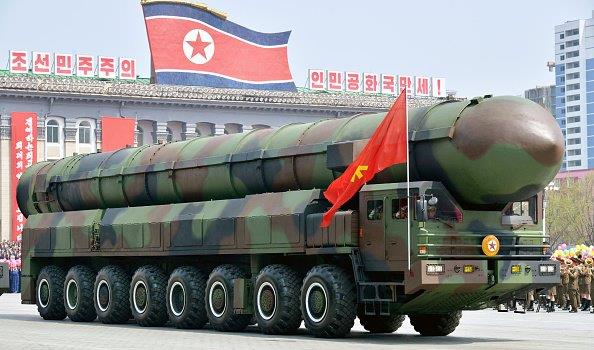
Israel is monitoring the North Korean crisis and assessing its implications, particularly with respect to the Iranian nuclear program. There is concern exists that American restraint and continued provocative North Korean behavior would signal to Tehran that a country determined to cross nuclear red lines is able to do so, even in face of American opposition. Thus for Israel, it is necessary to resume a comprehensive dialogue with Washington, and to formulate a joint policy towards Iran’s nuclear ambitions and the risks incurred by the JCPOA. Coordination with United States allies in the Middle East is also required in order to maintain effective pressure on Tehran.
On July 4, 2017, North Korea launched an intercontinental ballistic missile capable of flying a distance of over 6,000 kilometers. With the test, the first of its kind for Pyongyang, North Korea sought to highlight its ability to threaten United States territory, not merely American forces stationed in Northeast Asia. The missile, which was in the air for nearly 40 minutes, was launched specifically on American Independence Day, a few days after the meeting between US President Donald Trump and South Korean President Moon Jae-in, who favors a conciliatory approach to North Korea.
After the launch, the US army and the South Korean army conducted an exercise that simulated a large scale attack, in order to strengthen deterrence against North Korea. At the same time, US Ambassador to the UN Nikki Haley made it clear that the military option was “on the table,” and cautioned China as to the consequences of continuing to aid Pyongyang. President Trump also warned that North Korea would suffer the consequences of its behavior, and threatened “severe measures”, even without Chinese support. In addition, Washington tried to promote a UN Security Council resolution condemning North Korea that would include a call for a response, but Russia blocked the initiative.
In contrast to the other countries involved in the crisis, the United States faces a major escalation of strategic significance in the threat from North Korea. North Korean Supreme Leader Kim Jong-un possesses an arsenal of 15-20 nuclear bombs, and now has proven his capability of launching an intercontinental ballistic missile. The Trump administration has announced an end to the Obama administration’s policy of “strategic patience” toward North Korea, and already in January President Trump asserted in a threatening tone that Pyongyang would not have missiles capable of reaching the United States. North Korea, however, is continuing to develop its long range capabilities, which will threaten population centers in the United States, while at the same time miniaturizing nuclear warheads in order to mount them on long range missiles. This activity is designed to consolidate North Korea’s status as a nuclear power capable of deterring the United States.
Accordingly, the Trump administration has reached a critical juncture, and must decide what strategy to pursue in order to halt the North Korean nuclear and missile program - if there is in fact any strategy to achieve this goal. This is a formidable challenge facing the administration.
First, North Korea is already equipped with operational nuclear weapons, and can use them against American forces stationed in the Korean peninsula and in Japan. The deployment of the American THAAD anti-missile defense system will reduce this threat, but no anti-missile defense system is airtight, and in the event of a nuclear threat, the risk of a single missile hitting a target is severe. The very existence of nuclear weapons in the hands of Pyongyang therefore limits American room to maneuver, and increases the risks incurred by any military escalation.
Second, Japan and South Korea, United States allies in East Asia, fear escalation, as they will be the first to be hurt. The North Korean army is equipped with thousands of artillery launchers aimed at Seoul. North Korea also has thousands of missiles and rockets that can hit any target in South Korea, and medium range missiles that threaten Japan. The US defensive array currently does not provide an adequate solution to this threat, because its location enables primarily the defense of the American bases in these countries.
Third, the projected effect of political and economic pressure on North Korea is limited, as the United States will be dependent on the policy of China, its main competitor in the region, and on the international theater as a whole. China is North Korea’s lifeline: it is North Korea’s principal source for imports and destination for exports. China is also North Korea’s main source of energy and its primary channel for international financial activity. China, however, has demonstrated very limited alacrity regarding collaboration with the United States on the issue of North Korea.
Furthermore, even if China does try to prompt North Korea to change its policy, its ability to dictate policy to Pyongyang is very limited. The economic situation in North Korea is already dire: its economy is closed, and in effect almost autocratic, designed to ensure the support of the country’s elite, especially the military elite. North Korea already demonstrated a high degree of resilience at the peak of a severe economic crisis in the early 1990s, when millions experienced famine as a result of a drought that damaged the local crops. North Korean resolve is likewise evident in Pyongyang’s steadfastness in face of the international sanctions imposed because of its nuclear plan. Thus despite an economy that is faltering by any global standards, it is difficult to see how the North Korean regime and the society it controls can be broken. In addition, any escalation created by North Korea following a crisis will harm the economies of South Korea and Japan, which jointly account for almost 8 percent of the global economy. In other words, in economic terms, escalation would hurt primarily the United States and its allies in Asia.
In the asymmetric situation that has emerged, North Korea, which is inferior in every economic and military parameter, is progressing confidently toward the development of an operational arsenal of nuclear weapons that threatens the world’s strongest power. The United States, on the other hand, is facing the challenge with limited alternatives, none ensure its interests in the long term. An effective system of sanctions requires Chinese cooperation, which does not exist; the North Korean regime’s ability to survive a massive external pressure over many years has proven strong; North Korea has already violated two diplomatic agreements signed with it, in 1994 and 2007, that attempted to halt its nuclear program; and cyber operations against the North Korean missile program have at best slowed its progress.
Implications and Policy Recommendations
Israel is monitoring the crisis and assessing its implications, particularly with respect to the Iranian nuclear program. Concern exists that American restraint and continued provocative North Korean behavior would signal to Tehran that a country determined to cross nuclear red lines is able to do so, even in face of American opposition. The crisis surrounding North Korea’s missile program in effect presents a model of a balance of terror against Washington’s allies, based on support for a determined nuclear policy from a global power that is a United States rival. Strengthening Iran’s ability to threaten Israel and the Arab Gulf states directly and through proxies, combined with the rapprochement and growing coordination between Iran and Russia, conforms to this model. According to the model, it is worthwhile for Iran to continue developing its nuclear capabilities and its missile program in order to attain a nuclear deterrent.
More than a source of inspiration to Iran, the tension in the Korean peninsula is liable to divert American attention, thereby enlarging the vacuum that Washington is leaving in the Middle East. Thus, even if the Trump administration regards Iranian regional policy as a threat to American interests, it might be less attentive to events there, because attention and resources are focused on the growing challenge from the East.
If the United States has no accurate and comprehensive intelligence about North Korea’s nuclear facilities and operational capabilities, and lacks a capability for a preemptive strike, then presumably the immediate American goal will be modest, and will focus on halting North Korean activity at its current stage. Rolling it back will require aggressive pressure that may result in uncontrolled escalation. This goal corresponds to the first stage of the South Korean President’s two-stage plan for dealing with the North Korean threat (nuclear disarmament is the second stage) as presented during his visit to Washington. This goal is designed to prevent a direct threat against the United States in the near future.
In this framework, it is important to preserve the alliance between the United States and South Korea. Kim Jong-un’s aim is to drive a wedge between Washington and Seoul, thereby weakening South Korea. It is thus in Washington’s interest to oppose any demand to halt or restrict its military cooperation with Seoul. Any concession in this area will signal to Pyongyang that its policy yields results. Rather, in exchange for a freeze of North Korean activity, the US can offer public recognition of the legitimacy of the Pyongyang regime.
From Israel’s perspective, it is necessary to resume a comprehensive dialogue with Washington (which has not taken place continuously on a serious level since 2015), and to formulate a joint policy towards Iran’s nuclear ambitions and the risks incurred by the JCPOA. Coordination with United States allies in the Middle East is also required in order to maintain effective pressure on Tehran. As part of the American-Israeli dialogue, it is important to formulate a response to the possibility of the spread of knowledge and elements of the North Korean nuclear program to Iran or its allies in the region, as was the case with the nuclear reactor in Syria in the preceding decade. Tehran and Pyongyang are cooperating in the nuclear sphere, although the extent of their cooperation is unclear. Washington should ensure Iran is not using the North Korean missile and nuclear program in order to attain capabilities that it is unable to achieve by itself under the JCPOA.
Finally, Israel also possesses the ability to contribute to the US effort against North Korea, mainly through the export of defense systems against rockets and missiles and operational know-how that can strengthen the defense of Japan and South Korea against the North Korean threat.