


Publications
INSS Insight No. 864, October 26, 2016
Follow us on Google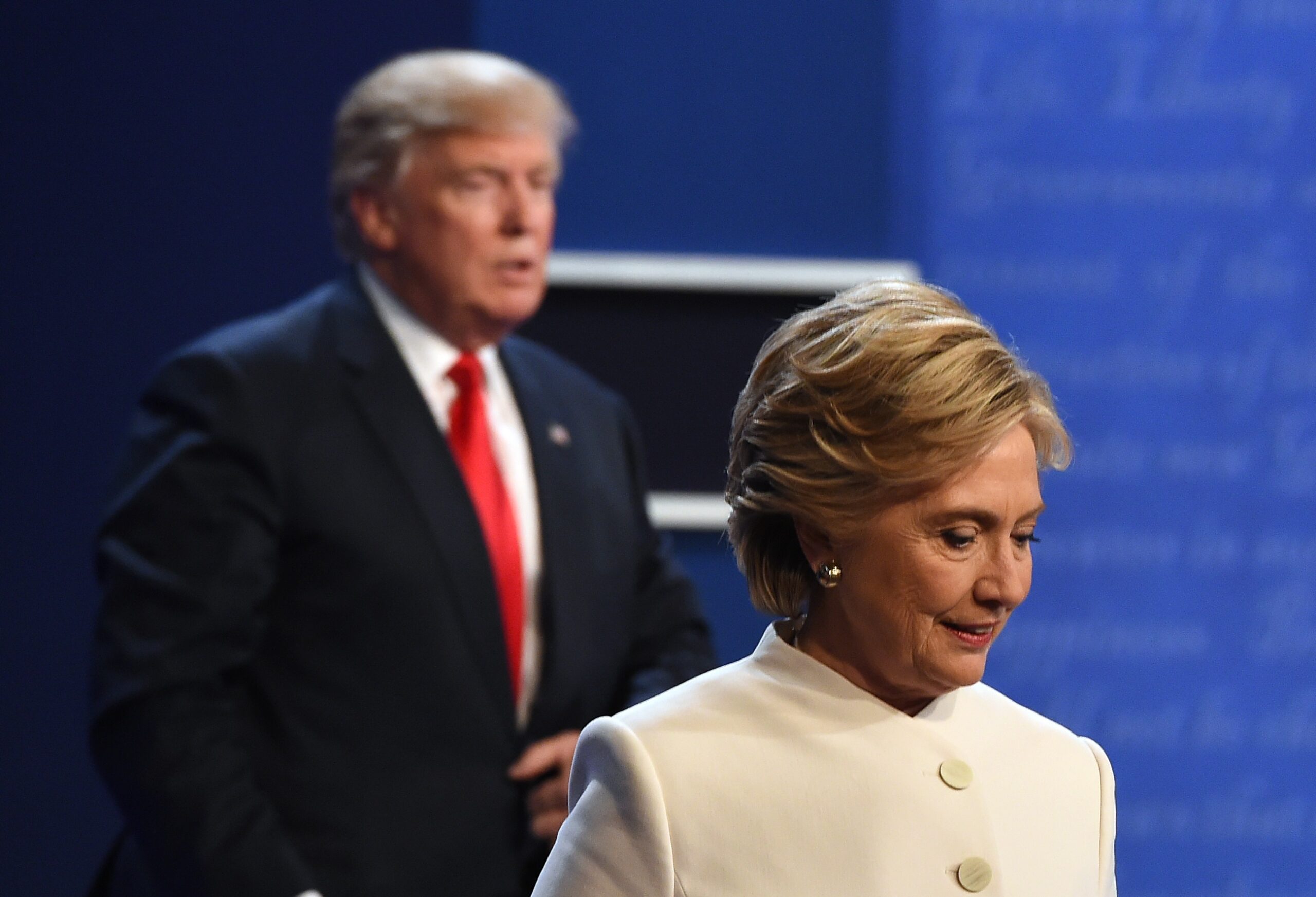
Of the three televised debates between Hillary Clinton and Donald Trump, the second, held on October 9, 2016, focused on US foreign policy issues, first and foremost Syria (that is, when the exchange between them wasn’t devoted to personal mudslinging). The argument between the two presidential candidates dramatically revealed the dilemmas the United States has faced since the last time US military force was deployed on a large scale and for an extended period of time, i.e., the wars in Afghanistan and Iraq. Since his first term in office, which began in 2009, President Obama has reversed the policy of his predecessor, George W. Bush, who increased involvement in Afghanistan and launched the US invasion into Iraq. Obama gradually reduced the US military presence in Afghanistan and Iraq, and since the start of the Arab Spring in late 2010, he has sent the world a very clear message: the United States seeks to avoid the use of large military forces – and certainly boots on the ground – for anything other than training and advisory missions. Under European pressure, US Air Force planes were used in the attacks on Libya. The mid, if not long term results were similar to those gained in Iraq after the 2003 invasion: the regimes and their leaders were eliminated, national armies were dismantled, nations splintered into independent state units, the Islamic State seized control in parts of both states, and the different factions, which had been held in check by the tyrannical chokeholds of the former dictators, were not capable of restoring central law, order, or sovereignty.
The reluctance of the United States to use massive military force, in part out of ideological reasons, have been felt by the new-old players in the Middle East. These players also understand the long term implications for their nations of various developments, such as the abandonment of President Mubarak because of his authoritarian conduct and the willingness to accept the Muslim Brotherhood in Egypt; President Obama’s promise of a red line on the use of nonconventional weapons in Syria, which turned pink with the acceptance of Russian mediation that led to an agreement on the dismantlement of Syria’s chemical arsenal rather than an implementation of the US military option; and the US reluctance to convey firmly and persuasively that the option to use force to eliminate Iran’s military nuclear program was still very much on the table. The Egyptian military seized control of the government from the Muslim Brotherhood, and while Iran was forced to agree to limits on its nuclear program, it remains capable of enriching uranium, and the restrictions will be forgotten with time. Meantime, Bashar Assad, whom the United States identified as the obstacle to a solution for Syria, retains his presidential seat thanks to political, economic, and military help from Iran and Russia, and continues to slaughter his own citizens by claiming to be fighting the Islamic State. This is the Middle East legacy President Obama bequeaths his successor.
In the debate, Clinton and Trump disagreed on the identity of the enemy, how to reach a resolution in Syria and Iraq, and the role the United States should play in resolving the refugee crisis triggered by the fighting in these states. While Clinton stressed the detrimental role that Russia plays in Syria and spoke about the need to apply pressure to return Moscow to a cooperative mode, Trump identified the Islamic State and radical Islam as the main problem. The difference between the two presidential candidates is deeply ideological and not merely tactical, and carries with it long term ramifications, assuming that the policies articulated by each candidate will be implemented once she or he enters the White House. Trump more than hinted that the total defeat of the Islamic State legitimates using Assad and Russia. Clinton stressed a key point: she is adamntly opposed to the use of US military force on the ground, and favors assistance to the locals and targeted killings, e.g., of Islamic State leader al-Baghdadi. Clinton’s proposal to arm the Kurds, for example, was criticized immediately by Turkey, and implementation of that proposal would inevitably lead to a crisis between the two nations, given a future Kurdish demand to be compensated in the form of recognition for Kurdish separatist wishes. It is already unclear if and how it is possible to end Turkey’s involvement in northern Syria, which is liable to harm the struggle against the Islamic State and the Assad regime. Clinton’s proposals are, in fact, a wholesale adoption of current US policies aimed at keeping boots off the ground, plus the willingness to take more operational steps against Assad and Russia’s involvement, implement a no-fly zone over Syria, and use special forces for short and quick operations. She has yet to explain what makes her believe that this approach will succeed in the future when it has failed in the past. Trump’s presentation of his position is simplistic, geared at easy access by the average voter, not unlike the line Reagan took in the 1980s, calling the USSR an “evil empire,” and that G. W. Bush picked up more than a decade later in labeling three “rogue” states the “axis of evil.” Trump has not explained, for example, the point of helping Assad fight the Islamic State or what will happen if Assad and Russia refuse to play the roles he intends to assign them. Trump has therefore failed to present a clear alternative to Clinton.
Trump’s depiction of the Islamic State as the epitome of villainy and the root of all the Middle East’s problems, and his equation of the organization with radical Islam, sharpens his difference with Clinton on the profound moral and ideological question of dealing with the mass slaughter in Syria and the millions of Syrian refugees and displaced people. Trump thus manages to incorporate into his position a sweeping opposition to acceptance of immigrants and refugees, especially from the Middle East, whom he suspects of representing a security risk. One of the only well-founded accusations Trump has made against Clinton is on this issue: she suggests increasing the number of refugees allowed into the United States to 65,000 (since the beginning of this year, 13,000 have already been let in). Even the change in the political balance of power in Congress in favor of the Democrats will not prevent friction between the parties, because Trump’s populist stance has fallen on receptive ears throughout the country.
The television debate did not raise the main question that underlies US misgivings on its Middle East policy and the resources the United States is willing to invest to attain goals and preserve interests. The lofty aspirations of G. W. Bush and Obama, aimed at solidifying a democratic civil society and developing a dialogue among cultures and religions, were shattered by the regional reality even before the Arab Spring. Therefore, Obama’s successor will probably make do with a list of goals that may include:
a. Preventing nuclear proliferation in and from the region
b. Preventing the export of radical Islamic terrorism from the region with the help of regional and other partners
c. Helping friendly regimes in the region, especially with the provision of financial aid, as well as military equipment and training designed to make them self-sufficient
d. Participating in attempts to shape and stabilize political structures in parts of the region currently in various stages of disintegration
e. Participating in the international effort to provide solutions to the refugee problem, especially by means of financial help to resettle them in their current locations and in nations willing to accept them.
This list of objectives matches the lines Clinton presented in the debates. In all likelihood, Trump will preach mainly about the United States role in the military effort to defeat the Islamic State. While Clinton tends to accept a limited military presence, including special forces, assistance, and training, Trump avoided making explicit reference to the issue, but it appears that he both prefers that others do the work and has few reservations about their methods. Regarding Iran, Clinton intends to leave the policy as is. Trump, on the other hand, is liable to be swept up in a proactive policy designed to allow him to revoke all or parts of the agreement.
The outline of Clinton’s approach seems to encompass the ideas she has suggested repeatedly in the latter part of the Obama era, the main goal being to halt further regional erosion. In part, this means stopping the disintegration of other state entities, ending more success on the ground by Islamic terrorist groups, and gradually reducing existing terrorist outfits until their territorial stronghold are eliminated. All of this is to be achieved while observing the major principle: not putting US fighting forces on the ground, transitioning to operations that require only a short term presence, and using aircraft. Trump’s guideline could be called “Fortress America” and would be implemented in tandem with toughening US policy on those trying to immigrate to the United States and agreeing to take in only a very limited number of Middle East refugees as part of an international refugee program. The implementation of this policy does not require an essential change in US resources allocated to run the nation, which will make it easier for the next administration to face other budgetary pressures.
The Middle East policy of the next US president will almost certainly weaken the defense of the region’s nations because the United States will no longer need to protect Middle East energy sources. In the televised debate, Clinton noted US energy independence. So, despite the dependence of US allies – Japan and Europe – on energy in Russia and the Middle East, they cannot rely on an automatic US commitment to protect their current sources of energy.
Attempts to compare this policy, if and when implemented, to past times, such as the period between the two World Wars, are flawed, in part because of the difficulty in comparing between eras that differ so vastly in terms of their defensive and offensive technological-military capabilities. It is hard to ignore the impact of powerful, one-time factors, such as the attack on Pearl Harbor or 9/11, on radical changes in US public opinion and hence also in policy.
Any strategy that the United States chooses will be heavily affected by cooperation with states and state-like entities in the Middle East, though at times this principle will force Washington to choose between interests and values. In Turkey, the US ally in NATO and the Middle East, the government is intensifying the oppression of the opposition, and the US is attributing similar behavior to the Egyptian regime. The disagreement between the US administration and the Israeli government on the way to resolve the Israeli-Palestinian conflict has hampered both states’ ability to cooperate on regional matters. The next administration will have to face these confines and constraints and will find it necessary to prioritize the issues on which to focus.