


Publications
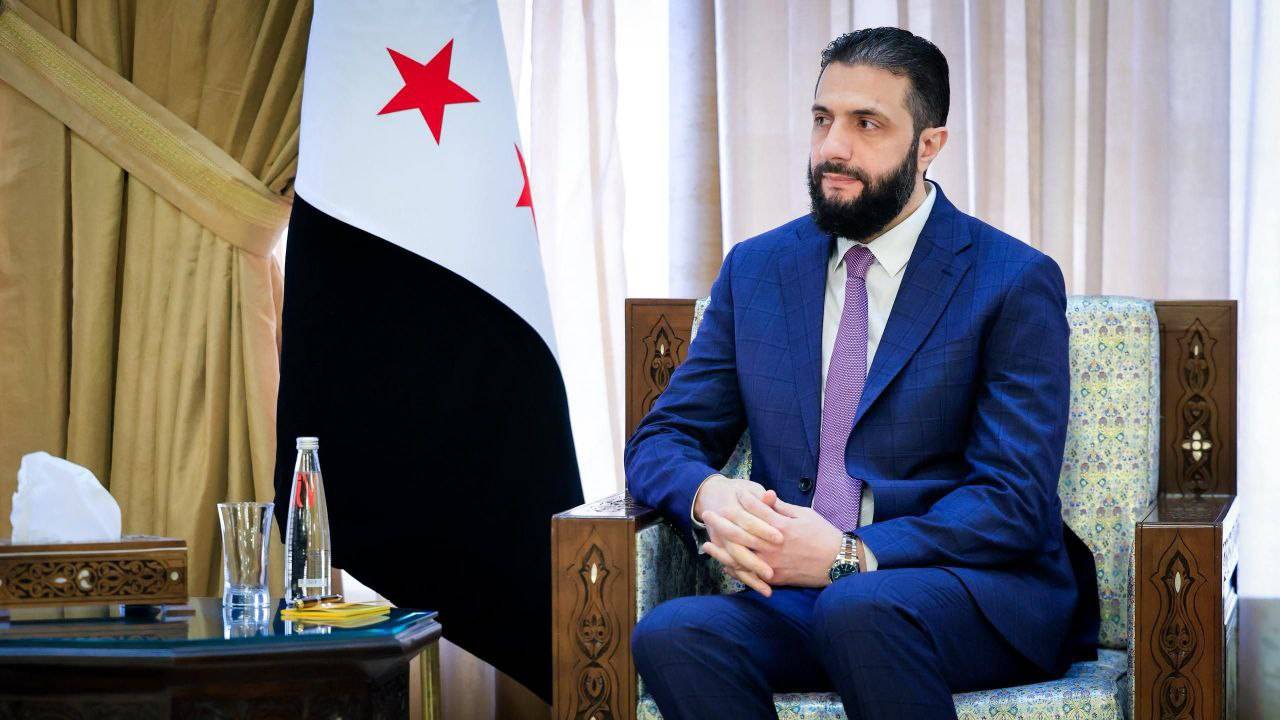
How does Syria look one year after the fall of Bashar al-Assad’s regime—both domestically and internationally—and what are the recommendations for Israel?
INSS Insight No. 2070, December 14, 2025
On December 8, the anniversary of the fall of the Assad regime and the rise of the transitional government led by President Ahmed al-Sharaa was commemorated. Despite his jihadi past, al-Sharaa seeks to present himself as a national, pragmatic, and statesmanlike leader. Thus far, the transitional government has advanced stabilization measures and rapid political procedures, including the establishment of a technocratic government and a temporary parliament, as well as an attempt to rebuild the Syrian army. While al-Sharaa has achieved notable successes in restoring Syria’s foreign relations and has gained international recognition, including US backing, domestically he faces numerous challenges from sectarian tensions and calls for separatism, the continued presence of extremist and jihadi groups that oppose his path, to a severe economic crisis. Alongside the many open questions regarding Syria’s character and future, this article identifies emerging trends from the perspective of the new regime’s first year. From the Israeli viewpoint, it is preferable for Israel to move toward an American-backed security arrangement that includes clear monitoring mechanisms and guarantees. This stands in contrast to continuing the current policy, which heightens hostility and increases the potential for friction between Israel and Syria.
The Domestic Arena—Between Stabilization Efforts and the Potential for Collapse
Ahmed al-Sharaa—also known as Abu Mohammad al-Joulani—the former leader of the jihadi movement Jabhat al-Nusra, remains a controversial figure. The prevailing perception in Israel, although it has moderated in recent months, is that al-Sharaa is a “jihadist in a suit” and that the pragmatic image he projects to the world is a façade. In contrast, the dominant view among most regional states and the international community, led by the United States, is that the steps he has taken thus far reflect an authentic effort to stabilize Syria and govern it in a moderate, national, and statesmanlike fashion. In conversations that the authors of this article held over the past year with researchers and experts who have followed al-Sharaa for years, they repeatedly heard the claim that he is a pragmatist, a populist, and a realist—more so than a zealous ideologue. According to them, compared to classical jihadi Islamists, since 2017 al-Sharaa and his organization Hayat Tahrir al-Sham (HTS) have undergone a gradual process of deradicalization and adaptation to the unique circumstances that emerged in Idlib in order to survive and consolidate control.
As for the nature of the current regime and the direction in which it is steering Syria, no clear trend of institutional Islamization has been observed so far. The regime does allow religious conservatism, and it is indeed more prevalent in today’s Syria (religious events, Qur’an-memorization competitions, public prayers, encouragement of traditional dress), but at this stage, it is without coercion. Expressions of religiosity come “from below,” from segments of the conservative Sunni public and not necessarily from a top-down directive of the regime. When officials have attempted to promote Islamic norms, they have often encountered public opposition that ultimately forced them to retract. This occurred, for example, when an attempt was made to impose modest swimwear on public beaches, or to insert more religious content into textbooks (under the previous Minister of Education).
Since coming to power, the transitional government has implemented a series of stabilization measures intended to enable proper governance after a decade of violence and war: establishing a technocratic government, drafting a temporary constitutional declaration , initiating a national dialogue for reconciliation, and launching a gradual process of transitional justice aimed at regulating the status of civil servants and military personnel from the Assad era. The government has worked to rehabilitate institutions and has managed to slightly improve the pace and quality of basic service delivery, including electricity, water, health, and education. In several regions, pilot programs for regional councils have been introduced, although these currently function only partially and informally.
In October, the regime held indirect elections for parliament (the People’s Council). Of the 210 parliamentary seats, roughly two-thirds were chosen by provincial electoral colleges, while the remaining one-third (70 seats) are to be appointed directly by the interim president. General elections, however, are slated to take place in four to five years, on the grounds that more time is needed to stabilize governing mechanisms and produce a reliable population sample.
It appears that Syria is not moving toward democracy, and clear patterns of highly centralized rule are already evident: reliance on loyalists, a lack of pluralism, as well as rapid political procedures that do not reflect inclusion or representation and seem largely symbolic. In particular, mostly minority communities have voiced criticism regarding a lack of transparency, the appointment of associates, and inadequate representation—for example, concerning the manner in which the president was selected, the nature of the “National Reconciliation Committee,” the composition of the government, and the elections for the People’s Council. As a result, domestic mistrust remains deep, especially given the violence perpetrated against minorities in the country, including by forces loyal to al-Sharaa.
Building the New Syrian Army
The new regime has begun a process of integrating armed groups and militias into security and military structures. Nevertheless, the “new Syrian army” appears to function more as a confederation of semi-institutionalized militias under a state umbrella than as a unified national army with a clear monopoly on the use of force. Although the regime has incorporated most rebel factions under the umbrella of the Ministry of Defense, it has left each group with its own internal chain of command, without systematic officer rotation or the cultivation of a shared national-organizational identity. This approach prevents clashes between factions, but it also preserves each group’s inherent capacity to operate independently in the event of a political or security crisis.
At the same time, the institutional exclusion of officers and soldiers who had served in the former Syrian army—most of whom are Alawites—from the new security structures creates the potential for the emergence of local rebel bodies. Against this backdrop, ethnic minorities—Kurds, Druze, and Alawites—continue to view the regime, which is perceived as Sunni-Islamist, as a potential threat. The violent clashes against minorities have further weakened the legitimacy of the security institutions and have made the integration of Kurdish forces into a state military framework particularly difficult.
As for military capabilities, the Syrian army relies primarily on light infantry, since most of its heavy weapons and its air and naval infrastructure were destroyed in Israeli strikes. It depends on the supply of weapons, training, and fighters’ salaries, funded partly by external actors—primarily Turkey—and operates without transparency nor effective civilian oversight, and under the dominance of HTS personnel in key positions.
Thus, the transitional government’s actual ability to establish full control and governance remains limited. The regime directly controls roughly 50% to 60% of the country—primarily the urban corridor of Damascus–Homs–Hama–Aleppo and most major cities—where state institutions, security mechanisms, tax collection, education systems, and medical services function relatively extensively. In contrast, in the periphery (the desert region in the east, northeast, and southern Syria), the government control is minimal, with local militias, tribes, Kurds, Turkish proxy factions, and Druze communities holding most of the power.
ISIS and Additional Spoilers
ISIS operates through terrorist and guerrilla methods, using small cells and compact squads. The organization’s activity is concentrated primarily in the Syrian desert, around Raqqa and Deir ez-Zor, and recently it has expanded its operations to Damascus and Idlib. At present, the organization does not control territory and is not waging a broad campaign, yet “ungoverned spaces” with weak governance, the proliferation of militias, and a law-enforcement system that lacks sufficient professionalism all preserve the potential for ISIS to renew its strength in the future. Against this backdrop, the announcement of Syria’s official accession to the international coalition against ISIS enables al-Sharaa to portray himself as a legitimate partner in the global campaign against extremist Islamic terrorism, and not merely as the former leader of a jihadi faction. From Damascus’s perspective, the ability to contain ISIS is a central condition for strengthening the new regime’s domestic legitimacy and thus its survival. Meanwhile, recent data indicate a rise in ISIS activity in areas under government control in Hama, Homs, Aleppo, and Idlib. Although the level of activity remains low relative to the past, it reflects the organization’s continued capacity to disrupt stability and undermine the new regime’s legitimacy.
Iran and Hezbollah—both of which suffered substantial strategic losses in the June 2025 confrontation with Israel and lost the infrastructure they had built in Syria during the Assad era—have not abandoned their desire for influence. They are seeking to re-establish a foothold by supporting ethnic minorities and local armed cells, maintaining smuggling routes to Lebanon, exploiting poorly governed areas, and leading an information campaign portraying the new regime as “a tool of the West.” In addition, recently published research indicates that individuals close to Assad are transferring funds through Lebanon and the United Arab Emirates to finance militias in the Alawite coastal region with the objective of sparking uprisings against the new government.
At the same time, al-Sharaa himself must contend with growing criticism from individuals and organizations with extremist worldviews who reject the moderate and pragmatic image he seeks to project, and who oppose steps such as regulating the status of the Alawites, promoting moderate fatwas encouraging religious tolerance, conducting dialogue with Israel and exercising restraint toward it, and calling for the dissolution of the Muslim Brotherhood movement in Syria. Taken together, these controversial measures may pose a threat to his survival.
The Minority Challenge
The waves of violent clashes against Alawites along the coastal region, which resulted in the deaths of more than a thousand civilians, and the subsequent violent events in Suwayda and the attacks on Druze communities have again exposed Syria’s sectarian volatility. They have also raised the question of whether these actions reflect a deliberate regime policy of vengeance and “settling accounts” with minorities, or whether they are a by-product of the civil war and the new security order, in which multiple militias operate with only very limited control by al-Sharaa—including those acting in his name.
A dangerous escalatory dynamic has emerged vis-à-vis the Druze community from incidents in Jaramana and Sahnaya in March–April, to the bloody clashes and massacre in Suwayda in July. The events in Suwayda marked a low point in the new regime’s relations with the Druze community and led to a siege and severe humanitarian crisis in the province. The crisis also deepened internal divisions within the local Druze leadership and ignited violent confrontations between armed factions. Some senior Druze figures, led by Sheikh Hikmat al-Hijri, have openly called for Druze autonomy under Israel’s protection—a perception that sharpens the gap between the ambition of the Damascus regime to centralize authority and the growing tendency among minorities to seek external security guarantees. In light of al-Sharaa’s declared policy of unifying Syria, it is reasonable to assess that he will show little willingness in the long term to accept decentralized models of local governance—whether in the Druze south or the Kurdish northeast.
A similar pattern of deadlock, lack of agreement, and sporadic violence characterizes the regime’s relations with the Kurdish minority. Although initial understandings were reached in March between the leadership of the Syrian Democratic Forces (SDF) and Damascus regarding integrating Kurdish units into the new Syrian army and transferring some civilian administrative authority to the central government, tensions have persisted and recently erupted into renewed rounds of fighting. The Kurds seek to preserve autonomous institutions, local security mechanisms, and protected minority rights, while the regime aims to centralize security and administrative powers. In the eyes of minorities, the violent incidents have eroded trust in the regime as a state authority capable of ensuring security for all sectors of society. Moreover, even if this is not a top-down directive, Syria is witnessing the emergence of a grassroots phenomenon in which individual Sunni extremists, driven by vengeance and a perception of “Sunni supremacy,” are escalating violence and extremism against minorities. Such actors have come from across Syria into the conflict zones to fight minorities during the confrontations with the Alawites and Druze.
Lifting Sanctions and the Beginning of Economic Reconstruction
At first glance, Syria under al-Sharaa appears to be embarking on a cautious trajectory of economic recovery. American support for al-Sharaa has translated, among other things, into a full repeal of US sanctions imposed under the Caesar Act. In the UN Security Council, discussions are underway regarding the easing of asset freezes and modifying arms restrictions, while global companies, banks, and digital-payment platforms are gradually returning to the Syrian market. In parallel, and with the assistance of Qatar and Turkey, the Syrian regime is advancing the rehabilitation and diversification of energy infrastructure, opening routes for the import of gas and oil, and restarting local production—all with the aim of converting the regulatory relief into tangible economic growth: more hours of electricity, improved manufacturing conditions, the creation of new jobs, and some relief from the cost of living.
However, beneath this surface lies an economy still heavily dependent on external capital, fuel imports, essential inputs, and an agricultural sector severely damaged by drought. Policymakers in Damascus must navigate rising demand pressures, including calls for wage increases, refugee repatriation, and subsidy reductions—without losing control of inflation. Compounding this fragile foundation is a mapping of memoranda of understanding for declared investments worth roughly $25 billion, revealing a core group of relatively reliable investors alongside a much larger cluster of opaque companies that lack transparency and have not demonstrated any financial or professional capacity. The infrastructure market is characterized by the awarding of massive projects to inexperienced entities, without open tenders or meaningful due diligence—a direct continuation of the “crony economy” model, albeit wrapped in a new rhetoric of reform and reconstruction. Therefore, the essential question is not only whether sanctions will be permanently lifted to allow Syria’s economic recovery, but whether Damascus can use the current window of opportunity to establish new rules of the game: increased transparency, effective oversight mechanisms, and binding standards for foreign investment and infrastructure tenders that would provide a stable basis for growth.
Syria’s Foreign-Policy Renaissance
While the regime struggles to stabilize the domestic arena, it is experiencing a renewed upswing in its foreign relations. The most dramatic shift comes from the United States. Within roughly a year, al-Sharaa transformed from the leader of a jihadi movement into a legitimate partner at the White House. The Trump–al-Sharaa meeting in Riyadh in May, his speech to the UN General Assembly, and his historic visit to Washington in November all symbolized the thaw in relations, Syria’s gradual return to the international community, and Washington’s full support for the transitional government.
From the outset, the Syrian government devoted considerable effort to renewing foreign relations and establishing diplomatic ties with regional and international actors. With the exception of Egypt and Iraq—which remain skeptical of the regime and its trajectory—most states recognize it as a legitimate actor and are deepening cooperation with Syria. Since the rise of the new regime, more than 80 diplomatic delegations have visited the country.
Turkey, which supported HTS for years, has become a key player in shaping the Syrian arena. Since Assad’s fall, Ankara has worked to broaden its influence and entrench its position. The new regime in Damascus, which previously benefited from Turkish military, economic, and logistical assistance, now seeks to balance its reliance on Turkey—in force-building, equipment supply, infrastructure investments, and the entry of Turkish companies into reconstruction projects—with efforts to avoid total dependency by cultivating ties with additional actors. The Gulf states—especially Saudi Arabia, Qatar, and the United Arab Emirates—are deepening their engagement with al-Sharaa’s regime through economic support, investments, and infrastructure rehabilitation. Saudi Arabia and Qatar are also promoting cooperation agreements in investment and energy and supporting the public sector through salary assistance and expansion of electricity services.
Al-Sharaa’s pragmatic approach is also reflected in his attitude toward Russia, which until recently had been Assad’s closest ally (and the provider of political sanctuary to him and senior regime officials) and a bitter enemy of HTS. Al-Sharaa now views Russia as a legitimate actor and even a potential partner in stabilizing Syria. Russia seeks to preserve at least part of its investment in the country and maintain a presence—even if limited—at its bases in Khmeimim and Tartus, as well as limited levers of influence in the energy and diplomatic spheres. In parallel, the possibility is being examined of deploying Russian policing forces in southern Syria, similar to past arrangements, to help enforce order and reduce potential friction with Israel.
Israeli Policy in Syria and the Path to an Agreement
After a year in which Israel adopted a forceful military approach—including seizing the buffer zone and Mount Hermon and conducting an intensive campaign of strikes—direct talks began in April between Israel and Syria regarding a possible security agreement. The main elements of the agreement include an Israeli withdrawal to the 1974 disengagement lines and a requirement to demilitarize southern Syria, in exchange for a Syrian commitment to maintain quiet along the border, counter attempts by the Iranian-led “Axis of Resistance” to re-establish themselves, and ensure the security of the Druze. Recently, however, reports indicate that the negotiations have reached an impasse due to deep gaps between the parties—especially over the scope of the IDF’s withdrawal and Israel’s demand to establish a demilitarized zone in southern Syria and allow a humanitarian corridor for the Druze in Suwayda.
Following al-Sharaa’s visit to Washington, concerns have grown in Israel that Trump may exert pressure and compel concessions regarding Israel’s military presence in Syria in order to advance the agreement. Israeli security officials, for their part, continue to emphasize the strategic importance of that presence—particularly control over Mount Hermon—for early warning capabilities and for preventing weapons smuggling to Hezbollah.
For Damascus, reaching an agreement is of great importance, as it is expected to stabilize and consolidate its sovereignty and legitimacy by ending Israeli military activity. Regarding the possibility of expanding the relationship into full normalization, al-Sharaa has stressed that this is irrelevant at this stage: “Syria’s situation is different from that of other countries that joined the Abraham Accords, because it shares a border with Israel, which occupies the Syrian Golan.”
Despite the negotiations, Israel remains cautious and distrustful—both regarding al-Sharaa’s intentions and his ability to restrain hostile actors within Syria. Consequently, at this stage, Israel prefers to maintain freedom of action and thwart security threats on its own. Thus, an Israeli raid on November 28 in Beit Jinn aimed to arrest operatives from the al-Jama‘a al-Islamiyya organization who were planning an attack against Israel. The operation became complicated after gunfire was directed at IDF forces, who returned fire, resulting in Syrian casualties and injuries to six IDF soldiers. The event—which occurred on the day commemorating the first anniversary of Assad’s fall and drew hundreds of thousands of Syrians into demonstrations of national unity—shifted public attention toward anti-Israeli sentiment. In the eyes of the Syrian public, the strike was perceived as part of a “continuous policy of aggression” by Israel, which they believe seeks to expand its borders, destabilize the regime, foment chaos, and delay the agreement. This event, along with the growing anti-Israeli sentiment in Syria, highlights the risk of increased friction with Israel. At the same time, regional and international criticism of Israel’s continued military presence in Syria is intensifying.
The United States views an agreement between Israel and Syria as a central component in shaping a broader regional order—one that includes containing Iran, stabilizing Jordan’s and Lebanon’s borders, and advancing a political process that would yield a significant strategic achievement for Washington. Indeed, the rising tensions between the sides have led Trump, in recent weeks, to repeatedly voice support for Syria’s stabilization efforts and to call on Israel to return to negotiations and avoid jeopardizing the process. Similar to the American approach in the Gaza war—in which Washington effectively dictated the endgame and set a binding framework for the pace and direction of events—it is possible that a similar pattern will emerge in the Syrian arena. Therefore, it is important for Israel to advance an agreement under conditions favorable to it before external pressure increases and dictates compromises.
Recommendations
Among the alternatives currently before Israel, it would be prudent to give a security arrangement with Syria a genuine opportunity. Continued military presence and unilateral Israeli policy toward Syria do not align with the position of the international community, especially the United States, regarding al-Sharaa; instead, they increase hostility toward Israel and calls to confront it, thereby risking frequent military clashes, eroding the new regime’s domestic legitimacy (despite its current restrained approach), and strengthening extremist groups espousing resistance against Israel—including Iran and its proxies.
These considerations, alongside American determination and increasing pressure from Washington to move toward an agreement, require Israel to modify its policy and leverage current conditions to preserve its security interests. Accordingly, Israel should set a clear framework for its withdrawal from the buffer zone and Mount Hermon—both in terms of deployment and timelines—subject to Syrian commitments and backed by American guarantees. In this model, Israel can rely on multiple intelligence capabilities, including advanced technologies, to provide early warning without requiring a physical presence on foreign soil—which, in any case, increases the burden on regular and reserve IDF soldiers—and thereby enable Israel to focus on more volatile arenas, namely Iran and the Gaza Strip.
A security arrangement under American auspices may ensure a quiet and stable border without relying on an ongoing military presence in the area, improve efforts to counter the Iranian axis through cooperation with the new regime, guarantee protection for the Druze, and strengthen Israel’s regional and international standing as a constructive actor. At the same time, Israel must recognize that Syria remains unstable, that the Syrian regime does not control the entirety of the state, and that its legitimacy is not absolute. Thus, Israel must prepare strategically and operationally for a scenario in which the agreement collapses—whether due to instability in Syria or deliberate policy by the new regime. In such a case, Israel would have greater legitimacy and freedom of action to respond. Conversely, if trust develops between the parties, Israel could use the momentum to promote a gradual normalization process with Syria—an approach that would underscore Israel’s strategic value in the region, weaken extremist actors in Syria and the broader Middle East, and promote long-term regional stability.