


Publications
What challenges and concerns have arisen—both in Jerusalem and in Ramallah—following the announcement of the transition to the second phase of the Trump plan for stabilizing the Gaza Strip, and how should Israel act?
INSS Insight No. 2090, January 27, 2026
The US administration has declared the transition to Phase II of the Trump plan for stabilizing the Gaza Strip, presenting both the international “Board of Peace” (BoP), which is meant to support the management and reconstruction of the Strip, and the Palestinian technocratic committee that will administer Gaza’s affairs. The general who will head the International Stabilization Force (ISF) was also announced. Israeli and Palestinian reactions reveal a gap in expectations and concerns: Israel seeks to slow the pace of progress, as the body of the last deceased hostage has not yet been returned; security stability in Gaza has not yet been achieved; and it is concerned about the inclusion of Turkey and Qatar in the BoP. The Palestinians, for their part, are eager for the start of Phase II, given the severity of the situation in the Strip, but fear that the BoP will effectively constitute a new foreign mandate that will prevent the realization of establishing a Palestinian state, as mentioned at the end of the Trump plan. Israel should present its reservations to the administration and request responses before the implementation process begins while maintaining coordination with pragmatic Arab states through which some of these concerns can be mitigated.
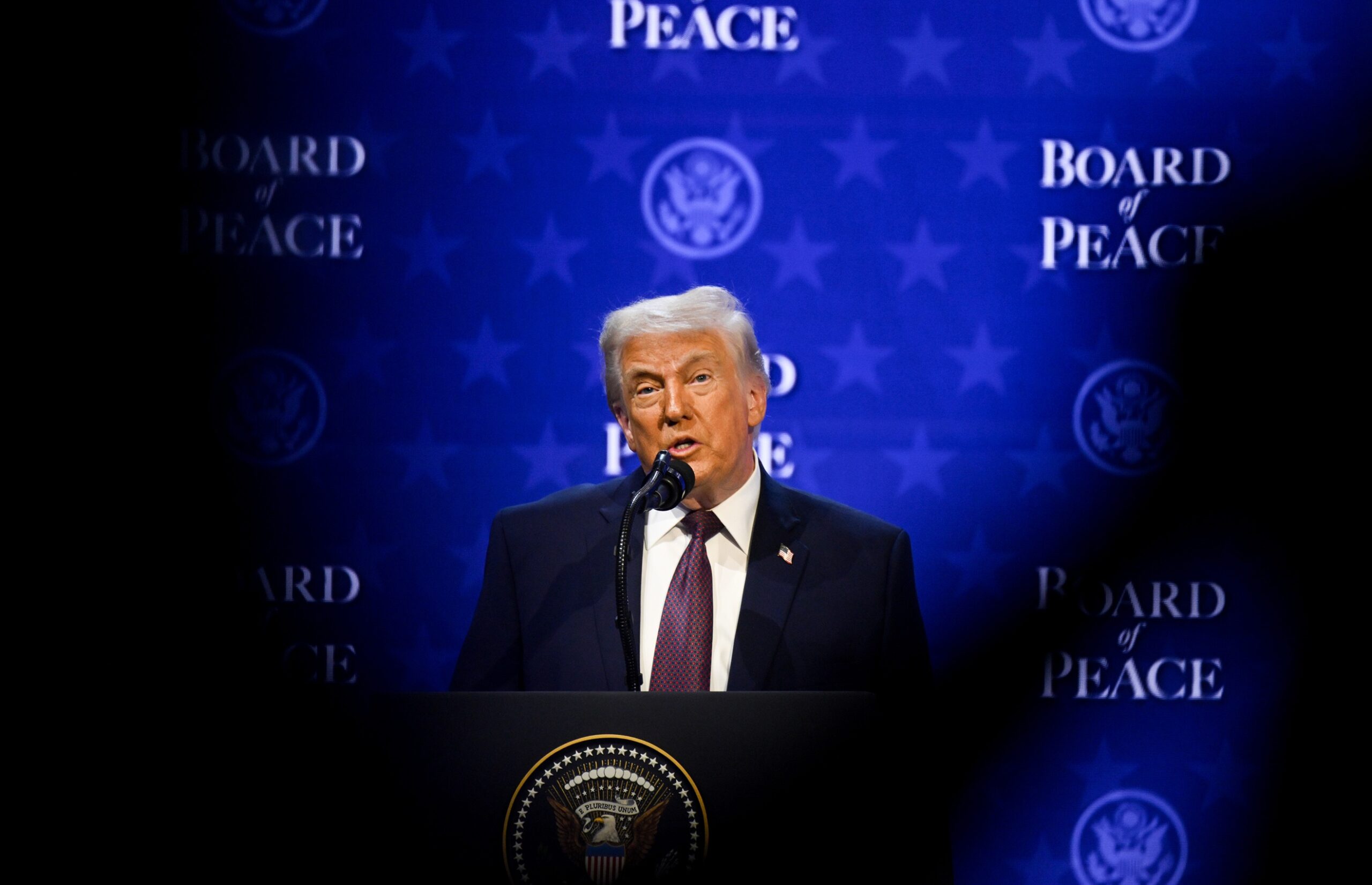
President Trump and his envoy Steve Witkoff announced on January 14 and 15 the start of Phase II of the 20-point plan for stabilizing and rehabilitating the Gaza Strip, initiated by the president in October 2025 and approved as UN Security Council Resolution 2803 in November. They also declared the establishment of the international “Board of Peace” (BoP), the appointment of the general who will head the ISF—the force responsible for security stability in the Strip—and released the names of the board’s members. The BoP, which is an international body with broad responsibility, apparently beyond the Gaza Strip alone, is composed of two bodies: (1) a general executive board chaired by Trump himself, with seven members, most of them Americans close to the president, with the exception of Britain’s Tony Blair, or senior officials in the administration; and (2) under it, an executive board for the Gaza Strip with 11 members, including representatives from Egypt, Qatar, Turkey, and the UAE and an Israeli businessman. Some members serve on both boards. In addition, Nickolay Mladenov, a former UN envoy to the peace process, was appointed commissioner of the board for the Gaza Strip.
In the announcement marking the formal start of Phase II, Witkoff said that a transition would begin from a ceasefire to the demilitarization of the Strip, technocratic governance, and reconstruction. He stated that the technocratic committee would be responsible for Gaza’s demilitarization, its rehabilitation, and confiscation of weapons from anyone not authorized to carry them. According to Witkoff and President Trump, the United States expects Hamas to fulfill all its commitments, including the immediate return of the body of the last hostage, Ron Gvili, and warned that failure to do so could have serious consequences. This is the time, Trump added, to end the suffering of Gaza’s residents.
Witkoff’s announcement was preceded by the publication in Cairo of the list of members of the Palestinian technocratic committee tasked with managing day-to-day life in the Strip. The composition of the committee was apparently agreed upon by all relevant actors, including Israel, the United States, the mediating states—Qatar, Egypt, and Turkey—as well as the Palestinian Authority (PA) and Hamas. This agreement made it possible to announce the start of the second phase of the Trump plan. The mediating states, the PA, and Hamas welcomed the announcement, with Hamas even stating that it would do everything possible to ensure the success of this phase.
The technocratic committee, which is to operate during a two-year transitional period, is composed of 15 members with no political background. All are connected in one way or another to the PA, having held senior positions in one of its institutions—including the security services—or having worked closely with it through civil society bodies and organizations. All were born in the Gaza Strip, grew up there, and lived there for many years. The committee’s chair, Dr. Ali Shaath, is from Khan Younis and has lived for years in Ramallah. He has held several senior positions in PA institutions, including director-general of the Ministry of Planning and International Cooperation and director-general of the PA’s Ministry of Transport. He also headed the committee tasked with establishing a port in Gaza; was responsible for establishing the Jericho industrial zone; planned additional industrial zones in the West Bank and the Gaza Strip; and participated as a professional expert in rounds of negotiations with Israel. A statement issued by the technocratic committee following its inaugural meeting on January 17 emphasized that its goals are to assume civilian responsibility and internal security responsibility in the Gaza Strip, and that it was established by Palestinians with the blessing of the PLO, the PA, and the Palestinian factions.
However, despite the ostensibly festive atmosphere surrounding the announcement of the transition to Phase II and the establishment of the various bodies that will lead the process, a significant gap is evident between the Israeli and Palestinian approaches to this move.
Israel seeks to slow the pace of the transition to this phase. It insists on the return of the body of the last hostage, Ron Gvili, and on the establishment of a mechanism that will allow it to monitor the dismantling and collection of weapons from Hamas and the other factions. Israel argues that the security reality in Gaza does not yet permit a transition to the second phase. It wishes to continue holding the “green area” and the “yellow line,” where IDF forces were positioned when the ceasefire entered into force, until Hamas is disarmed. In addition, Israel believes that opening the Rafah crossing in both directions, as required at the outset of this phase, is premature. Generally, it fears a loss of control over developments in the Gaza Strip following the transfer of management and control to the Board of Peace and its subordinate bodies, in which Israel has no formal representation.
The Palestinian side, while indeed concerned about President Trump’s long-term intentions, nonetheless views the transition to Phase II of the plan as an opportunity that should be embraced. In its perspective, the transition symbolizes the end of the war, promises reconstruction and rehabilitation of the Gaza Strip on both sides of the yellow line, and is also seen as an opportunity for intra-Palestinian reconciliation, the reconnection of the Strip with the West Bank, and the return of the PA to Gaza. Palestinians believe that weapon collection will only be possible after control of the Strip is transferred to a Palestinian entity, as Hamas has previously stated, and the technocratic committee meets this definition. Palestinian expectations thus reflect a drive toward the final stage of the plan, which, in their understanding, is the establishment of an independent Palestinian state in the territories of the Gaza Strip and the West Bank.
However, both Israel and the Palestinians are troubled by the internationalization of the conflict inherent in the American move. The establishment of a supreme international BoP, with an executive board operating in the Gaza Strip and run by foreign figures—indeed with the BoP itself lacking Arab representation—appears to Israel as a step that strips it of the ability to implement measures intended to serve its security needs, or at the very least obliges it to take into account the positions of bodies that have never been its partners in such processes. Moreover, the inclusion of Qatar and Turkey in the executive board for the Gaza Strip is perceived in Israel as a dangerous move that serves Hamas and is expected to hinder the dismantling and collection of weapons, while perpetuating the organization’s presence and continued re-entrenchment in the Strip. Against this backdrop, tension has already emerged in relations between Israel and the Trump administration.
In practice, the establishment of the BoP serves the Trump administration’s aspiration to reorganize the international system in a way that reflects Washington’s self-perception as entitled to dictate the conduct of the international arena. This approach is in contrast to the way the UN currently operates, which the administration views as exploiting American contributions while advancing the interests of other international actors. In the Gaza context, the administration continues to promote a policy based on regional actors with which it has strong ties, foremost among them Qatar and Turkey—contrary to Israeli interests.
From the Palestinian side, alongside satisfaction with the end of the war, the declared launch of the Strip’s rehabilitation, and its warm welcome of Phase II by the Arab states, the announcement of Phase II is also perceived as a kind of renewed foreign mandate over the Gaza Strip (and the Palestinian people), whose objectives are not entirely clear. Palestinian columnists ask: Will the technocratic committee have its own authority, or is it nothing more than an implementing contractor for the Board of Peace? Are Palestinian interests truly guiding the administration—humanitarian considerations, the removal of threats of expulsion and displacement of Palestinians from their homes? Or are the same motives that led the United States to take over Venezuela also driving it in the Gaza Strip—namely building a Riviera, tourism sites, exploiting the gas field off Gaza’s coast, and promoting projects that will yield substantial profits for American and other companies? In other words, there is reason to doubt the feasibility of realizing the final goal mentioned in the 20-point plan—“the conditions may finally be in place for a credible pathway to Palestinian self-determination and statehood…”—alongside the advancement of development and rehabilitation of the Gaza Strip and the implementation of reforms in the Palestinian Authority.
In addition, Palestinians fear that the Trump administration may turn its attention to other places and conflicts around the globe—as it has recently signaled in various forums and in documents published by the White House. If this happens, tensions will arise between the Trump administration and the Arab states involved in the process, with negative implications for their relations with Israel.
Israel, for its part, will not be able to set aside its many reservations regarding the transition to this phase. It is still unclear how control will be transferred to the technocratic committee, whether it will operate on both sides of the yellow line, as its chair has declared, or only on the green side; how Hamas’s weapons will be dismantled, what oversight there will be over the process, and whether Palestinian optimism in this regard is justified; and whether alternatives have been prepared in the event of failure in implementing this phase.
Therefore, Israel would be well advised to engage in dialogue with these states regarding the implementation of the plan, rather than confining itself to efforts to reach understandings solely with the US administration on its security interests in the Gaza Strip. Specifically, Israel should clarify with the Trump administration how it intends to ensure Israel’s security in light of the risks inherent in including Turkey and Qatar in the Gaza Board of Peace, and given the apparent absence of a gradual component in the BoP’s implementation of the phase. In this context, Israel should ask if it is expected to relinquish its operational freedom even in territory still under Hamas’s control and to withdraw from the yellow line where the IDF is currently deployed—even in the absence of progress or oversight over the process of disarming Hamas.