


Publications
How should Israel address the threat from the Houthis in Yemen?
INSS Insight No. 1781, November 8, 2023
The Swords of Iron war between Israel and Hamas has assumed a new regional nature, with attacks by Iranian proxies, including the Houthis in Yemen. While Yemen is a secondary combat zone, the potential damage it could cause to Israel and the Gulf states, which have been accused by the Houthis of collaborating with Israel, could increase. If the Houthis continue to be involved in the fighting, Israel will be forced to find ways to deter them and respond to their aggression, which will make it hard for the Gulf states to maintain proper relations with Iran while trying to integrate into the United States’ regional efforts. For now, Israel should keep the Houthi aggression in proportion and contain it, while focusing on the principal military front in the Gaza Strip.
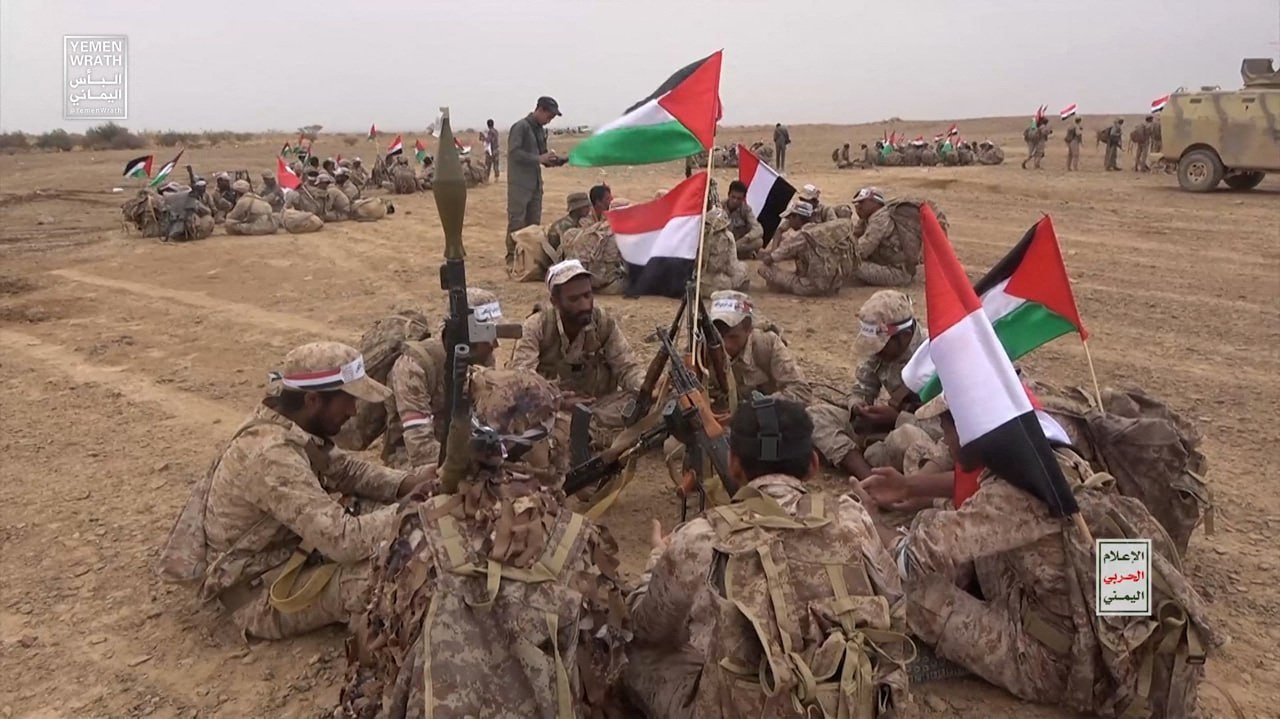
The IDF’s ongoing ground operation in the Gaza Strip has heightened the motivation of Iranian proxies in the region to acquiesce to Tehran’s pressure by intensifying their acts of aggression against Israel, and thereby present a “united front” and show solidarity with the Palestinians. For this reason, the Houthi militia, which controls large parts of Yemen and has been supported by Iran and Hezbollah, joined the fighting against Israel and launched missiles, cruise missiles, and drones at Israel on several occasions. All were intercepted.
The Houthis became part of the Hamas campaign against Israel when it began threatening Israel on the second day of the way, when it declared that it was planning to join the combat and attack Israel. Abdel-Aziz bin Habtour, head of the Houthi government, said that “Hamas is an integral part of the Palestinian people and it is impossible to disconnect them from the resistance. We are part of the axis of resistance and nothing will stop the resistance in Yemen, notwithstanding the geographical distance.” He added that the Houthis would continue to fire at Israel if Israel’s “crime” against the Palestinian people continues. The most significant attack was on October 18 and included the launch of cruise missiles and drones, which were intercepted by US forces in the Red Sea and by aerial defense systems in Saudi Arabia when two of the missiles entered Saudi airspace.
Seeking to portray the conflict as a broad Muslim struggle, Iran hopes to expand the spectrum of participants in the struggle against Israel and the United States, with varying levels of involvement. To this end, Iranian Supreme Leader Ayatollah Ali Khamenei told students at a meeting to mark the anniversary of the storming of the US embassy in Tehran, that “the battle is not between Gaza and Israel, but between the force of faith and the force of arrogance” – a phrase used to describe the United States and the West. He went on to call for Muslim countries to stop exporting fuel and food to Israel.
Indeed, the fact that the Houthis have joined the war against Israel strengthens the approach that Iran has adopted since Hamas’s brutal attack in the western Negev on October 7, which hopes to cast the war as the entire “axis of resistance” fighting Israel and supporting Hamas. From Tehran’s perspective, it is now seeing the fruits of the years of effort it made nurturing the belief that all the militias it supports across the region help one another and are unified in particular in the battle against Israel. Indeed, since the outbreak of the fighting, all the militias have joined the fighting, from Hezbollah, which has attacked Israel’s northern front with varying degrees of intensity and frequency, to the Iraqi militias that are attacking US troops in Iraq and Syria. Now the Houthis have launched direct attacks against Israel as well.
The concern that the Houthis joining the war against Israel would also impact on other countries in the region was validated following an incident in the Jazan Province of Saudi Arabia, on Yemen’s northern border, in which four Saudi soldiers were killed in clashes with Yemini militia fighters. This was perhaps a retaliatory attack for the Saudi missile interception; in response to the incident, Saudi Arabia’s military went into a state of high alert. These clashes are in keeping with accusations that Saudi Arabia and the United Arab Emirates collaborate with Israel in its war on Hamas. On October 31, Muhammad al-Bakhiti, a member of the Houthi political bureau, said that the Houthis should “trust the axis of resistance and the Arab nations and not Saudi Arabia or the UEA. We have information that Abu Dhabi was a party to the aggression against the Strip.” This is in addition to the warnings sounded by Iran against the possibility of normalization between Israel and Saudi Arabia. However, it is clearly in Iran’s interests to safeguard its newly restored relations with Saudi Arabia, and therefore it is in ongoing contact, at the highest possible levels, with the Saudi leadership.
The Complexity of the Yemini Arena
There are several factors reining in the Houthis, reducing both their motivation and their ability to attack Israel. First, Yemen is some 2,000 kilometers away from Eilat, Israel’s southernmost point, which means that most attacks must come from the air (various kinds of missiles and drones) or the sea (attacking Israeli vessels and targeting freedom of navigation in the Bab al-Mandab Strait). This also makes it easier for Israel and its allies to monitor and thwart such attacks. However, in order to do this, Israel must divert its attention and its resources, especially naval and aerial, to defense of the Red Sea theater. Indeed, Israel reportedly deployed naval resources to this theater. In this context, some of Israel’s maritime trade to and from Eilat passes through the Red Sea, which is a significant economic trade route for Israel.
Second, it is questionable to what extent the Houthis are interested in causing a regional conflagration – if only because it would endanger the achievements that they recorded following the agreements reached with Saudi Arabia and the ceasefire that has been in place since April 2022. Also, the Houthis have a different agenda and do not enjoy the support of many citizens of Yemen; perhaps, therefore, the attacks against Israel are a way of deflecting criticism. Representatives of the Houthi government recently reached understandings with Saudi Arabia, whereby many of their financial demands were met, and they would be loath to risk that, as well as the ceasefire that allows them to focus on military buildup.
The Houthis enjoy the support of the Islamic Revolutionary Guard Corps’ Quds Force, including weapons smuggling, combat training, funding, and assistance in weapons manufacturing. This support has increased over the past decade and even more so since the start of the war with Saudi Arabia in 2015, as Iran’s indirect method of targeting Saudi Arabia. Nonetheless, alongside the Houthis’ desire to show solidarity with Hamas and the other members of Iran’s axis, Iran’s influence over them is relatively limited – certainly compared to the influence that Tehran wields over Hezbollah, for example. The geographical distance between Iran and Yemen, and the lack of a territorial connection between Iran and Houthis, also complicates the support efforts.
The limitations and restraints that influence the Houthis also apply to Israel. The geographical distance and the complexity of the Yemini front make it hard for Israel to develop the responses that could harm that Houthis and/or deter them from continuing to attack Israel. During the seven years of their conflict with the Houthis, Saudi Arabia and the UAE found it hard to deal with the attacks against them, despite their physical proximity to Yemen, the cooperation they enjoyed with other actors in the country, and even the US and Western support they had for at least some of that period.
Any kind of Israeli response to the Houthi attacks would require coordination and consultation not only with the United States, which has repeatedly stated that it does not want the conflict to become any wider, but also with additional partners in the region that share a desire to contain the conflict and ensure that it does not spread to their countries – primarily the UAE and Saudi Arabia. Riyadh faces a particularly complex dilemma: it is in its fundamental interests to hurt Hamas and deny the axis of resistance any accomplishments, but it is clearly the Saudi preference to remain outside the conflict. In general, the risk of a regional war increases the anxiety level in the Arab Gulf and could push the Gulf states to press for a quick end to the fighting, rather than enjoying whatever benefit might accrue from the severe damage that Israel is inflicting on Hamas.
Iran and the Houthis understand this, which is why they are trying to exacerbate the dilemma confronting Riyadh: to what extent is it willing to “choose a side,” to join forces with the United States, and implicitly with Israel, and thereby endanger the benefits of improved relations with Iran, as well as the ceasefire with the Houthis. The Saudis, for their part, would prefer to sit on the fence and continue to hedge their bets and, in any case, have asked the US administration to prove that it is willing to play a significant role in defending the kingdom. That is why Khaled bin Salman – the Saudi defense minister and brother of de facto ruler Mohammed bin Salman – went to Washington for talks with Defense Secretary Llyod Austin and National Security Advisor Jake Sullivan.
Containment or Response?
A widespread campaign against Israel would serve Iran’s goals and bolster its regional standing. Accordingly, it is in Israel’s clear interests to continue to focus on the fighting against Hamas. The more evident damage that it does to Hamas, assuming the conflict does not expand, the more the limitations of axis of resistance built by Iran will be exposed. The fact that the missiles fired from Yemen were intercepted also shows the limitations of Iran and its proxies, especially given the effectiveness of the military and regional response under the CENTCOM umbrella and its ability to deal with aerial threats of this kind. However, the Houthis can record one achievement, which is in the cognitive arena. In attacking Israel, they are “paying their dues” to the other members of the Iranian axis, especially Hamas, which may have expected more active involvement in the fighting from the other members of the axis. The concern is that the failure of the Houthis thus far to actually hit Israel will encourage them to look for alternative methods of attack, in which the damage would be more significant.
In conclusion, it is important to view the Houthi attack with a sense of proportion: the extend of the harm and the danger posed by the Yemini arena are nowhere near the threat posed by Hezbollah and Hamas, or even by Iran’s proxies in Syria. Therefore, Israel must do everything it can to contain the Houthi attacks – as long as they do not expand – and focus on the main sphere of conflict in the Gaza Strip. At the same time, the more Iran is concerned about Hamas being weakened by Israeli attacks, the more pressure it, Hamas, and Hezbollah will put on the Houthis to escalate their aggression. If that happens, Israel will find it hard to contain the attacks and will be forced to respond and exact a price of the Houthis to deter them from future aggression. A significant Israeli response could provoke the Houthis into attacking the Gulf states, thereby leading to a renewed escalation in the Yemen-Saudi war and perhaps even to a region-wide conflict.