


Hizbollah Closes a Breach of its Outer Shield: The Threat to Israel | INSS
go to header go to content go to footer go to search
INSS logo The Institute for National Security Studies, Strategic, Innovative, Policy-Oriented Research, go to the home page
INSS
Tel Aviv University logo - beyond an external website, opens on a new page
  • Campus
  • Contact
  • עברית
  • Support Us
  • Research
    • Topics
      • Israel and the Global Powers
        • Israel-United States Relations
        • Glazer Israel-China Policy Center
        • Russia
        • Europe
        • Antisemitism and Delegitimization
      • Iran and the Shi'ite Axis
        • The Campaign Against Iran and the Shiite Axis
        • Iran
        • Lebanon and Hezbollah
        • Syria
        • Yemen and the Houthi Movement
        • Iraq and the Iraqi Shiite Militias
      • Conflict to Agreements
        • Israeli-Palestinian Relations
        • Hamas and the Gaza Strip
        • Peace Agreements and Normalization in the Middle East
        • Saudi Arabia and the Gulf States
        • Turkey
        • Egypt
        • Jordan
      • Israel’s National Security Policy
        • Military and Strategic Affairs
        • Israel's Security Strategy
        • Societal Resilience and the Israeli Society
        • Jewish-Arab Relations in Israel
        • Climate, Infrastructure and Energy
        • Terrorism and Low Intensity Conflict
      • Cross-Arena Research
        • Data Analytics Center
        • Law and National Security
        • Advanced Technologies and National Security
        • Foreign Information Manipulation and Interference
        • Economics and National Security
    • Projects
      • Preventing the Slide into a One-State Reality
      • India-Middle East-Europe Economic Corridor (IMEC)
  • Publications
    • -
      • All Publications
      • INSS Insight
      • Policy Research and Papers
      • Special Publication
      • Strategic Assessment
      • Technology Platform
      • Memoranda
      • Posts
      • Books
      • Archive
  • Database
    • Surveys
    • Spotlight
    • Maps
    • Dashboards
  • Events
  • Team
  • About
    • Vision and Mission
    • History
    • Research Disciplines
    • Chairman of the Board
    • Board of Directors
    • Fellowship and Prizes
    • Annual Reports
    • Internships
  • Media
    • Communications
    • Video gallery
    • Press Releases
  • Podcast
  • Newsletter
  • Campus
Search in site
  • Research
    • Topics
    • Israel and the Global Powers
    • Israel-United States Relations
    • Glazer Israel-China Policy Center
    • Russia
    • Europe
    • Antisemitism and Delegitimization
    • Iran and the Shi'ite Axis
    • The Campaign Against Iran and the Shiite Axis
    • Iran
    • Lebanon and Hezbollah
    • Syria
    • Yemen and the Houthi Movement
    • Iraq and the Iraqi Shiite Militias
    • Conflict to Agreements
    • Israeli-Palestinian Relations
    • Hamas and the Gaza Strip
    • Peace Agreements and Normalization in the Middle East
    • Saudi Arabia and the Gulf States
    • Turkey
    • Egypt
    • Jordan
    • Israel’s National Security Policy
    • Military and Strategic Affairs
    • Israel's Security Strategy
    • Societal Resilience and the Israeli Society
    • Jewish-Arab Relations in Israel
    • Climate, Infrastructure and Energy
    • Terrorism and Low Intensity Conflict
    • Cross-Arena Research
    • Data Analytics Center
    • Law and National Security
    • Advanced Technologies and National Security
    • Foreign Information Manipulation and Interference
    • Economics and National Security
    • Projects
    • Preventing the Slide into a One-State Reality
    • India-Middle East-Europe Economic Corridor (IMEC)
  • Publications
    • All Publications
    • INSS Insight
    • Policy Research and Papers
    • Special Publication
    • Strategic Assessment
    • Technology Platform
    • Memoranda
    • Posts
    • Books
    • Archive
  • Database
    • Surveys
    • Spotlight
    • Maps
    • Dashboards
  • Events
  • Team
  • About
    • Vision and Mission
    • History
    • Research Disciplines
    • Chairman of the Board
    • Board of Directors
    • Fellowship and Prizes
    • Internships
    • Annual Reports
    • Privacy Policy and Terms of Use
  • Media
    • Communications
    • Video gallery
    • Press Releases
  • Podcast
  • Newsletter
  • Campus
  • Contact
  • עברית
  • Support Us
bool(false)

Publications

Home Publications INSS Insight Hizbollah Closes a Breach of its Outer Shield: The Threat to Israel

Hizbollah Closes a Breach of its Outer Shield: The Threat to Israel

INSS Insight No. 648, December 25, 2014

Follow us on Google
עברית
Yoram Schweitzer
Benedetta Berti
In light of the complex evolving predicament facing Hizbollah, the alleged discovery of yet another infiltration would probably be branded by the organization as an operational victory. Indeed, by uncovering high level infiltrators, the group can project power and efficiency and discredit Israel’s intelligence apparatus. Even more significant, assuming media reports are credible, and although other intelligence assets may still be utilized by Israel, the arrested senior operative and his four accomplices may have contributed to the successful thwarting of Hizbollah’s planned attacks abroad. If so, their exposure can certainly be seen as harmful to Israel in its campaign against the Shiite terror apparatus. The loss of a high ranking asset may limit Israel’s ability to thwart future terror operations against Israeli targets abroad.

Lebanese and international media reported recently that Hizbollah exposed and tried a high level security operative and four of his subordinates, accusing them of being Israeli agents. The media reports about the alleged Israeli agents are based on a source within Hizbollah rather than an official statement from the organization. The suspects were allegedly members of Hizbollah’s External Operations Unit (also known as Unit 910). The main defendant, Muhammad Shawarba, who formerly served as part of Hassan Nasrallah's personal security cadre, was the unit's deputy commander.

This latest development joins a series of “spy ring scandals" exposed by the organization’s security services. Hizbollah, long extremely fearful of foreign “spies,” has historically placed an emphasis on counterintelligence. In the early 2000s, as part of Iran's comprehensive support, the group established an ad hoc counter-intelligence unit, while also relying on assistance from the Iranian Revolutionary Guards in Lebanon to locate and expose potential infiltrators and prevent leaks of information. One of the lessons derived from the 2006 war with Israel was likewise to invest further in the group’s preventive security and intelligence systems, again with Tehran’s assistance, in order to limit the group’s vulnerability to foreign infiltration within its ranks. Since then, Hizbollah’s counterintelligence efforts have led to an aggressive campaign to identify and apprehend potential spies and double agents in Lebanon in general, and within the organization more specifically. A prominent case involved Hizbollah’s identifying in June and November 2011 a number of members who were also allegedly involved with the CIA. This case had an important impact on Hizbollah, with the group admitting – and for the first time – to have been infiltrated, in turn tarnishing its reputation of invincibility and immunity from internal security breaches.

Though not unprecedented, the recent apprehension of a foreign agent within Hizbollah’s highest ranks further exposes Hizbollah’s vulnerability to external infiltration, despite its well-cultivated image as a cohesive and loyal organization. In addition, on the operational level, this development is of particular significance. Following the alleged assassination by Israel in 2008 of Imad Mughniyeh, Hizbollah's top security official and the head of external operations in Damascus, the group’s Secretary General avowed his commitment to avenge Mughniyeh’s death. This proclamation was followed by a string of largely foiled or failed plots against Israeli assets, personnel, and citizens abroad.

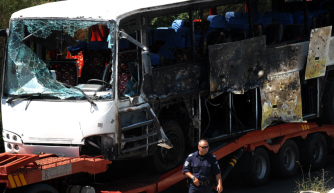
With the alleged spy Shawarba playing such an important role within the group’s military apparatus, his possible collaboration with Israel may have contributed to the foiling of Hizbollah attacks abroad, from Azerbaijan to Turkey, Cyprus, Thailand, and recently Peru (among others), as well as to serious intelligence against the group’s leadership.  In avenging Mughniyeh, Hizbollah’s only “success" has been its attack in July 2012 against Israeli tourists at the Burgas airport in Bulgaria, resulting in six fatalities – five Israeli tourists and one Bulgarian. This attack, which strongly contributed to the European community’s decision to add Hizbollah’s military wing to its list of terror organizations, was reportedly ascribed to Hizbollah based on information allegedly provided by Shawarba.

The recent revelations come at an especially complex time for the Lebanese-Shiite organization: over the past year Hizbollah has been engaged in a multi-front struggle that includes support for Bashar al-Assad in Syria, protection of Hizbollah’s communities and infrastructure, and assistance and coordination with the Lebanese Armed Forces in dealing with the so-called “takfiri” threat – referring to the rise in activism of Salafi-jihadist groups in Lebanon, a phenomenon itself exacerbated by Hizbollah’s own involvement in Syria. Over the course of 2014, successful attacks by rival groups against Hizbollah have forced the organization to reexamine its defense and intelligence apparatus, further focusing not only on counterintelligence, but on internal security as well. In addition, Hizbollah’s security landscape and calculations continue to be affected by its post-2006 de facto deterrence vis-à-vis Israel. Preserving the status quo has become increasingly harder since the beginning of the Syrian civil war, with Hizbollah struggling between two competing interests. One is the need to signal strength and resolve as well as to re-establish the rules of the game vis-à-vis Israel, as they have been eroded by the alleged Israeli attacks in Lebanon and Syria targeting weapons convoys on route to Hizbollah operatives in Lebanon. Two, the group still needs to avoid escalation and another all-out war with Israel. In this context, over the past few months the organization has assumed responsibility for several small scale operations in Mount Dov (Shab’a Farms) and the Golan Heights.

In light of the complex evolving predicament facing Hizbollah, the alleged discovery of yet another infiltration would probably be branded by the organization as an operational victory. Indeed, by uncovering high level infiltrators, the group can project power and efficiency and discredit Israel’s intelligence apparatus. Even more significant, assuming media reports are credible, and although other intelligence assets may still be utilized by Israel, the arrested senior operative and his four accomplices may have contributed to the successful thwarting of Hizbollah's planned attacks abroad. If so, their exposure can certainly be seen as harmful to Israel in its campaign against the Shiite terror apparatus. The loss of a high ranking asset may limit Israel’s ability to thwart future terror operations against Israeli targets abroad.

The continued threat of international terror by the Shiite Lebanese organization   reinforces Israel’s need to convey a firm warning to Hizbollah to refrain from further attempted attacks. In addition, Israel must strengthen its international cooperation in the effort to uncover the group’s activities abroad. Furthermore, given Hizbollah’s historical modus operandi, which includes not claiming responsibility for its external operations, a lack of internal informants could complicate efforts to pin Hizbollah down as an international terror player.
_____________________________________________
Thanks to Yael Basford and Einav Yogev for their assistance with this article.
The opinions expressed in INSS publications are the authors’ alone.
Publication Series INSS Insight
TopicsLebanon and HezbollahTerrorism and Low Intensity Conflict
עברית

Events

All events
Israel’s National Security Conference
27 July, 2026
10:00 - 14:00

Related Publications

All publications
Live Dashboard: Lebanon
This situation report presents data regarding security incidents in Lebanon since the outbreak of the “Swords of Iron” War. The data includes, among other things, Israeli and foreign fatalities, the scope of launches carried out by Hezbollah toward Israel, the number of alerts, monitoring of Hezbollah’s statements, the scope of displacement in Lebanon, as well as data regarding offensive activity in the arena. The data is based on official sources and open-source intelligence (OSINT) collection and is updated on an ongoing basis.
06/09/26
Shutterstock
The Debate in Lebanon over Direct Talks with Israel
How do the conflicting voices within a divided Lebanon manifest themselves concerning the historic decision to negotiate directly with Israel?
10/08/26
Iran and Hezbollah’s Illicit Crypto Operations: The Venezuelan Connection
The mechanics behind the Iranian method of sanction evasion via digital currencies
30/07/26

Stay up to date

Registration was successful! Thanks.
  • Research

    • Topics
      • Israel and the Global Powers
      • Israel-United States Relations
      • Glazer Israel-China Policy Center
      • Russia
      • Europe
      • Antisemitism and Delegitimization
      • Iran and the Shi'ite Axis
      • The Campaign Against Iran and the Shiite Axis
      • Iran
      • Lebanon and Hezbollah
      • Syria
      • Yemen and the Houthi Movement
      • Iraq and the Iraqi Shiite Militias
      • Conflict to Agreements
      • Israeli-Palestinian Relations
      • Hamas and the Gaza Strip
      • Peace Agreements and Normalization in the Middle East
      • Saudi Arabia and the Gulf States
      • Turkey
      • Egypt
      • Jordan
      • Israel’s National Security Policy
      • Military and Strategic Affairs
      • Israel's Security Strategy
      • Societal Resilience and the Israeli Society
      • Jewish-Arab Relations in Israel
      • Climate, Infrastructure and Energy
      • Terrorism and Low Intensity Conflict
      • Cross-Arena Research
      • Data Analytics Center
      • Law and National Security
      • Advanced Technologies and National Security
      • Foreign Information Manipulation and Interference
      • Economics and National Security
    • Projects
      • Preventing the Slide into a One-State Reality
      • India-Middle East-Europe Economic Corridor (IMEC)
  • Publications

    • All Publications
    • INSS Insight
    • Policy Research and Papers
    • Special Publication
    • Strategic Assessment
    • Technology Platform
    • Memoranda
    • Database
    • Posts
    • Books
    • Archive
  • About

    • Vision and Mission
    • History
    • Research Disciplines
    • Chairman of the Board
    • Board of Directors
    • Fellowship and Prizes
    • Internships
    • Annual Reports
    • Support
    • Privacy Policy and Terms of Use
  • Media

    • Communications
    • Video Gallery
    • Press Release
    • Podcast
  • Home

  • Events

  • Database

  • Team

  • Contact

  • Newsletter

  • עברית

INSS logo The Institute for National Security Studies, Strategic, Innovative, Policy-Oriented Research, go to the home page
40 Haim Levanon St. Tel Aviv, 6997556 Israel | Tel 03-640-0400 | Fax 03-744-7590 |
Developed by Daat ,Yael Group.
Accessibility Statement
This site is protected by reCAPTCHA and the Google Privacy Policy and Terms of Service apply.