


Publications
How Hamas Assesses Two Years of War with Israel – And the Key Takeaways
INSS Insight No. 2082, January 7, 2026
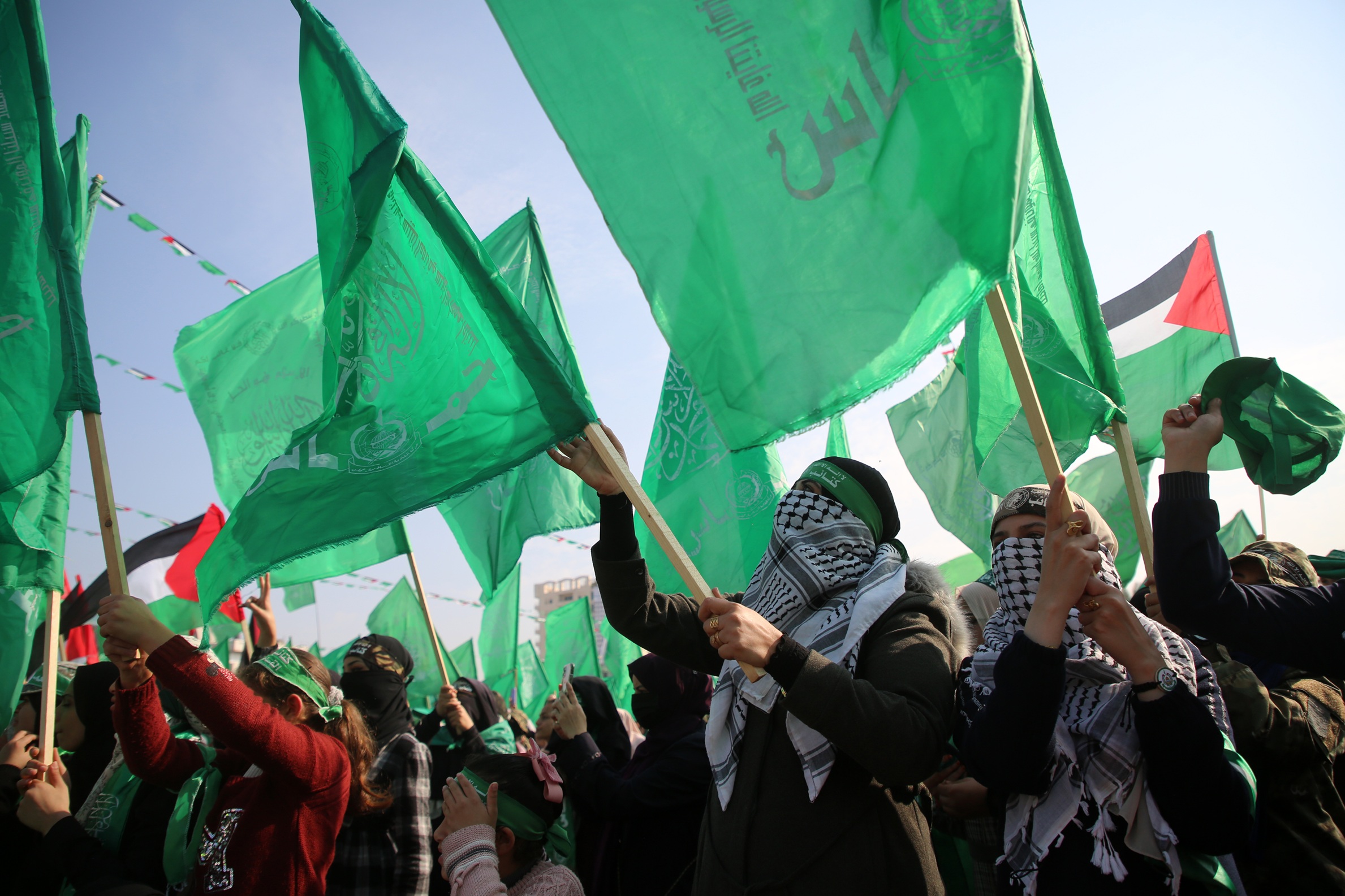
In December 2025, Hamas published a document summarizing the war in the Gaza Strip nearly two years after its outbreak. The document, titled “Our Narrative: Al-Aqsa Flood—Two Years of Steadfastness and Aspiration for Liberation,” resembles the format of a document issued by the organization in January 2024 but differs in content. The earlier document, which functioned as a kind of defense brief in response to criticism leveled at Hamas and its concerns about the continuation of the war, sought to explain why it had declared war on Israel. In contrast, the current document attempts to explain why the attack was worthwhile and what its achievements were. It emphasizes Hamas’s standing as a central component of Palestinian society and as a rival to the nationalist movement, while completely ignoring the growing criticism directed at it and even expecting recognition for its achievements.
According to the Hamas document published in December, the war with Israel has ended, and the time has come to address its damages while simultaneously boasting of Hamas’s accomplishments. This is because, in the organization’s view, the “Al-Aqsa Flood” attack was not meant to remain a day of commemoration but rather should be seen as a “rebirth”—a historic crossroad after which the conflict with Israel will appear different. The document is formulated as a manifesto aimed at persuading broad audiences in the Arab, Islamic, and Palestinian arenas, and it is divided into eight chapters. It contains data and arguments, some of which are inaccurate or even false, as well as assessments and claims of achievement designed to demonstrate the organization’s capabilities and to assert that it will not disappear from the scene and will continue to be a central part of the Palestinian people. In this context, the following messages merit attention:
- The motives for the war declared by Hamas—The document lists 77 years of occupation, expulsion, negation, discrimination, and ethnic cleansing; Israel’s obstruction of negotiation rounds; the Judaization of the West Bank and the growing number of settlers there; repeated Israeli declarations since 2009 against both the Oslo Accords and the establishment of a Palestinian state; the rise of the extreme right in Israel since late 2022, giving sensitive ministerial portfolios to the most extreme ministers, including Itamar Ben-Gvir and Bezalel Smotrich, who violate the status quo on the Temple Mount, cantonize the West Bank, and annex it to Israel; the suffering in the Gaza Strip, which Prime Minister Benjamin Netanyahu ignored despite warnings from the head of the Israeli Security Agency; the suffering of Palestinian prisoners in Israeli prisons; the weakness of the international community, which failed to prevent Judaization efforts and the erasure of the Palestinian issue from the agenda—processes that culminated in the “integration of the occupation” (normalization with Israel) in the region and attempts to turn the Palestinian issue into a historical concept; the failure to implement 1,180 UN General Assembly resolutions on Palestine over 75 years; and Britain’s violation of its 1939 commitment to revoke the Balfour Declaration and establish a Palestinian state over all of Palestine within ten years (apparently referring to the 1939 White Paper, which expressed British intent to establish a single state in Mandatory Palestine for all its inhabitants, Jews and Arabs, and to significantly restrict Jewish immigration and land purchases from Arab owners).
- The significance of the war—The “Al-Aqsa Flood” attack is now defined in the document as يوم العبور المجيد (“the glorious crossing day”), a term Egypt used in 1973 to glorify the results of the Yom Kippur war. The document asserts that, for the first time since the establishment of the “Zionist entity,” the resistance succeeded in breaching all of Israel’s defensive lines around the Gaza Strip, humiliating the “occupation,” shocking it, and creating a new paradigm. Palestinian anger erupted, and international disregard came to an end. This was not an adventurous or emotional act, but a calculated move that enjoyed broad support.
- The facts—The document alleges that Israel disseminated many false claims in order to legitimize the destruction of the Palestinian people and the erasure of the Gaza Strip, and specifically that Hamas deliberately killed Israeli civilians and children and raped women. The document further claims that killing civilians contradicts Islam, massacres are not the practice of the organization, and that this is an area in which the “Zionist enemy” excels. It also claims that even major Israeli newspapers reported that some Israelis were killed by Israeli fire under what Israel defines as the “Hannibal Directive.” The document calls upon Israel to allow an international investigation into the crimes committed against civilians on both sides. It also contends that Hamas offered in the first days of the war to release all Israeli civilian “prisoners” that it held, but Israel delayed responding and agreed only about a month after the war began.
- Palestinian casualties—The document claims that, since the beginning of the war, there have been 169,500 Palestinian dead and wounded in the Gaza Strip, including 67,100 “martyrs” whose bodies reached hospitals, and another 9,500 buried under rubble or missing. It further claims that the dead include approximately 20,000 children and 12,500 women, as well as many commanders from resistance organizations and their family members, and 254 journalists.
- Israeli casualties—It is unclear what data the document relies upon in asserting that Israel is concealing the number of its casualties. The document claims that IDF Chief of Staff Eyal Zamir admitted that 5,942 soldiers were killed, while medical reports allegedly indicate 13,000 Israeli fatalities in the Gaza Strip, Lebanon, and the West Bank. The document further alleges additional damage to Israel, including an economic cost of $100 billion over two years, the loss of 2,850 tanks, extensive engineering equipment, and military vehicles.
- Achievements of the war—According to the document, Hamas’s achievements include renewed proof of the steadfastness of Gaza’s residents; the return of the Palestinian issue to the international agenda; Israel’s isolation both regionally and internationally and damage to the Israeli narrative, alongside erosion of Israel’s deterrence; Israel becoming a moral and political burden on its allies and the weakening of its status as a safe haven for Jews; the derailment of regional normalization with Israel; the release of Palestinian prisoners from Israeli prisons; and growing international recognition of a Palestinian state (without reference to the 1967 lines). Additional achievements include bringing Israel before international courts, alongside unprecedented Arab and international solidarity with the Palestinians.
- Hamas’s efforts to end the war—The document emphasizes that Hamas and the resistance organizations sought to stop the war already at the start of Israel’s ground maneuver in the Strip, but Netanyahu and his government made defeating the resistance their objective, rejected ideas previously agreed upon in talks, and Israel returned to war after a deal to release hostages from Hamas in January 2025. According to the document, these steps proved that Israel had no interest in ending the war. After the Israeli bombing in Doha, Hamas agreed to a ceasefire and to the establishment of a Palestinian technocratic government, as proposed in Trump’s 20-point plan to end the war. This was because the agreement included ending the war and the “aggression”—the war of annihilation and starvation—and preventing a new Nakba. “We were not defeated,” the document states, adding that Hamas prevented the deployment of local militias through which Israel sought to control the Gaza Strip.
- The future of Hamas—The document underlines that Hamas has been and will continue to be an inseparable part of the Palestinian people. Its roots are very deep in Palestinian society; it is the rival of Fatah and competes with it over representation of the Palestinian people. Over the years, the organization has grown stronger, won the 2006 elections, and today represents a natural component of the Palestinian national mosaic. Armed resistance continues to prove that it is the central lever for strengthening the spirit of the people, as surveys indicate. Therefore, any thought of isolating Hamas is an illusion. Hamas’s fundamental right is to represent the Palestinian people, and no international trusteeship can revoke it.
- The future of the Palestinian issue—The document states that acting for the future of the Palestinian issue requires unity, Palestinian control over the Gaza Strip, full Israeli withdrawal from it, its reconstruction and rebuilding, and the release of all Palestinian prisoners from Israeli prisons. It also requires improving relations with the Arab and Islamic world, maintaining ties with liberal actors worldwide who stood with the Palestinians against the occupation, preventing normalization with Israel, continuing the pursuit of Israel in international courts and forums, entrenching the Palestinian narrative, and strengthening relations with all countries of the world. An independent Palestinian state with Jerusalem as its capital and the return of refugees to their homes are not dreams but rights that a steadfast people can compel to be realized.
Significance
Although the Hamas document still bears defensive characteristics, it is saturated with attempts to project security, enabled in part by the manner in which the war ended. The ceasefire achieved following President Trump’s declaration effectively dispelled Hamas’s fears of its destruction as an organization and that of the Gaza Strip as a Palestinian living space. Consequently, once the ceasefire came into effect, Hamas has been acting as though the war has ended and will not be renewed in the foreseeable future. This has allowed Hamas to display governance, rebuild its ranks, and project control to the public. It is reasonable to assume that this assessment is also based on a promise given to Hamas by President Trump or his associates that Israel would not resume the war, as well as on Israel’s growing dependence on the United States. The implication is that nothing has fundamentally changed as a result of the war, and the intra-Palestinian arena can resume and return to the prewar agenda.
It should be emphasized that the document makes no genuine attempt to confront the harsh criticism directed at Hamas from all sides. Beyond the implicit claim that the war was calculated and planned, there is no effort to respond to this criticism or to assume responsibility for the consequences of the war. It is therefore unclear whether this document will help improve the organization’s image in Gaza in the eyes of the public, many of whom hold Hamas responsible for the war and even expect an apology. Hamas’s boasting of achievements it did not seek—such as international recognition of a Palestinian state along the 1967 lines and broad international identification with the Palestinians and their national aspirations rather than with Hamas’s values as a maximalist movement—is perceived as an attempt to retroactively back the wrong horse.
In this document, Hamas seeks to project “business as usual,” entrench its presence—both physical and cognitive—as a central actor in the Palestinian arena, put the war behind it, begin its rehabilitation as a resistance movement, select new leadership, and compete for a leading role in representing the Palestinian people, ultimately aiming to seize it.
If the results of the war in the Gaza Strip do not exact a heavy public price from Hamas, progress toward realizing the organization’s aspirations will, from its perspective, entail a heavy cost—that is, the compromises it will be required to make in its contacts with the national camp led by Abu Mazen in order to advance unity. This is because after the war and in its wake, Abu Mazen seeks to decisively settle the dispute with Hamas by asserting that the war proved the failure of the path of armed resistance and therefore demands that the organization engage in a public process of self-examination and accountability.