


Publications
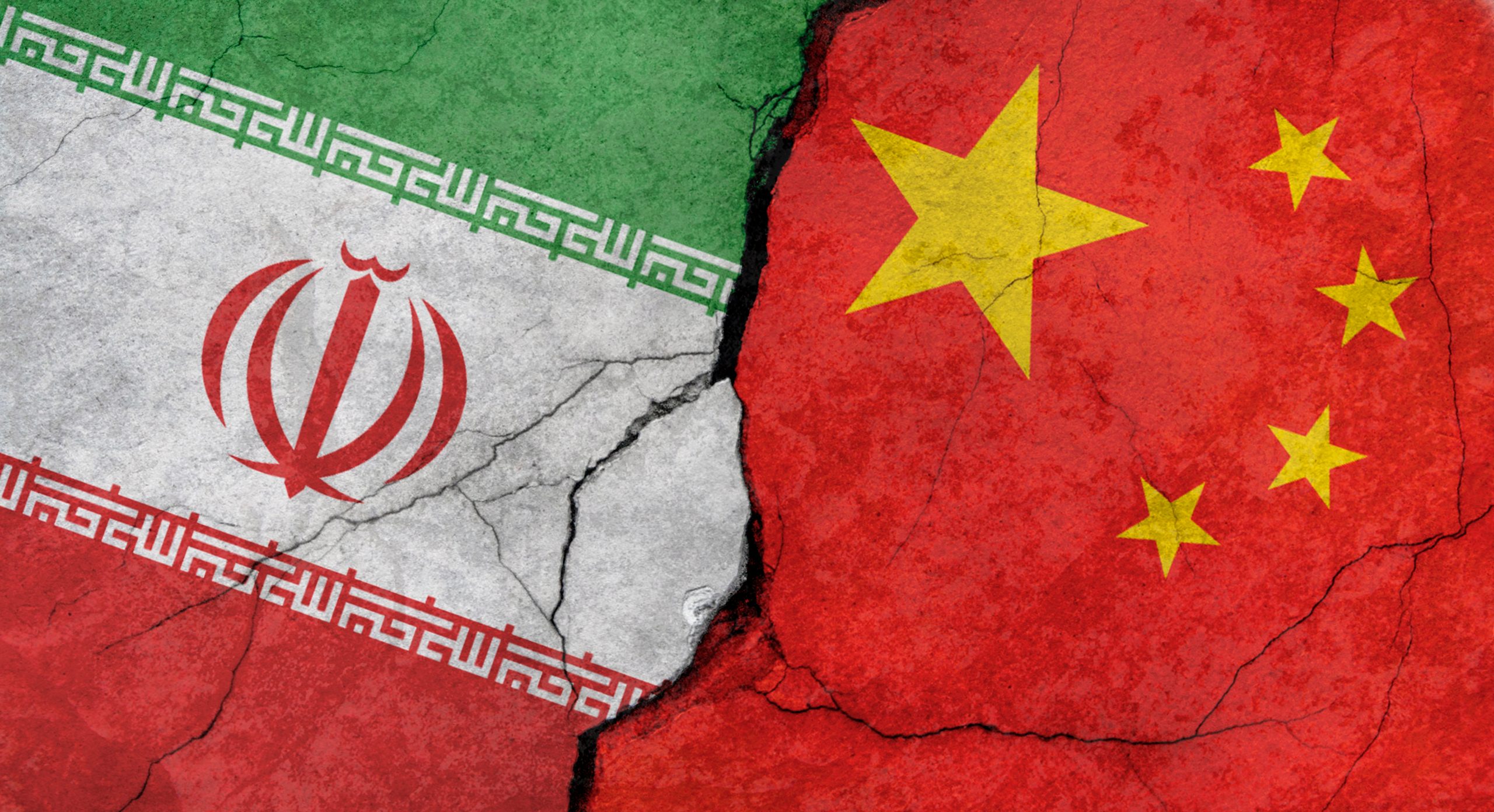
Why, to date, has Beijing refrained from adopting a resolute stance in support of Tehran?
INSS Insight, No. 2112, March 15, 2026
China’s response to the war with Iran appears to be one of non-intervention. Although one might have expected Beijing to stand more firmly by its partner Tehran, China’s response thus far has been relatively restrained. This article offers several explanations for this, including China’s domestic priorities, its desire to avoid further friction with the United States, Beijing’s balancing policy among all actors in the Middle East, and uncertainty about the future of the Iranian regime. At the same time, China is looking ahead to the day after the war and to its possible role in the economic and industrial reconstruction of Iran and the countries of the region. Given this possibility, Israel should work with the United States to convey clear messages to Beijing about the dangers inherent in rebuilding Iran’s military and industrial capabilities.
The war with Iran, like previous wars and conflicts in the Middle East, has prompted a Chinese response that appears “non-interventionist.” Iran, which is defined as China’s “comprehensive strategic partner,” has been attacked by their shared great rival—the United States. Therefore, one might have expected Beijing to stand more firmly by Tehran, which is economically dependent on it. China is Iran’s largest trading partner, and Iran exports about 90% of its total oil exports to it. Moreover, a war initiated by the United States in the middle of negotiations with Iran provides an excellent opportunity for China to denounce Washington, criticize it for violating international law, and present itself as an alternative to the American model that, according to Beijing, “stirs up wars.”
Yet the Chinese response has been relatively restrained. The Foreign Ministry in Beijing spoke out against the American and Israeli strikes in Iran and against the killing of a “sovereign leader,” calling for an immediate ceasefire and the renewal of talks to prevent regional escalation. China’s ambassador to the United Nations condemned, in general terms, the violation of the sovereignty of Iran and “other countries in the region.” China also joined Russia in calling on the Security Council to discuss the matter. Compared with Beijing’s clear support for the Palestinians during the Swords of Iron war, its weak support for Iran raises questions about the extent of China’s commitment to its close partner.
Four explanations can be offered for China’s lukewarm response: its focus on domestic issues, geopolitical considerations, the possible implications of regime change in Tehran for relations with Iran, and the implications for energy trade.
Out of Sight, Out of Mind
These days, China is focused primarily on the convening of the “Two Sessions,” which opened in Beijing on March 4, 2026. This is the annual meeting of two important bodies—the National People’s Congress (NPC) and the Chinese People’s Political Consultative Conference (CPPCC)—which convene in parallel. This gathering, which receives almost no coverage in the West, and especially in Israel, is one of the most important events in China, as it is one link in a chain of meetings aimed at formulating and approving Beijing’s plans for the coming years. The timing of this year’s meeting is especially sensitive given the state of China’s economy, the technological rivalry with the United States, and the dismissal of many generals from the military. Thousands of officials and their aides are immersed in preparing for the gathering and in the proceedings themselves, as are many businesspeople, researchers, and journalists. Thus, China’s public, media, and political attention is directed mainly inward and away from the Middle East. Although reports about the war in Iran do appear from time to time on broadcast media and in the press in China, they are swallowed up by domestic developments and pushed into the inner pages of the newspapers. In other words, China’s leadership and public are now looking inward and are not focused on events far beyond their borders.
Geopolitical Considerations
In addition to the current lack of interest among China’s senior leadership, any active support for Iran could further exacerbate tensions between China and the United States at a sensitive period in their relations. In recent years, China has viewed the Middle East as a convenient arena for verbal sparring with the United States and has welcomed any conflict that occupies its rival in this distant arena, thereby drawing it away from Asia. However, since the start of Trump’s second presidency, Beijing has sought to avoid further tensions with Washington, especially on economic and technological issues. At the same time, it does not currently see a conflict in the Middle East as a matter worth escalating its strategic rivalry over. The anticipated visit by the US president to Beijing in early April 2026 may also encourage China to soften its criticism and create more favorable conditions for discussions between the parties on issues of greater importance to China, particularly trade, supply chains, and technology. In this context, Chinese commentators have estimated that the war will end by the time of President Trump’s visit to China, although it could also be postponed.
Moreover, the war in Iran involves other Chinese partners on both sides, chiefly the United Arab Emirates and Saudi Arabia, as well as Oman and Kuwait. China’s trade volume with the UAE and Saudi Arabia each stood at more than $100 billion in 2024, compared with less than $15 billion with Iran. The scale of Chinese investment in Iran also pales in comparison to its investments in Saudi Arabia and the UAE. Therefore, explicit Chinese support for Iran could damage Beijing’s relations with other Gulf states, whose economic importance to Beijing is immeasurably greater than that of Iran.
Beyond this, China’s policy in the Middle East has, for years, been based on balancing among all the major actors in the region, without taking sides in their rivalries. Beijing maintains close relations both with Iran and with its regional rivals, including Israel, Saudi Arabia, and the UAE. China’s contribution to the 2023 renewal of relations between Tehran and Riyadh illustrated its ambition to position itself as acceptable to all sides. Accordingly, one-sided support for Iran in the current military confrontation would undermine the diplomatic balance China is trying to establish in the region and would not provide it with any benefit.
China’s military capabilities—even if Beijing chose to employ them—remain far more limited than those of the United States, especially in such a distant theater. Likewise, reports that China has supplied weapons systems to Iran remain unsubstantiated, and some have turned out to be Iranian propaganda. As in the past, reports again surfaced this week about shipments of sodium perchlorate, a precursor for missile fuel, leaving China for Iran. In addition, the Chinese intelligence vessel Liaowang-1 recently arrived in the Arabian Sea and is undoubtedly closely following the course of the war in Iran. It was recently reported that Russia is providing Iran with intelligence for the war, but it is not known whether China is doing so as well.
The Implications of Regime Change in Tehran for Bilateral Relations
In principle, China opposes external intervention in the internal affairs of other states. In practice, China does not want regime change in Iran, with whose current leadership it has productive political cooperation and shared understandings regarding their preferred world order. At the same time, it is also likely that any new regime in Iran, should one emerge, would be happy to continue economic relations with China. Moreover, a new regime that reaches an understanding with the United States and secures the lifting of sanctions on Iran could help China deepen its economic ties with Tehran.
China is also acutely aware of Iran’s destabilizing activity in the Middle East. Since October 7, 2023, it has become clear to Beijing to what extent Iran and its proxies contribute to regional instability. The current war and the threat to shipping in the Strait of Hormuz may have reinforced this understanding in Beijing, as reflected in commentaries by Chinese researchers who cast doubt on both the resilience of the Iranian regime and on Tehran’s value to Beijing. As long as the future of the current regime remains uncertain, China will prefer to keep all options open to maintain good relations, whether the current regime survives, changes, or is replaced altogether.
Disruption in Energy Trade
If concerns about the future of the regime in Tehran are not a primary source of anxiety for Chinese officials, then the closure of the Strait of Hormuz, which disrupts China’s energy imports from the Gulf, should be a major source of concern for Beijing. China is the largest importer of energy from the Middle East, and about 50% of all the oil it imports reaches it through the Strait of Hormuz. It is no wonder, then, that the spokesperson for China’s Foreign Ministry hastened to call for shipping routes in the Strait of Hormuz to be kept safe. At the same time, other senior Chinese officials appealed to their Iranian counterparts, asking them to avoid disruptions to tanker traffic in the strait. Apparently out of concern about shortages, leading refineries in China suspended exports of diesel and gasoline, possibly on government orders, despite official denials.
Despite this clear rhetoric and these preventive steps, it should be remembered that, in the short term, the damage to China from disruptions to the oil trade is limited. This is due to the diversification of its energy sources and its large oil reserves, which are sufficient for its needs for three to six months. Unlike China, other countries in East Asia—Japan, South Korea, and Taiwan—are more vulnerable to disruptions in energy supplies through the Strait of Hormuz because, unlike its neighbors, China produces about a quarter of its total oil consumption and about 58% of its total gas consumption. In parallel, China can increase its gas purchases from Russia, although it is not eager to deepen its dependence on Moscow. Hence, disruption to energy flows through the Strait of Hormuz may harm China less than its neighbors, as long as it is limited in time or scope.
Moreover, ironically, some commentators suggest that China may even benefit from rising oil prices, which would push up inflation and somewhat moderate the deflationary pressures in its economy. As long as the war lasts only a few weeks, China may be able to steer the markets in ways that benefit its economy without suffering an energy shortage.
Conclusion and Implications for Israel
It can be argued that China has no real reason to stand by Iran’s side. In the short term, China is not expected to be significantly harmed by the energy crisis and prefers to keep its options open in the event of regime change in Iran. For the time being, it is responding ambiguously while maintaining its ties with all the states in the region. Even the dispatch of the special envoy to the Middle East to “mediate” between the sides is not expected to change the degree of Beijing’s involvement in the situation and is intended mainly to signal presence. In any case, Beijing’s ability to influence Iran is limited, and beyond conveying messages, China has neither the desire nor sufficient leverage to affect Tehran.
China’s response to the war illustrates how Beijing operates in the Middle East: it prefers diplomatic flexibility to taking sides in conflicts and camps. Even when one of its regional partners is engaged in a severe military confrontation, China prefers to maintain room to maneuver and avoid direct involvement. In this way, it continues to consolidate its presence in the region primarily through economic and diplomatic tools.
As it watches events from the sidelines, China is also thinking about the day after the war and the opportunities that will then open up. Beijing is likely to be a leading potential actor in rebuilding Iran and the regional states. For Tehran, China may also be seen as a preferred supplier for rebuilding the regime’s military and industrial capabilities. Therefore, Israel should now convey clear messages to China, directly and through the United States, that reflect its concern over the Iranian threat in all its forms—nuclear, ballistic missiles, UAVs, terrorism, and proxies—which adversely affects all the states in the region and China’s own interests there as well. It should be made clear to Beijing that Israel and the United States will not look favorably upon, and will not allow, the rebuilding of Iran’s military capabilities. Conveying such messages may help the allies shape Iran’s postwar reconstruction and preserve their military achievements over time. Jerusalem should therefore work with Washington to ensure that this aspect is incorporated into US–China talks and in the messages delivered during Trump’s upcoming visit to Beijing.