


Publications
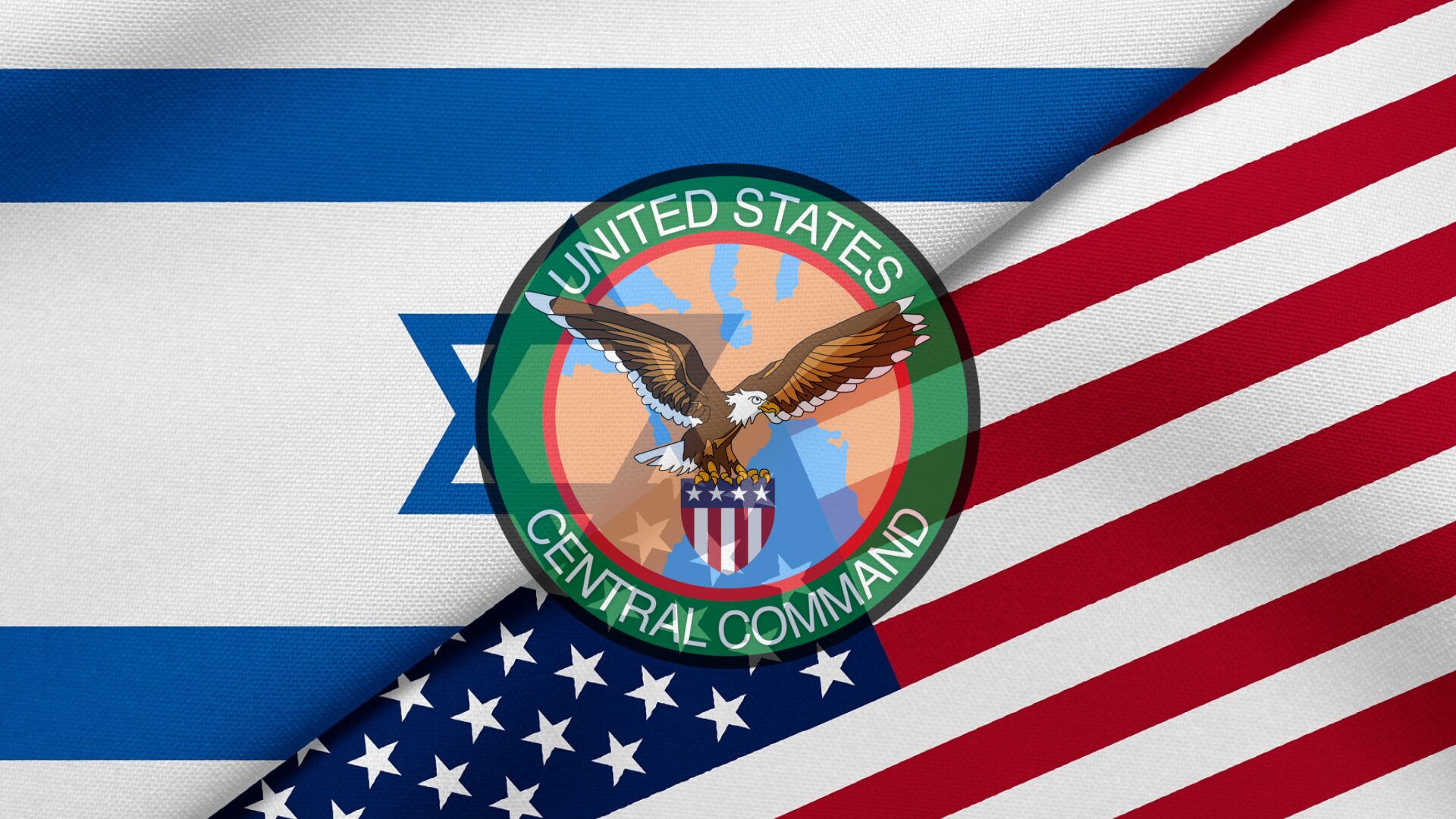
After half a decade, how has Israel’s transfer from US European Command to US Central Command played out on the ground?
INSS Insight No. 2085, January 18, 2026
On January 15, 2021, the Pentagon announced the transfer of Israel from the area of responsibility of the US European Command (EUCOM) to that of the US Central Command (CENTCOM). This move marked a substantive shift in the security perception of both the United States and Israel regarding the Middle East. Five years after the transfer, and in the shadow of the October 7 war, this article examines the move through the prism of regional security doctrine and concludes that Israel’s integration into CENTCOM has been demonstrated to be a strategic step that strengthened its status as a legitimate regional partner within the Middle East security architecture.
For nearly four decades (1980–2021), Israel fell under the responsibility of EUCOM, an inherent anomaly in the United States’ Unified Command Plan. This anomaly reflected regional political considerations, foremost among them the desire to preserve CENTCOM’s freedom of action vis-à-vis Arab states, many of which did not maintain diplomatic relations with Israel. However, profound changes in the Middle East—chief among them the expansion of the Iranian threat and progress in normalization processes with Israel toward the end of the second decade of the millennium—undermined this organizing logic and led to a fundamental change in the Unified Command Plan (UCP 2020), announced by the US administration on January 15, 2021.
Under this declaration, Israel was transferred from EUCOM to CENTCOM responsibility and, for the first time, joined the 27 countries under the command’s purview, most of them Arab and Muslim states. Interestingly, the US Department of Defense archives note that when CENTCOM was established in 1983, it was decided not to include the “confrontation states”—Israel, Syria, and Lebanon—in order “to enhance its effectiveness and credibility in its engagements with other Arab and Muslim states” (Drea, 2013). In 2004, President Bush approved the transfer of Syria and Lebanon from EUCOM to CENTCOM, leaving Israel as the only Middle Eastern state under EUCOM. Nearly two more decades would pass before Israel’s transfer to CENTCOM—indicating that the concern that led to Israel’s exclusion in 1983 was no longer valid, and that Israel’s inclusion would not “harm the effectiveness or credibility of the command” in its dealings with Arab and Muslim states. Perhaps even the opposite.
In an INSS Insight by Udi Dekel and Assaf Orion, published in January 2021 and discussing the implications of the move, it was noted that beyond the statement that the transfer “formally institutionalizes the deep, quiet, and longstanding relations between the IDF and CENTCOM,” it would also “facilitate cooperation between the IDF and US forces and other countries within the command.” Now, five years after the transfer, it is appropriate to examine three central questions: (1) Did the move indeed facilitate Israel’s cooperation with regional states? (2) Did it improve the regional security architecture? And (3) How was the October 7 war affected by—and how did it affect—the transfer?
Regional Security Architecture: Theory and Reality
Regional security architecture, like US alliance thinking, is largely grounded in Regional Security Complex Theory. This theory posits that security dynamics are shaped primarily within regional frameworks, in which threats, perceptions, and military responses are intertwined, and it underpins the operational logic of the US combatant commands (Buzan & Wæver, 2003). From this perspective, Israel’s placement under EUCOM created an artificial disconnect between its primary threat environment and the institutional framework responsible for it on the part of the United States and its regional partners. The rationale behind Israel’s transfer to CENTCOM was to create more conducive conditions for security cooperation with moderate Arab states, both bilaterally and within multilateral regional frameworks.
Five years on, the transfer indeed appears to have realized a significant conceptual and practical shift—from an anomalous state in the Arab space to a legitimate regional actor. The move also aligned with a broader logic of building a regional security architecture as a complementary and natural continuation of the Abraham Accords framework, in which Israel not only benefits from US protection but also actively contributes to it and to the region, integrating capabilities and assets across the Middle East.
In practice, following Israel’s move to CENTCOM, regional security dynamics over the past five years have indeed been anchored in regional frameworks—primarily, although not exclusively, in response to the Iranian threat—in which Israel had a tangible “seat at the table.” Extensive discussions with senior officers (serving and retired) who were de facto involved in executing and implementing the transfer reveal a clear picture regarding the realization of its main component: Israel’s integration as a legitimate regional actor. In their view, the move led to better regional integration and significantly facilitated cooperation with states that otherwise would have progressed slowly, if at all.
It should be recalled that IDF relations with CENTCOM—and with some regional states—particularly in regional-theater contexts, had already developed to some extent, albeit discreetly, in the decade preceding the formal transfer (2010–2020). Examples include operational and intelligence cooperation with Egypt in the Sinai Peninsula, with Jordan in the tri-border area (Israel–Jordan–Syria), and participation in multilateral exercises involving countries such as the UAE and Bahrain. However, the transfer to CENTCOM not only brought these relationships into the open and exposed their scope; it also accelerated cooperation and, to a large extent, broke through the “security and military boundaries” that had characterized the regional arena prior to the move. On a practical, day-to-day level, previously covert bilateral ties with regional states acquired a public dimension, and a full array of regional cooperative mechanisms emerged that had not previously been possible, including official public meetings, high-visibility exercises, and even joint defensive operational activity.
At the same time, in the context of the US military and its modes of operation in the region, the transfer brought about a fundamental change in the US–Israel cooperation paradigm—from one characterized by assistance and support to one in which Israel’s status is that of a regional operational partner; and from a baseline of relative isolation to one oriented toward regional security and military integration. The move also reflected a shift in rhetoric and practice from the IDF’s cooperation with EUCOM, which focused primarily on defending Israel in emergencies, to a rhetoric and set of actions over the past five years aimed at creating effective regional defense architectures.
It is also interesting to observe (and sometimes hear) CENTCOM’s perspectives on the transfer, as reflected in statements by senior commanders regarding its contribution to the command’s standing within the US interagency system. Operational experience during wartime and CENTCOM’s involvement in the new American model for managing regional conflicts have significantly strengthened its position within the administration. Examples include the Civil-Military Coordination Center (CMCC) established by CENTCOM in Kiryat Gat and the trilateral coordination and war room established in Lebanon—both reflecting the new US strategy aimed at achieving regional influence and dominance. In practice, CENTCOM has emerged as the conceptual, organizational, and operational leader of this strategy.
One of the central dimensions of regional security activity since the announcement of the transfer has been the increased access Israel gained vis-à-vis regional states. This “opening of doors”—mostly mediated by the United States—led, in certain situations, to regional states agreeing to advance regional operational issues jointly with the United States and Israel. Examples include the integrated use of early-warning systems in the air defense domain or the deployment of liaison officers in joint war rooms. That said, it is important to distinguish between bilateral and multilateral regional frameworks. While bilateral ties often make it seemingly easier to advance concrete security and military issues—even if US presence in the room is sometimes required—multilateral arenas often present objective difficulties in achieving similar outcomes due to regional complexities and tensions that frequently have little to do directly with Israel. Thus, even aside from the advantages of Israel’s integration into an advanced multilateral regional architecture through CENTCOM, bilateral engagement and dialogue with regional states have improved significantly.
The October 7 War: A Reality Test “on Steroids”
The October 7 war provided the first and particularly extensive empirical test of Israel’s transfer to CENTCOM. Intense US involvement—the deployment of naval and air forces, regional defensive coordination, intelligence sharing, and participation in security arrangements across various theaters—illustrated the advantage of a unified command framework in which Israel was not an outsider but a regional security partner. One senior IDF officer who worked with CENTCOM throughout the period emphasized: “Luckily, the transfer to CENTCOM happened before the Swords of Iron war . . . otherwise everything would have looked different.” Indeed, from both defensive and offensive perspectives, the transfer made a significant contribution in the most practical regional terms: the establishment and consolidation of operational communication systems, a supportive regional structure (especially in air defense), joint threat analysis, the placement of liaison officers, and additional operational issues.
In these contexts, the war created a rapid regional ecosystem in which CENTCOM’s regional operational methodology was tested in real time, under complex scenarios and with the involvement and cooperation of most regional states. Moreover, at the war’s peak moments—such as the nights of Iranian attacks (the first in April 2024 and the second in October 2024), or the “12-day war” against Iran (June 2025)—CENTCOM’s statements and actions regarding Iran, including joint situation assessments of the regional threat, strengthened Israel’s position vis-à-vis the United States, the administration, and the Pentagon. Notably, CENTCOM and the IDF jointly led the planning and execution of the bilateral and regional military operation, especially in aspects of aerial defense.
Indeed, the United States’ ability to operate simultaneously with Israel, the Gulf states, and other regional actors under a single command highlighted the added value of the move. General Michael “Erik” Kurilla—the CENTCOM commander for most of the war—found himself “hopping” between the capitals under his responsibility, frequently visiting Israel (some would rightly say, also to monitor developments here closely). At the same time, these “hops” reflect the core of CENTCOM’s security philosophy: striving to create an “ecosystem” of militaries with defensive and offensive capabilities, working cooperatively, in optimal synchronization, and with an understanding of each other’s needs and constraints. In CENTCOM leadership’s view, Israel carries significant strategic weight within the Middle Eastern ecosystem. In practice, the past two years of war have demonstrated how such regional defense architectures are a necessary condition for effective crisis management, expectation coordination, and the preservation of credibility among regional actors.
Alongside its advantages, the transfer to CENTCOM has also presented challenges. CENTCOM faces a heavy operational burden across multiple theaters, which—if not for the October 7 war—could have limited the attention and resources devoted to Israel. In addition, and to some extent (although this is less evident at the operational level), regional political sensitivities and the ongoing Israeli–Palestinian conflict continue to constrain the willingness of some regional states to deepen overt cooperation with Israel in a regional framework, thereby limiting command maneuverability. In certain respects, there may also be constraints on the use of Israeli force, although this point is primarily a product of discourse at the political level and does not directly affect operational or intelligence cooperation with US Central Command.
Conclusions and Policy Recommendations
Five years after Israel’s transfer to CENTCOM, it can generally be said that this was a geostrategic move of significant value, aligned with regional threat realities and conducive to building regional cooperation architectures. However, fully realizing the strategic opportunities inherent in this move requires proactive Israeli policy aimed, on the one hand, at reducing patterns of regional “entanglement” (such as the failed Israeli strike in Qatar in September 2025) and, on the other, at advancing broader regional solutions. First, Israel should work to deepen cooperation within CENTCOM-led multilateral regional frameworks, particularly in air defense, early warning, and missile and drone defense. Second, it is appropriate to invest in institutionalizing permanent coordination channels with partner Arab states, even if some of these remain below the threshold of public visibility. Third, Israel should avoid viewing CENTCOM passively as merely an “American umbrella” and instead position itself as an active regional player and a central contributor to the regional security architecture.
Finally, two general observations. First, strategy is, among other things, a game of alternatives. One can only imagine what might have happened had Israel remained under EUCOM at a time when the European Command has been grappling with the consequences of the Russia–Ukraine war since February 2022, with command attention refocused on Central Europe. In this sense, Israel was “fortunate” that the CENTCOM transfer was announced when it was—about a year before the outbreak of the Russia–Ukraine war—and that it was fully implemented about a year and a half before October 7, 2023. Second, policymakers in Jerusalem must recognize that Israel’s ongoing integration into the regional security architecture is not a substitute for prudent management of the Palestinian arena. On the contrary, stability there is a prerequisite for deepening regional cooperation. In this sense, the transfer to CENTCOM is not an end state but a strategic platform whose future depends on how Israel chooses to use it.