Publications
Introduction
Donald Trump’s return to the U.S. presidency has consolidated a shift in American foreign policy toward unilateralism, economic coercion, and transactional diplomacy. At the core of Trump’s “America First” policy is the belief that the international order long led by the United States has been turned against it, driven by deindustrialization and the disruptive effects of globalization. Instead, Trump seeks to restore American economic primacy, which he views as having been exploited by economic rivals such as China, and even by American allies. Trump’s unilateral, business-focused approach seeks to recalibrate the United States’ relationships with its allies and with entities—like BRICS—that he perceives as challenging American economic interests.
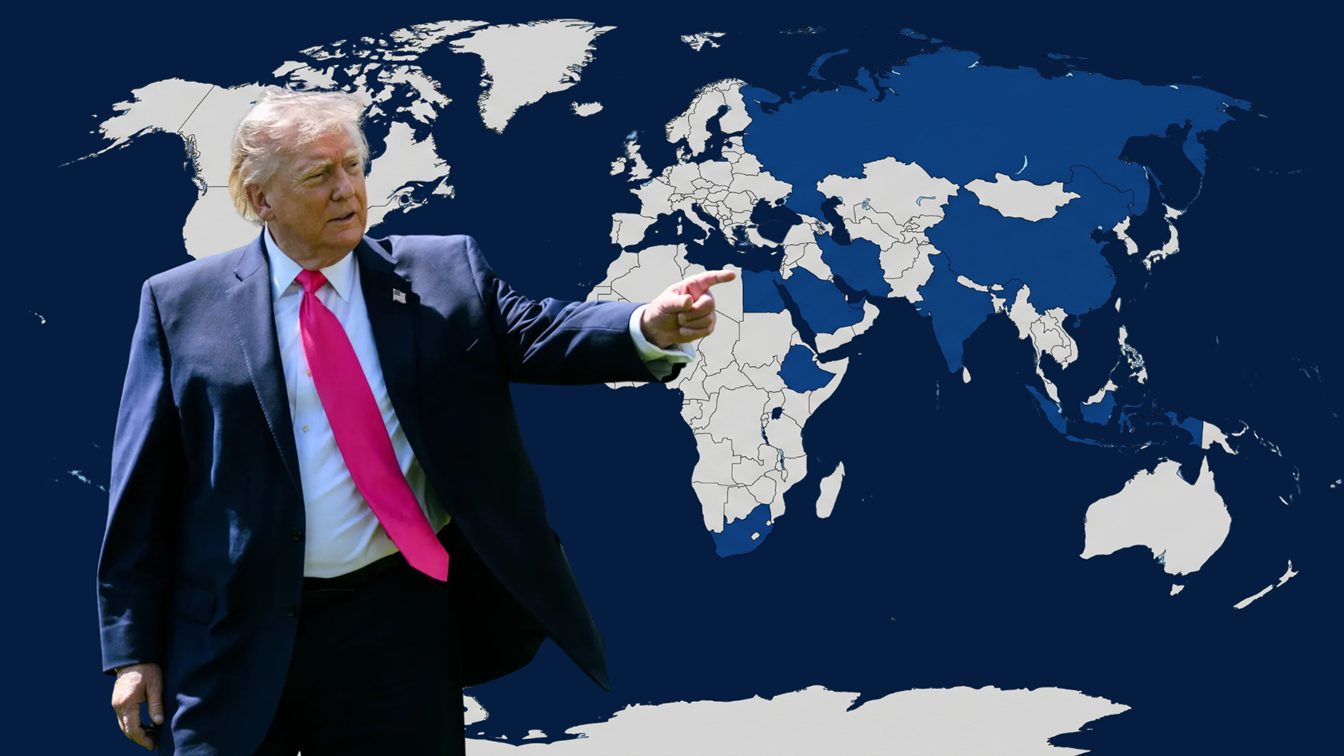
Within this framework, BRICS has become a point of U.S. concern. Trump has repeatedly portrayed the grouping as a challenge to the dollar-centered global financial system, warning against de-dollarization efforts and threatening punitive tariffs on states aligning with BRICS initiatives. Originally formed in 2009 by Brazil, Russia, India, and China and later expanded to include South Africa, BRICS has grown to ten members, most recently adding Egypt, Ethiopia, Iran, the UAE, and Indonesia in early 2025. The Trump administration views BRICS as a challenge to U.S. economic dominance, consistent with Trump’s transactional, “America First” foreign policy. While this approach resonated with Gulf states—whose wealth and personal access enabled close ties and major U.S. investments—it did not prevent the UAE and other Middle Eastern states from joining the bloc. Their participation raises a key question: why have regional states, including long-standing U.S. partners, aligned with BRICS amid an international order reshaped by Trump’s narrowing of U.S. commitments to multilateralism, alliances, and free trade?
For many U.S. partners, participation in BRICS reflects strategic hedging rather than ideological realignment. As a result, in a more fragmented and multipolar international system, BRICS functions as a platform to enhance strategic autonomy, diversify economic ties, and seek greater representation in global governance—without severing relations with the West.
Click here to read the complete publication on the Friedrich Naumann Foundation For Freedom website