A recently captured document written by the commanderof al-Qaeda in the Arabian Peninsula (al-Qaeda in Hijaz) reviews theorganization’s strategy in 2011-2012, when operatives seized control of severalprovinces in the southern part of Yemen. It reveals the organization’s internaldebate regarding its relationship with the local Yemeni population,deliberations that were prompted by the organization’s drive to gain popularsympathy and support in its fight against the Sana’a government. The documentoffers a rare glimpse into the mindset of al-Qaeda leaders and plans for theircontinued struggle against the Yemeni regime. It also represents similardilemmas of al-Qaeda affiliates in other arenas fighting against weakgovernments.
A recently captured document written by the commander of al-Qaeda in the Arabian Peninsula (al-Qaeda in Hijaz) reviews the organization’s strategy in 2011-2012, when operatives seized control of several provinces in the southern part of Yemen. It reveals the organization’s internal debate regarding its relationship with the local Yemeni population, deliberations that were prompted by the organization’s drive to gain popular sympathy and support in its fight against the Sana’a government. The document offers a rare glimpse into the mindset of al-Qaeda leaders and plans for their continued struggle against the Yemeni regime. It also represents similar dilemmas of al-Qaeda affiliates in other arenas fighting against weak governments, such as Syria, Iraq, Mali, and others. The document, written by Nasir al-Wuhayshi, the leader of al-Qaeda in the Arabian Peninsula (AQAP) and formerly Osama Bin Laden’s personal secretary, is consistent with Bin Laden’s recommendations in letters found at the estate in Abbottabad where he was killed in 2011. In them, Bin Laden advises al-Wuhayshi’s organization to avoid harming civilians and even Yemeni soldiers unless absolutely necessary for self-defense, and urges the organization instead to focus on fighting the United States, as this will presumably help persuade the Yemeni people to support the organization’s struggle.
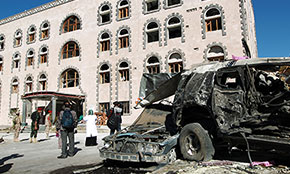
In this context the public apology by a senior organization figure to the families of the victims of an attack on the Yemeni Defense Ministry is highly significant. On December 5, 2013, the organization attacked the central compound of the Defense Ministry in Sana’a, killing 52 and injuring more than 150 soldiers and civilians, including foreigners. The attack was carried out by a suicide terrorist driving an explosives-laden vehicle; his breach of the gates allowed other members of the cell to attack soldiers being ferried to the compound hospital where the terrorists massacred doctors and nurses. In the apology, the organization offered to compensate the families for what he termed was a “violation of organization instructions” not to attack the hospital and kill innocent civilians.
In its official statement first assuming responsibility for the attack, AQAP cast the attack as an act of revenge against a site that serves as a planning base for US drone attacks against AQAP. Indeed, in addition to security cooperation between the sides, the United States has steadily increased its annual aid to the Yemeni government, which last year stood at $350 million (compared to $28 million in 2008). US aid to the Yemeni army in its fight against AQAP helped the Yemeni government expel the organization’s forces from areas where it assumed control in 2011-2012, especially in the Abyan province.
Thanks to the upheaval rocking Yemen since the start of the Arab Spring, AQAP scored some serious gains. The Yemeni extension of al-Qaeda, made up of Saudi nationals who found refuge in Yemen, Yemenis, veterans of the war in Iraq, fighters from Afghanistan, and activists released from Guantanamo, has been described by US analysts as the most active and most dangerous of all al-Qaeda affiliates. The organization’s extensive international terrorist activities include an attempt to blow up a US passenger plane over Detroit on Christmas 2009; an attack on a Japanese oil tanker sailing the Straits of Hormuz by the Abdullah Azzam Brigades, identified with al-Qaeda; and another attempt to down a US aircraft, which was foiled by the Saudi Arabian intelligence services in April 2012. Moreover, the US soldier who carried out a massacre in Texas in 2009, killing 13 members of the US armed forces, was inspired by Anwar al-Awlaki, a senior member of the organization, with whom he had been in contact before the attack.
The increased use of drone strikes in Yemen is, in al-Qaeda’s view, a particularly tough challenge, as it has eliminated many organization members, including senior commanders. Al-Awlaki himself was killed in a drone attack in September 2011. Nonetheless, the drones at times also strike non-combatant civilians, as was reported last week when 15 people, returning from a wedding, were accidentally killed in an attack near Yakla, considered one of al-Qaeda’s strongholds. Incidents like that, used by the organization to recruit new volunteers, serve as prime propaganda material to create distrust between the Yemeni government and the local population and arouse resentment against US involvement in Yemen, as per the new strategy recommendations.
Drone strikes also generate political problems for the Yemeni government, and following the most recent incident the Yemeni parliament decided to outlaw them. While the decision needs the president’s signature before being enacted into law, the issue is clearly a political hurdle for the government, which is still in the midst of a national dialogue designed to reach an agreement among the country’s many political factions over the future of Yemen in the post-revolution era.
Al-Qaeda’s relative freedom of action has stemmed from the lack of an effective Yemeni army presence, as the military was forced to retreat from many areas in the countryside to confront the unrest in Sana’a and al-Qaeda’s successful takeover of large areas in the southeast. For its part, al-Qaeda has shifted emphases in its mode of operation and moved away from focusing on classical anti-regime terrorism to guerrilla and revolt designed to create a permanent hold on sections of the country and promote a political and administrative system based on sharia while exploiting the central government’s weakness. In the areas under its control, al-Qaeda personnel (“Ansar al-Sharia”) began to function as local administrations, supported and joined tribal leaders, instituted a system of conflict resolution among tribes, and even provided various services such as security, fresh water, food, basic health services, and a religious school system. Heavy military pressure, however, forced the organization to retreat from the regions it controlled and return to an extent to the classical terrorist modes of operation that characterized its activity before the onset of the Yemeni Spring.
The United States, which views Yemen as an important arena for thwarting the intentions of al-Qaeda affiliates to seize control of strategically important areas in the Middle East and Africa, must take into consideration al-Qaeda plans and changes in their operational strategies. This is particularly true in light of the assessment by security and administration sources in the United States that al-Qaeda in the Arabian Peninsula is the most dangerous among al-Qaeda’s senior affiliates in the Maghreb, Iraq, and Syria. The assessment stems from the organization’s several attempts to carry out dramatic, mass-casualty attacks against Western civilian aviation targets outside of the Arabian Peninsula, thereby adopting the international operations strategy of al-Qaeda Central. Furthermore, the organization assists the Somali al-Shabaab, another of al-Qaeda’s dangerous offshoots, responsible for the September attack on the mall in Nairobi, Kenya that killed 67 people. The recent decision of Ayman al-Zawahiri, the current leader of al-Qaeda Central, to appoint Nasir al-Wuhayshi as his deputy and the coordinator of joint terrorist efforts of all the affiliated organizations and al-Qaeda supporters has made the war against the Yemeni-Saudi organization especially important, a war the West can ill afford to lose.
Al-Qaeda has never threatened the stability of the government in Yemen. The fight of the Shiite Houthis in the north and the fight of the separatists in the south are a greater challenge to the government’s stability and the territorial integrity of the Yemeni nation. (In the past, the Yemeni government even sought skilled al-Qaeda personnel to fight the Houthis and used Western aid money designed for the war on terrorism to tackle other issues it deemed more serious.) Nonetheless, the message in the organization’s attack on the Defense Ministry’s headquarters in the heart of the country’s capital is tantamount to a direct challenge to the stability of the Yemeni government and a wake-up call for the president and his ally, the United States, that the success in ousting the organization from most of the areas it had seized does not mean that the battle is over. Now the major test facing the Yemeni government and the United States is how to continue the fight effectively without losing the legitimacy of the campaign as a whole.
The opinions expressed in INSS publications are the authors’ alone.