


Publications
Special Publication, November 9, 2025
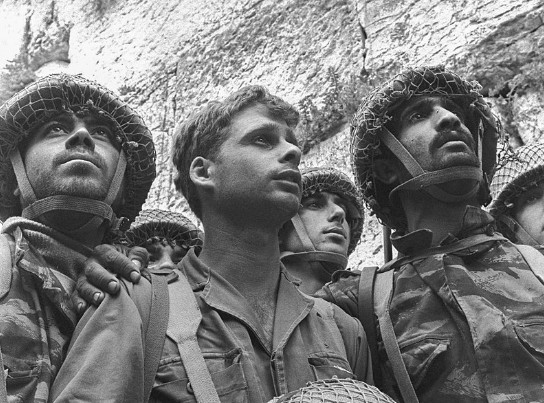
According to the German philosopher Hegel, history is written by universal reason, which reveals itself only when the future becomes reality and visible to the eye. This universal reason deceives the actors of history while they are preoccupied with the pursuit of political power, military conquests, glory, or wealth. Thus, the Israeli victory in 1967 brought down the barriers that had separated the various parts of the Palestinian people. At the end of the Six-Day War, the vast majority of the Palestinian nation found itself within a single, continuous territorial area under Israeli rule in Jerusalem, the West Bank, and the Gaza Strip. This territorial continuity created the political and geographic conditions for the renewed consolidation of Palestinian nationalism, after a stagnation that had lasted since the War of Independence and the establishment of the State of Israel. Two years after the Swords of Iron war in 2023, the question still stands: Does historical reason have a grand plan for the future of the conflict? Will historical reason trick the players in the Middle East and lead them to a political settlement, or has it grown weary of the conflict and will it abandon them to their fate?
It is commonly said that history is written by the victors. Others, however, claim today that victory is a matter of perception. In their view, history is written by the narrative that triumphs in public opinion. The German philosopher Georg Wilhelm Friedrich Hegel disagrees with both sides. In his view, history is written by a third, hidden agent, which is universal reason. The cunning of reason guides humanity toward a better future, one whose scope and contribution to humankind become apparent only when that future materializes and can be seen. Yet reason deceives the players of history: While they are focused on achieving political power, military conquest, glory, or money, universal reason—like Minerva, the Roman goddess of wisdom—spreads its wings only at dusk; it is an elusive entity.
Hegel is the philosopher of the Enlightenment, of progress, optimism, and rationality. To support his position, he offers the following insights: Alexander the Great stormed through the ancient East and reached as far as India. He believed his conquests placed him at the pinnacle of power and glory. In fact, he served the spread of the Hellenistic world—its culture, science, and governance. Julius Caesar, for his part, conquered Gaul and returned crowned with victories. In reality, he laid the foundations for imperial culture and the rule of law. Napoleon marched as far as Moscow, expecting eternal fame as a peerless military commander. In truth, Napoleon advanced throughout Europe the values of the French Revolution—liberty, equality, and fraternity. Therefore, according to Hegel, Alexander the Great, Caesar, and Napoleon were in fact merely historical instruments in the service of universal reason.
What, then, can be learned from all this about the Israeli–Palestinian conflict? Does the cunning of reason also operate here? Can we glimpse something of its hidden design? In fact, the Six-Day War, surprisingly, reveals the cunning of Hegelian reason.
Seemingly, there is no need to ask who the historical victor of the Six-Day War was. Facing an existential threat from the armies of Egypt, Syria, and the Jordanian Arab Legion, Israel struck first and, within six days, achieved a complete victory over the Arab armies, seizing the Sinai Peninsula, the Gaza Strip, the West Bank, and the Golan Heights. Strikingly and puzzlingly, the Palestinians were entirely absent from this war and took no part in it. Their passivity during the Six-Day War is telling. It stands in contrast to their active struggle during the 1920s and 1930s against the Zionist Yishuv in Mandatory Palestine, led by the mufti, Hajj Amin al-Husseini. Why, then, did the Palestinians refrain from participating in the Six-Day War? Was it for the same reason they were excluded from the 1949 armistice negotiations between Israel and the Arab states?
The reason lies in the Palestinians’ failures in their struggle against the Jewish Yishuv, both during what is known as the Arab Revolt of the 1930s and also during the 1940s, in the first half-year of the War of Independence, from the UN Partition Resolution of November 29, 1947, until the declaration of the State of Israel on May 14, 1948. The Palestinians’ military failure drove them to seek external Arab assistance. A dramatic example of this can be found in the failed attempt of the Palestinian commander in Jerusalem, Abd al-Qadir al-Husseini, to obtain weapons and logistical support from the central command in Damascus. His request was rejected, and he returned to his headquarters in Jerusalem humiliated. The generals in Damascus attached no military significance to the Palestinian guerrilla forces.[1]
The Palestinians were, in fact, a convenient pretext for the Arab military invasion, but the Arab rulers had no intention of supporting the Palestinian agenda or helping them become masters of the land. On the contrary, they regarded the Palestinians as a nuisance. The Palestinian military leadership was sidelined and rendered irrelevant. In May 1948, the Arab armies invaded Israel with the aim of conquering and dividing it among the participating Arab states. The Arab leaders conducted their campaigns against the Zionist Yishuv according to each ruler’s particular interests.
According to the plan of the Arab leadership, and in line with King Farouk’s desire to reach Jerusalem, the Egyptian army was to advance along the coastal plain, threaten Tel Aviv from the south, and simultaneously move toward Jerusalem from the southwest. The goal was to sever the city and the Negev from Israel’s center and create a continuous zone of Egyptian control in the south. The eastern effort, through Hebron and Bethlehem, was repelled by the Etzioni Brigade and members of Kibbutz Ramat Rachel, located on the outskirts of Jerusalem, while the western advance was defeated south of Ashdod. In the end, it was the cunning of reason that saved Tel Aviv.
At the end of the war, the Palestinians, who had initiated it, paid dearly for their defeat. They found themselves divided into four disconnected groups as refugees in the Arab states, subjects under Hashemite rule in Jordan and the West Bank, subjects under Egyptian rule in the Gaza Strip, and as citizens of Israel under military administration with no means of contact between them. This fragmented state of the Palestinian diaspora remained frozen until the Six-Day War.
The Israeli victory in 1967 brought down the barriers that had separated the different parts of the Palestinian people. At the end of the Six-Day War, the vast majority of the Palestinian nation, which had not participated in the war, found itself within a single, continuous territorial area under Israeli rule: in Jerusalem, the West Bank, and the Gaza Strip. This territorial continuity brought most of the Palestinian people under Israeli occupation and created the territorial and political conditions for the renewed consolidation of Palestinian nationalism.
Hegelian reason outwitted Israel. From the Palestinian perspective, the Six-Day War annulled the achievements of the War of Independence. The reemergence of the Palestinian national movement after 1967 accelerated rapidly.
Eleven universities and institutions of higher learning were established under Israeli occupation, among them Hebron University, Bethlehem University, Birzeit University, An-Najah National University in Nablus, Al-Quds University in Abu Dis, Al-Quds Open University, the Arab American University in Jenin and Ramallah, and the Polytechnic University in Hebron. Information and education became accessible to the public with the emergence of daily newspapers, which had not existed under Jordanian rule—among them Al-Quds, Al-Fajr, Al-Shaab, and Al-Nahar in Jerusalem, and Al-Ayyam in Ramallah.
The spread of information and education among the Palestinian public launched two parallel and opposing national processes: negotiations for coexistence with Israel on one hand, and counter-political unrest on the other. The cunning of Hegelian reason wavered between the confrontational line that led to the outbreak of the First Intifada in December 1987 and the path of negotiation that culminated in the signing of the Oslo Accords on September 13, 1993.
The cunning of reason was embodied in the figure of PLO Chairman Yasser Arafat. Arafat and his entourage were expelled from Beirut to Tunis at the end of the First Lebanon War. During his stay in Tunis, the First Intifada broke out spontaneously. Although Arafat had no hand in it, he understood that his exile in Tunis nullified his leadership. A local Palestinian leadership in Jerusalem and the West Bank could arise at any moment and take his place. With shrewdness, he agreed to the Oslo process, which reshuffled the cards in the Palestinian arena and returned it to the center of the Israeli–Arab conflict. With cunning, Arafat managed to launch the process that brought him first back to the Gaza Strip, and from there to the Muqata in Ramallah. From that point, he chose to torpedo the Camp David Summit in July 2000, leading to the eruption of the Second Intifada and the wave of suicide bombings in Israel.
Israel understood that Arafat had deceived it. Following the deadly Passover Eve attack at the Park Hotel in Netanya in March 2002, the IDF launched Operation Defensive Shield, reoccupied the West Bank cities, and laid siege to the Muqata for two years. Arafat’s health deteriorated, and he was evacuated to Paris, where he died in November 2004.
The cunning of Hegelian reason continued to serve the violent current within the Palestinian community. It transferred the baton of leadership from Fatah to Hamas—from Arafat to Yahya Sinwar—and to the massacre of October 7, 2023.
Two years after the Swords of Iron war, the question still stands: Does historical reason have a grand design for the future of the conflict? Will it outsmart the players in the Middle East and lead them toward a political settlement, or has it grown weary of the conflict and will it abandon them to their fate?
______________
[1] Danny Rubinstein, It’s Us or Them—The 24 Hours that Decided the War: The Kastel and Jerusalem, April 1948 [Hebrew] (Yedioth Books / Sifrey Aliyat HaGag, 2017).