The Gaza Envelope: Has Societal Resilience Declined? | INSS
go to header go to content go to footer go to search
INSS logo The Institute for National Security Studies, Strategic, Innovative, Policy-Oriented Research, go to the home page
INSS
Tel Aviv University logo - beyond an external website, opens on a new page
  • Campus
  • Contact
  • עברית
  • Support Us
  • Research
    • Topics
      • Israel and the Global Powers
        • Israel-United States Relations
        • Glazer Israel-China Policy Center
        • Russia
        • Europe
        • Antisemitism and Delegitimization
      • Iran and the Shi'ite Axis
        • Iran
        • Lebanon and Hezbollah
        • Syria
        • Yemen and the Houthi Movement
        • Iraq and the Iraqi Shiite Militias
      • Conflict to Agreements
        • Israeli-Palestinian Relations
        • Hamas and the Gaza Strip
        • Peace Agreements and Normalization in the Middle East
        • Saudi Arabia and the Gulf States
        • Turkey
        • Egypt
        • Jordan
      • Israel’s National Security Policy
        • Military and Strategic Affairs
        • Societal Resilience and the Israeli Society
        • Jewish-Arab Relations in Israel
        • Climate, Infrastructure and Energy
        • Terrorism and Low Intensity Conflict
      • Cross-Arena Research
        • Data Analytics Center
        • Law and National Security
        • Advanced Technologies and National Security
        • Foreign Information Manipulation and Interference
        • Economics and National Security
    • Projects
      • Preventing the Slide into a One-State Reality
  • Publications
    • -
      • All Publications
      • INSS Insight
      • Policy Papers
      • Special Publication
      • Strategic Assessment
      • Technology Platform
      • Memoranda
      • Posts
      • Books
      • Archive
  • Database
    • Surveys
    • Spotlight
    • Maps
    • Dashboards
  • Events
  • Team
  • About
    • Vision and Mission
    • History
    • Research Disciplines
    • Chairman of the Board
    • Board of Directors
    • Fellowship and Prizes
    • Internships
  • Media
    • Communications
    • Video gallery
    • Press Releases
  • Podcast
  • Newsletter
  • Campus
Search in site
  • Research
    • Topics
    • Israel and the Global Powers
    • Israel-United States Relations
    • Glazer Israel-China Policy Center
    • Russia
    • Europe
    • Antisemitism and Delegitimization
    • Iran and the Shi'ite Axis
    • Iran
    • Lebanon and Hezbollah
    • Syria
    • Yemen and the Houthi Movement
    • Iraq and the Iraqi Shiite Militias
    • Conflict to Agreements
    • Israeli-Palestinian Relations
    • Hamas and the Gaza Strip
    • Peace Agreements and Normalization in the Middle East
    • Saudi Arabia and the Gulf States
    • Turkey
    • Egypt
    • Jordan
    • Israel’s National Security Policy
    • Military and Strategic Affairs
    • Societal Resilience and the Israeli Society
    • Jewish-Arab Relations in Israel
    • Climate, Infrastructure and Energy
    • Terrorism and Low Intensity Conflict
    • Cross-Arena Research
    • Data Analytics Center
    • Law and National Security
    • Advanced Technologies and National Security
    • Foreign Information Manipulation and Interference
    • Economics and National Security
    • Projects
    • Preventing the Slide into a One-State Reality
  • Publications
    • All Publications
    • INSS Insight
    • Policy Papers
    • Special Publication
    • Strategic Assessment
    • Technology Platform
    • Memoranda
    • Posts
    • Books
    • Archive
  • Database
    • Surveys
    • Spotlight
    • Maps
    • Dashboards
  • Events
  • Team
  • About
    • Vision and Mission
    • History
    • Research Disciplines
    • Chairman of the Board
    • Board of Directors
    • Fellowship and Prizes
    • Internships
    • Privacy Policy and Terms of Use
  • Media
    • Communications
    • Video gallery
    • Press Releases
  • Podcast
  • Newsletter
  • Campus
  • Contact
  • עברית
  • Support Us
bool(false)

Publications

Home Publications INSS Insight The Gaza Envelope: Has Societal Resilience Declined?

The Gaza Envelope: Has Societal Resilience Declined?

INSS Insight No. 1186, July 4, 2019

עברית
Carmit Padan
Meir Elran
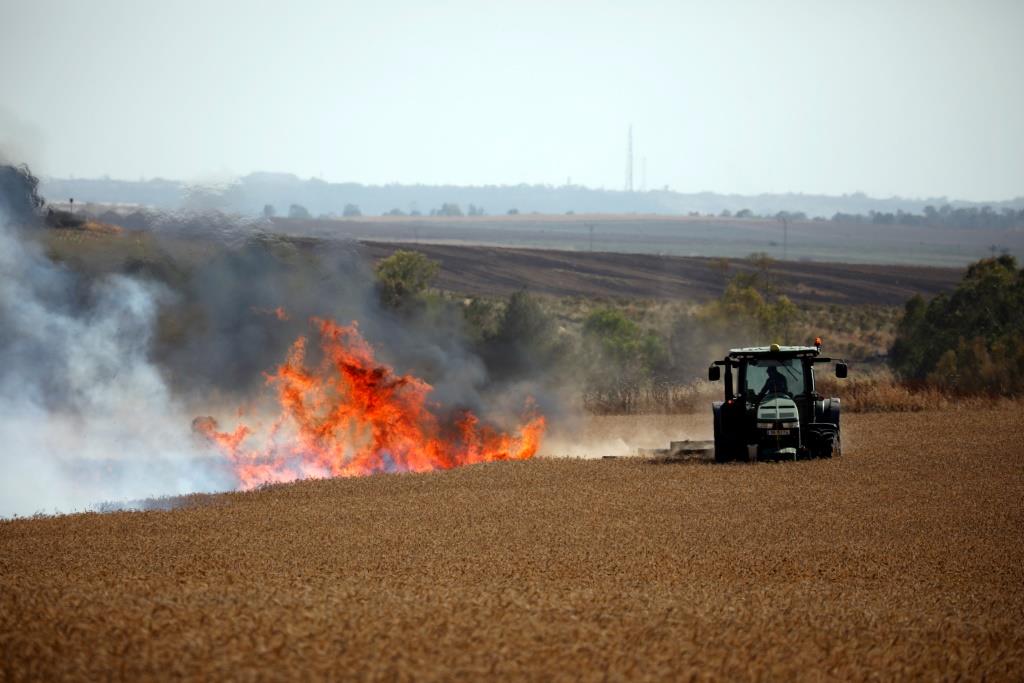
A farmer drives a tractor as fire burns part of a field on the Israeli side of the border between Israel and Gaza, Israel May 15, 2019.

Despite contentions that events of the past year have reduced the level of societal resilience in the Gaza envelope communities, a high and even improved level of systemic functioning prevails regarding the civilian capacity to stand up to immediate security challenges. In addition, the local population continues to increase, and construction is on the rise. The critical question is whether the continued “rounds of escalation” over time will negatively affect the high functional resilience in the area. It is possible that mental stress among the population and high societal resilience will coexist, especially if two conditions are met. The first (already extant) is that the local leaderships continue to provide a high level of basic services, including a reasonable response to the security disruptions. The second condition (which does not exist) is the government’s provision of hope regarding the possibility of a sustainable solution that will prevent, or at least greatly reduce the recurring security disruptions in the region. The absence of a solution to the continued threat from Gaza and the ambiguity regarding Israel’s approach to Hamas creates a vacuum that might have a detrimental impact on the resilience in the Gaza envelope.


Societal resilience, as defined through the prism of functionality, represents a system's capacity to contain the repercussions of a severe disruption, bounce back quickly, and resume normal and even improved functionality. Studies we conducted in the so-called Gaza envelope communities between 2006 and 2016 found societal resilience to be on a high level. The criteria considered in the previous research included organizational capacity, leadership, and social trust. The analysis attested to the localities’ high functional capacity during Hamas attacks. Moreover, these same communities experienced impressive demographic, social, and economic growth between and following disruptions. This happened despite the ongoing threat in the region, which mushroomed in three rounds of violent clashes with Hamas, including Operation Protective Edge (summer 2014), which was notable for its 50-day long duration and the significant disruption it caused to daily life.

Since March 2018, there have been marked changes in the nature of the security threats along the Gaza border. After more than three and a half years of relative quiet, following the ceasefire that ended Operation Protective Edge, the Gaza envelope localities once again came under intense security pressures. These comprised the "Marches of Return" along the border fence and explosive balloons and incendiary kites, which have caused numerous fires in the area that inflicted significant environmental damage and consistently disrupted daily life. These incidents join the ongoing harassment of the population in a variety of manners, as well as short but intense rounds of escalation, characterized by significant amounts of high trajectory fire (including anti-tank missiles launched directly at vehicles). The IDF responded with attacks on Hamas and Islamic Jihad military positions and limits on the Gaza fishing zone, and more recently, suspension of fuel supply to the power station in the Gaza Strip. Repeated occurrences of this kind have severely undermined the daily routine of the Israeli population, creating major psychological stress.

This article questions whether these trends have also resulted in a genuine change in the population’s societal resilience, as has recently been argued by some people in the region. Indeed, various voices from the local population, public officials, and regional leaders have recently pointed to possible signs of a "crumbling of resilience" among individuals and the local communities. They contend that given common references to a "never-ending war of attrition," fear and uncertainty once again prevail in some of the communities, resulting in talk of leaving the area (especially among families with children), reduced numbers of potential new residents, the inability of the resilience centers to cope with the number of applicants, and the lack of hope for tranquility, or a long range truce, that will allow normal routine. "We’ve reached the saturation point" is a common metaphor used by the local population in describing their dire situation.

At the same time, as far as the civilian capacity to stand up to the immediate security challenges is concerned, a high and even improved level of systemic functioning prevails. The community and regional organs established in recent years (community emergency teams, resilience centers, war rooms, alert squads, firefighting teams, and a direct connection with the IDF's regional division) operate in optimal fashion. They address the needs of the population with dedication, professionalism, perseverance, sensitivity, and understanding regarding emotional needs, including the desire to temporarily exit the disrupted communities and "recharge batteries" following stressful escalations. In other words, the experienced civilian emergency systems function amidst a high level of civilian resilience, complemented by the multi-faceted strong and ongoing defense provided by the IDF.

Societal resilience is also measured by a continued momentum of civilian growth. For example, along with the negligible number of families who have chosen to leave the Gaza envelope, the past year has witnessed the continued absorption of new families: ten families were accepted as full members of Kibbutz Kfar Azza, another four families joined Kibbutz Nahal Oz, and additional families are expected to settle in the area before the end of this year (the two kibbutzim are part of the Sha`ar Hanegev Regional Council, which in the past year alone has demonstrated impressive population growth, increasing from 5,000 to 8,700 residents). The nearby town of Sderot is also enjoying rapid growth, with the population jumping from approximately 23,000 residents in 2016 to more than 28,000 today.

In addition, and despite the ongoing security disruptions, there are no signs of a reduction in the area’s impressive economic growth. Major new construction in Sderot and the rural localities is clearly visible. New economic projects are underway, such as the cooperation between Sderot and Sha`ar Hanegev in establishing a joint industrial park. The Gaza envelope continues - with the massive assistance of the state - to flourish and build itself as a thriving region, reflecting distinctive, stable resilience.

The critical question is whether the continued "rounds of escalation" over time, which create severe disruptions and therefore increase the sense of social stress and tension, will negatively affect the high functional resilience in the area. Although there is no unequivocal answer to this question, against the background of past experience in Israel and abroad regarding disruptions following natural and manmade events, it is not unconceivable that both phenomena – mental stress among residents and high societal resilience – will coexist, especially if, in the Israeli case, two conditions are met. The first (already extant) is that the local leaderships continue to provide a high level of basic services, including a reasonable response to the security disruptions, and more importantly, to build a "sense of togetherness," community, and belonging. The second condition (which does not exist) is the government's provision of hope regarding the possibility of a sustainable solution that will prevent, or at least greatly reduce the recurring security disruptions in the region. In the meantime, the government continues to project the lack of a clear policy vis-à-vis Hamas, and refrains from presenting an approach regarding the future solution to the ongoing conflict. The absence of a solution to the continued threat from Gaza and the ambiguity regarding Israel's approach to Hamas creates a vacuum that might have a detrimental impact on the resilience in the Gaza envelope that is a primary Israeli national interest.

The opinions expressed in INSS publications are the authors’ alone.
Publication Series INSS Insight
TopicsHamas and the Gaza StripSocietal Resilience and the Israeli Society
עברית

Events

All events
Iraq – What Looms Ahead?
20 January, 2026
12:00 - 13:00

Related Publications

All publications
Habbou Ramez/ABACA via Reuters Connect and REUTERS (modified by INSS)
De-Hamasification of the Gaza Strip: Learning from Western and Arab Models of Deradicalization
The radicalization of Palestinian society in the Gaza Strip is not a new phenomenon, but the process has accelerated and deepened dramatically since Hamas’ takeover of the territory in 2007. Under its rule, an extremist religious-nationalist ideology has been systematically embedded across all spheres of Gaza life—from education and religious institutions to welfare and the media—producing a profound “Hamasification” of public consciousness. The war that erupted on October 7 brought unprecedented ruin to the Gaza Strip, both physically and institutionally, posing a monumental reconstruction challenge, but also a rare historic opportunity. This memorandum argues that military disarmament and physical rehabilitation alone will not ensure long-term security and stability, and that a far deeper process of “de-Hamasifcation” is required: dismantling Hamas’ ideological and institutional hegemony and replacing it with a more moderate civic and normative infrastructure. The study presents a comparative analysis of Western and Arab deradicalization models and finds that Western approaches—such as those implemented in Germany and Japan—struggle to provide an adequate response to Gaza’s cultural and political context. Instead, we propose adopting operational principles drawn from contemporary Arab models, particularly the “civic-transformative” model applied in the Gulf states, which combines a firm crackdown on extremist actors with re-education toward religious tolerance and broad-based economic rehabilitation. The paper outlines an integrative strategy encompassing sustained security demilitarization, the mobilization of an Arab coalition to provide religious and political legitimacy, and the establishment of a credible political horizon as a counterweight to the ethos of “resistance.” Only the combination of these elements can generate a viable governing and ideological alternative to Hamas and lead to a more stable long-term security environment for the State of Israel.
05/02/26
REUTERS / Jonathan Ernst
Trump’s Board of Peace: An Initiative for the Gaza Strip or an Alternative to the UN?
What is the mission of the international board established by the US president as part of his plan to end the war in the Gaza Strip—and what are the implications of Trump’s move?
04/02/26
From Jihad to Justice: Hamas’s Outreach to the International Arena
Rebranding as “freedom fighters,” shifting responsibility and blame, and appropriating the language of international law: examining Hamas’s appeal to the Western world through war-summary document
02/02/26

Stay up to date

Registration was successful! Thanks.
  • Research

    • Topics
      • Israel and the Global Powers
      • Israel-United States Relations
      • Glazer Israel-China Policy Center
      • Russia
      • Europe
      • Antisemitism and Delegitimization
      • Iran and the Shi'ite Axis
      • Iran
      • Lebanon and Hezbollah
      • Syria
      • Yemen and the Houthi Movement
      • Iraq and the Iraqi Shiite Militias
      • Conflict to Agreements
      • Israeli-Palestinian Relations
      • Hamas and the Gaza Strip
      • Peace Agreements and Normalization in the Middle East
      • Saudi Arabia and the Gulf States
      • Turkey
      • Egypt
      • Jordan
      • Israel’s National Security Policy
      • Military and Strategic Affairs
      • Societal Resilience and the Israeli Society
      • Jewish-Arab Relations in Israel
      • Climate, Infrastructure and Energy
      • Terrorism and Low Intensity Conflict
      • Cross-Arena Research
      • Data Analytics Center
      • Law and National Security
      • Advanced Technologies and National Security
      • Foreign Information Manipulation and Interference
      • Economics and National Security
    • Projects
      • Preventing the Slide into a One-State Reality
  • Publications

    • All Publications
    • INSS Insight
    • Policy Papers
    • Special Publication
    • Strategic Assessment
    • Technology Platform
    • Memoranda
    • Database
    • Posts
    • Books
    • Archive
  • About

    • Vision and Mission
    • History
    • Research Disciplines
    • Chairman of the Board
    • Board of Directors
    • Fellowship and Prizes
    • Internships
    • Support
    • Privacy Policy and Terms of Use
  • Media

    • Communications
    • Video Gallery
    • Press Release
    • Podcast
  • Home

  • Events

  • Database

  • Team

  • Contact

  • Newsletter

  • עברית

INSS logo The Institute for National Security Studies, Strategic, Innovative, Policy-Oriented Research, go to the home page
40 Haim Levanon St. Tel Aviv, 6997556 Israel | Tel: 03-640-0400 | Fax: 03-744-7590 | Email: info@inss.org.il
Developed by Daat ,Yael Group.
Accessibility Statement
This site is protected by reCAPTCHA and the Google Privacy Policy and Terms of Service apply.
No audio version available for this podcast