


Publications
INSS Insight No. 833, June 30, 2016
Follow us on Google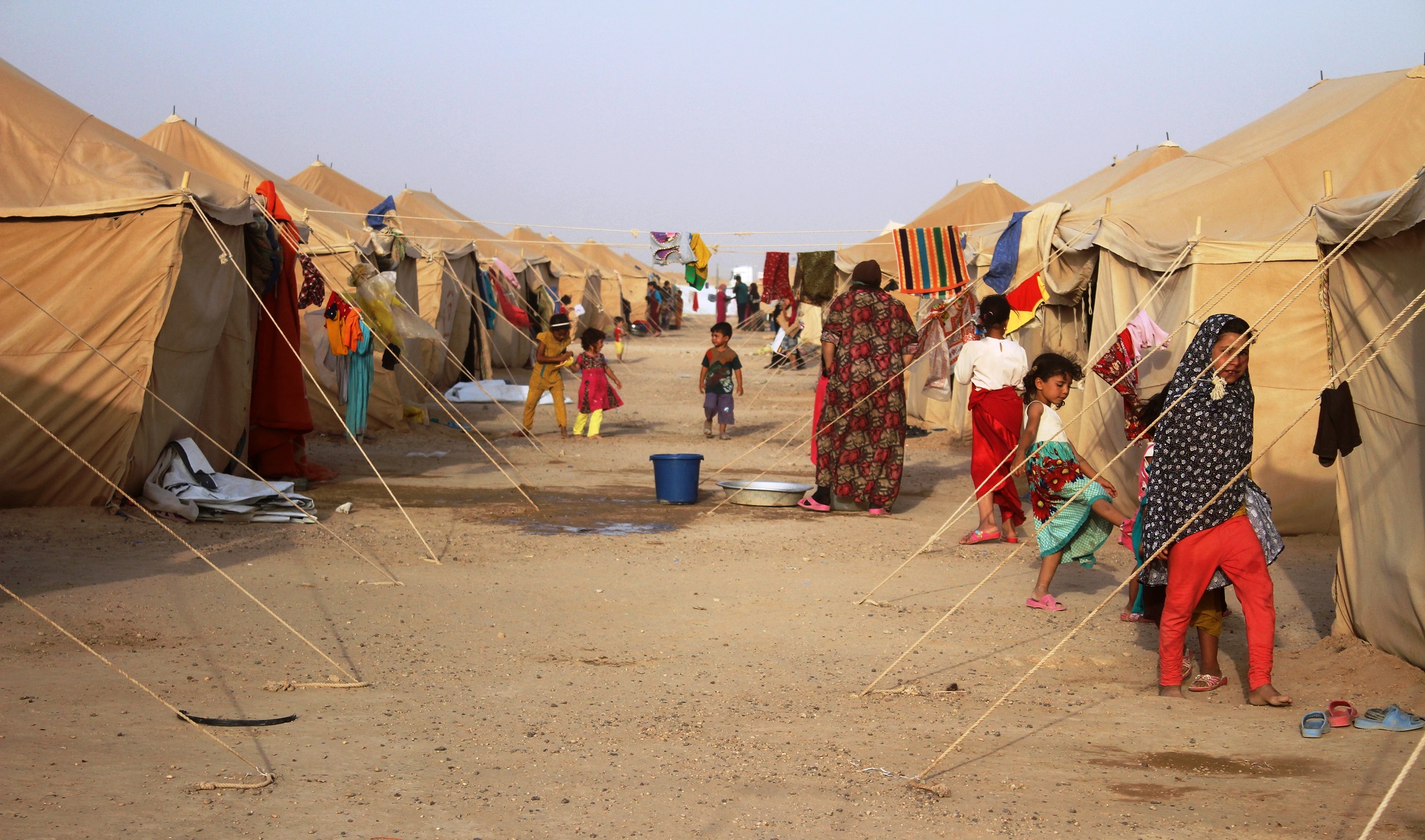
The two-year mark since the Islamic State was established as the foundation of a new caliphate, with Abu Bakr al-Baghdadi crowned as its caliph, invites a situation assessment of this singular enterprise. Unlike the first year of activity, in which the Islamic State projected an image of a successful, expanding entity, it now appears that the fulfillment of its vision to establish a caliphate in the heart of the Levant has dwindled. In recent months there have been many reports of the Islamic State’s military setbacks throughout the Middle East. In Iraq, it lost its hold on Fallujah, and there are preparations underway to liberate Mosul, the Islamic State’s key stronghold in the country. The Islamic State has lost strongholds in Syria too, and reports testify to preparations for the conquest of Raqqa, the Islamic State’s capital in the region. In Libya there is fierce fighting to liberate Sirt – the principal stronghold of the Islamic State after it was ousted from its strongholds in Benghazi and Derna – between the Islamic State and local forces, some of which are fighting in the name of the “unity government” (whose unity is questionable) while others are fighting in al-Qaeda’s name. Furthermore, senior officials, leading the US campaign against the Islamic State, have said that to date, the Islamic State has lost 50 percent of the territory it captured in Iraq, some 20 percent of land conquered in Syria, and about 50 percent of its income because of the losses in the oil reserves it had seized. These developments indicate that Baghdadi, who two years ago gambled heavily when he declared himself caliph, is now facing the very real possibility that he might lose Islamic State strongholds to a broad coalition of enemies. For its part, this coalition is intent on proving that Baghdadi’s calculations were mistaken and that the cost he and his people will be forced to pay will be no less painful than the price that the Islamic State and its destructive, murderous conduct exacted of its enemies.
Yet despite these optimistic reports, it is too early to conclude that we are seeing the collapse of the Islamic State as a state entity in control of vast territories. First, it is difficult to foresee how long the efforts to liberate key areas from the Islamic State may continue and at what cost. The liberation of Mosul, for example, might confront several obstacles, including: internal conflicts within the Shiite ruling circles in Iraq; the complexity involved in operating forcers that will have to lead the campaign in the city; the concern about the Shiite Popular Mobilization Forces (Hashd al-Shaabi) taking revenge against the Sunnis in the liberated areas and perpetrating mass slaughters there; and the United States’ reservations about Iran’s involvement – either directly or via its proxies – in this campaign. In Syria, too, it is hard to find the forces that will lead the battle to liberate Raqqa. The Kurds, who have shown themselves to be supremely effective in fighting the Islamic State in Iraq and Syria and are leading the charge on the city together with the Free Syrian Forces, are currently reluctant to enter the city, fearing resistance from and tensions with the local Sunni population. Moreover, there is well-founded fear of local residents being subjected to mass killings and destruction not only in Mosul but in all battlefields at the hands of the Islamic State, which has opted for a systematic “scorched earth” policy.
Furthermore, even if it becomes clear that the rapid – almost meteoric – rise of the Islamic State and its past conquests of extensive territories have been curbed, and there is a clear process of retreat underway, the disappearance of the Islamic State as an influential and game-changing actor in the Middle East is not expected within the next several years, as the fundamental conditions in the chaotic Middle East have not changed and are not expected to change in the foreseeable future.
The Middle East in the post-Arab Spring era remains unstable. Many places have seen the destruction of their economic infrastructure, and many of the war-torn region’s residents are displaced in their native lands or have become refugees in neighboring countries. Many have left the Middle East altogether. Much of the Middle East enjoys only partial governance and much lacks any effective governance whatsoever, let alone such that can function as a stable pillar and serve the needs of the local people. In such places, the Islamic State can find alternate territories, ripe for takeover, to replace the areas it has lost.
In addition, the particular – often contradictory – interests among the region’s power brokers, such as Turkey, Saudi Arabia, and Iran, as well as the global powers of Russia and the United States, can also be expected to complicate coordination of the push against the Islamic State and slow down the process of its dismantlement. Great economic and military investment as well as political will and, most importantly, ongoing consecutive coordinated activity, are all needed to keep Islamic State forces from recapturing areas from which it has been ousted.
Moreover, the major concern that the Islamic State is preparing for an extensive terrorist campaign in cities throughout the world, especially in the West, is not unfounded. The primary means available to the Islamic State is its large reserve of fighters located in a hundred different countries across the globe. In the last two years, the Islamic State has managed to recruit local allies in various countries in the Maghreb, the Gulf, South and Southeast Asia, and Africa. These elements are liable to act to promote the Islamic State agenda, even if it sustains further blows in the Levant. According to US Director of National Intelligence James Clapper, the Islamic State has a reserve of some 30,000 fighters, of whom 7,000 are from West European nations. These are skilled, experienced fighters, indoctrinated Salafist jihadists , liable to carry out mass-casualty attacks in their countries of origin when ordered by the Islamic State or in response to attacks against it. These attacks, whether initiated by the Islamic State or self-initiated by Islamic State supporters, may fan incitement by Muslim immigrants and minorities against the West. This in turn will unleash radical right-wing elements that will exploit the opportunity to sharpen the suspicions of the Western public at large against immigrants from the Middle East and Africa and translate this into political gains affecting the political maps in many states, first and foremost in Europe. These countries are now at a crossroads because of the mass waves of immigration from the Middle East and Africa and the destabilization of the intra-European system, now in part also as a result of the British exit from the European Union.
The history of the Islamic State in the last two years, both in the Levant and in Europe, indicates that the hopes of the international coalition operating against global jihad (led in the past by al-Qaeda) to eradicate the phenomenon militarily have been dashed. Despite its military defeats and the losses of previous conquests, the Islamic State and its allies still have vast territorial, economic, and human resources available. It would thus seem that its ability to continue to serve as a significant, central actor in the international area and be the focus of attention in the media and political discourse throughout the world has not ebbed. A vast amount of additional resources – military, economic, diplomatic, and legal – will be needed to stop and contain its destructive impact on the Middle East and the rest of the world. If the nations fighting against the Islamic State want to accelerate the rate of its collapse and rebuild the wreckage it has wrought, they will have to set aside the disagreements that are the result of opposing interests. Yet while it is doubtful that respective particular interests will be subordinated to the greater common good, the lessons of 9/11 and the consequent military campaigns should be remembered by any state that refuses to fully cooperate in the fight against enemies such as the Islamic State, lest that state ultimately be forced to do so by its own painful reality.