


Publications
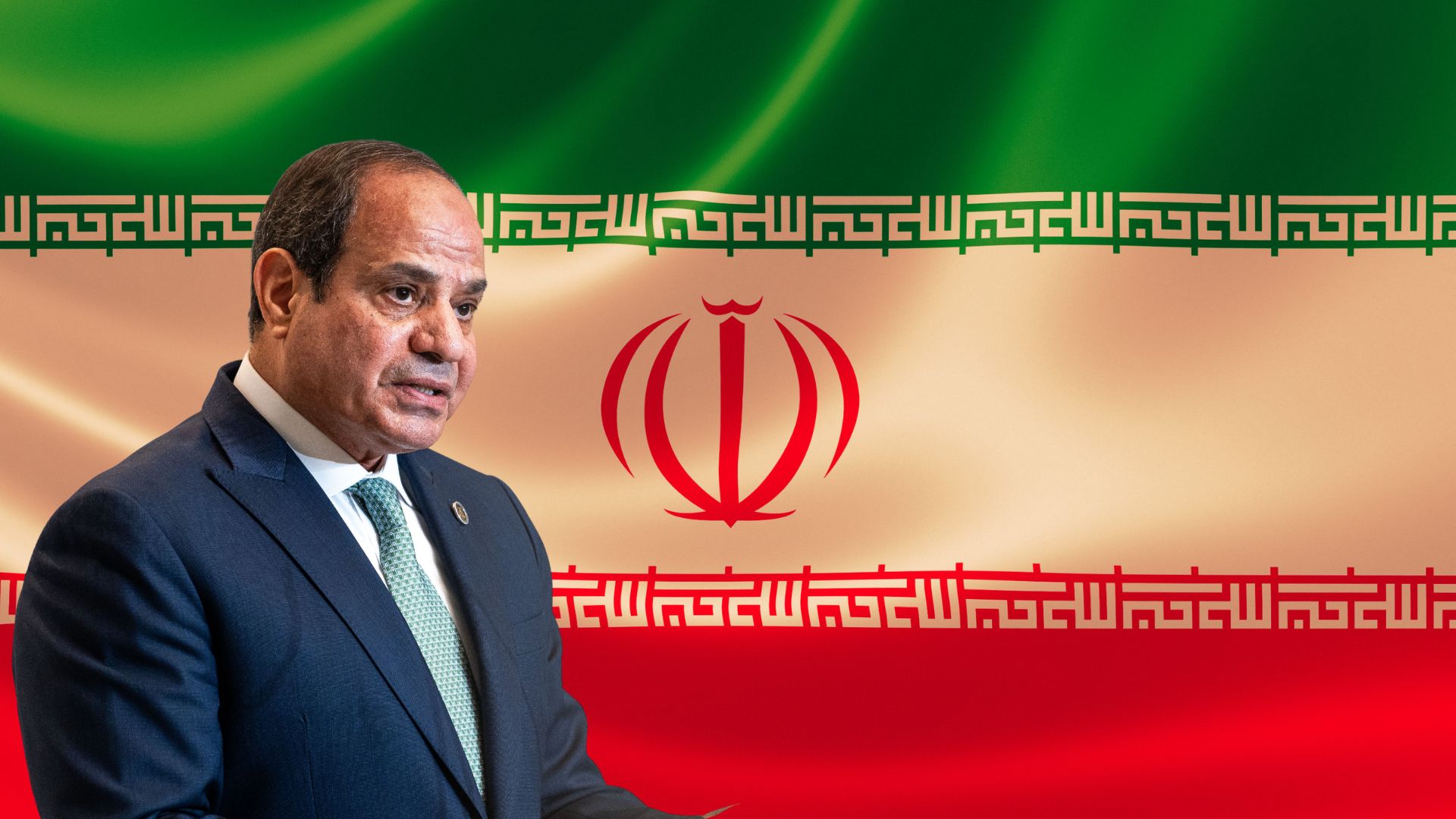
Why and how Cairo worked to achieve and maintain the U.S.-Iran ceasefire — and what conclusions should be drawn in Israel?
INSS Insight No. 2139, May 17, 2026
Follow us on GoogleWhile Pakistan led mediation efforts aimed at securing a ceasefire between the United States and Iran, Egypt also played an active, albeit secondary, role in the process. Faced with concerns over the war’s negative impact on its economic stability and on the regional balance of power, Egypt participated in mediation efforts within a new quadrilateral coordination mechanism alongside Pakistan, Saudi Arabia, and Turkey. Its aim was to consolidate this framework into an Arab-Islamic Quartet capable of leveraging the member states’ collective political, economic, and demographic weight to create a counterweight to both Israel and Iran. The emergence of this quadrilateral mechanism as a cohesive regional bloc, combined with a lack of necessary policy adjustments by Israel, risks heightening tensions between Jerusalem and Cairo and further deepening Israel’s regional isolation.
From the outset of Operation Roaring Lion, Egypt has called for de-escalation and diplomatic solutions, working to achieve a ceasefire agreement and prevent its collapse. According to international media reports, Cairo played complementary roles in efforts to bridge the gaps between Washington and Tehran on the path toward a ceasefire agreement. Egypt's president and foreign minister held talks with their counterparts in Tehran and Washington, while Egyptian intelligence maintained a backchannel with the Islamic Revolutionary Guard Corps (IRGC) in an effort to advance negotiations and formulate a framework for an agreement.
These moves reflected the opportunity Egypt identified to expand its regional mediating role beyond the Gaza Strip, following its involvement in September 2025 in mediation efforts between Iran and the International Atomic Energy Agency (IAEA). Upon announcement of the ceasefire, Egyptian President Abdel Fattah el-Sisi welcomed the agreement, stating that it had “warmed the hearts of millions of peace-seekers worldwide.” He expressed hope that it would become a permanent accord that would end the war, restore security and stability to the region, and ensure development, progress, and prosperity.
In an article in the pro-establishment Egyptian daily Al-Shorouk, editor Emad El-Din Hussein took pride in the central role Egypt played in the mediation process alongside Pakistan and Turkey, noting that "communication between the foreign ministers of the three countries took place almost daily." According to Hussein, "the lessons of this war, which lasted approximately 40 days, are many. One of them is that Egypt is a major and pivotal state, and it is impossible to manage the region or determine its fate without it."
Following the achievement of a ceasefire, Egypt worked in coordination with Pakistan, Turkey, and Saudi Arabia to prevent the renewal of hostilities. The Egyptian Foreign Minister, Badr Abdelatty, held ongoing consultations and talks with relevant players in an effort to facilitate successful negotiations between the United States and Iran. In a phone call received from his Pakistani counterpart, the two expressed hope for a second round of negotiations, during which the parties would reach understandings that would enable the war's definitive conclusion.
Given its aspiration to serve as a mediator, Egypt adopted a cautious stance throughout the war: it refrained from directly condemning U.S. and Israeli actions against Iran so as not to undermine its relations with Washington and Jerusalem. At the same time, Egypt’s condemnations of Iranian strikes on Arab states were initially hesitant, but later intensified due to the dissatisfaction of its Gulf allies—countries that serve as Egypt's economic backbone and expect it to stand by them with greater resolve. In an effort to ease tensions, President el-Sisi embarked on a series of solidarity visits to the United Arab Emirates, Saudi Arabia, Qatar, and Bahrain, emphasizing that any final agreement must take into account the concerns of the Gulf states, Jordan, and Iraq.
The Interests Behind the Mediation
From Cairo’s perspective, efforts to reach an understanding between Washington and Tehran serve a range of domestic and regional interests—economic, security, and political.
On the economic front, the broad conflict with Iran, although Egypt was not directly involved, destabilized its regional environment, dealt a severe blow to vital Egyptian interests, and inflicted cumulative damages estimated in the billions of dollars. The Suez Canal, one of Egypt's primary sources of foreign currency revenue, has recorded losses estimated at roughly $10 billion since October 7, 2023, due to the drop in maritime traffic caused by Houthi attacks in the Red Sea. The current escalation, and the fear of its further spread, prompted several international shipping companies to once again suspend passage through the canal, just as it began recovering from the prolonged war in Gaza.
In addition, against the backdrop of the war with Iran, Egypt experienced a slowdown in tourism, difficulties in transferring remittances from Egyptian workers in the Gulf back into the country, a temporary halt in gas flows from Israel, depreciation of the Egyptian pound against the dollar, and a rise in oil and fuel prices. Compounding these issues was the threat to the agricultural sector, which employs roughly a quarter of Egypt's workforce, due to the blockade of the Strait of Hormuz, through which approximately one-third of Egypt's fertilizer imports pass. At the same time, damage to the country's supply chains could worsen if maritime traffic through the Bab el-Mandeb Strait is disrupted, as a significant volume of goods passes through the Strait on its way to the Suez Canal.
Given Egypt’s economic vulnerability to the consequences of the war, its interest in securing a ceasefire grew stronger. Emergency measures implemented due to the conflict, including reduced energy consumption, a shift to remote work, and import restrictions, underscored the scale of the pressure facing Cairo and the importance of stabilizing the economy. Under these circumstances, as the damages of the war impact both the Egyptian treasury and the daily lives of its citizens, renewed regional escalation could deepen Egypt's domestic crisis and pose a challenge to the regime.
On the political-security front, the war intensified Egyptian concerns over Israel’s growing strength within the regional balance of power. From Cairo’s perspective, Israel—whose government repeatedly declares its intention to "reshape the Middle East" and promotes plans to encourage the voluntary migration of Palestinians from Gaza to Sinai—is seen as a growing threat to its national security. Similarly, the Israeli-American campaign against Iran is interpreted by many in Egypt as an effort to establish Israeli dominance in the region, relying increasingly on military force against its neighbors while backed by the U.S. administration, and as potentially shifting attention away from the Gaza arena. Therefore, ending the campaign through mutual understandings—without a decisive military victory—aligns with Cairo’s preference for preserving a multipolar regional order.
Furthermore, unlike the Gulf states, which perceive Iran as an immediate and direct military threat, Egypt—despite its aversion to the expansion of Iranian influence in the region and its nuclear ambitions—regards it as an indirect and less tangible threat. The absence of a shared border, relative geographical distance, and a gradual rapprochement observed in recent years enable Cairo to adopt a more flexible stance toward Tehran, maintaining open communication channels and avoiding integration into an overtly anti-Iranian camp. Alongside Egypt's hope for a future improvement in Arab-Iranian relations, it recognizes certain advantages in Iran's ability to deter Israel and balance its regional influence.
The Arab-Islamic Quartet: An Opportunity for a New Regional Architecture
The mediation efforts between Tehran and Washington were conducted through a quadrilateral mechanism launched by the foreign ministers of Egypt, Pakistan, Turkey, and Saudi Arabia in Riyadh on March 20, which has since convened twice more, in Islamabad and Antalya. This Arab-Islamic "Quartet" emerged in response to the war in Iran; however, the hopes pinned on it by Egyptian analysts extend beyond ending the conflict to shaping the post-war regional order across various strategic dimensions. These include reducing regional dependence on global powers, formulating stable security arrangements, countering the regional "hegemonic ambitions" attributed to Israel and Iran, strengthening joint regional defense frameworks, securing maritime routes, and safeguarding economic interests.
In addition, according to an April 2026 report by Bloomberg, the defense agreement forged between Saudi Arabia and Pakistan in September 2025 could eventually expand into a quadrilateral alliance that includes Egypt and Turkey. From Cairo’s perspective, the potential synergy among these states—which collectively account for approximately half a billion people—rests on their complementary sources of power: Egypt possesses a strong military, a large population, and control over the Suez Canal; Saudi Arabia holds vast oil reserves, significant economic influence, and leading religious standing as the cradle of Islam; Turkey features an advanced defense industry, NATO membership, and a strategic geographic position between East and West; and Pakistan provides a nuclear umbrella. Furthermore, all four maintain good relations with global powers. Alaa Al-Ghatrifi, editor of the pro-establishment Egyptian daily Al-Masry Al-Youm, expressed hope that "this convergence will serve as the nucleus for a new regional order."
Concurrently, Egypt’s desire to demonstrate its strategic value to its Gulf allies while advancing regional interests of its own prompted it to revive a concept during the war that had been raised and shelved several times in the past: the establishment of a joint Arab military force to address regional challenges. Foreign Minister Abdelatty and others noted that such a force would enable Arab states to counter the threats and dangers facing them more effectively and to influence the regional order. According to several reports, Egypt also provided military assistance to several Gulf states during the war, including the deployment of Rafale fighter jets to the United Arab Emirates and of an upgraded Skyguard Amoun air defense system. These steps were intended to signal to the Gulf states that the economic backing they provide Egypt yields a tangible security dividend in return.
The roots of the initiative to establish a joint Arab force stretch back many years; however, it has never realized due to gaps between Arab states regarding the division of responsibility, the question of funding, and the definition of which adversaries the force would be directed against. In light of these gaps, and given the weakness of the Arab League, it is reasonable to assume that the current initiative to establish a joint Arab force is likely to encounter significant obstacles, with limited prospects for success. By contrast, the quadrilateral Arab-Islamic mechanism, which comprises a smaller number of states and has thus far focused on diplomatic activity rather than military pretensions, may have a greater chance of evolving into an effective framework for cooperation, one capable of increasing its members' regional weight and their influence vis-à-vis the administration in Washington. The Quartet also benefits from the shared experience gained by the "Group of Eight (G8)," a slightly older and broader Arab-Islamic alliance that emerged against the backdrop of the war in Gaza and likewise includes these same four nations.
Implications
In light of Egypt’s interest in ending the campaign against Iran and its involvement in mediation efforts, a renewal and prolonged continuation of the fighting could become another point of contention with Israel, straining the already chilly relations between the two countries. Under these circumstances, Egypt and the Arab-Islamic frameworks in which it operates—including the "Quartet"—are likely to adopt confrontational approach toward Israel on the Iranian issue and work to deepen its regional isolation. They may also challenge Israeli policy across additional arenas, ranging from Lebanon and the Palestinian arena (the Gaza Strip, the West Bank, and Jerusalem) to issues related to arms control.
To prevent a potential deterioration in relations with Cairo and to curb the consolidation of the quadrilateral mechanism, or similar frameworks, into an anti-Israel regional axis, it is recommended that Jerusalem adopt the following steps:
- Strengthening direct political and security dialogue with Cairo: Israel should work to bridge gaps with Egypt on disputed issues, while tightening coordination regarding the guiding considerations of the campaign against Iran. An effective bilateral channel could improve the alignment of expectations with Egypt and moderate its inclination to cultivate the Quartet as a competing regional framework. Furthermore, Israel could leverage Egypt's involvement in negotiations with Iran—alongside its interest in a swift end to the war and its commitment to its Gulf allies—to secure an agreement that aligns with Israel's security concerns and interests.
- Adopting restrained rhetoric: The Israeli leadership should avoid inflammatory statements that reinforce Israel’s negative and aggressive image in Egypt as a state seeking to unilaterally redraw the regional map through military force alone. Alongside highlighting Israel's deterrent military capabilities, emphasis should be placed on messaging that supports regional stability, respect the existing state order in the Middle East, and strive for diplomatic arrangements through peaceful means.
- Cultivating economic cooperation: The Israeli government should work to promote concrete shared interests with Egypt, particularly in the fields of gas, trade, and industry. Such a policy would underscore the extent to which peace with Israel serves as a valuable asset to the Egyptian economy, as well as the vital importance of preserving stable relations between the two countries even amid tensions and disagreements.
* The authors wish to thank Udi Dekel, Gallia Lindenstrauss, Raz Zimmt, and Yoel Guzansky for their valuable comments.