


America First? The Relevance of the BRICS in Trump’s New World Order and its impact on the Middle East. | INSS
go to header go to content go to footer go to search
INSS logo The Institute for National Security Studies, Strategic, Innovative, Policy-Oriented Research, go to the home page
INSS
Tel Aviv University logo - beyond an external website, opens on a new page
  • Campus
  • Contact
  • עברית
  • Support Us
  • Research
    • Topics
      • Israel and the Global Powers
        • Israel-United States Relations
        • Glazer Israel-China Policy Center
        • Russia
        • Europe
        • Antisemitism and Delegitimization
      • Iran and the Shi'ite Axis
        • Operation Roaring Lion
        • Iran
        • Lebanon and Hezbollah
        • Syria
        • Yemen and the Houthi Movement
        • Iraq and the Iraqi Shiite Militias
      • Conflict to Agreements
        • Israeli-Palestinian Relations
        • Hamas and the Gaza Strip
        • Peace Agreements and Normalization in the Middle East
        • Saudi Arabia and the Gulf States
        • Turkey
        • Egypt
        • Jordan
      • Israel’s National Security Policy
        • Military and Strategic Affairs
        • Societal Resilience and the Israeli Society
        • Jewish-Arab Relations in Israel
        • Climate, Infrastructure and Energy
        • Terrorism and Low Intensity Conflict
      • Cross-Arena Research
        • Data Analytics Center
        • Law and National Security
        • Advanced Technologies and National Security
        • Foreign Information Manipulation and Interference
        • Economics and National Security
    • Projects
      • Preventing the Slide into a One-State Reality
      • India-Middle East-Europe Economic Corridor (IMEC)
  • Publications
    • -
      • All Publications
      • INSS Insight
      • Policy Papers
      • Special Publication
      • Strategic Assessment
      • Technology Platform
      • Memoranda
      • Posts
      • Books
      • Archive
  • Database
    • Surveys
    • Spotlight
    • Maps
    • Dashboards
  • Events
  • Team
  • About
    • Vision and Mission
    • History
    • Research Disciplines
    • Chairman of the Board
    • Board of Directors
    • Fellowship and Prizes
    • Internships
  • Media
    • Communications
    • Video gallery
    • Press Releases
  • Podcast
  • Newsletter
  • Campus
Search in site
  • Research
    • Topics
    • Israel and the Global Powers
    • Israel-United States Relations
    • Glazer Israel-China Policy Center
    • Russia
    • Europe
    • Antisemitism and Delegitimization
    • Iran and the Shi'ite Axis
    • Operation Roaring Lion
    • Iran
    • Lebanon and Hezbollah
    • Syria
    • Yemen and the Houthi Movement
    • Iraq and the Iraqi Shiite Militias
    • Conflict to Agreements
    • Israeli-Palestinian Relations
    • Hamas and the Gaza Strip
    • Peace Agreements and Normalization in the Middle East
    • Saudi Arabia and the Gulf States
    • Turkey
    • Egypt
    • Jordan
    • Israel’s National Security Policy
    • Military and Strategic Affairs
    • Societal Resilience and the Israeli Society
    • Jewish-Arab Relations in Israel
    • Climate, Infrastructure and Energy
    • Terrorism and Low Intensity Conflict
    • Cross-Arena Research
    • Data Analytics Center
    • Law and National Security
    • Advanced Technologies and National Security
    • Foreign Information Manipulation and Interference
    • Economics and National Security
    • Projects
    • Preventing the Slide into a One-State Reality
    • India-Middle East-Europe Economic Corridor (IMEC)
  • Publications
    • All Publications
    • INSS Insight
    • Policy Papers
    • Special Publication
    • Strategic Assessment
    • Technology Platform
    • Memoranda
    • Posts
    • Books
    • Archive
  • Database
    • Surveys
    • Spotlight
    • Maps
    • Dashboards
  • Events
  • Team
  • About
    • Vision and Mission
    • History
    • Research Disciplines
    • Chairman of the Board
    • Board of Directors
    • Fellowship and Prizes
    • Internships
    • Privacy Policy and Terms of Use
  • Media
    • Communications
    • Video gallery
    • Press Releases
  • Podcast
  • Newsletter
  • Campus
  • Contact
  • עברית
  • Support Us
bool(false)

Publications

Home Publications Special Publication America First? The Relevance of the BRICS in Trump’s New World Order and its impact on the Middle East.

America First? The Relevance of the BRICS in Trump’s New World Order and its impact on the Middle East.

עברית
Jesse R. Weinberg
Arkady Mil-Man
Yaron Gamburg

Introduction 

Donald Trump’s return to the U.S. presidency has consolidated a shift in American foreign policy toward unilateralism, economic coercion, and transactional diplomacy. At the core of Trump’s “America First” policy is the belief that the international order long led by the United States has been turned against it, driven by deindustrialization and the disruptive effects of globalization. Instead, Trump seeks to restore American economic primacy, which he views as having been exploited by economic rivals such as China, and even by American allies. Trump’s unilateral, business-focused approach seeks to recalibrate the United States’ relationships with its allies and with entities—like BRICS—that he perceives as challenging American economic interests.

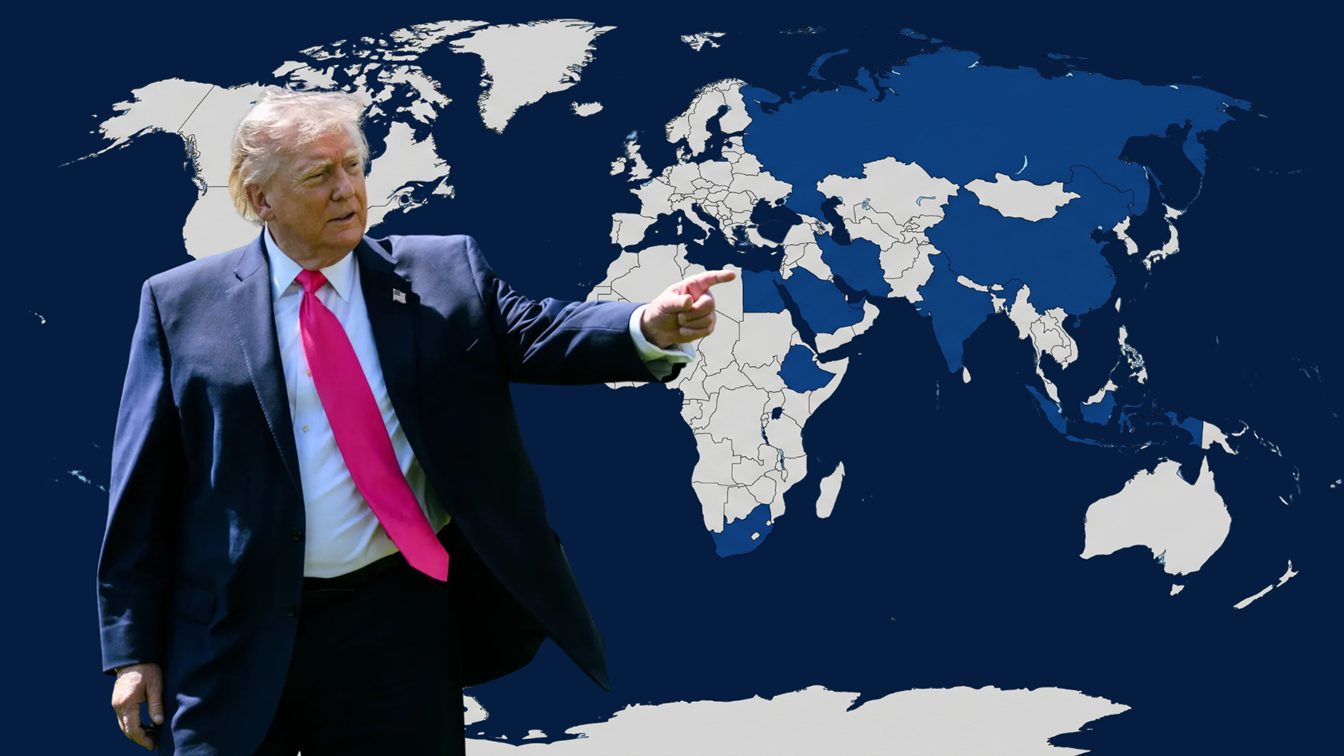
Within this framework, BRICS has become a point of U.S. concern. Trump has repeatedly portrayed the grouping as a challenge to the dollar-centered global financial system, warning against de-dollarization efforts and threatening punitive tariffs on states aligning with BRICS initiatives. Originally formed in 2009 by Brazil, Russia, India, and China and later expanded to include South Africa, BRICS has grown to ten members, most recently adding Egypt, Ethiopia, Iran, the UAE, and Indonesia in early 2025. The Trump administration views BRICS as a challenge to U.S. economic dominance, consistent with Trump’s transactional, “America First” foreign policy. While this approach resonated with Gulf states—whose wealth and personal access enabled close ties and major U.S. investments—it did not prevent the UAE and other Middle Eastern states from joining the bloc. Their participation raises a key question: why have regional states, including long-standing U.S. partners, aligned with BRICS amid an international order reshaped by Trump’s narrowing of U.S. commitments to multilateralism, alliances, and free trade?

For many U.S. partners, participation in BRICS reflects strategic hedging rather than ideological realignment. As a result, in a more fragmented and multipolar international system, BRICS functions as a platform to enhance strategic autonomy, diversify economic ties, and seek greater representation in global governance—without severing relations with the West.

Click here to read the complete publication on the Friedrich Naumann Foundation For Freedom website

The opinions expressed in INSS publications are the authors’ alone.
Publication Series Special Publication
TopicsIsrael-United States RelationsRussia
עברית

Events

All events
Iran, US, Israel, and the Global Jewish Community
10 March, 2026
12:00 - 13:00
Shutterstock

Related Publications

All publications
Jacek Boczarski / Anadolu via REUTERS
A Deepening Crisis in Israel’s Standing in the United States
How has the collapse of Israel’s standing in American public opinion manifested—and is it still possible, and if so how, to halt this dangerous deterioration?
23/04/26
Anadolu via Reuters Connect
From Legitimate Discourse to Antisemitic Theories in the United States in the Context of the War Against Iran
How did antisemitic narratives enter the public discourse in the United States during Operation Roaring Lion, and how should Israel respond?
14/04/26
The Iran War and the Politicization of the US–Israel Relationship
The Israeli-American war is speeding up U.S. trends of falling support for Israel and pushback against the traditional alliance. What can be done to prevent the further politicization of these strong bilateral ties?
26/03/26

Stay up to date

Registration was successful! Thanks.
  • Research

    • Topics
      • Israel and the Global Powers
      • Israel-United States Relations
      • Glazer Israel-China Policy Center
      • Russia
      • Europe
      • Antisemitism and Delegitimization
      • Iran and the Shi'ite Axis
      • Operation Roaring Lion
      • Iran
      • Lebanon and Hezbollah
      • Syria
      • Yemen and the Houthi Movement
      • Iraq and the Iraqi Shiite Militias
      • Conflict to Agreements
      • Israeli-Palestinian Relations
      • Hamas and the Gaza Strip
      • Peace Agreements and Normalization in the Middle East
      • Saudi Arabia and the Gulf States
      • Turkey
      • Egypt
      • Jordan
      • Israel’s National Security Policy
      • Military and Strategic Affairs
      • Societal Resilience and the Israeli Society
      • Jewish-Arab Relations in Israel
      • Climate, Infrastructure and Energy
      • Terrorism and Low Intensity Conflict
      • Cross-Arena Research
      • Data Analytics Center
      • Law and National Security
      • Advanced Technologies and National Security
      • Foreign Information Manipulation and Interference
      • Economics and National Security
    • Projects
      • Preventing the Slide into a One-State Reality
      • India-Middle East-Europe Economic Corridor (IMEC)
  • Publications

    • All Publications
    • INSS Insight
    • Policy Papers
    • Special Publication
    • Strategic Assessment
    • Technology Platform
    • Memoranda
    • Database
    • Posts
    • Books
    • Archive
  • About

    • Vision and Mission
    • History
    • Research Disciplines
    • Chairman of the Board
    • Board of Directors
    • Fellowship and Prizes
    • Internships
    • Support
    • Privacy Policy and Terms of Use
  • Media

    • Communications
    • Video Gallery
    • Press Release
    • Podcast
  • Home

  • Events

  • Database

  • Team

  • Contact

  • Newsletter

  • עברית

INSS logo The Institute for National Security Studies, Strategic, Innovative, Policy-Oriented Research, go to the home page
40 Haim Levanon St. Tel Aviv, 6997556 Israel | Tel: 03-640-0400 | Fax: 03-744-7590 | Email: info@inss.org.il
Developed by Daat ,Yael Group.
Accessibility Statement
This site is protected by reCAPTCHA and the Google Privacy Policy and Terms of Service apply.