


Publications
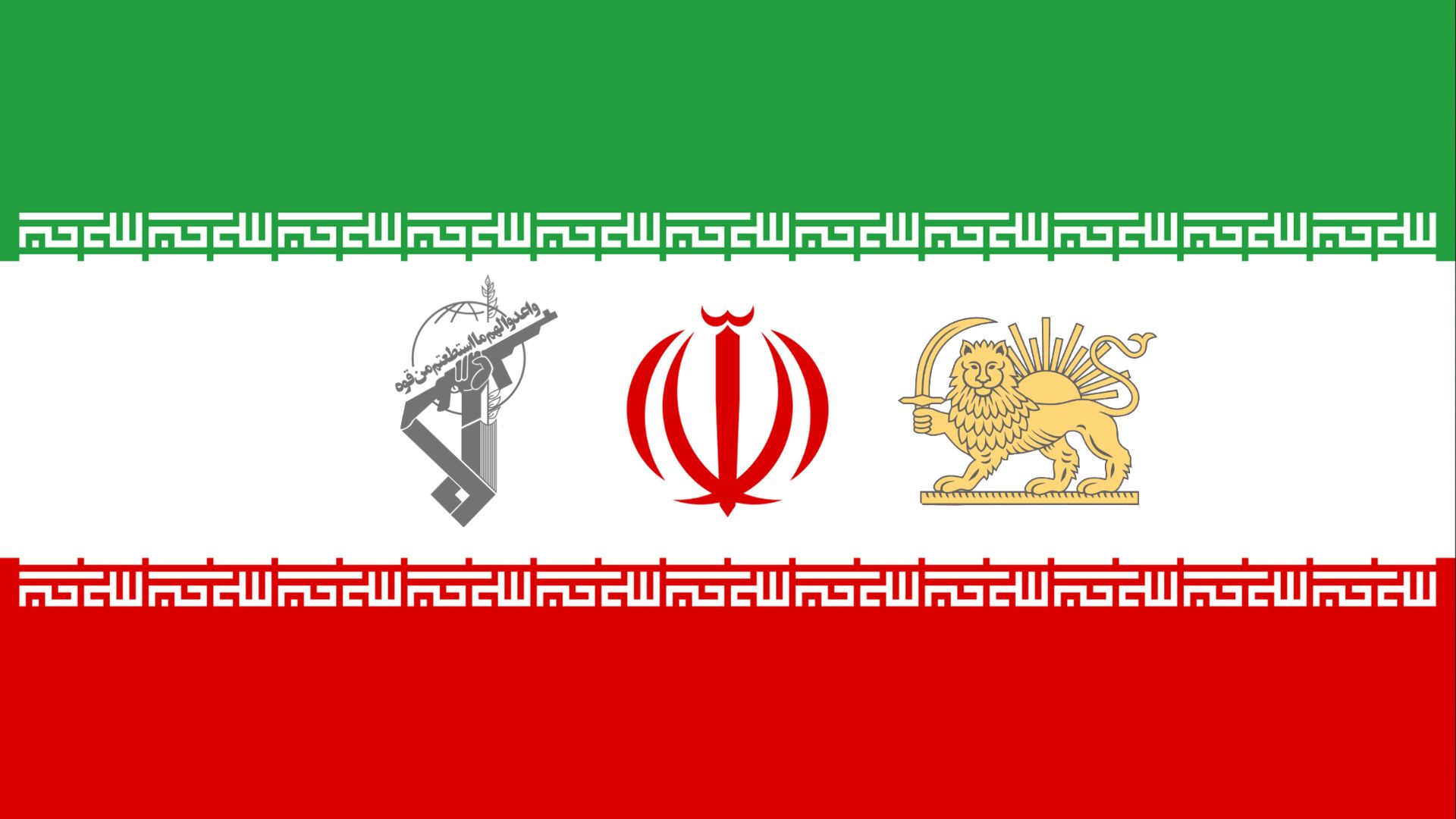
Even if the regime manages to overcome the current crisis temporarily, roughly half a century after the revolution, the Second Iranian Republic appears to be approaching its historical end. What might the Third Republic look like?
INSS Insight No. 2087, January 20, 2026
Follow us on GoogleThe foundations of the Islamic Republic have, since the Islamic Revolution in 1979, been anchored in the concept of the rule of the jurist (velayat-e faqih), shaped in the spirit of the vision of the revolution’s architect, Ruhollah Khomeini. His death in 1989 necessitated a clear deviation from this principle since none of his loyal disciples possessed sufficiently high religious standing to succeed him. The appointment of Ali Khamenei as Iran’s supreme leader—made possible by an amendment to the Iranian constitution—heralded the establishment of the “Second Islamic Republic.” Although governance remained in the hands of clerics, primacy was no longer vested in the supreme source of theological authority. Despite efforts to consolidate his rule, Khamenei’s regime failed to prevent criticism and protest, which over the past decade have intensified to the point of posing a significant threat to regime stability. The Islamic Republic’s ongoing failure to provide solutions to the severe crises confronting the state, alongside a crisis of legitimacy and the erosion of the standing of the clerical establishment, casts serious doubt on its ability to preserve its current form. In this reality, and given the absence of revolutionary change likely to lead to regime collapse in the near future, the possibility of a transition to an alternative governing model with authoritarian characteristics is gaining strength—potentially based on authoritarian-military leadership centered on a strongman from the armed forces, particularly the Islamic Revolutionary Guard Corps (IRGC). Even if the regime manages to overcome the current crisis temporarily, it can be assessed that the Second Iranian Republic is approaching its historical end.
Against the backdrop of recent protests in Iran and the growing challenges to the stability of the Islamic regime, economist and political commentator Saeed Laylaz has assessed that Iran may soon undergo a political transformation driven by the emergence of a new leader from within the system. Such a figure, he suggested, could bring about a shift in domestic and foreign policy, including economic reforms and improved relations with the West. In an interview with Euronews Persian in early January 2026, Laylaz—who had served as an adviser to former Iranian president Mohammad Khatami—asserted that the Islamic Republic has reached a dead end but still lacks a viable alternative, as no opposition is capable of seizing power. He argued that slogans such as “Reza Shah, may your soul rest in peace,” heard during demonstrations over the past decade, reflect a public yearning for a strong and effective leader, comparable to Napoleon Bonaparte, who could rescue the country from its current crisis. Laylaz’s remarks reflected a discourse that has developed in Iran in recent years regarding the possibility of transitioning to a new governing model to replace the clerical rule established after the Islamic Revolution in 1979.
Since the revolution, the foundations of the Islamic Republic have been rooted in a unique interpretation of Shiite Islam, shaped by the vision of Ruhollah Khomeini, who articulated the guiding principle of the rule of the jurist (velayat-e faqih). This concept was intended to justify centralized religious rule during the absence of the “Hidden Imam,” granting supreme authority to a senior jurist who would lead the state in the name of Islam and Shiism. The main difficulty in implementing the rule of the jurist lay in the fact that it was designed from the outset according to Khomeini’s own exceptional stature. On the eve of the revolution, none of the high-ranking clerics fully shared this conception, and none of the revolutionary clerics who supported Khomeini possessed the high religious standing necessary to exercise authority according to his doctrine.
Khomeini’s death in 1989 necessitated a clear deviation from this principle, as his conception of the supreme leader envisioned the most senior cleric in terms of both scholarship and piety. Because none of his loyal disciples possessed sufficient religious stature to succeed him, it became necessary to separate theological authority (marjaʿiyya) from political-governing authority (velayat) and to enshrine this distinction in the amended 1989 constitution, thereby enabling the appointment of Ali Khamenei as Khomeini’s successor. Khamenei was not recognized as a source of religious authority (marjaʿ-e taqlid) and, until then, had only held the clerical rank of Hojjat ul-Islam, lower than that of ayatollah. He was designated successor primarily due to his loyalty to Khomeini’s path and the governing experience he had accumulated during the revolution’s first decade, especially during his eight years as president of Iran (1981–1989). His appointment thus represented a significant retreat from the principle of the rule of the jurist. Governance remained in clerical hands, but primacy was no longer vested in the supreme source of theological authority.
Khamenei’s appointment as supreme leader marked the establishment of the “Second Islamic Republic.” Since assuming office, Khamenei has sought to impose his authority over the clerical-scholarly establishment in Qom. This effort has rendered the establishment almost entirely dependent on regime funding and political support and has contributed to the significant erosion of its power and influence in recent decades. At the same time, Khamenei strengthened the IRGC as the principal pillar of support for consolidating his rule and preserving the regime’s stability.
Despite these efforts, the regime has failed to prevent criticism and protest against both Khamenei’s leadership and the principle of the rule of the jurist. As early as 1999, Iranian cleric and intellectual Mohsen Kadivar published an article arguing that Iran’s main problem was the principle of the rule of the jurist itself. In September 2010, senior reformist cleric and then-member of the Assembly of Experts, Ayatollah Ali Mohammad Dastgheib, issued a ruling that directly challenged the regime’s interpretation of the rule of the jurist. Responding to a religious query on the subject, he determined that a senior Shiite cleric could serve as an “absolute ruling jurist” only if he were recognized as a religious authority of the rank of marjaʿ. In such circumstances, he would possess broad powers to manage state affairs as the deputy of the “Hidden Imam.” By contrast, a “ruling jurist” appointed by the Assembly of Experts in accordance with the constitution, rather than by virtue of religious authority, would have limited powers and would be authorized only to coordinate among the three branches of government and prevent violations of citizens’ rights by those authorities.
Alongside growing criticism of the supreme leader, there has also been a significant erosion over the years in the standing of the clerical establishment as a whole. Processes of secularization in Iranian society—especially among the younger generation—together with the growing alienation many citizens feel toward clerics due to the politicization of the religious establishment since the revolution; the identification of clerics with a governing system perceived as failing and corrupt; the uncompromising positions of hardline clerics; and the relatively comfortable economic status of senior clerics—all have contributed to a marked decline in their standing and even to displays of public hostility toward clerics in the public sphere. The burning of hundreds of mosques during the most recent wave of protests in Iran provided another expression of the intensity of public hostility toward religious institutions.
Over the past decade, and particularly in recent years, amid increasing reports of the deteriorating health of Iran’s supreme leader, attention has increasingly focused on the question of succession. The 12-day war with Israel in June 2025, together with Khamenei’s few public appearances afterward, has further heightened this focus, especially given that Khamenei was forced to go into hiding during the war—a step that raised questions and doubts regarding his condition and the extent of his control over decision-making processes. One member of the Assembly of Experts, senior cleric Mohsen Araki, confirmed in 2019 that a three-member committee operating within the Assembly holds a confidential list of potential candidates from among senior clerics to succeed Khamenei. Another possibility raised has been the transfer of power to Khamenei’s son, Mojtaba, who for years has been regarded as having close ties with Iran’s security leadership.
At the same time, the Islamic Republic’s continued failure to provide solutions to the series of severe crises facing the state—foremost among them the economic crisis and water and electricity shortages—and even to ensure basic security for its citizens, alongside the decline of the stature of the religious establishment and the growing criticism even among its hardcore supporters, has raised significant doubts about its capacity to preserve itself in its current form. The repeated protests over the past decade are no longer isolated expressions of economic distress or temporary social anger; rather, they reflect a deep and enduring crisis of legitimacy that extends well beyond questions of government policy. Slogans heard in the streets against the leader, religious institutions, and the Islamic Republic itself testify to a fundamental rupture between the public and its founding values, including the doctrine of the rule of the jurist.
In this context, the possibility of a transition to an alternative governing model has gained increasing support—one centered on the appointment of a “strongman,” drawn from the armed forces, particularly the ranks of the IRGC, who could rely on military experience to address the country’s problems more effectively. Such a model would build upon the IRGC’s strengthened position in recent decades. Today, the organization plays a central role not only in Iran’s political system but also in its economy. Khamenei’s death or his early departure from the political arena—whether by consent or as a result of his removal amid growing concern within his inner circle over the regime’s instability—could pave the way not only for the end of the current leader’s era but also for a transition from the rule of the “turban-wearers” (clerics) to the rule of the “boot-wearers” (the military).
At this stage, it is not possible to identify a specific successor, and it is conceivable that initially state affairs would be managed by a collective leadership council, including senior political figures such as President Masoud Pezeshkian and Secretary of the Supreme National Security Council Ali Larijani, alongside current or former senior officials such as Majles Speaker Mohammad Bagher Ghalibaf. Another possibility is that the new ruler would prefer to preserve the institution of the spiritual leader while also weakening its authority, a system that could subsequently evolve into one-man rule. Iran has already experienced a similar process when the founder of the Pahlavi dynasty, army officer Reza Khan, ruled from 1921 as prime minister under the last Qajar shah, Ahmad Shah, before deposing him and proclaiming himself shah in 1925.
There is no certainty that a regime characterized by authoritarian-military rule would be accepted by a majority of the Iranian public or meet the citizens’ demands and grievances. Moreover, it is difficult to assess what policies such a regime would adopt. On the one hand, many IRGC veterans—particularly those shaped by the Iran–Iraq War—are closely associated with the conservative-hardliner camp and tend to favor a hawkish and confrontational approach toward the West. Their worldview holds that Iran must pursue forceful policies to strengthen its military capabilities and expand its regional influence, with potential implications for Iran’s nuclear and missile programs, regional ambitions, and relations with the United States, the Arab world, and Israel. On the other hand, the IRGC should not be viewed as a monolithic organization. Its members come from diverse political, social, and economic backgrounds, and their political views vary accordingly. Furthermore, an authoritarian-military regime may be more committed to the institutional interests of the armed forces than to revolutionary ideology, thereby allowing for greater pragmatism and flexibility.
In any event, given the unprecedented protest movement and its brutal suppression, it appears that both Iran’s political system and the theological-political doctrine upon which it rests have entered a deep crisis. In January 2020, former Majles member Parvaneh Salahshouri likened the Islamic Republic’s situation to the severe crisis faced by the Qajar dynasty in its final years. Having ruled Iran since 1789, it was ultimately overthrown in 1921 by Reza Khan. Even if the regime succeeds in temporarily weathering the current crisis, nearly half a century after the revolution, it can be assessed that the Second Iranian Republic is approaching its historical end—whether through a gradual process or through revolutionary change.