


Publications
The American commitment—and the European price: What are the outcomes of the military alliance summit held in The Hague—and how will they affect Israel?
INSS Insight No. 2014, July 15, 2025
Follow us on GoogleAt the NATO summit held in The Hague on June 24–25, European countries received a renewed American commitment to the collective security guarantee within the alliance. In return, they agreed to increase their defense budgets as demanded by President Trump. Nevertheless, obstacles remain in Europe’s path to security independence, and there is no certainty that the parties will fulfill their commitments. The shifts in power dynamics within NATO and the implications of Trump’s approach to relations between the United States and its partners will also influence Israel’s strategic environment.
The NATO summit in The Hague on June 24–25 highlighted the shift in the Trump administration’s approach toward Europe compared to that of the previous American administration. President Trump once again presented his clear demands that European member states raise their defense budgets and take greater responsibility for the continent’s security. These demands are central to the current US strategy toward Europe. This strategy is based on the perception of Europe as a secondary arena compared to other regions of the world—primarily the Indo-Pacific and Latin America—and adopts a businesslike approach while distancing itself from the traditional ideas of NATO, particularly collective security guarantees and alliances among democratic countries.
In addition, President Trump and his associates have expressed clear hostility toward many European countries and the European Union itself. This hostility has an economic aspect, namely the trade war Trump declared upon taking office in January 2025. This trade war is directed in part against the European Union, which Trump has described as an entity “established to screw the United States.” He views the trade imbalance between the United States and Europe, estimated at hundreds of billions of dollars, as an inequality that must be corrected.
Beyond economic and business considerations, a significant value and ideological gap separates the current American administration from most European countries. The speech by Vice President Vance at the Munich Conference in February 2025 marked a sharp departure from traditional American policy toward Europe. Vance criticized European leadership for what he described as a decline in freedom of speech—particularly affecting right-wing groups—and for what he viewed as excessively liberal immigration policies. These remarks, along with public support by officials in the Trump administration for far-right politicians and parties across Europe, have been seen as an attempt to interfere in intra-European politics and undermine liberal-democratic values. Additionally, the European Union and its institutions serve, in President Trump’s view, as examples of the inherent problems in multilateral organizations, which prioritize collective interests over national interests. In his dealings with Europe, Trump has preferred to engage in dialogue with national leaders—Italy’s Prime Minister Giorgia Meloni or Hungary’s Prime Minister Viktor Orban—rather than with EU representatives.
Furthermore, the Trump administration largely perceives the traditional transatlantic ties not as a strategic asset but as a burden—primarily due to Europe’s reluctance to increase defense spending. The tension on this issue is not new; President Obama harshly criticized European allies as “Free Riders” for failing to share the security burden, and even President Biden echoed similar concerns. However, unlike Trump, previous US administrations did not make continued transatlantic cooperation explicitly conditional on Europe’s financial commitments to NATO. In contrast, the Trump administration has placed budgetary contributions at the center of its NATO policy, suggesting that American support for a member state under attack could hinge upon that country’s defense spending. Already during his first term, Trump hinted that he would not rush to invoke Article 5 of the NATO treaty—which establishes collective security among member states—in the event of an attack against one of the members, if doing so did not serve American interests.
Several developments have heightened European concerns ahead of the NATO summit. Trump’s distrust of multilateral forums was evident at the G7 summit in Canada, held about a week earlier. The G7 summit ended without any significant diplomatic achievements, with President Trump leaving before its conclusion and tweeting insults at French President Emmanuel Macron. Furthermore, signs of the US administration’s waning commitment to Europe’s security were already apparent before the NATO summit. Senior US officials issued statements raising doubts, and media reports indicated that the United States was considering to relinquish NATO’s supreme command. In addition, a Pentagon force deployment review suggested the possibility of major reductions and even the withdrawal of American forces from Europe.
Against this background, the European NATO members came to The Hague with modest goals—to prevent the summit from collapsing and to secure a reaffirmation from President Trump of Article 5, the cornerstone of Europe’s security. In this regard, the Europeans largely achieved their goals. The summit took place without incident; all NATO members endorsed a joint declaration reaffirming the principle of collective security under Article 5; Russia was named as a threat; and support for Ukraine was included as a goal.
However, fundamental questions remained unanswered. Although Trump publicly expressed his commitment to Article 5, there was no discussion about the future US presence in Europe. Moreover, the war in Ukraine received only a cursory mention in the concluding statement, compared to its treatment in previous NATO summits. Russia was referenced only once, described as a “long-term threat,” and with no mention of Russian aggression in Ukraine, as had been the case until now. Ukraine itself was mentioned only twice and much more moderately than in previous declarations. No other threats were addressed, including those in the Indo-Pacific or the Middle East.
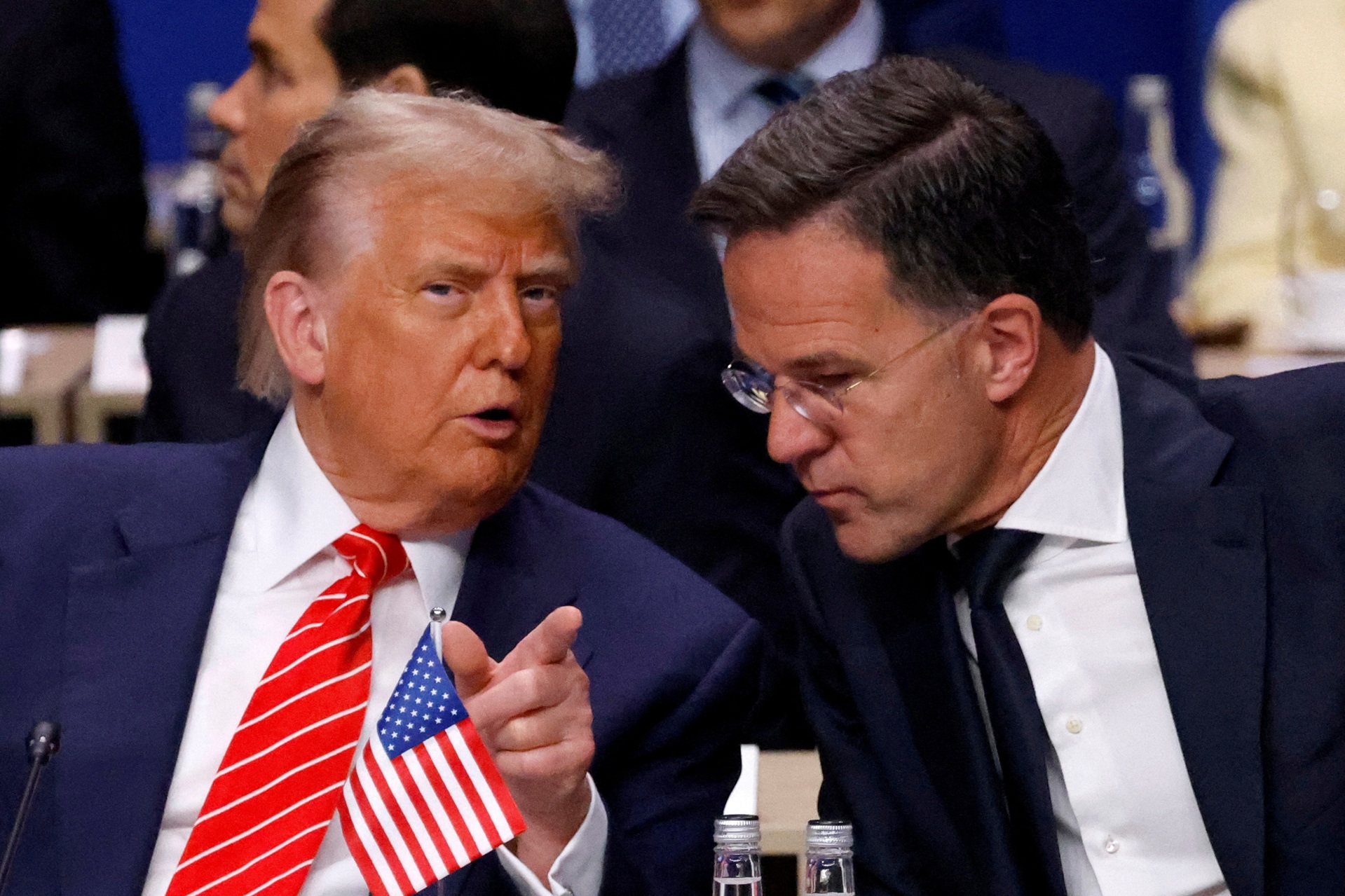
Additionally, the Europeans were forced to pay a high price in return for securing the American commitment. First and foremost, the summit in The Hague demonstrated the absolute dominance of the United States—and of Trump in particular—over Europe. Trump’s influence was felt even in the summit’s format: The meeting of the North Atlantic Council was brief, and the summit declaration matched Trump’s style—only five paragraphs (the previous summit’s declaration included 38 paragraphs). The submissive behavior of NATO Secretary-General Mark Rutte, whose correspondence with Trump was leaked by Trump himself on social media, also reflected Europe’s surrender to the American president.
But Trump’s major victory at the summit was securing a commitment from NATO members to allocate 5% of their GDP to the defense budget. Although European countries tempered the decision by allowing 1.5% of that amount to be directed to infrastructure and civilian resilience, Trump could return to Washington claiming he got what he wanted from the Europeans: a more equitable burden-sharing.
Raising the defense budget meets the real needs of European countries due to growing threats and the weakening of the American willingness to defend them. The demand to reach 3.5% of GDP in defense spending came not only from the American administration but also from NATO’s own planning bodies. Furthermore, investment in infrastructure and resilience is essential given the growing threats of hybrid warfare. Still, the results of the Hague summit offer only a fragile basis for strengthening NATO and Europe.
Not every European country enthusiastically joined the promise to increase the defense budget. In this context, Spain stood out, as its prime minister was the only leader to openly oppose Trump, saying he did not intend to meet the 5% target; yet Trump pressured Spain until it also agreed to join the summit declaration. The incident, however, created a rift in NATO’s united front, and the prime ministers of Belgium and Slovakia also signaled they did not intend to meet their commitment. The target date for reaching a defense budget of 5% of GDP is 2035, and the process is supposed to be reviewed again in 2029, after the next US presidential election. Until then, changes are expected in Washington, and some European leaders may hope to evade their commitment when a different US president is elected.
Another challenge for Europeans is that even if they meet the target and allocate 3.5% of their GDP to the defense budget, they do not necessarily have the tools to translate these expenditures into tangible military power. At present, European countries lack the industrial capacity to absorb such investments in the military field, as dictated by the Hague declaration. In this reality, increasing the defense budget may lead to greater European dependence on the American military industry. Additionally, setting a numerical target without the industrial capacity to implement it efficiently could result in wasted funds that would not improve Europe’s security situation.
Moreover, European investments in the security field have so far been made without sufficient coordination between countries, which limits their impact on collective security. As a result, the European Union, of which 23 NATO members are also members, is stepping up as a coordinator between the respective states. Given the recent changes in its strategic environment (including the rise of rivals such as China and Russia, security challenges from the south, and a new American approach), the European Union sees itself as a complement to NATO and provides an economic layer for Europe’s security. In March 2025, the European Commission published an ambitious plan—ReArm Europe (later renamed Readiness 2030 to reflect a broader concept of security beyond the military industry)—with the expressed goal of offering approximately 800 billion euros in investments toward enhancing the European Union’s security. The implementation of this plan, still in doubt due to the concessions required from European countries to ensure its success, would align with Trump’s demands and enable European countries to reach the 3.5% target faster and coordinate their efforts.
The pledge to increase the defense budget could also spark disputes both within European countries and between them. The success of the process of strengthening Europe’s military capability depends on the leaders’ ability to persuade their respective publics to support it. However, the financial situation of most European governments does not give them much room to maneuver, and economic and social concessions will be required. Such measures could trigger a wave of protests, fueling populist movements and creating vulnerabilities that adversaries like Russia may exploit—potentially destabilizing European states.
Disparities between the efforts of different countries could also harm the cohesion of the European bloc. The plan to raise the defense budget to 2%, decided in 2014, has already caused friction between those who met the target, mainly in Eastern Europe, and those who did not. A more ambitious target of 5% could worsen these tensions. A gap is already emerging between Germany, which has decided to double its defense budget and meet the 3.5% of GDP target for defense spending by 2029, and Spain, which is reluctant to make the required increase. Italy and France will also struggle to meet the target due to their complex financial situations.
Beyond the intra-European debate on burden-sharing, which could worsen in the coming years, Europe is experiencing shifts in its internal balance of power. In the last decade, Poland’s military has become the largest in Europe (excluding Turkey), and Warsaw seeks to continue strengthening its capabilities. If Germany meets the targets it set for itself, it will become the region’s largest power in a decade. These changes could create tensions between rising regional powers and other countries and potentially paralyze decision-making mechanisms in NATO or the European Union. Given the significant disagreements among the member states of these two organizations, ad hoc and less institutionalized coalitions may form, in which countries with similar security perceptions act together without the approval of NATO or the European Union, thereby avoiding delays and limitations on their activities.
The Hague summit is, therefore, a success in the immediate term: European countries received an American commitment to NATO’s Article 5, and Trump received a European promise to invest more in security—two achievements that should strengthen the alliance. But the plan’s implementation is rife with complexities that could lead to rifts between partners in Europe and between European countries and the United States, ultimately weakening the European members of the alliance.
From an Israeli perspective, several points are worth noting. Israel has been a NATO partner within the framework of the “Mediterranean Dialogue” since 1995. This status allows it to cooperate with the alliance and even participate in various NATO military exercises. However, in the past two years, Turkey’s opposition to managing ties between the alliance and Israel has strained relations between the parties. The Hague summit demonstrated the increasing influence of Turkish President Recep Tayyip Erdoğan within NATO. On the one hand, he enjoys a good personal relationship with his American counterpart, who has frequently expressed his appreciation for him. The strengthening of Trump within NATO is therefore also an indirect strengthening of Erdoğan. Additionally, the possible reduction of the American presence in Europe, doubts about US willingness to intervene in extreme cases, and the need to bolster European military power make Turkey—with the second-largest army in NATO and a flourishing military industry—an indispensable ally. Erdoğan’s strengthening in the European system and within NATO is a factor that Israeli decision-makers must consider in relation to both Israel–NATO ties and broader regional strategic assessments.
On the other hand, the Hague summit created new opportunities for Jerusalem. First, the balance of power among NATO members appears favorable to Israel. The strengthening of Israel-friendly states within the alliance—primarily the United States and Germany—and the weakening of anti-Israeli states—Spain and Belgium—are positive developments for Israel. Furthermore, the new security reality in Europe is generating interest in what Israel has to offer. The Israeli defense industry may become an important partner for European countries seeking to strengthen their military capabilities. Despite the war in the Gaza Strip, there was a sharp increase in Israeli defense exports to Europe in 2024. Israeli defense systems have proven themselves over the past two years, especially against Russian-made ones operated by Iran, making them highly relevant to European defense needs. Generally, Israel’s military achievements in the campaign against Iran have sparked great interest among several NATO leaders. Therefore, even if Israel–NATO relations remain frozen in the short term due to opposition from certain countries—primarily Turkey—Israel will still have room to maneuver with other alliance members.
The results of the Hague summit also illustrate Trump’s attitude toward his allies, offering relevant lessons for Israel. NATO members—the United States’ oldest and most significant alliance—had to appeal to the American president both in substance and tone. In return, they received only a vague commitment from the United States, with both sides clearly aware that Washington will support Europe only if it bears its own defense burden and proves its strategic value to US interests. Jerusalem should carefully consider the implications of this American approach in the context of its relationship with the United States.