


Publications
INSS Insight No. 772, November 30, 2015
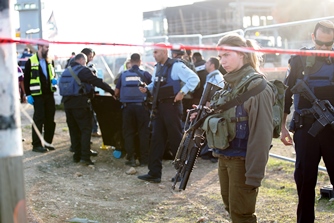
The outbreak of the Palestinian terrorism phenomenon some two months ago took the Israeli public and leadership by surprise in terms of the attacks’ persistence, frequency, and form – primarily stabbings. Underlying the attacks are multi-dimensional motives, reflecting national, religious, and social issues; the principal trigger, at least initially, was religious sentiment focusing on the struggle over the al-Aqsa mosque. In tandem, however, is the inspiration provided by the jihadist notions spouted by the Islamic State. The young perpetrators are motivated by a sense of national, economic, and social frustration, the feeling that all paths are closed to them, the perception they have no one to rely on, and the loss of trust in every echelon of Palestinian leadership. This, combined with a desire to dismantle the existing structure and without a commitment to any defined notion of a future order, makes for a highly volatile situation.
Some of the attacks are also prompted by the sense that there is nothing to lose. Both PA leaders in the West Bank and Hamas leaders in the Gaza Strip are busy fighting for their own survival. Regional powers, especially Egypt and Jordan, have lost interest in the Gaza Strip and West Bank, while the attention of the international community, focused on the fight against the Islamic State, especially after the Paris attacks, is diverted from the Palestinian issue. All these factors heighten the Palestinians’ sense of abandonment and despair.
Many in the Israeli public, including politicians and public figures, faced with the ongoing reality of stabbings, vehicle attacks, and shootings, are demanding that much more be done to deal with the situation. In this context, they repeatedly invoke the old, familiar toolbox that was effective during the second intifada, when Israel faced organized terrorism. However, the current outbreak does not resemble the second intifada. It lacks organization, and attacks are launched by individuals who in most cases are not using firepower. The vast majority of the Palestinian population, both in the areas controlled by the PA and in East Jerusalem, is not involved (despite the fact that the phenomenon is termed “popular”), and even if there is a certain amount of sympathy for the attackers, it is doubtful whether this can be seen as broad Palestinian support for terrorism. Moreover, the attacks and Israel’s response counter the basic interests of the majority of the Palestinian population and disrupt their lives.
The fact that many of the attackers are teenagers (of both sexes) is indicative of the breakdown of Palestinian society’s leadership and social structure and the traditional restraining mechanisms (family, schools, elders, the political leadership). Given the weakening of the social and political structures, the inspiration of Salafist jihadist ideas, and the lack of a political horizon, the systematic and institutionalized incitement by the Palestinian leadership serves as fertile ground for the viral influence of the messages distributed in the social media encouraging terrorism. Teens living in the virtual reality of the social media are inspired by the new generation of heroes: young people who took knives in their hands, believing that stabbing and killing a Jew, even at the cost of their own lives, was an act of supreme sacrifice.
This type of terrorism is portrayed as somehow softer than organized terrorism involving firearms and bombs. It is therefore convenient for the Palestinian leadership and public opinion shapers to support terrorism perpetrated by youth. Sources in the PA see an advantage in loner attacks, which lack an address, as a way to challenge Israel while preventing it from taking high intensity military action against the PA’s own institutions and the Palestinian public. Hamas in the Gaza Strip, like Fatah in the West Bank, continues its campaign of incitement – especially in the social media and the mosques – and in doing so tries to secure its role in current events in the national consciousness. Fatah is standing behind the terror attacks, which it calls “a wave of uprising against the occupation,” and is interested in seeing more of the same. Hamas is pleased by the fact that attention has shifted to the Hebron sector, its longtime powerbase in the West Bank, while trying to prevent escalation in the Gaza Strip.
In order to formulate an effective response to this outbreak of terrorism, it is important to understand the limits to any Israeli reaction or method of action. Specifically, it is important to distinguish between modes of action that can help reduce the phenomenon and provide a quick, effective way of neutralizing the attackers on the one hand, and moves designed to prove that Israel is taking determined action against terrorism, on the other. The inevitable outcome of determined, dramatic steps is escalation, increased motivation among individuals to carry out attacks, a transition to more organized terrorism (including the participation of Fatah’s Tanzim faction), and damage to the motivation of the Palestinian security apparatus to take action against terrorism and continue any cooperation with Israel’s security services.
In recent years, Israel has failed to outfit a new toolbox suited to the spirit of the times focused on exerting economic, infrastructural, social, educational, and public relations efforts, to be used also in the new media. The reality of the last few years has suppressed the growth and development of a legitimate local Palestinian leadership that is attentive to the population’s problems, representing an outlet for dialogue with Israel and a means and influence to rein in violence. In the absence of new tools and lacking an appropriate solution to a strategic problem, there is a return to the old toolbox; some in Israel are pushing to recycle operational plans (such as Operation Defensive Shield) formulated as a response to a radically different situation. This could well prove to be a bad mistake. The pressure on the political echelon and the security establishment to do something – taking decisive action that would change the rules of the game – is liable to impair the political echelon’s rational considerations, undermine the restrained and responsible reaction taken to date, and lead to it adopt a rationale of action that is unsuited to the current type of terrorism.
The first signs of such inappropriate efforts can be seen in the decision to check every Palestinian vehicle in the Hebron-Bethlehem sector and a sampling of vehicles in the rest of the West Bank; to deny Israeli work permits to Palestinian workers relatives of attackers; to prevent Palestinian laborers from entering Jewish settlements in the Etzion Bloc; to examine the possibility of Palestinian vehicular traffic separate from Israeli vehicular traffic on West Banks roads; increase the frequency of arrests of Palestinians, based on the merest hint of suspicion; and to consider other steps, e.g., isolating geographical and urban zones, such as Hebron. Moves like these are liable to transfer the targeted of terrorism areas elsewhere (Nablus and Jenin, for example) and motivate people not currently involved in terrorism to support it more actively. In addition, such steps would prove very onerous to the Palestinian security apparatus, which to date is not involved in terrorism and is actively restraining violence against Israelis, taking action against terrorist infrastructures in PA-controlled areas, preventing friction between the Palestinian population and the IDF, and continuing security coordination with Israel’s security forces.
Any chance for preventing further escalation lies in devising competing and more attractive alternatives ideals to the national and religious radicalization capturing the hearts of the younger Palestinians. To do so, it is essential to harness the Palestinian leadership to take necessary measures to influence the ideas and consciousness of young people by smart use of the social media and pay significant attention to the Palestinian school systems and the contents of the messages broadcast via the various media to the public at large and especially the young, including those by the Palestinian leaders. The fact that the Palestinian leadership is losing its legitimacy among the Palestinian public and is seen as increasingly irrelevant hampers its efforts to persuade the Palestinian public to abandon violence and terrorism, and so instead it leans to the atmosphere supporting terrorism. The Palestinian leadership is on a slippery slope: the frustration and despair of young Palestinians are directed not only at Israel, as the terrorism is meant to challenge the Palestinian leadership as well. Nonetheless, Israel’s effort to root out the phenomenon requires, first and foremost, the commitment by the Palestinian leadership, despite its weakness and doubtful willingness and ability, to influence the public.
In order to convince the PA’s leadership to dissociate itself unequivocally from terrorism and violence and restore its influence to its public, especially the young, the PA’s leadership must be supplied with the appropriate tools, including the establishment of employment initiatives, professional training programs, more higher education options, and the possibility for young people to become involved in politics. Israel can help the PA in achieving these goals. Israel must prove its reliable willingness to return to the negotiating table and work toward the two-state solution, just as the PA must repudiate terrorism and violence. At the same time, it is important that Israel promote a series of moves that will help improve the routine daily lives and welfare of the Palestinians. In exchange for the PA’s commitment to rein in terrorism, Israel would have to strengthen the Palestinian security apparatuses and expand their zones of action while also stepping up security coordination.
As long as there is no change in the political reality, Israel must deploy a massive security presence on the ground, strengthen the public’s resilience and alertness, and expend special efforts toward foiling attacks, based on the assumption that we are seeing an ongoing, cyclical reality of terrorism with the potential for escalation that only restraint and recourse to a new toolbox can help contain.