


Syria: Time to Reformulate the Rules of the Game | INSS
go to header go to content go to footer go to search
INSS logo The Institute for National Security Studies, Strategic, Innovative, Policy-Oriented Research, go to the home page
INSS
Tel Aviv University logo - beyond an external website, opens on a new page
  • Campus
  • Contact
  • עברית
  • Support Us
  • Research
    • Topics
      • Israel and the Global Powers
        • Israel-United States Relations
        • Glazer Israel-China Policy Center
        • Russia
        • Europe
      • Iran and the Shi'ite Axis
        • Iran
        • The Israel–Iran War
        • Lebanon and Hezbollah
        • Syria
        • Yemen and the Houthi Movement
        • Iraq and the Iraqi Shiite Militias
      • Conflict to Agreements
        • Israeli-Palestinian Relations
        • Hamas and the Gaza Strip
        • Peace Agreements and Normalization in the Middle East
        • Saudi Arabia and the Gulf States
        • Turkey
        • Egypt
        • Jordan
      • Israel’s National Security Policy
        • Military and Strategic Affairs
        • Societal Resilience and the Israeli Society
        • Jewish-Arab Relations in Israel
        • Climate, Infrastructure and Energy
        • Terrorism and Low Intensity Conflict
      • Cross-Arena Research
        • Data Analytics Center
        • Law and National Security
        • Advanced Technologies and National Security
        • Cognitive Warfare
        • Economics and National Security
    • Projects
      • Preventing the Slide into a One-State Reality
      • Contemporary Antisemitism in the United States
      • Perceptions about Jews and Israel in the Arab-Muslim World and Their Impact on the West
  • Publications
    • -
      • All Publications
      • INSS Insight
      • Policy Papers
      • Special Publication
      • Strategic Assessment
      • Technology Platform
      • Memoranda
      • Posts
      • Books
      • Archive
  • Database
    • Surveys
    • Spotlight
    • Maps
    • Dashboards
  • Events
  • Team
  • About
    • Vision and Mission
    • History
    • Research Disciplines
    • Board of Directors
    • Fellowship and Prizes
    • Internships
  • Media
    • Communications
    • Video gallery
    • Press Releases
  • Podcast
  • Newsletter
  • campus
Search in site
  • Research
    • Topics
    • Israel and the Global Powers
    • Israel-United States Relations
    • Glazer Israel-China Policy Center
    • Russia
    • Europe
    • Iran and the Shi'ite Axis
    • Iran
    • The Israel–Iran War
    • Lebanon and Hezbollah
    • Syria
    • Yemen and the Houthi Movement
    • Iraq and the Iraqi Shiite Militias
    • Conflict to Agreements
    • Israeli-Palestinian Relations
    • Hamas and the Gaza Strip
    • Peace Agreements and Normalization in the Middle East
    • Saudi Arabia and the Gulf States
    • Turkey
    • Egypt
    • Jordan
    • Israel’s National Security Policy
    • Military and Strategic Affairs
    • Societal Resilience and the Israeli Society
    • Jewish-Arab Relations in Israel
    • Climate, Infrastructure and Energy
    • Terrorism and Low Intensity Conflict
    • Cross-Arena Research
    • Data Analytics Center
    • Law and National Security
    • Advanced Technologies and National Security
    • Cognitive Warfare
    • Economics and National Security
    • Projects
    • Preventing the Slide into a One-State Reality
    • Contemporary Antisemitism in the United States
    • Perceptions about Jews and Israel in the Arab-Muslim World and Their Impact on the West
  • Publications
    • All Publications
    • INSS Insight
    • Policy Papers
    • Special Publication
    • Strategic Assessment
    • Technology Platform
    • Memoranda
    • Posts
    • Books
    • Archive
  • Database
    • Surveys
    • Spotlight
    • Maps
    • Dashboards
  • Events
  • Team
  • About
    • Vision and Mission
    • History
    • Research Disciplines
    • Board of Directors
    • Fellowship and Prizes
    • Internships
    • Privacy Policy and Terms of Use
  • Media
    • Communications
    • Video gallery
    • Press Releases
  • Podcast
  • Newsletter
  • Campus
  • Contact
  • עברית
  • Support Us
bool(false)

Publications

Home Publications INSS Insight Syria: Time to Reformulate the Rules of the Game

Syria: Time to Reformulate the Rules of the Game

INSS Insight No. 750, September 30, 2015
עברית
Udi Dekel
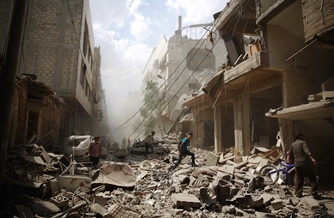
In practice, Syria is already split internally and divided into areas under the influence of external powers. As the Russians deploy, the coastal region will all but come directly under their control. Northern Syria, especially the Kurdish region, is under Turkish influence. The central axis of Syria – from Damascus to Homs and Aleppo – and the Syrian-Lebanese border are, with Hizbollah’s help, under Iranian influence. Eastern Syria is the battlefield for the war by the US-led international coalition against the Islamic State. Israel must thus undertake an in-depth analysis of the changing rules of the game, in face of Russia’s involvement and its determination to shape the future of Syria. This new situation changes the internal and external balance of power in Syria and increases the risk of events spilling over to Israel, such as the possibility that Salafist jihadi rebel forces will be drawn to southern Syria, the only Syrian sector currently free of active influence by external actors. The Israeli government must formulate its long term goals for the north, including willingness to fight for operational freedom of action, and the ability to establish an Israeli area of influence in southern Lebanon, the Golan Heights, and southern Syria.

Once again Syria commands a leading position on the international agenda, due to the flood of refugees moving through Europe – as Jordan, Lebanon, and Turkey are no longer able to take in additional Syrian refugees – and due to President Vladimir Putin’s decision to substantially increase military aid to the Assad regime. This new Russian assistance includes the construction of a Russian airfield on the Syrian coast near Latakia in the Alawite district, Assad’s primary base of support. Moscow’s heightened involvement in Syria cut short the preliminary discussions between the various external players who were trying to formulate a political settlement in which Assad himself would step down, even as the regime would continue to maintain its existing character during a transition period. This was predicated on the assessment that the Syrian army and security mechanisms were critical in stabilizing the situation during an interim period, as well as on the need to neutralize the involvement of the Islamic State and other Salafist jihadi forces whose capabilities were outstripping those of the other factions fighting in Syria.

The Islamic State as the Key Threat: Broad Agreement Is Insufficient

The foreign actors in the Syrian arena – the United States, Russia, the EU, Iran, Saudi Arabia, Turkey, the Gulf principalities, and Jordan, as well as the various minority groups in Syria (the Kurds, Druze, Alawites, and others – share a primary interest, namely, dismantling the Islamic State and preventing its takeover of Syria in the post-Assad era. This shared interest ostensibly serves as the basis for establishing a transitional government in Syria that would stabilize the situation and outline a path for the future. But it seems that promoting the interests shared by most of the actors as a way to formulate an interim agreement in Syria under regional and international sponsorship is beyond reach, which is why the respective actors are in no hurry to bring the phenomenon known as the Islamic State to an end.

The Western powers, led by the United States, are not willing to pay the price needed to dismantle the Islamic State’s military capabilities and to replace the Assad regime, i.e., putting boots on the ground – the only effective way to change the situation. Somewhat surprisingly, the confrontation with the Islamic State has yielded some positive consequences, such as channels of coordination and dialogue with Iran and other players not allied with the United States. Furthermore, at this point the United States and its allies are not eager to attack the Islamic State with the required effectiveness because the collapse of the Islamic State could result in increased power for Assad.

Iran, which sees the Islamic State as an immediate threat to its own hegemony in Iraq, Syria, Lebanon, and beyond, is very concerned about the ramifications of a coalition fighting the Islamic State, especially the possibility of an extensive US military presence in the region – near the Iran-Iraq border, in the Kurdish enclave, and in eastern Turkey, as well as in Syria and Jordan. The Iranians view the strengthening of Assad’s regime as a primary tool in stopping the Islamic State from spreading and preventing the radical Sunni elements – especially Salafist jihadists, such as Jabhat al-Nusra – from seizing control of Syria.

Another key actor is Turkey, led by President Erdogan, which is using the Islamic State as a smokescreen to hide its destruction of bases of the PKK and the Kurdish underground in northern Iraq, northern Syria, and even within Turkey itself. Typical of his fickle opinions, Erdogan has removed the ouster of Assad from the top of the list of Turkey’s demands. As for fighting the Islamic State, Erdogan has made it clear that Turkey will take resolute action only after NATO, led by the United States, gathers the necessary forces toward that objective.

For Saudi Arabia and the Gulf principalities, Iran remains the most threatening enemy. Their policy is therefore aimed at reducing Iran’s influence in the Middle East, especially in Iraq, Syria, and Lebanon. Some of the Arab nations see a drawn out, pointless war against the Islamic State as the lesser of the evils compared to two worse possibilities for the future of Syria: Iranian dominance via its proxies, such as Hizbollah, or the seizure of power by factions belonging to the Muslim Brotherhood or Salafist jihadists, their main enemy within the Sunni camp itself. Therefore, the Islamic State offers them a way to deflect what they consider to be two graver alternatives – Iranian dominance or a radical Muslim government in Syria. The Middle East rationale mandates creating influence with the power to destroy rather than to contribute constructively. Therefore, in the short term and given to the need to choose sides right now, the so-called pragmatic Sunni states are assisting – or allowing provision of military and economic assistance – to Salafist jihadi organizations and the Muslim Brotherhood fighting against the Assad regime.

Looking Ahead

The Syrian tragedy reflects the fact that the Assad regime and the Islamic State are the flashpoints for two sets of conflicts in the Muslim Arab world: first, the inter-ethnic conflict between the Sunni camp, led by Saudi Arabia, and the Shiite camp, led by Iran, and second, the intra-Sunni rivalries, which are no less dramatic than the inter-ethnic fights, the latter involving the so-called pragmatic states, the Salafist jihadi actors, and the Muslim Brotherhood. Both the Assad regime and the Islamic State are tools in the hands of stronger actors; they enjoy immunity thanks to the lack of resolve among the various adversaries to topple them. The very existence of the Islamic State at its current level of power and the fear of a vacuum in Syria keep external involvement from destroying Assad’s regime.

The key question in behind the scenes discussions among the involved parties is: will Assad be forced to give up the presidency, or will he be part of the settlement for a transition period, after which the Syrian people will have a chance to determine the nature of the permanent arrangement? The Saudi-led Sunni camp has decided to join forces with Turkey and Qatar, the nations identified with the Muslim Brotherhood, and they refuse any option that includes Assad retaining his position even for an interim period. By contrast, Iran, which views Assad’s survival as a firm precondition, is supported by Russia, and the two are coordinating their moves to this end. Russia has once again hardened its line and is significantly increasing its military deployment and aid to Assad’s regime, even to the point of active military involvement. The Sunni camp, which considers the toppling of Assad as a central goal, has greatly strengthened the forces rebelling against the Assad regime in Syria’s north and south. Support for the rebel forces will continue to the point where Assad is severely compromised and he represents a burden rather than an asset for Iran and Russia. At that point, it will be possible to neutralize their veto power over an interim arrangement without Assad at the helm. In response, the increasing Russian military intervention and the close coordination between Russia and Iran are intended to create a situation in which an Alawite-minority regime remains in place in the coastal strip from the north, through Hama and Homs, to Damascus and the area bordering Lebanon.

Consequences for Israel

In practice, Syria is already split internally and divided into areas under the influence of external powers. As the Russians deploy, the coastal region will all but come directly under their control. Northern Syria, especially the Kurdish region, is under Turkish influence. The central axis of Syria – from Damascus to Homs and Aleppo – and the Syrian-Lebanese border are, with Hizbollah’s help, under Iranian influence. Eastern Syria is the battlefield for the war by the US-led international coalition against the Islamic State.

The only area not claimed by an outside force as a critical interest is the southern Syrian expanse, including the Golan Heights. It is critical that Israel retain operational freedom of action in this sector and in Lebanon. Israel was therefore shocked once it became clear that Russia was sending forces and building military strongholds on the Syrian coast. This was the reason Prime Minister Benjamin Netanyahu, accompanied by IDF Chief of Staff Gadi Eizenkot, rushed to Moscow: to formulate understandings on avoiding clashes between Russian and Israeli forces, especially aerial clashes, and preventing the arrival of advanced Russian weapons, such as surface-to-air missiles, that could impinge on the IDF’s operational freedom of action in Lebanon and southern Syria. Moreover, Israel is concerned that advanced weapons that Russia supplies to Assad’s forces will end up in Hizbollah hands, especially in Lebanon. Perhaps Israel was also testing the possibility of the Russian track being used in reaching understandings on rewriting the rules of the game with regard to the Iran-Assad-Hizbollah axis, based on the awareness of the shared threat inherent in the Islamic State.

Israel must thus undertake an in-depth analysis of the changing rules of the game, in face of the Russian involvement and Moscow’s determination to shape the future of Syria. This new situation changes the internal and external balance of power in Syria and increases the risk of events spilling over to Israel, such as the possibility that Salafist jihadi rebel forces will be drawn to southern Syria, the only Syrian sector currently free of active influence by external actors. The Israeli government must formulate its long term goals for the north, including willingness to fight for operational freedom of action, and the ability to establish an Israeli area of influence in southern Lebanon, the Golan Heights, and southern Syria.

The opinions expressed in INSS publications are the authors’ alone.
Publication Series INSS Insight
TopicsIranIslamic StateRussiaSyria
עברית

Events

All events
Iran in Africa: Global Reach Regional Impact and Israeli Implications
26 October, 2025
14:00 - 17:00

Related Publications

All publications
Aircraft Under the Radar: Mechanisms of Evading Sanctions in Iran’s Aviation Sector
Despite being subjected to one of the harshest sanctions regimes in the world, Iran has succeeded in building a sophisticated, law-evading mechanism to support its aviation industry, which reflects the broader principles of the shadow economy it has developed. This article maps the operational architecture of that mechanism, based on using front and shell companies in countries with little transparency, layered ownership registries, bursts of activity designed to complete transfers within short timeframes, and flight-path planning that includes fictitious emergency landings to allow aircraft to quietly enter Iran. The article describes how Iran’s aviation sector—significantly harmed by sanctions—has shifted from a civilian transportation tool to a core component of the regime’s economic and security strategy, enabling it to continue functioning, finance its regional proxies, and project resilience in the face of international pressure. The aviation industry represents only one link in a much larger apparatus designed to evade sanctions in the trade of oil, gold, and dual-use technologies; yet the aviation sector clearly demonstrates the method: a sophisticated integration of state, market, and underground networks that operate in regulatory gray zones and disrupt efforts to globally enforce the sanctions.
17/12/25
Iranian Supreme Leader'S Office via ZUMA Press Wire
The Deadlock Surrounding Iran’s Nuclear Program
The solution to the crisis surrounding the Iranian nuclear program is nowhere in sight, and the ticking clock is forcing Tehran to make fateful decisions
09/12/25
Morteza Nikoubazl/NurPhoto via REUTERS
From Islamic Republic to Iranian Republic
Young Iranians celebrate Halloween, while the regime erects a statue of an ancient Persian king: What explains these trends, which do not align with Iran’s Islamic identity, and how do they affect the future of the Islamic Republic?
02/12/25

Stay up to date

Registration was successful! Thanks.
  • Research

    • Topics
      • Israel and the Global Powers
      • Israel-United States Relations
      • Glazer Israel-China Policy Center
      • Russia
      • Europe
      • Iran and the Shi'ite Axis
      • Iran
      • The Israel–Iran War
      • Lebanon and Hezbollah
      • Syria
      • Yemen and the Houthi Movement
      • Iraq and the Iraqi Shiite Militias
      • Conflict to Agreements
      • Israeli-Palestinian Relations
      • Hamas and the Gaza Strip
      • Peace Agreements and Normalization in the Middle East
      • Saudi Arabia and the Gulf States
      • Turkey
      • Egypt
      • Jordan
      • Israel’s National Security Policy
      • Military and Strategic Affairs
      • Societal Resilience and the Israeli Society
      • Jewish-Arab Relations in Israel
      • Climate, Infrastructure and Energy
      • Terrorism and Low Intensity Conflict
      • Cross-Arena Research
      • Data Analytics Center
      • Law and National Security
      • Advanced Technologies and National Security
      • Cognitive Warfare
      • Economics and National Security
    • Projects
      • Preventing the Slide into a One-State Reality
      • Contemporary Antisemitism in the United States
      • Perceptions about Jews and Israel in the Arab-Muslim World and Their Impact on the West
  • Publications

    • All Publications
    • INSS Insight
    • Policy Papers
    • Special Publication
    • Strategic Assessment
    • Technology Platform
    • Memoranda
    • Database
    • Posts
    • Books
    • Archive
  • About

    • Vision and Mission
    • History
    • Research Disciplines
    • Board of Directors
    • Fellowship and Prizes
    • Internships
    • Support
    • Privacy Policy and Terms of Use
  • Media

    • Communications
    • Video Gallery
    • Press Release
    • Podcast
  • Home

  • Events

  • Database

  • Team

  • Contact

  • Newsletter

  • עברית

INSS logo The Institute for National Security Studies, Strategic, Innovative, Policy-Oriented Research, go to the home page
40 Haim Levanon St. Tel Aviv, 6997556 Israel | Tel: 03-640-0400 | Fax: 03-744-7590 | Email: info@inss.org.il
Developed by Daat A Realcommerce company.
Accessibility Statement
This site is protected by reCAPTCHA and the Google Privacy Policy and Terms of Service apply.
No audio version available for this podcast