


Publications
INSS Insight No. 1091, August 27, 2018
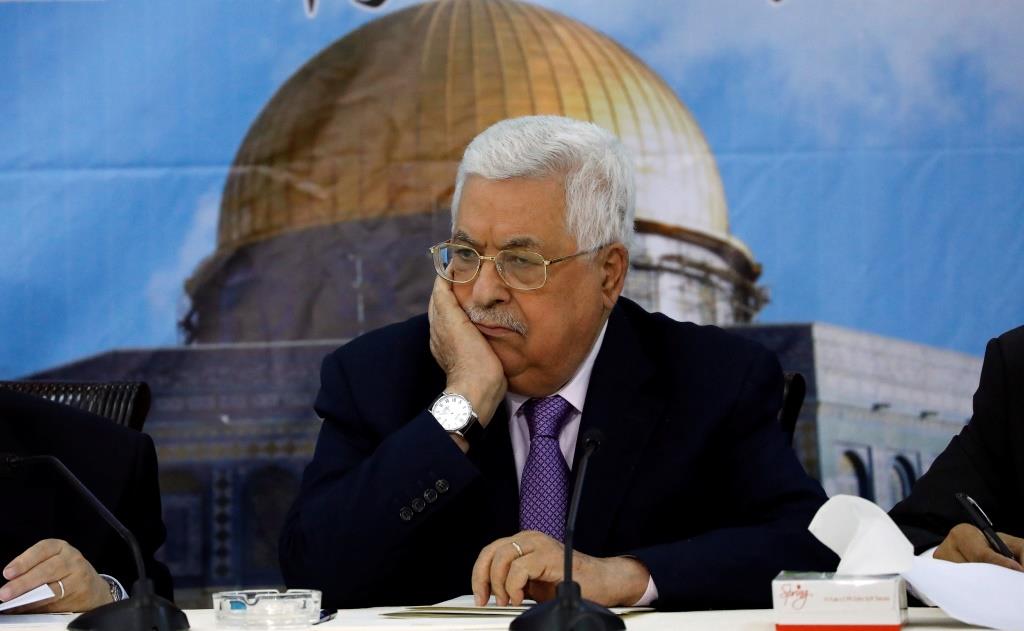
The challenges facing the PA and PA President Abu Mazen have increased during the Trump administration. In addition, Egypt in effect has made it clear that it is willing to work toward a ceasefire arrangement in the Gaza Strip, even without agreement by Abu Mazen and the PA. Egypt is thus in essence granting Hamas a status that it did not previously enjoy, equal to that of the PA. Hamas speaks on behalf of the Gaza Strip population and their plight. Abu Mazen, however, still enjoys the status of exclusive representative of the Palestinian people, can speak in the name of the national consensus, and can neutralize the efforts made in Cairo to go forward without him with an arrangement in the Gaza Strip. In Gaza, a lull without a binding agreement already exists, but reconciliation between Fatah and Hamas remains highly in doubt, given Abu Mazen’s insistence on “one law and one gun” in the Palestinian arena. Abu Mazen is also determined to prevent another coup against the PA in the Gaza Strip, should it reenter the area.
The PLO Central Council convened in Ramallah on August 15-17, 2018, following other conferences and meetings held in recent months by PLO institutions, the Palestinian Authority (PA), and Fatah. These meetings were designed to deal with the political challenges on the agenda, among them the marked change in the attitude of the US administration toward the Palestinians and the Israeli-Palestinian conflict, as well as efforts to promote a lull/arrangement between Hamas and Israel in the Gaza Strip without the PA, led by Egypt with American backing and in coordination with Israel.
The Central Council meeting took place in the shadow of a threat to the PLO's status as the exclusive representative of the Palestinian people, and the possibility of a solution imposed on the Palestinians that would sever the Gaza Strip from the West Bank. In addition, there is evidence of some desire to isolate Abu Mazen himself given his opposition to any measure that might promote the Trump administration's policy in the region, especially any measure that Abu Mazen regards as liable to cause a split among the Palestinians. The rhetoric at this conference therefore featured threats and warnings against any action harmful to Palestinian national interests and liable to play into the hands of the United States and Israel, which ostensibly aim to perpetuate the split among the Palestinians, prevent formation of a Palestinian state according to the framework outlined in 1988, and promote the "deal of the century" that President Trump's emissaries have drafted over the past 18 months. The conference was marked by the absence of the Democratic Front for the Liberation of Palestine (DFLP) from the discussions, in protest at having its representatives excluded from PLO offices and what was described as a takeover by Fatah of the PLO and general Palestinian national decision making. This absence caused more unease in Fatah than the absence of other groups, including the Popular Front for the Liberation of Palestine (PFLP) and the Palestinian National Initiative (PNI), the organization of Mustafa Barghouti.
The concluding announcement by the Council was declarative in nature, including the following main statements:
- The connection with Israel is based on "a struggle between the Palestinian people and its occupied country and the occupying force." Independence remains the main goal. The five-year transitional period mentioned in the Oslo Accords is no longer valid, given Israel's disregard of these agreements.
- Trump's decision on Jerusalem and the relocation of the American embassy are condemned. By taking this act, the United States has lost its status as an impartial mediator and can no longer fulfill this function exclusively.
- The attempts to promote any arrangement in the Gaza Strip are a national affair of the PLO, not of any particular faction of the Palestinian people, as was the case in the 2014 talks following Operation Protective Edge. These attempts at formulating an arrangement were designed to promote the US administration's "deal of the century," to create a state in the Gaza Strip, perpetuate the split, and in effect to put an end to the idea of a Palestinian state based on the 1967 borders.
In addition, decisions were taken to lend concrete expression to these statements according to a timetable to be determined. These include the following:
- The connection with Israel: The Council approved a recommendation by the PLO Executive Committee concerning implementation of the Palestinian National Council's decisions on relations with Israel and an overall framework plan, with a timetable. These decisions include suspension of recognition of Israel until it recognizes a Palestinian state within the 1967 borders, termination of security coordination/cooperation with Israel, and disengagement from the Paris Protocol for economic coordination between the parties. These measures are in the framework of transition from the Palestinian Authority to the nation-state stage (without, however, dismantling PA institutions).
- Calls to convene an international conference under collective international sponsorship that will include the five permanent members of the UN Security Council. The conference will be held on the basis of the relevant UN resolutions, the Arab Peace Initiative, and the ideas raised by Abu Mazen in his speech to the Security Council on February 20, 2018 following Trump's statement on Jerusalem (in this speech, Abu Mazen called for an international conference sponsored by a multinational mechanism and recognition of the Palestinian state by all UN members).
- Combating the "deal of the century": the Council rejects what it calls all attempts to eliminate the Palestinian problem and the Palestinian national project, including any temporary solution or creation of a state in the Gaza Strip. The United States is described as Israel's partner and part of the problem, not the solution. The effort to thwart any deal put on the agenda by the US administration will continue. It was also decided to continue to sever ties with the US administration until it retracts its decisions concerning the conflict and its solution.
- A call to boycott goods produced in Jewish settlements in the territories.
- Following passage of the Basic Law: Israel as the Nation-State of the Jewish People, the Council issues a call to strengthen and support the BDS campaign.
- The establishment of a supreme national committee for Jerusalem affairs that will have exclusive authority on all matters pertaining to the city.
- The PLO Executive Committee is entrusted with resolving the dispute between the various factions in the Palestinian system in order to achieve a national partnership in PLO ranks.
Assessment
Since President Trump's announcement on US recognition of Jerusalem as Israel's capital, the transfer of the US embassy to Jerusalem, and the marked change in the administration's policy on the Palestinian issue, the challenges facing the PA and PA President Abu Mazen have increased. Out of American pressure, understandings with Israel, and interest in stability and tranquility on its border with the Gaza Strip, Egypt in effect made it clear that it will be willing to work toward a ceasefire arrangement in the Gaza Strip, even without agreement by Abu Mazen and the PA although publicly Cairo continues to regard the PA as sovereign and says the PA's consent is essential for making progress in the political process.
Egypt is thus in essence granting Hamas a status that it did not previously enjoy. By making it clear that the PA will no longer constitute an obstacle to an arrangement in the Gaza Strip, it has given Hamas a status equal to that of the PA. If Hamas obtains the support of the other Palestinian factions for an arrangement, it can argue that this constitutes a Palestinian-wide agreement. The PFLP and DFLP boycott of the Palestine Central Council conference weakened the PLO's status as a Palestinian-wide organization, even though both of these organizations stated that they would not cooperate with an Egyptian action without Fatah. Because of their secular character, the PFLP and DFLP usually object to coordination with an Islamic group like Hamas without backing from Fatah, but it appears that at least this time, the DFLP has an interest in getting even with Abu Mazen for dismissing its members from the offices they held in the PLO.
As of now, Abu Mazen and Fatah are standing their ground. In the name of Palestinian national consensus, they have thus far thwarted all efforts by President Trump's emissaries to achieve progress toward the "deal of the century," which the American administration has heralded since it was established. With backing from Saudi Arabia, Jordan, and even Egypt, they have forced Trump's emissaries to admit their inability to overcome the obstacle to the deal presented by Abu Mazen and to scale back their activity in the matter. Since the failure of their effort to promote reconstruction in the Gaza Strip, the administration's emissaries have remained largely behind the scenes and are focusing on joint public statements expressing interest in a solution for the Palestinians' plight.
It appears that the two sides in the Palestinian arena currently possess a certain advantage. Abu Mazen, who notwithstanding the factors mentioned above still enjoys the status of exclusive representative of the Palestinian people, can speak in the name of the national consensus and neutralize the efforts made in Cairo to go forward without him with an arrangement in the Gaza Strip. For its part, Hamas speaks on behalf of the Gaza Strip population and their plight. Despite the ongoing erosion in its status, Hamas's assertions that the PA and Abu Mazen himself bear responsibility for this distress find a ready ear in Palestinian public opinion due to Abu Mazen's status as the "older brother" who possesses national resources.
Until the talks in Cairo on a settlement are renewed, many contacts are likely between the rival parties in the Palestinian arena, either directly or through third parties. In struggles of this type, in which involvement looms by a third non-Arab party whose intentions are very uncertain, someone speaking in the name of the national consensus often has an advantage. A ceasefire or lull without a binding agreement already exists, but reconciliation between Fatah and Hamas, which is due to be the next stage in the Cairo talks, remains highly in doubt given Abu Mazen's insistence on "one law and one gun" in the Palestinian arena. This insistence has recently increased out of concern about the Trump administration's intentions. Abu Mazen is therefore determined to prevent another coup against the PA in the Gaza Strip, should it reenter the area.
As for the statements about relations with Israel to emerge from the Central Council conference, implementation in practice clashes to a large extent with the transition "from the PA to a state." Maintaining the existing institutions is important for this transition; therefore, as long as Abu Mazen leads the decision making process and internal Palestinian reconciliation is not achieved, only partial implementation of the decisions is likely, which will not materially change the situation.
*** Yohanan Tzoreff, Ministry of Intelligence Services